Back in September, I described how my wife’s 2013 Honda Fit not having a brake pad warning sensor resulted in rotor-pad metal-on-metal grinding while we were driving home from Vermont. Usually, the situation is the other way around—that is, the more common situation with modern cars is that the brake warning light comes on, and the driver feels like they’re risking death unless they head immediately to a dealership and pay easily twice what they’d pay at an independent shop (and maybe ten times what they’d pay if they did it themselves) for pads and rotors.
But the Fit situation was embarrassing and potentially unsafe. So when the complementary situation (the brake warning light coming on) happened in my 2003 E39 530i daily driver with both my wife and my sister in the car, even though the car’s braking was absolutely fine, I took it very seriously. Unfortunately, the message display in the car’s instrument cluster works intermittently, so if it was displaying text telling me that the brake linings were getting thin, I couldn’t see it. I stopped the car, looked through the wheels at the brake pads with the flashlight on my phone, and saw that they all had plenty of meat on them.
I wanted to check the brake fluid level, but on this car it’s underneath the driver’s side cabin air filter housing, and thus not easy to get at. I figured that the only other thing I could rule out was whether the cable to the sensor had torn. The front of the car was too low to be able to see anything, but crouching behind the right rear, I found the smoking gun.
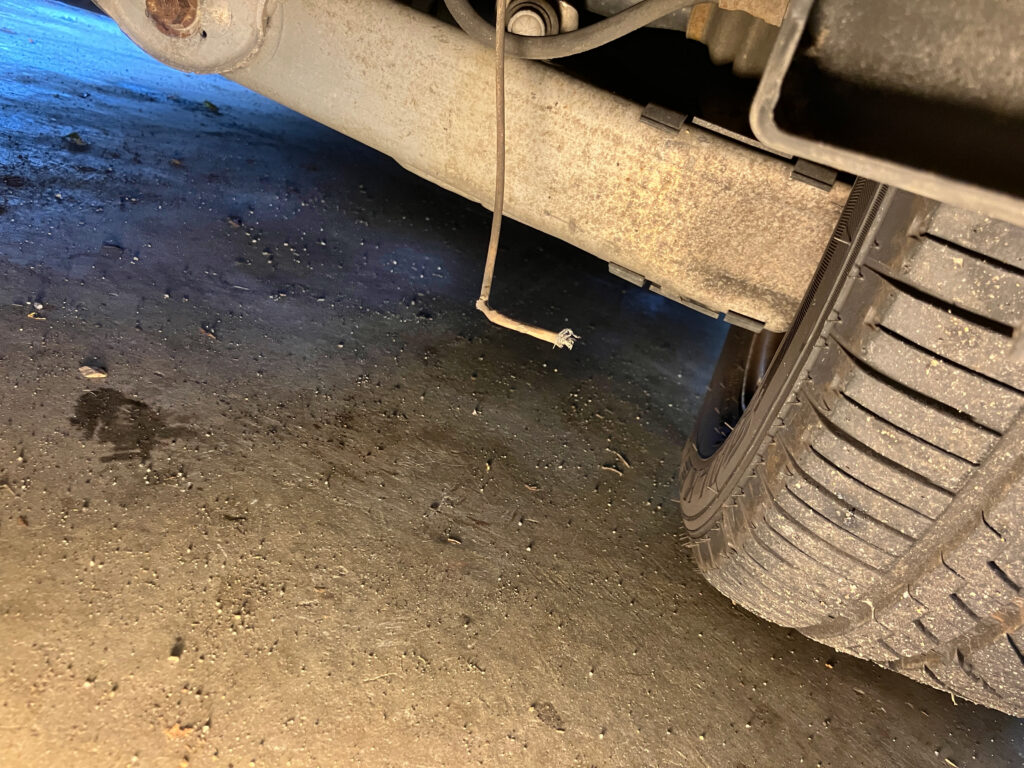
The old “well that’s your problem right there.”
Replacing one of these is a very easy fix, but the wheel does need to come off, and you have to stick enough of yourself under the wheel well of the car that it’s not safe working on it while it’s lifted only by a floor jack on the jack pad. I’ve never found a good jack stand location at the back of the car other than the pad, and if your floor jack is already there, you see the problem. So for a repair like this, I’ve taken to lifting it by the pad, pulling off the wheel, and positioning a second floor jack beneath the big rear suspension bushing, but my inner lawyer says to tell you that I don’t recommend that you do. (For bigger repairs with both rear wheels off, the car goes on the mid-rise lift.)
The knowledge-part of this repair is disconnecting the sensor from its connector because, along with the one for the wheel-speed sensor, it’s mounted behind the plastic inner fender lining which covers the entire inside of the wheel well, and you look at it and think “Do I need to pull this whole thing off?” No, you don’t. Fortunately, when you undo the 10mm nut holding that corner of the lining on, you can bend the lining forward, pull the mated connector out into the light, and disconnect it there.
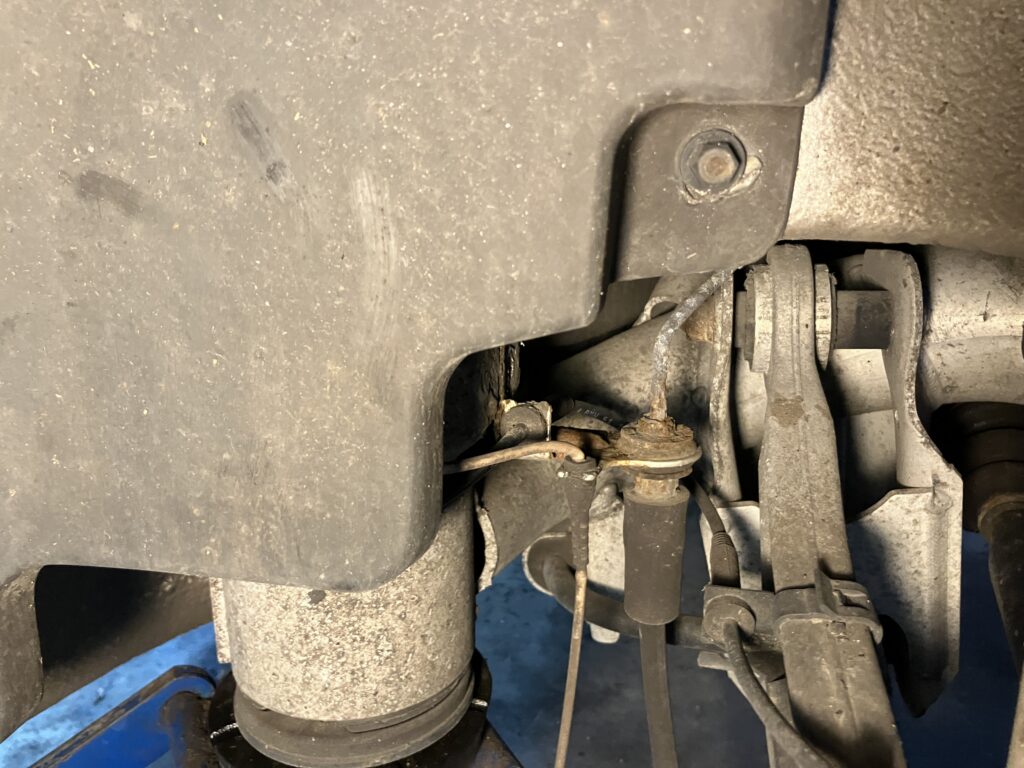
That nut comes off…
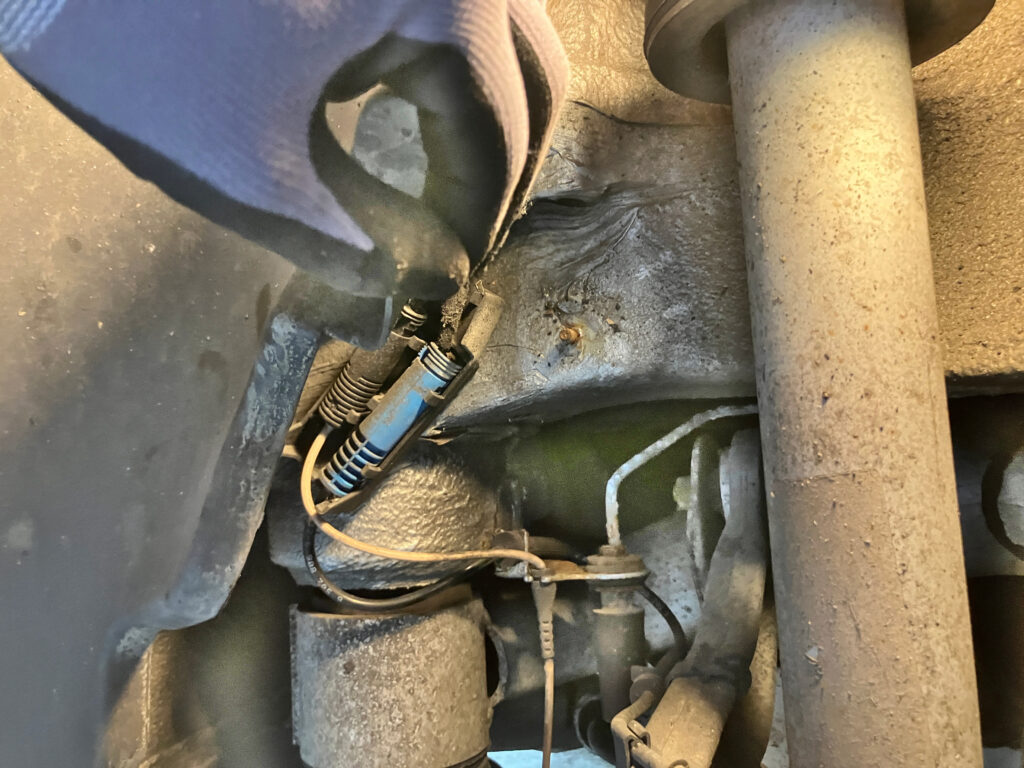
…the corner of the lining is bent back to expose the connectors…
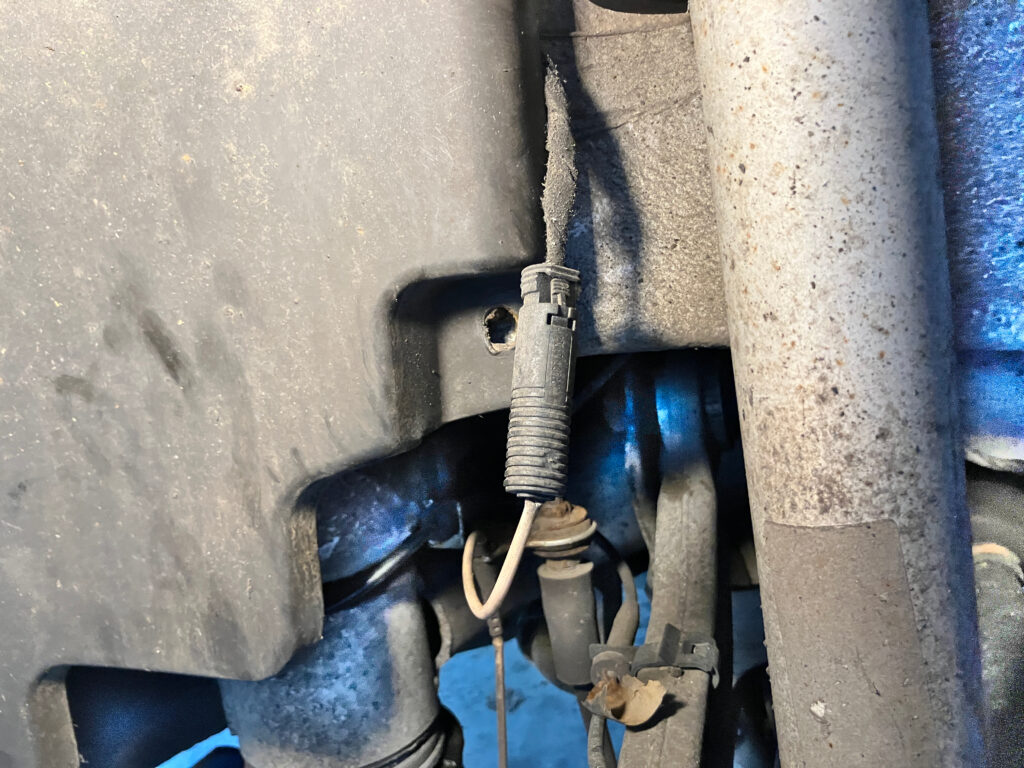
…and you slide connector to where you can grab and separate it.
The end that goes into the brake pad (which in my case was completely missing) just snaps in place, held by a little contact spring, but corrosion may make the old and new ones difficult to remove or insert by hand. A small pair of pliers aids in the process.
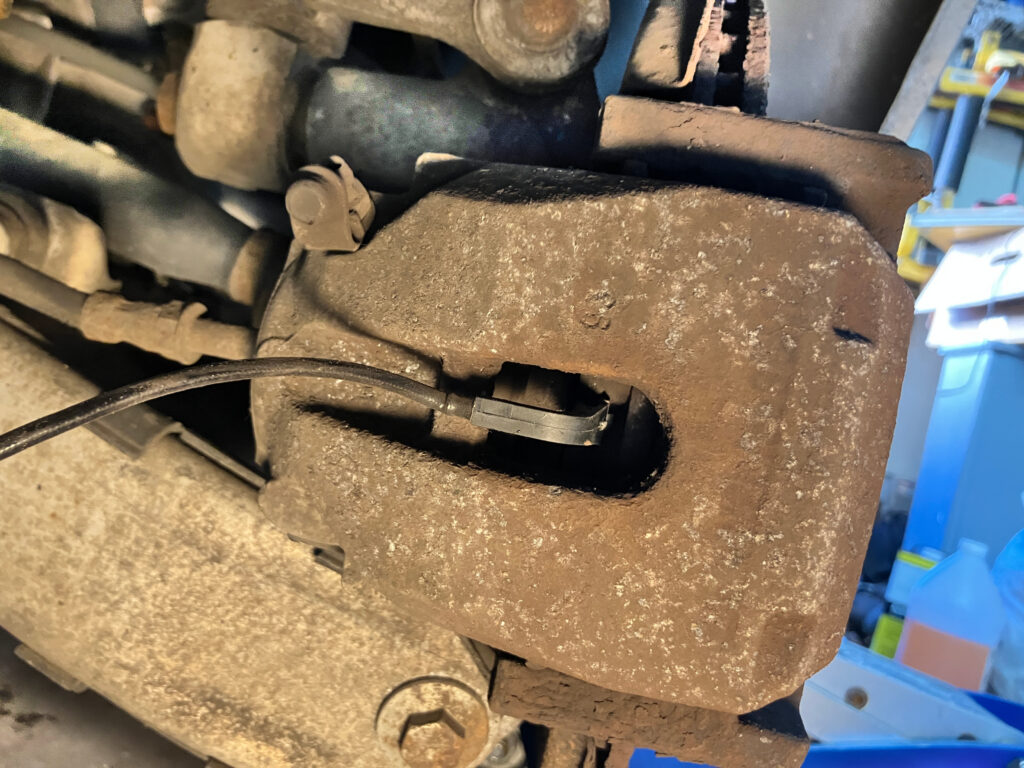
The new sensor in place.
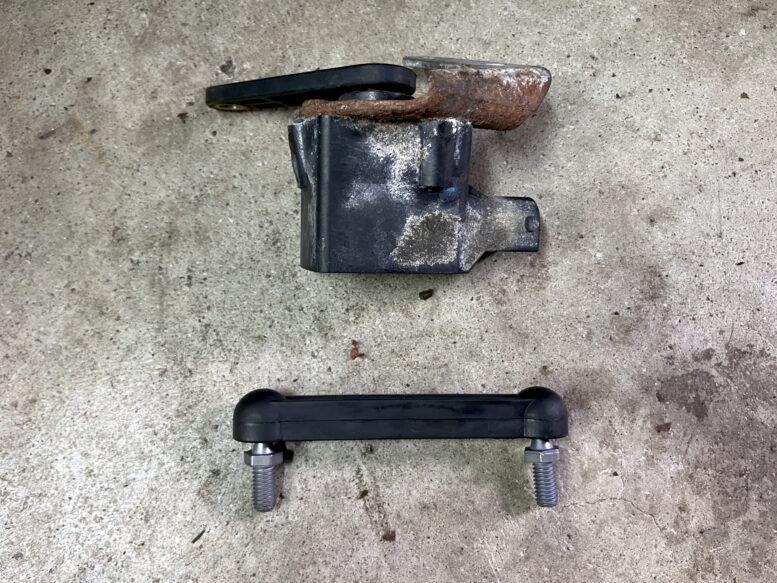
That was it for the brake pad sensor replacement, but while I was in there, another issue jumped out at me—the plastic lever between the rear ride height sensor and the body of the car was dangling, and the ball-post fastener that should connect it was so corroded that there was no snapping it back into place. You never know when parts will be ridiculously expensive (see my piece about the cabin air duct) or no longer available (*cough E30 horn contact cough*), so I was relieved to learn that the lever, p/n
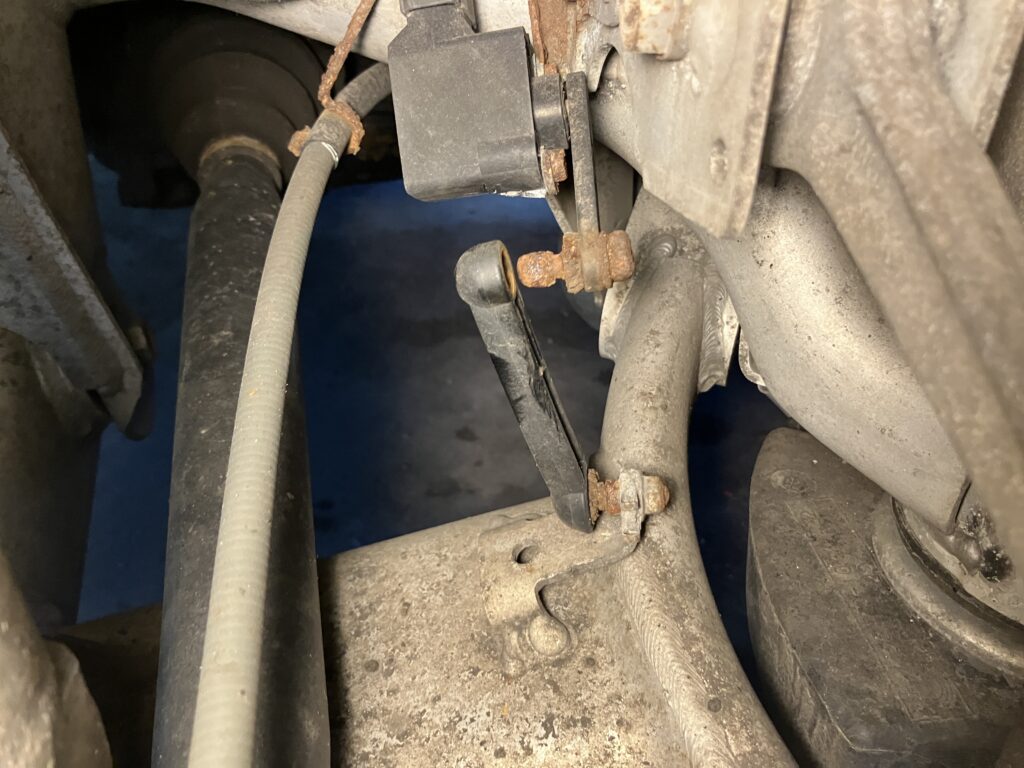
Not a big deal, so why not fix it?
I get addicted to Amazon next-day parts delivery and frustrated when I actually need to wait for something, but obviously it wasn’t a big deal to put the wheel back on. It’s not like the car was half-apart sitting on the lift and I needed to use it the next day or anything. So when the part arrived, I double-jacked the car again and had at it.
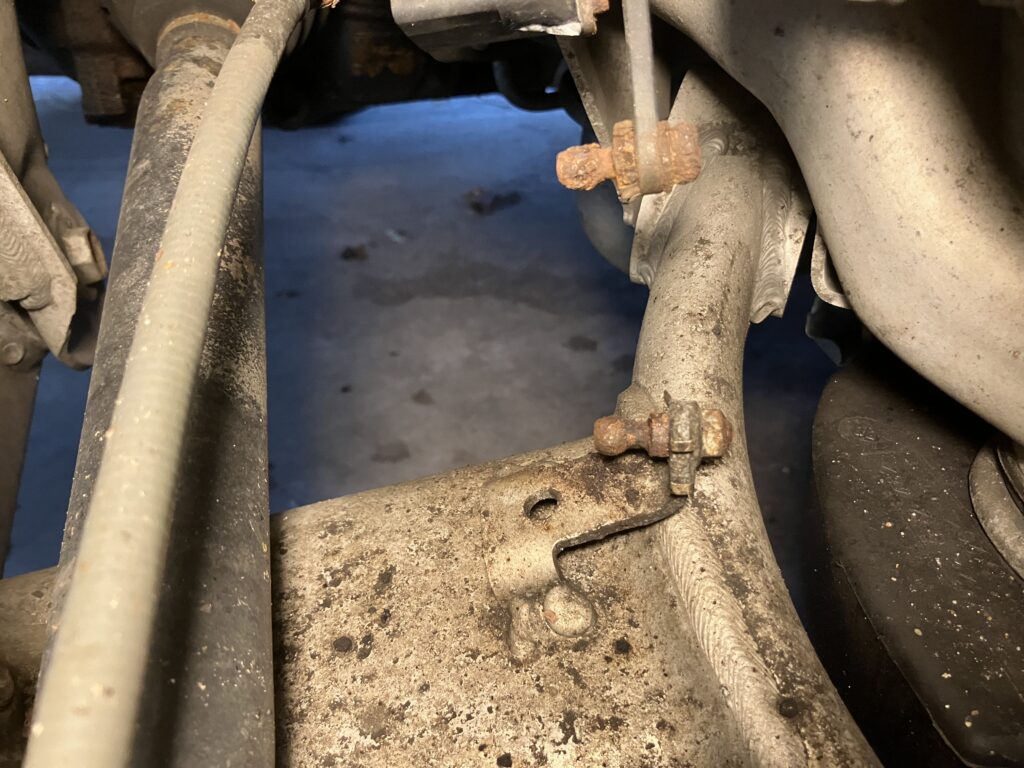
Easy, right?
The remaining ball-post attachment to the original lever popped off as soon as I tugged on it, and both 10mm nuts were badly corroded. I used my recently-purchased induction heater on the lower one, but since the upper one was attached to the plastic arm that was an integral part of the sensor itself, the heat would’ve melted it, so I had to go old-school on it. The best way to do that and not risk breaking it was to remove the sensor from the car.
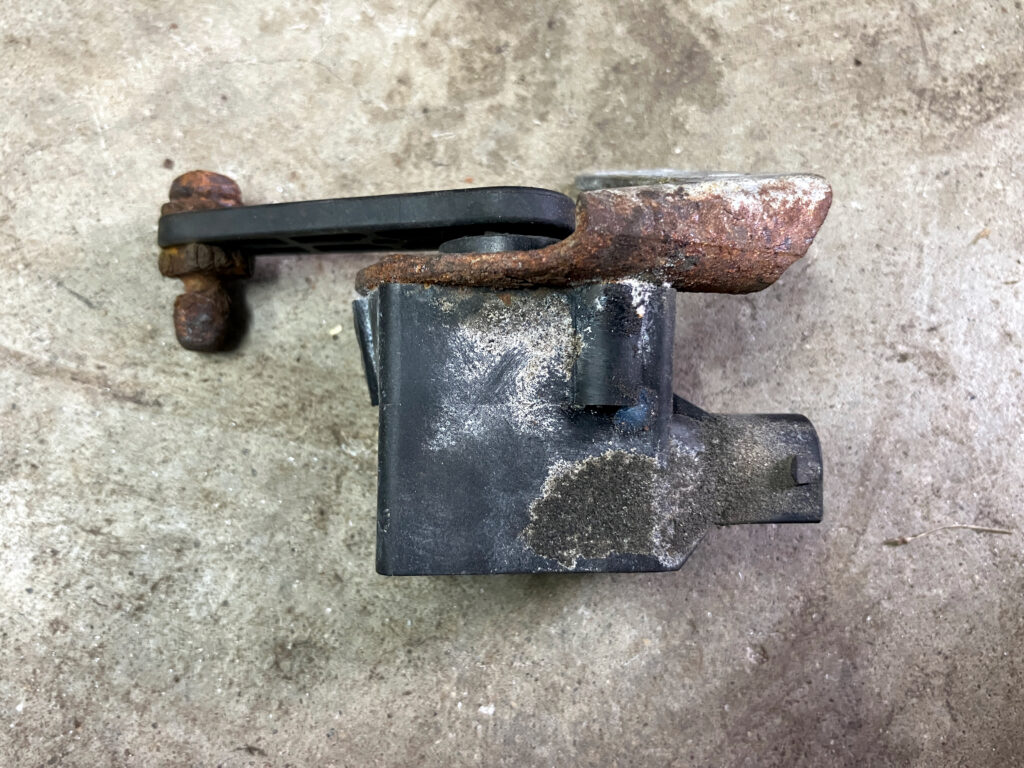
Crusty but serviceable.
Since the new piece came with its own ball-posts, I didn’t care about ruining the original one, but I really didn’t want to break the sensor’s plastic arm getting the old post off, so careful application of SiliKroil and leverage were essential. The stability of the garage floor allowed me to put a 9mm wrench with a pipe on the end onto the base of the ball-post, and a 10mm socket on a 1/2-inch driver on the nut, crank away, and not care if the post unscrewed or snapped (it did the former).
And with that, operation Small Stuff on the Back of the E39 was complete.
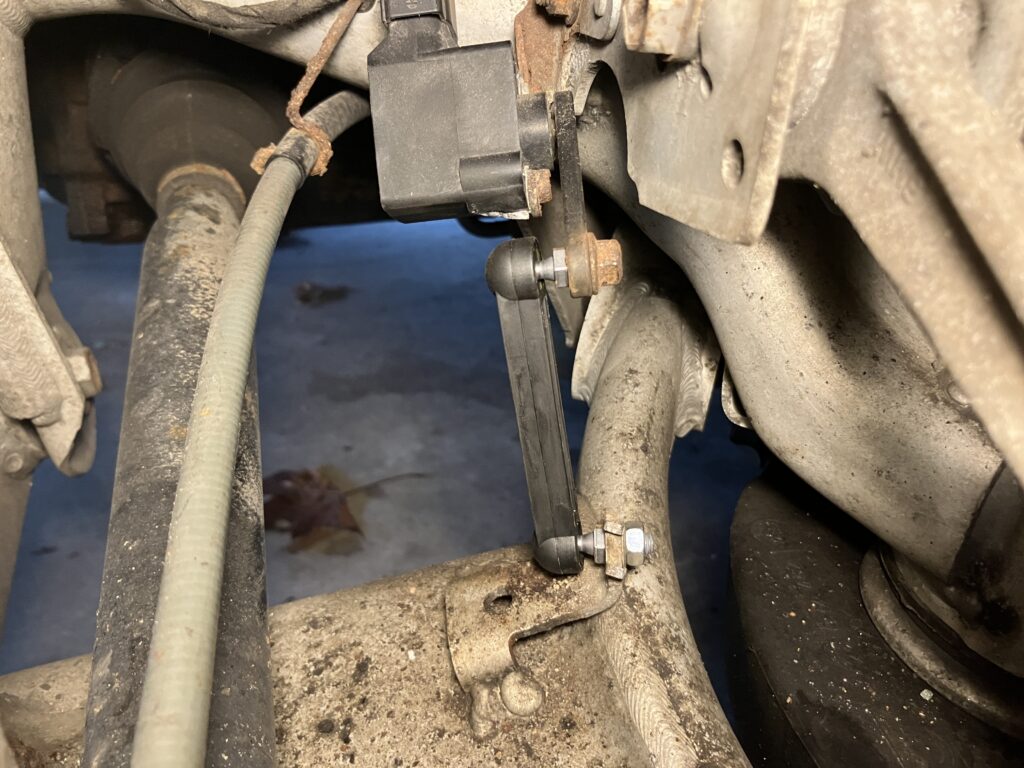
Small wholly-contained repairs make me so happy.
Unfortunately, while the corner of the car was up the air, I saw something concerning. I was aware that the back corners of both rocker panels had some rust-bubbling, and had meant to either grind and treat it myself or try to find some old-school shop who could arrest it, but I now see that the situation at this corner has spread further than I was aware of. I’ve been daily-driving this car for ten years, and I love it, but this is one of those harbingers of what’s to come that you can’t ignore. I guess I’ll begin thinking about what might replace it.
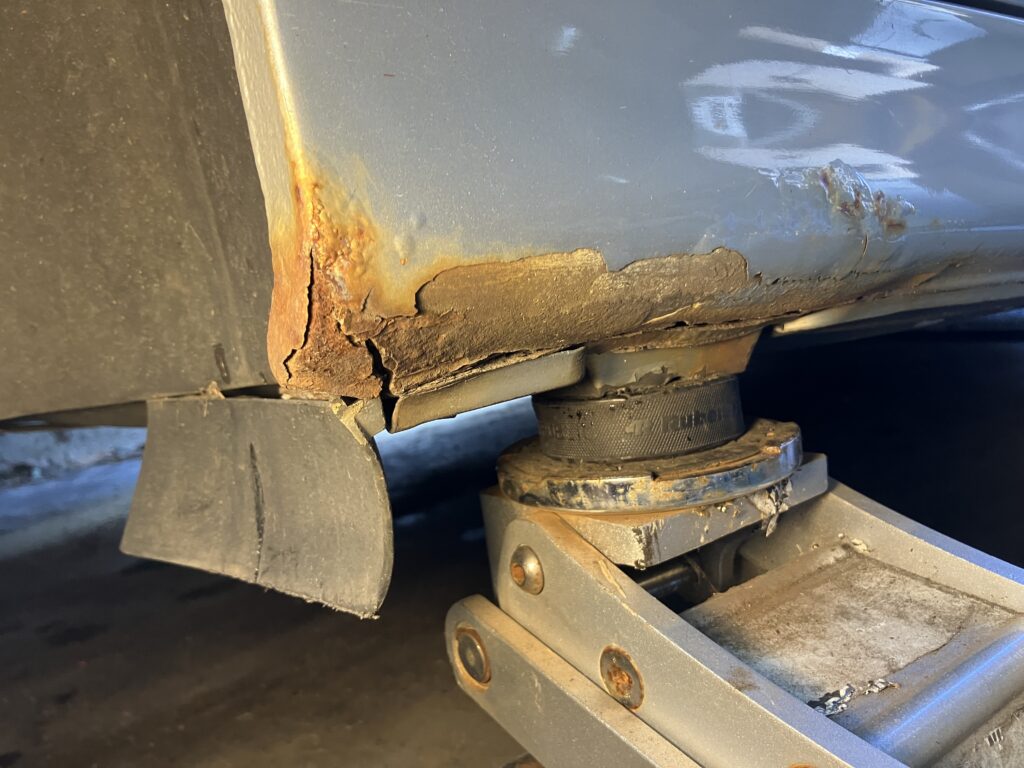
The poor thing.
Rob’s newly-expanded book The Best Of The Hack Mechanic™: 40 years of hacks, kluges, and assorted automotive mayhem, is available on Amazon here. His other seven books are available here on Amazon, or you can order personally-inscribed copies (including the new Best Of) from Rob’s website, www.robsiegel.com/books.