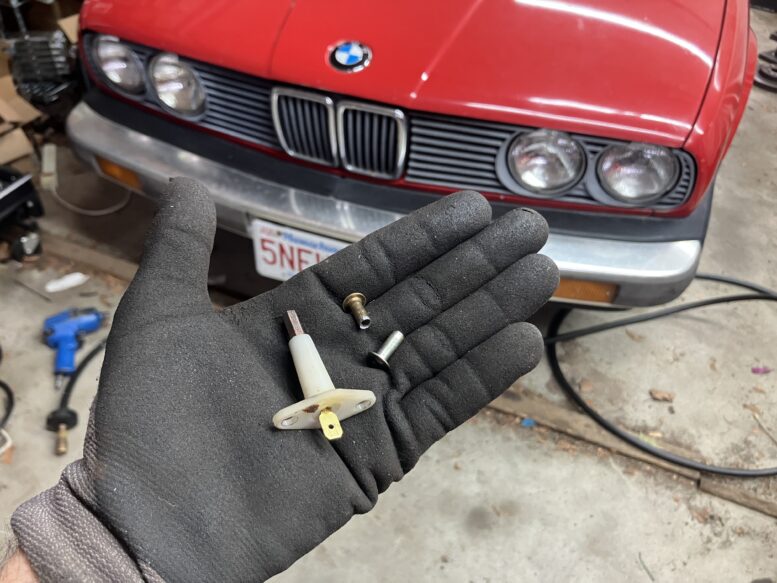
Last week, prior to getting the FrankenThirty inspected, I found that the horn didn’t work. I stepped through the necessary electrical troubleshooting to rule out the relay and its wiring to find that the horn contact behind the steering wheel itself was broken. I kluged it into functionality by putting the spring and the pin contact in a stiff section of heat-shrink tubing, but I knew that this wouldn’t hold, and set myself searching for a permanent solution.
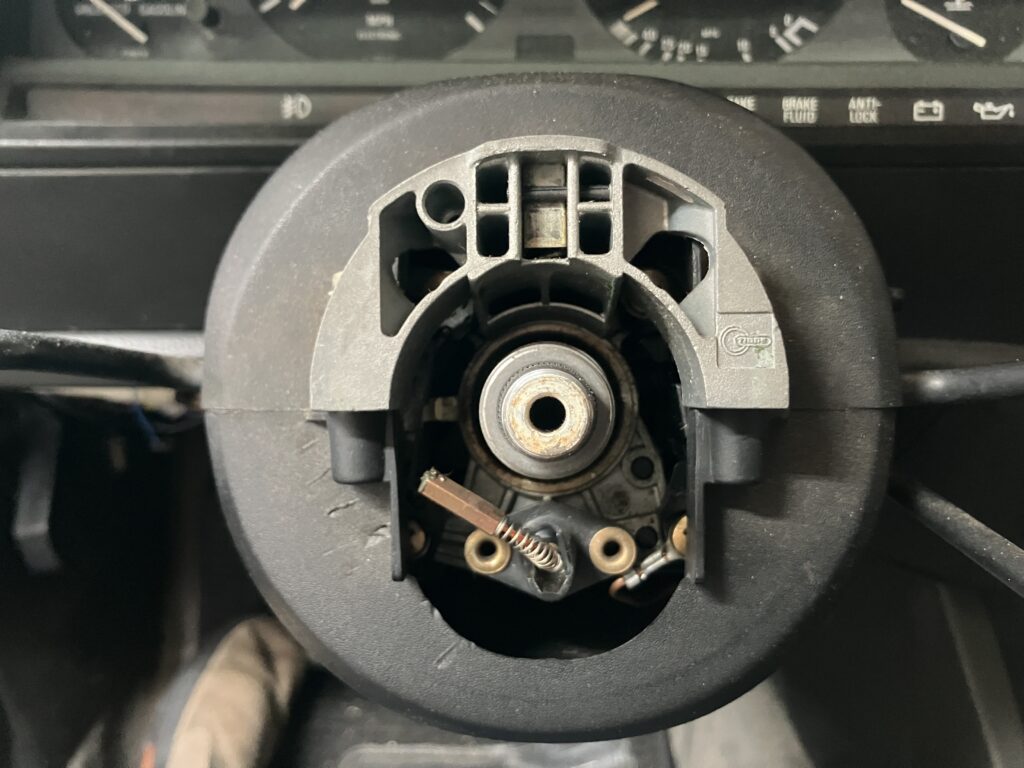
The busted contact…
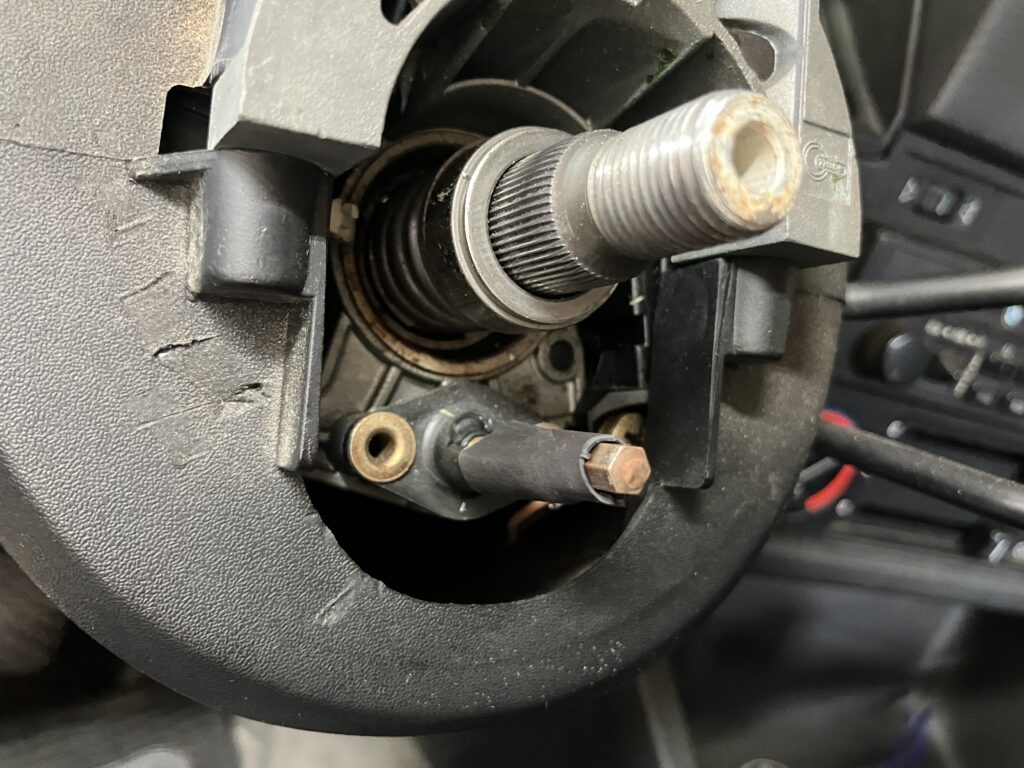
…and my short-term solution.
As I said last week, I was surprised to learn that the horn contact (part number 32331350750) is used on essentially every BMW built between about 1965 and the early 1990s except the 2002, and is no longer available. A search on eBay revealed that folks were asking $70 for contacts where the ears on the plastic housing were either broken or repaired, and over $100 for “a new reproduction part made for the DIY minded individuals.”
The one less-expensive option was from eBay seller oshmotorworks—$35 shipped for what I assume is a 3D-printed replica of the plastic housing. The eBay description appeared honest and complete, saying “From years of use, original housings are brittle, and new replacements are no longer available. I purchased a new one with the brush and spring, and found the spring and brush to be low quality, hence I engineered these replacement housings. Installation: If you have a broken assembly and the spring and brush are intact, this will be a quality fix. If you not have a good brush and spring, do not purchase this housing. On your old unit, file or grind away the top face until it is flush with boss. Once that is done, the spring and brush will pull out from the backside. This replacement housing is engineered with a pocket on the back side. It may require using a 10mm drill bit to deepen the pocket. Do not use a drill, ream the housing by hand. Once the pocket is prepared, use a 2 part epoxy to secure your spring and brush assembly. Allow to fully cure. Fasteners are supplied to attach your new assemble to the steering hub.”
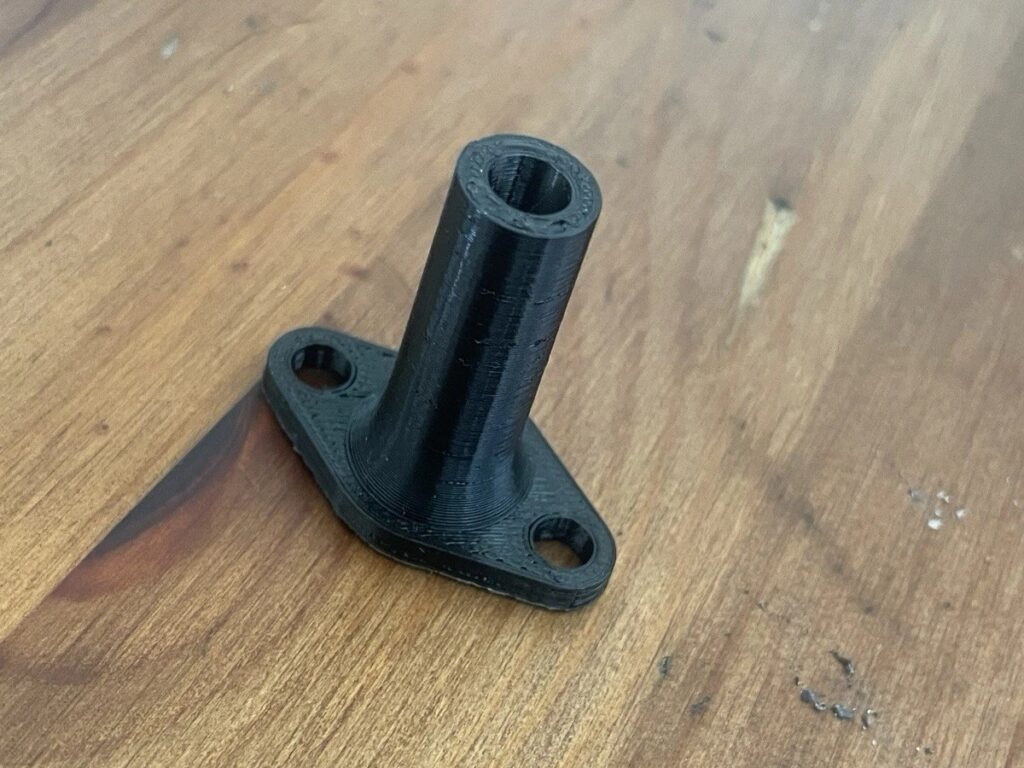
The horn contact housing from eBay seller oshmotorworks.
Buying this seemed like a slam-dunk. I was about to mash the buy-it-now button when I remembered that my Lotus Elan needed similar horn contact surgery, and I tried a similar technique that didn’t work because the spring and pin contact were damaged in a subtle way that I hadn’t seen, so I essentially had to pay for the parts twice.
Then I had a thought. Tim Donahue in Connecticut sells used E30 parts through his business “BMW Buyers of New England.” He was enormously helpful to me when I was resurrecting the FrankenThirty, his prices were reasonable, and being nearby, the parts arrived quickly. I told him the situation and was completely honest about what I saw on eBay for prices for damaged or repaired horn contacts. He said that he’d sell me an intact undamaged one for the same price as the compromised eBay units, but the catch was that it was still attached to the collar for the steering column lock because he didn’t want to risk damaging the contact by drilling out the rivets. He sent me a pic of a collar that included a lock cylinder for which he didn’t have the key, but said he had several and would find the one with the best horn contact.
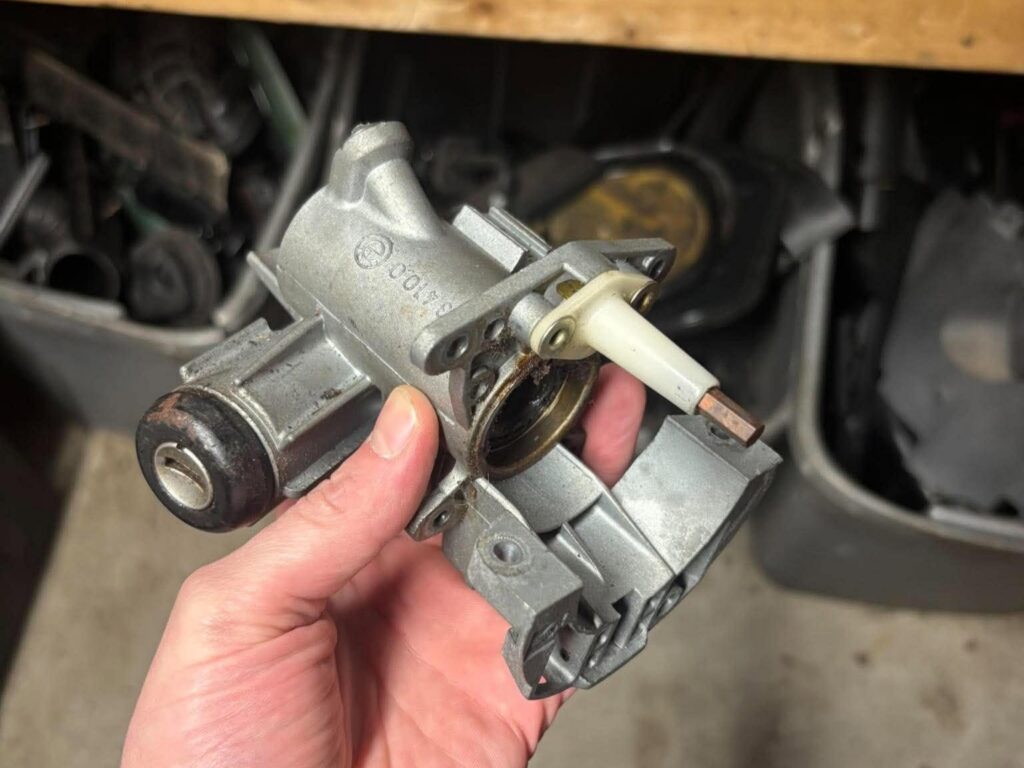
Photo Tim Donahue
Now, normally I’d go through all sorts of backflips to avoid spending $72 for a part that I’d already temporarily fixed with a piece of heat-shrink tubing, could probably permanently fix with a housing from a pen, and there was a likely $35 solution, but these sort of relationships with people who sell used parts are important. As I described a few months ago about buying used parts from “Big Al” Taylor, I don’t want to be someone who makes them go through work to find a part and quote shipping, and then goes “Uh, never mind.” Besides, this was not just a fair price, but a better one than I could find for an original intact horn contact. So I bought it.
When it arrived, I set about to drill out the rivets. I set the piece up on my drill press and tried drilling them out from the back so I wouldn’t damage the horn contact’s plastic, but had clearance issues. Fortunately a Dremel tool with a grinding bit dispatched the rear faces of the rivets perfectly.
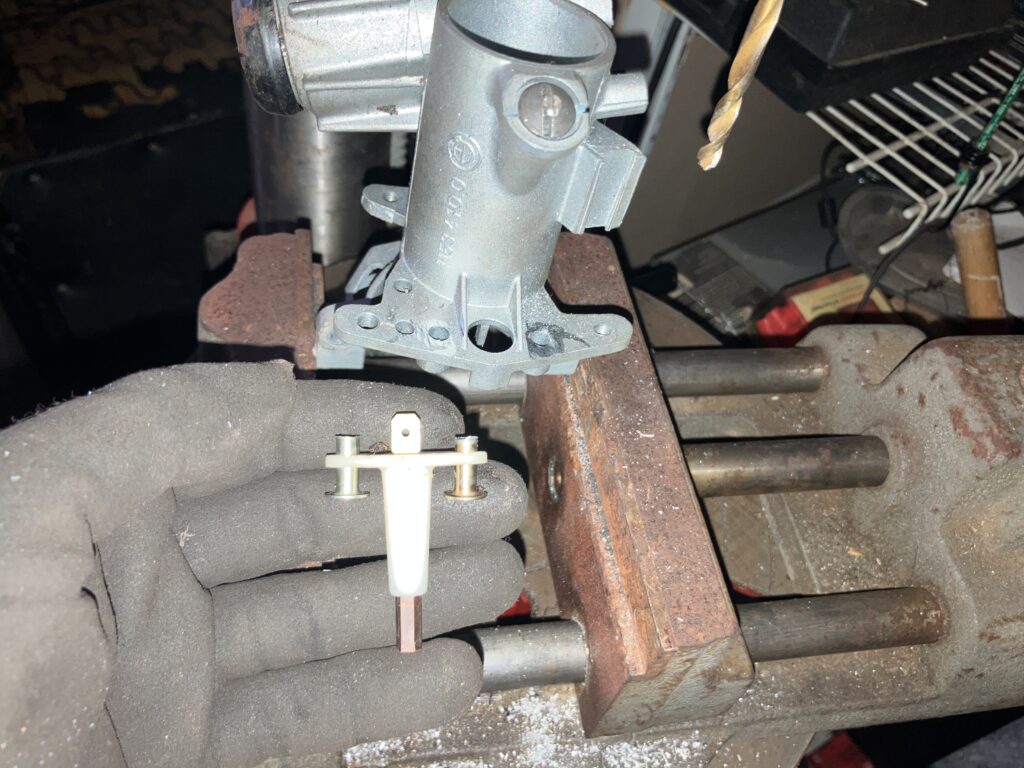
A clean extraction.
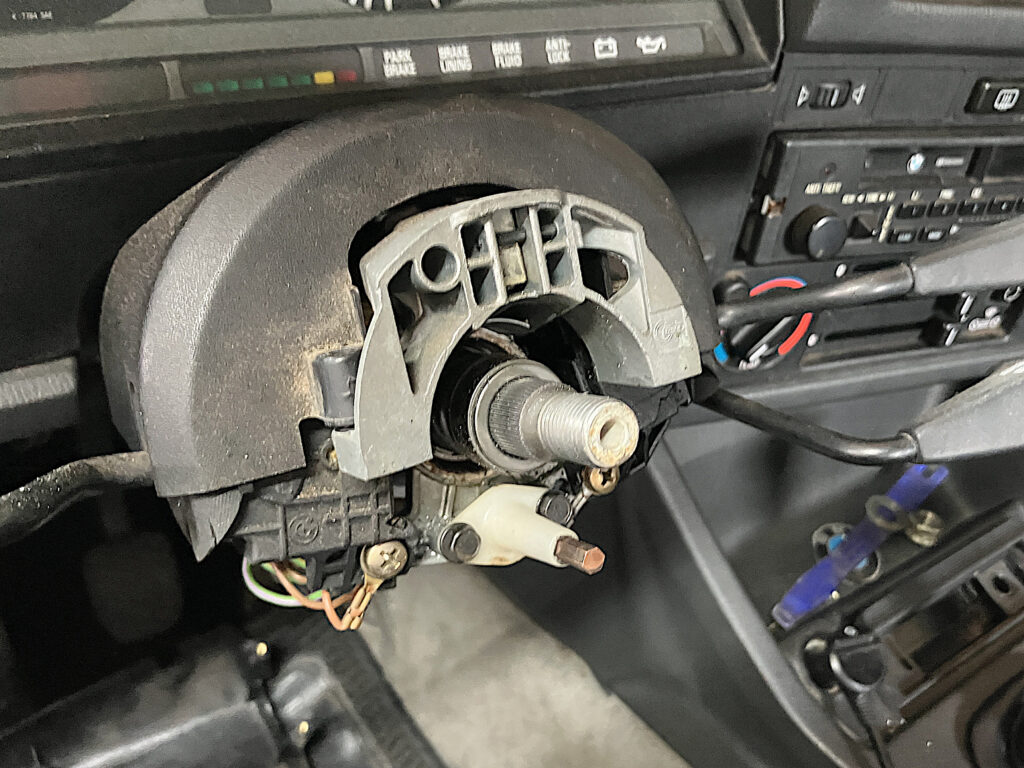
Now I needed to pull the original unit off the car. Four big Phillips screws needed to be removed to drop the lower cover from the steering column.
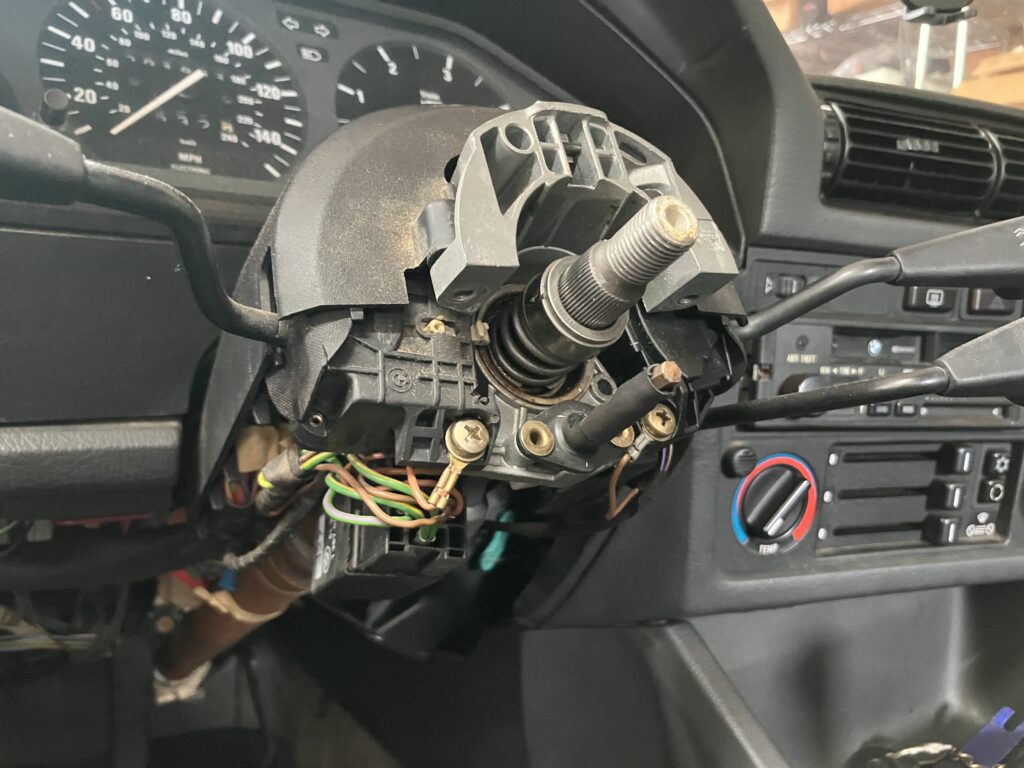
Access granted.
This time, both because access was better from the front and because I didn’t really care if I marred the plastic on the broken horn contact, I Dremeled the front heads of the rivets off.
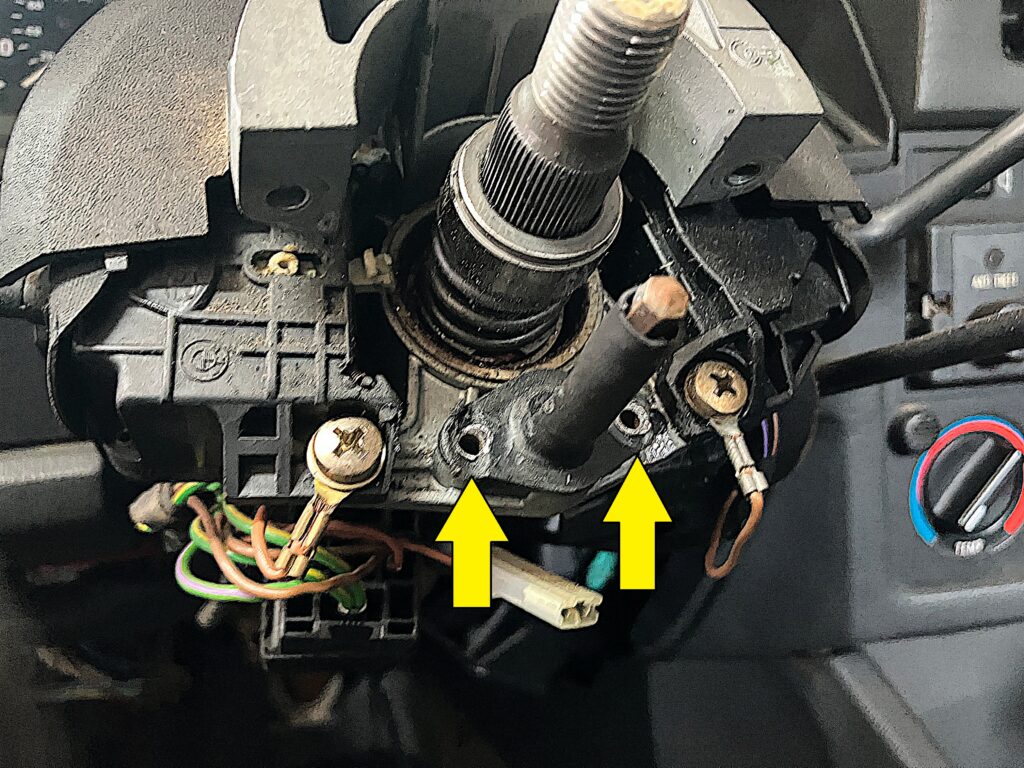
Not pretty, but easy.
And with some new M5 fasteners, the deed was done.
Fini.
I’m unlikely to fundamentally change my thrifty Hack Mechanic ways anytime soon. But when you have a parts channel that’s of value to you, sometimes it’s better to be certain to keep that skid greased than to look for ways to save what comes to less than the cost of a pizza dinner for the family. (At least here in Boston.)
—Rob Siegel
____________________________________
Rob’s newly-expanded book The Best Of The Hack Mechanic™: 40 years of hacks, kluges, and assorted automotive mayhem, is available on Amazon here. His other seven books are available here on Amazon, or you can order personally-inscribed copies (including the new Best Of) from Rob’s website, www.robsiegel.com/books.