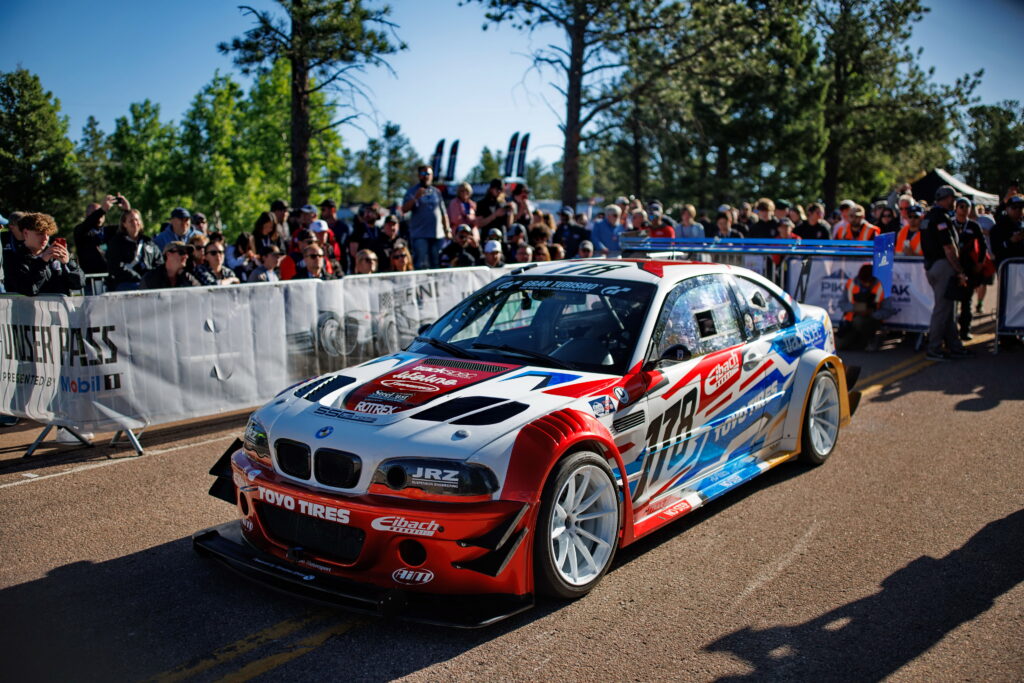
Tom Tang will drive his 654hp E46 M3 (750+hp when the nitrous is turned on) up Pikes Peak as fast as he possibly can on June 21st, with the goal to get up in less than 10 minutes. The biggest obstacle to doing that isn’t Tang’s driving ability or the car, but the circuit itself.
Tom Tang will be taking on the Pikes Peak International Hill Climb for the third time in 2026, and we’ll be with him along the way, reporting on his preparation and planning here on BimmerLife.com, followed by a report on the big event in BimmerLife magazine. In this third installment, we learn more about the circuit.
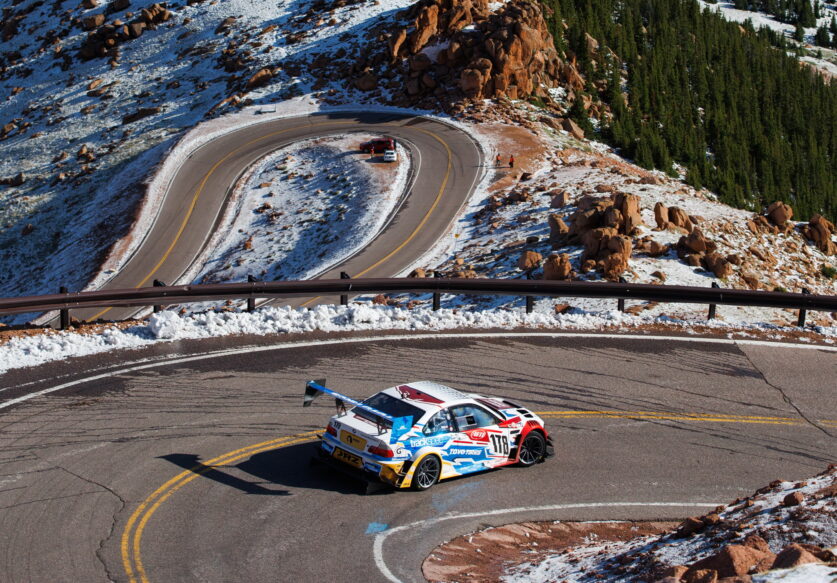
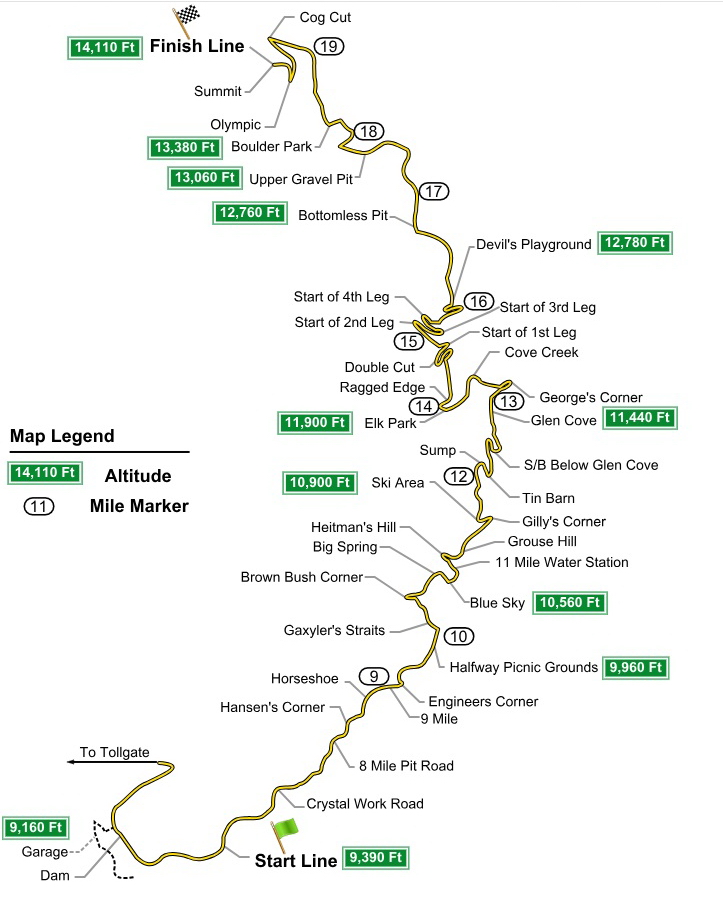
The Pikes Peak Hill Climb circuit is the most scenic and most dangerous stretch of road in the U.S. that hosts a motorsport event. The circuit, which has been fully paved since 2011 (it used to be dirt at the top), covers 12.42 miles, has 156 turns and climbs to an elevation of 14,115 feet from a start line elevation of 9390 feet. It’s undeniably dangerous. If you go off the road on the bottom half of the circuit you’ll head into trees and if you go off toward the top you’ll go down a sheer cliff covered with rocks. It’s all part of the adventure.
A big part of what makes Pikes Peak so challenging is that the circuit changes dramatically from the bottom to the top. “It’s almost like three very different circuits,” says Tang. “The lower third is probably the closest to a road course. It’s high speed, it’s relatively smooth and there’s a lot of banking that you can take advantage of, so you drive it like a road course. The middle third is almost like a rally course. There are a lot of switchback hairpins and drag racing between hairpins, then you have to get the car slowed down, rotate it into a tight turn and drag race to the next hairpin. The middle third is the steepest part of the climb, with anywhere from seven to fourteen degrees of grade.”
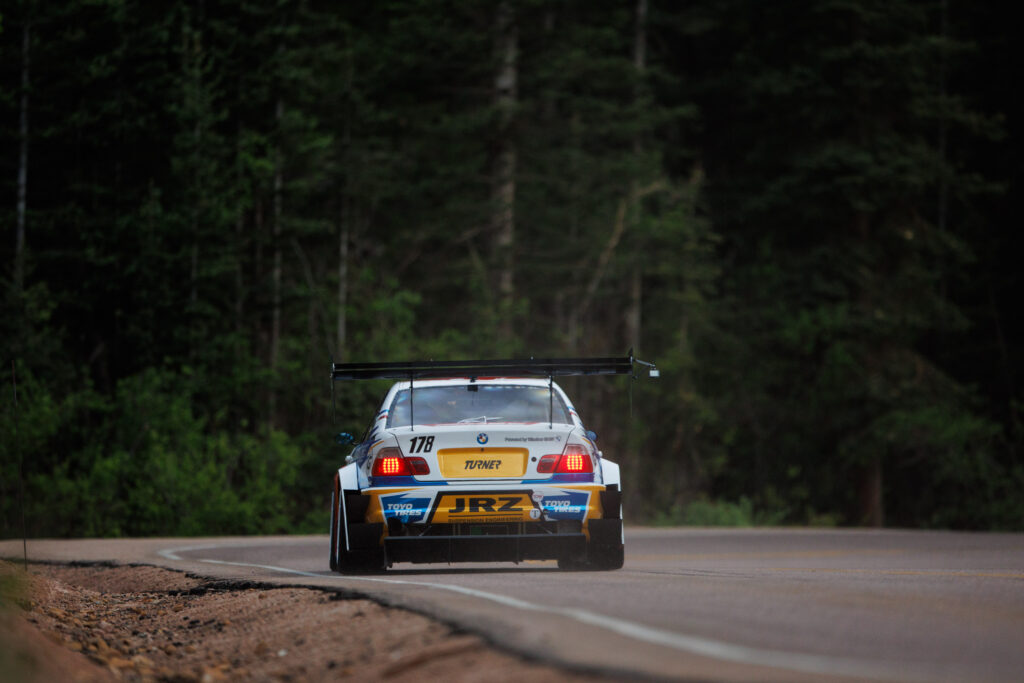
The most scenic and dangerous part of the course is the top third, where going off would be disastrous, but the road surface there is also not conducive to driving smoothly. “In the upper third it flattens out but it’s very bumpy because of all the rain, snow and temperature changes it gets during the year,” says Tang. “You need a more suspension travel than you do in the first two thirds of the course, and the big challenge for everyone is how to optimize for that with the setup. If you optimize for one, you’re making tradeoffs for the others.”
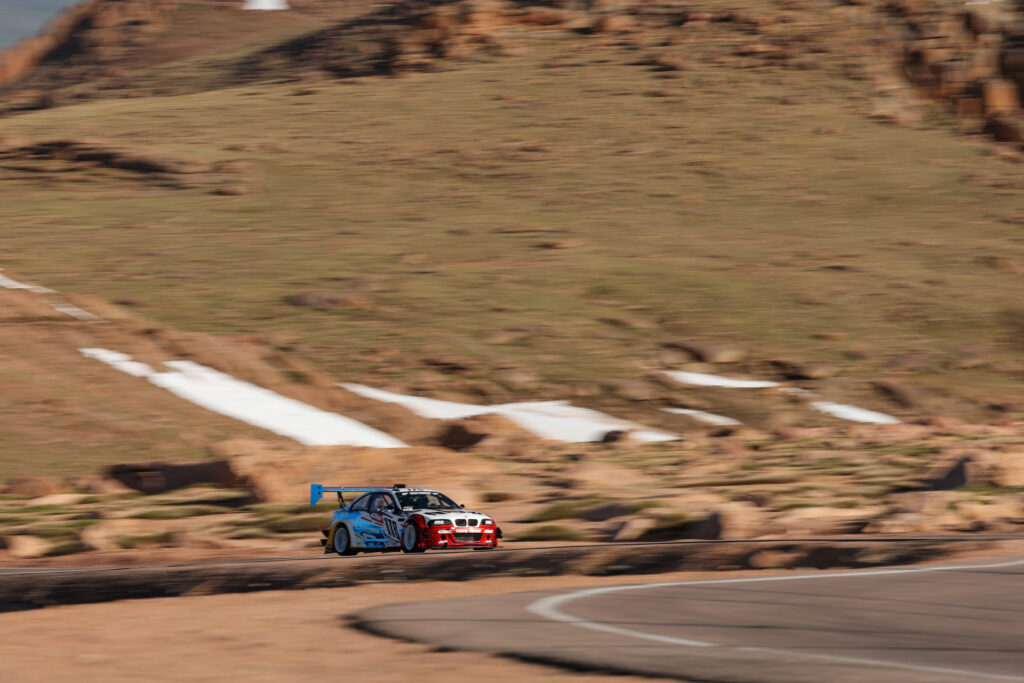
What adds to the challenge is that you can’t go to Pikes Peak for a test day or practice runs until the day of the race itself. You can run it on a simulator, as Tang does, but a simulator doesn’t account for road surface changes or weather conditions that impact tire grip. “Pikes Peak is really challenging in that you can’t go there and test ahead of time, as you can at a track,” says Tang. “Pikes Peak is a public road 364 days out of the year. There’s only one day for the race that they shut the whole thing down and there’s only so much daylight.”
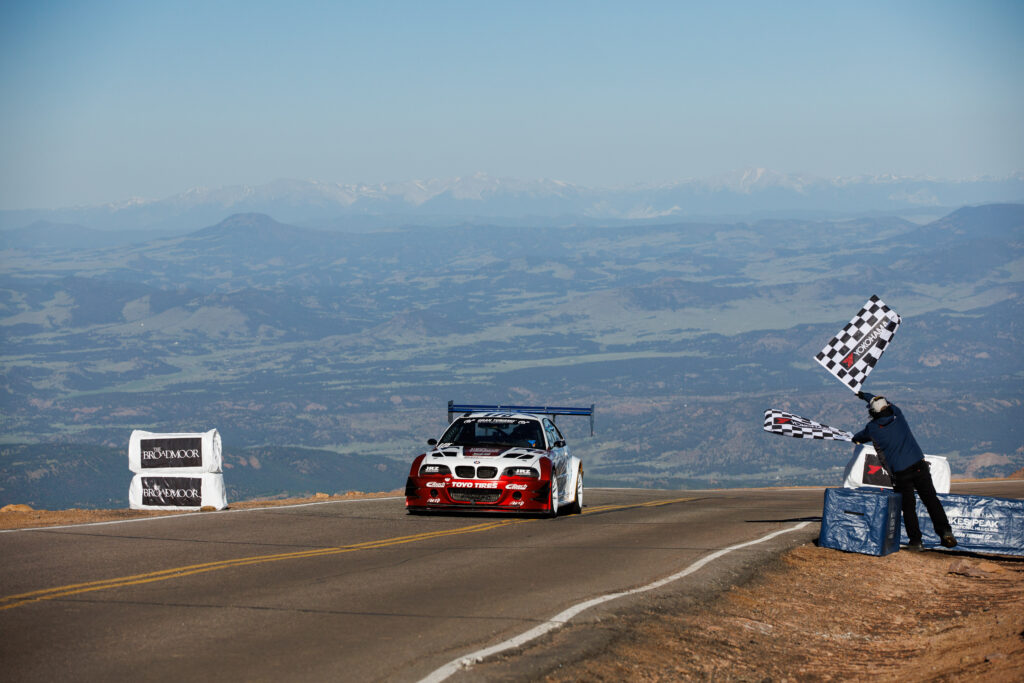
Tang has the benefit of a trick JRZ active suspension on his E46 M3, but even with that the car is better on some parts of the circuit than others. “My car is really good in the lower third and the upper third,” Tang says. “I’ve optimized the setup more for high-speed transitions and to carry a lot of momentum through corners. That works well in the bottom third in particular and it works in the upper third too, although you’re way down on power by then. Where I struggle the most is the middle third, because I don’t have as much horsepower as some of the other cars.”
Competitors also have the added challenge of animals occasionally wandering out into the road. After all, you’re in the Colorado Rockies. Mountain goats have walked out into the road during the event, and you have to make a judgement call based on the size of the animal whether you try to avoid it or run right over it. It’s all part of what makes the Pikes Peak Hill Climb the ultimate motorsport challenge.
—David Haueter
[Photos courtesy Tom Tang]