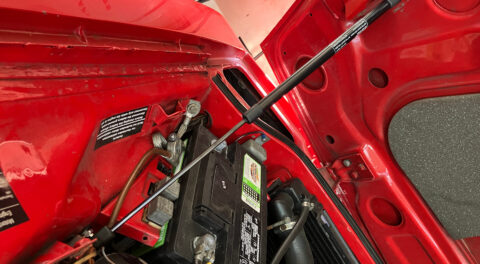
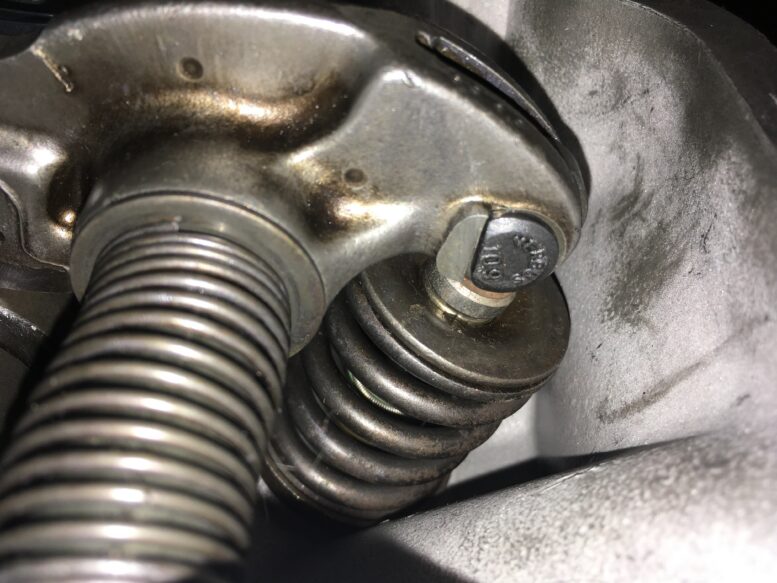
Well, Bertha and I aren’t going to The Vintage after all. I have a dear 84-year-old cousin with whom Maire Anne and I have done some travel. She has slow-moving lung cancer, but right now she feels fine and wants to enjoy life. She called us last week and said “I think I have one more trip left in me. Do you want to go to Spain?”
So we’re going to Spain.
I’ll miss my Vintage friends, but it will be there next year, and my cousin may not be.
But before this happened, as I was poking around Bertha’s engine compartment and looking at the valve cover, I remembered something dating back decades.
If you own a vintage BMW with manually-adjusted valves as was the case in the M10, M20, and M30 engines in models up through the late Eighties, adjusting the valves is part of routine maintenance. These engines use so-called eccentric adjusters that are little discs with an off-center hole in them. Rotating the disc reduces the clearance between it and the top of the valve stem. Clearance is set on a dead-cold engine at 0.006 to 0.008 inches on an M10 engine, 0.010 to 0.012 on M20 and early non-Motronic M30 engines, and 0.012 to 0.014 on Motronic M30 engines. (For more detail on valve adjustment, see this piece.)
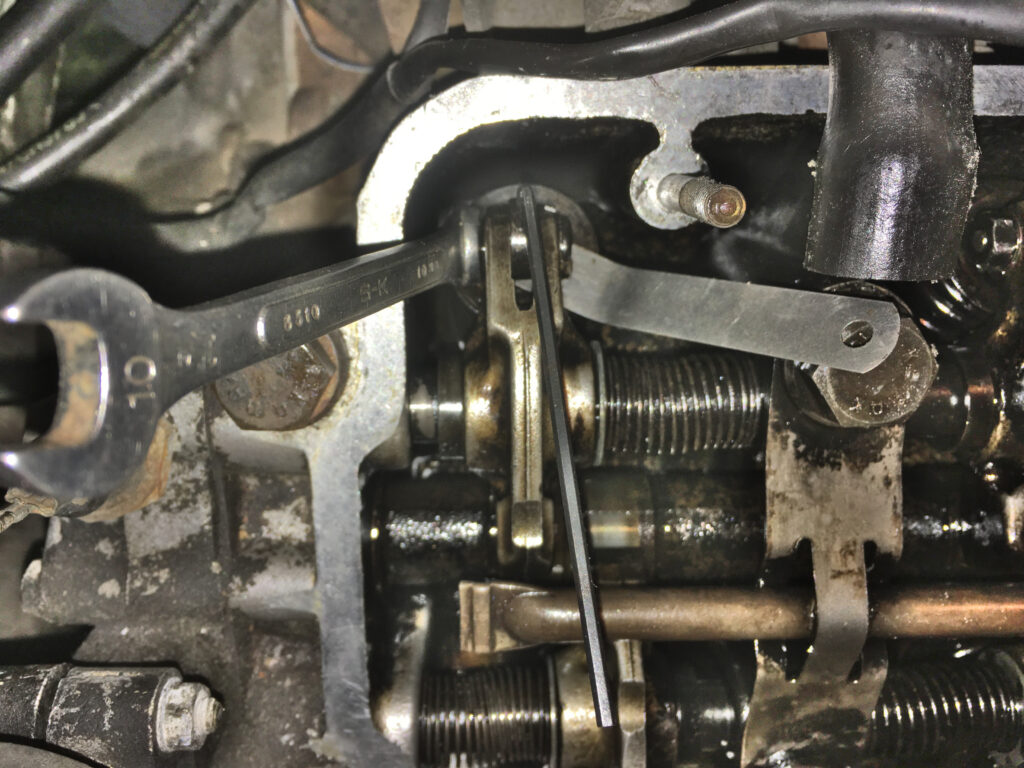
Old-school valve adjustment with a feeler gauge, 10mm wrench, and Allen key or other right-angle tool to rotate the eccentric is a necessary part of maintenance on any vintage BMW.
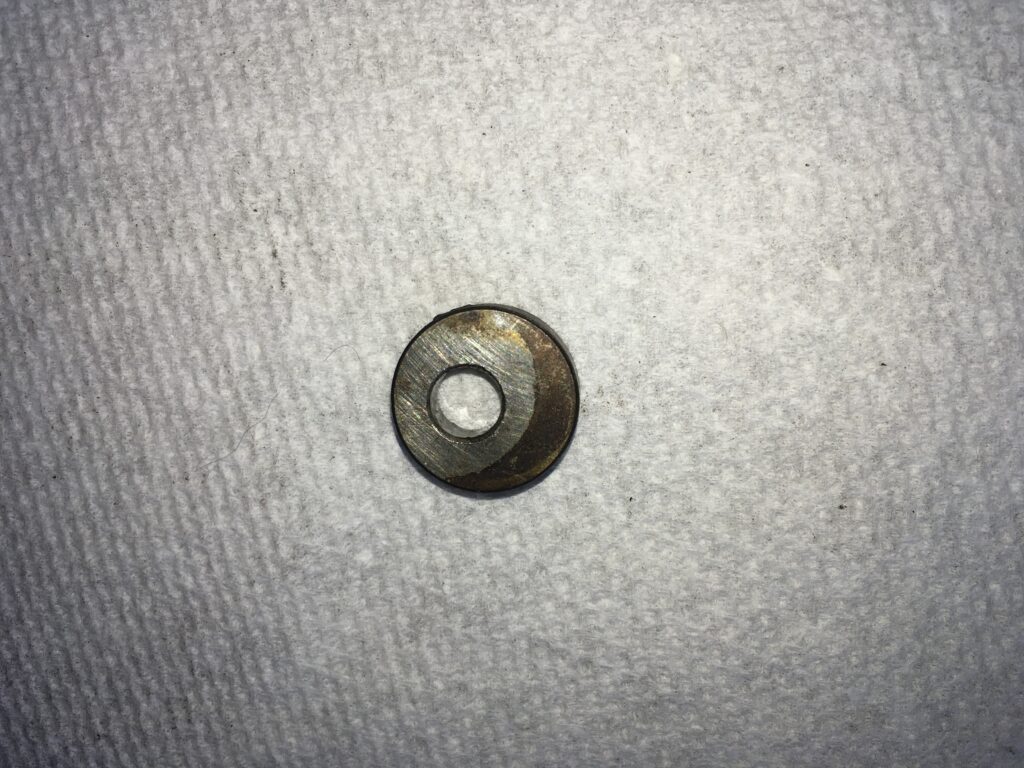
It’s call an “eccentric” not because it’s a little weird, but because it’s literally eccentric.
If you hear a persistent tick-tick-tick from under the valve cover, that’s almost always due to a valve with too much clearance, meaning that the eccentric needs to be rotated closer to the top of the valve stem.
On a high-mileage car, you may have the experience of trying to adjust the valves, and finding that the adjusting eccentric runs out of room, rotating completely around without coming in contact with the feeler gauge. When that happens, it’s almost always due to wear in the rocker shaft, the bushing in the rocker arm, or both. If you pull the head to rebuild it and bang out the rocker shafts, you’ll almost certainly find visible wear grooves.
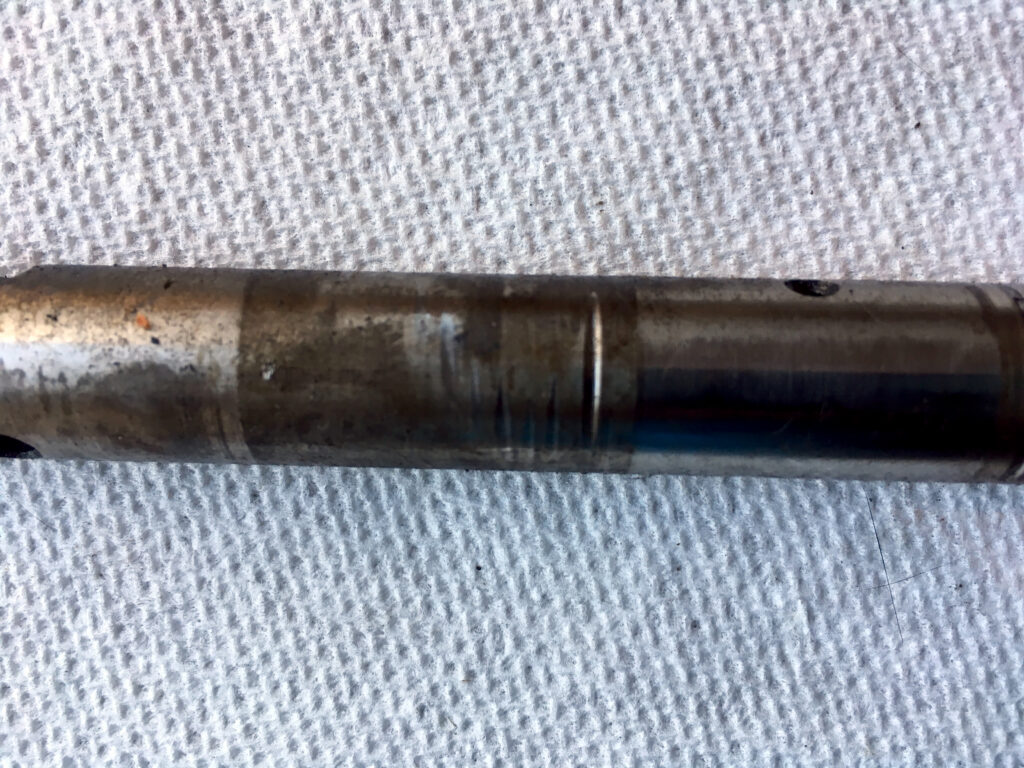
Groovin’… on a sunny afternoon…
When you find this on a head you’re tearing down, obviously the rocker shaft and arms need to be replaced. And make no mistake—it means that the engine is nearing the end of a wear cycle, and other components are likely to be worn as well. But we can’t always drop everything and rebuild an engine. It’s not unreasonable to want to get the valve adjusted, get rid of the tick-tick-ticking, and put off the head removal and rebuild until winter (or until a rich uncle leaves you money). Fortunately, there’s a cool trick I learned decades ago that lets you do exactly that.
First, a little context. Engines basically have one of three valve adjustment methods. There are old-school manually-adjustable valves like I’ve described above. There are modern engines with hydraulic lifters that are self-adjusting. And there are shim-and-bucket configurations where valve shims (also called “lash caps”) are placed on top of the valve stem, the bucket is placed over them, clearance is measured between the back of the cam lobe and the bucket, and the shim is replaced with one of the proper thickness to produce the proper clearance.
What the “cool trick” is is to use one of these lash caps on the top of a valve stem to effectively lengthen it and make up for the fact that the eccentric can no longer reach it. I’ve long used the ones from an Alfa Romeo, as their 33mm diameter fits almost perfectly over the top of an M10/M20/M30 valve stem. I’m almost certain it was Terry Sayther who turned me onto this trick 44 years ago when I was living in Austin and bought some ratty 2002 with loud adjustable valves. I believe that the valve shims used on the BMW S14 and S38 engines in the E30 M3, E28 M5, and E24 M6 are the same 33mm diameter as the Alfa shims and thus will also work, but be careful because the M88, S50B30, and S50B32 engines use 31mm valve shims, and I think those are too small. If you buy 33mm valve shims for a vintage Alfa engine, you’ll know they’re the right ones. They’re available in thicknesses from 1.3 to 3.5mm. Get one of the thin 1.3mm ones, or close to it. You don’t need it to be thick. Again, you’re not trying to use the valve shim to set the clearance—you’re still going to use the eccentric to do that.
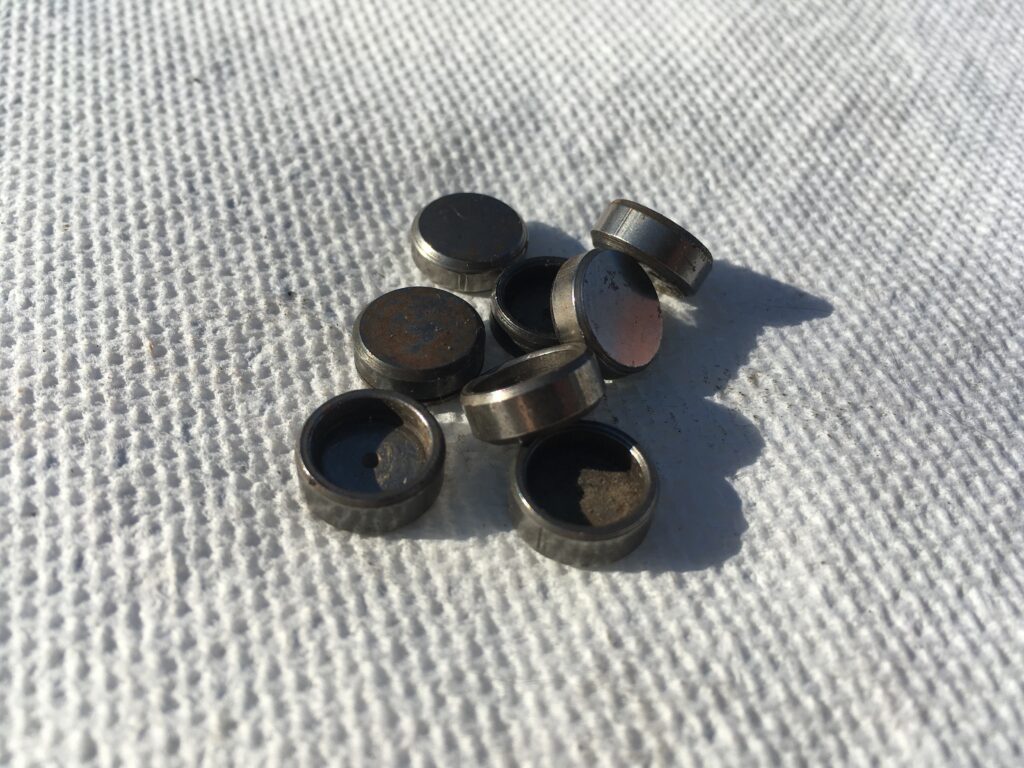
I’ve literally had these in a drawer in my knick-knack box for 44 years.
To get the lash cap onto the top of the valve stem, what you want to do is:
- Use some paper towels or clean rags to block off the oil drain holes so if you bobble the valve cap and drop it, it doesn’t slide down into the oil pan.
- Rotate the engine so the valve is neither being opened by the cam lobe, nor is it on the flat part of the back of the lobe where the piston is at the top of its stroke (you don’t want to depress the valve into the crown of the piston).
- Use something like a rubber mallet that has a wooden handle you can press against the cup on the top of the valve spring, and a nice big head you can grab onto and lean against with your upper body. Carefully depress the valve spring, and slide the shim on top of it without pinching your fingers.
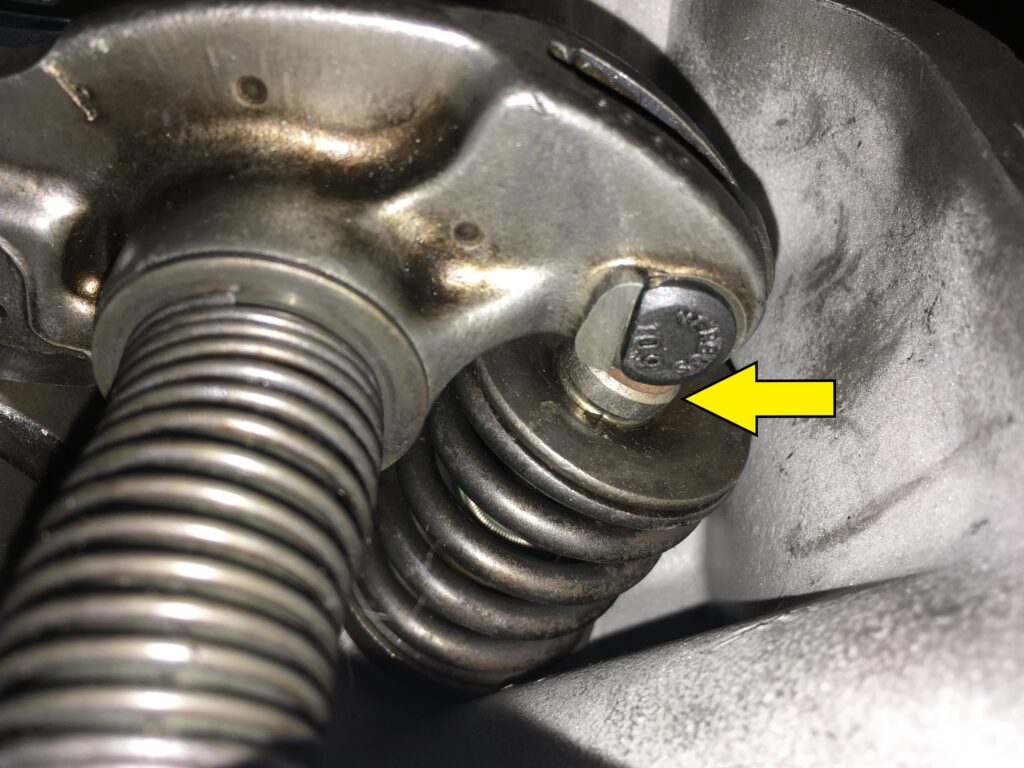
Ta-DA!
There’s actually another reason why you might need to use lash caps, and that’s with a reground cam, which is why there were shims in Bertha. It has an Iskendarian 300-degree cam in it, and when I installed it 40 years ago, I didn’t understand why the eccentrics in my freshly-rebuilt head spun around. Just to give equal time to another option to lash caps and provide an explanation for the regrind issue, Ireland Engineering sells oversized eccentrics. Their website says “Oversize eccentrics are often required to adjust the valves to spec when using a cam with a smaller base circle (typical on regrind cams). We like them better than lash caps.”
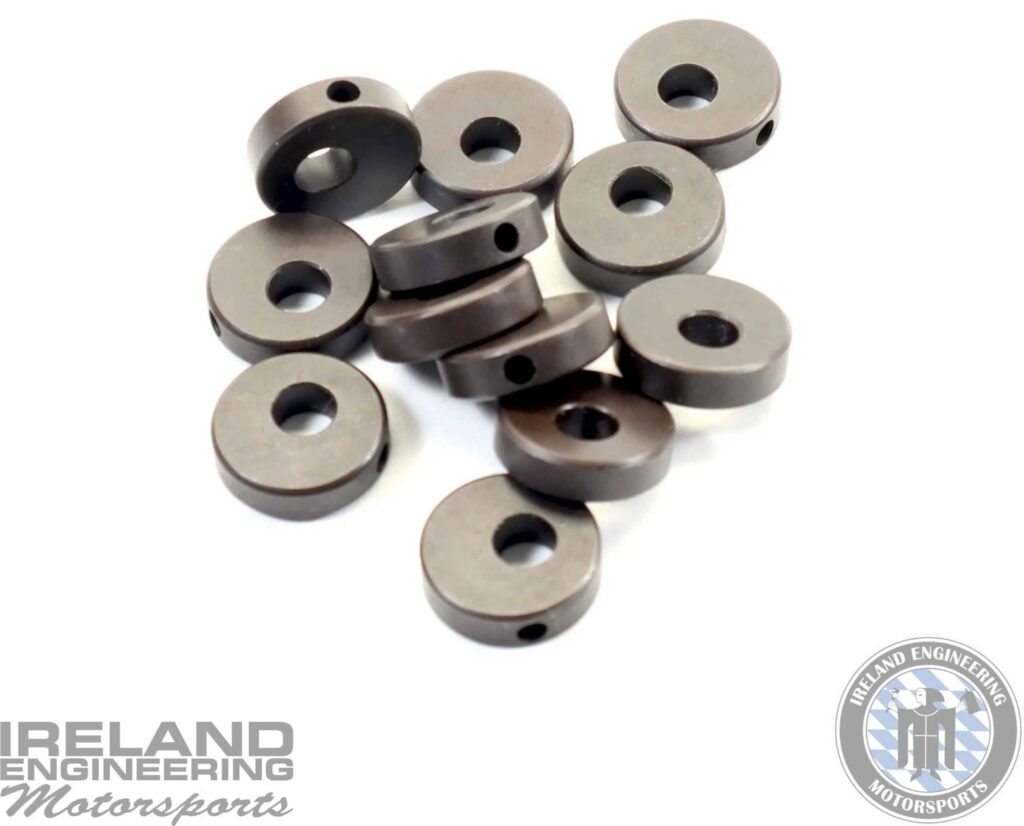
Ireland Engineering’s oversized eccentrics.
So, Alfa lash caps or oversized eccentrics. Take your pick. Me, I kind of like the idea that my fine German engine has a little bid of Italian blood in it. I can almost hear that Alfa timing chain rasp when I get on it.
—Rob Siegel
____________________________________
Rob’s latest book, The Best of The Hack Mechanic, is available here on Amazon, as are his seven other books, including Just Needs a Recharge: The Hack Mechanic Guide to Vintage Air Conditioning. Signed copies can be ordered directly from Rob here.