Welcome to Tech Talk, where our resident BMW tech Nick Owen answers all your pressing BMW technical questions, frustrations, and issues. Have a question for Nick? Email him at techtalk@roundel.org. Let’s get into it.
My Original E30 – Trouble That Is About to Whip Me
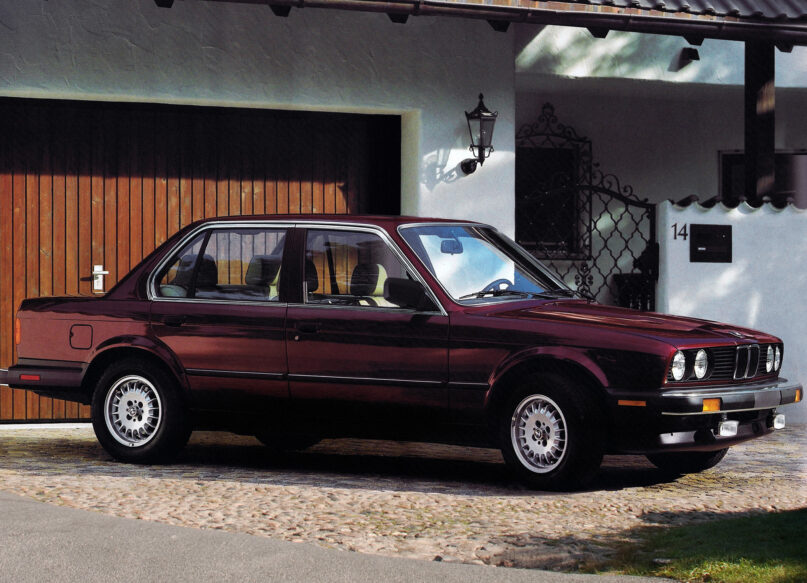
You might recall I was struggling getting the center hex head bolt to break loose for cam seal replacement purposes. I referenced potential use of a T-47 socket and that worked and shared that with you. I’m still trying to finish the work on the same car, I attempted to send you a note last week but I’m not sure you received it (sent to your other address). I am copying it here / below but updating it as I have a couple of pertinent things to add. If you received the other note and I have worn out my welcome, I apologize as I certainly don’t mean to. In all of my years, I can’t recall having anything close to this amount of trouble with this car. If you did receive it but just haven’t gotten to it, please reference this one.
I bought this car new and have maintained it vigorously over its life. It currently has about 290,000 miles and has the original clutch, the head has never been off, etc. but normal stuff has definitely been maintained. It sat recently for a couple of years in a heated and cooled garage on a four-post lift after being driven very sporadically the last several years. To borrow Rob Siegel’s line, it ran (very well) when parked (on the lift) a couple of years ago.
Several weeks ago, I started the current scope of work—timing belt, belt tensioner, water pump, thermostat, cam seal, coolant flush, plugs, wires, cap, rotor, fuel filter, valve adjustment, oil and filter change, and a few things I’m forgetting. I somewhat broke one of my cardinal rules and ‘touched’ a lot of stuff all at one time. While I don’t think the fuel was necessarily bad, I also drained the tank and put about 10 gallons of 93 octane E-free fuel in it. Parts purchased were quality OE stuff.
Prior to starting the recent work and not wanting to push my luck (with a dated timing belt), I pushed the car into the area where I do the greasy work; the point is that I did not try to run it before starting the work. I performed everything listed above and when finished, it wouldn’t start. I found that I had no ignition and discovered the main relay had quit on me. Why it did that from just sitting in a heated and cooled garage is beyond me. (I had the car on a (now) questionable trickle charger so maybe that’s relevant.) The car now has a new battery. I replaced the main relay and it fired up but ran bad, as if it’s running on five cylinders or so. I then started looking at the fuel system.
With an old fuel gauge, I used a fair amount on previous E28s, I decided the in-tank transfer pump had quit and I replaced it. After not running any better, I rechecked the fuel pressure at the cold start valve. Per specs in my Bentley book, the pressure was low (~32psi) so it looked to me like the regulator must be bad. I replaced it. Still no better, I decided that the main fuel pump (original to the car) must be tired. I replaced it. I rechecked the pressure at the intake and it’s no better, still ~32psi, all of this with the fuel pump relay contacts jumped. With the relay back in place, the car starts up quickly but still runs bad.
Fuel pressure with the car running is ~25psi +/- a few depending on throttle position. Note: at some point in this, I bought a new fuel pressure gauge kit to eliminate the possibility of bad info from my old gauge; they both seem to give nearly identical results. Prior to pump replacement, I also checked fuel flow: 30oz. at 30 sec. (the minimum per Bentley). I rechecked it tonight with the new pumps and got about 32oz. in 30 sec. I trust that is good since it’s above the minimum (he doesn’t give a range in the old manual that I have).
- Fuel pressure: 32psi is low per Bentley. Assuming so, have you ever experienced a new fuel filter being bad (too restrictive)? The new filter is the right (Bosch) fuel filter. I have a new Mahle on the shelf and am tempted to swap it; it’s a PITA to get to so I haven’t at this point. I want to assume both new fuel pumps are good. Would 32psi (not running) or about 25psi when running make the M20 run like crap / act like a missing cylinder? Maybe I have an injector issue (also) but that doesn’t seem to me something to chase given the low fuel pressure reading (?) Note: the car has never seen low dollar fuel – always Tier 1 and almost exclusively 89 or higher-octane Shell.
- Ignition: I previously have manually rechecked the timing alignment and believe it’s spot on. It’s not possible that I’m 180 degrees out and the motor still runs, correct? Would you expect valves and pistons to be colliding if so? I have performed that work many times in the car’s life but I am starting to question everything. Tonight I dragged out my old inductive timing light for two reasons: I verified each cylinder is firing and for fun I pointed it at the balancer (on the #1 cyl wire) and it showed the timing marks basically lining up. From my experience with older stuff, I would say that it doesn’t show any particular advance but I don’t know what I should see on this motor while running and a timing light connected. Note: I did this in an attempt to verify correct timing belt installation only. I guess I confirmed that (?)
- I’m debating putting the old ignition components back on the car for test purposes. I haven’t thrown anything away. (Deleting this after my timing light experiment.)
I am reasonably competent around the car but am about to pull my hair out. It’s too nice of a car to not whip this situation.
Phil Williams
Life has been extremely crazy lately; I haven’t been able to give the car any attention. I finally got my hands on a vacuum gauge and a few hours. Based on my previous low fuel pressure readings (from two gauges) with two new pumps, I decided to replace the (new Bosch) fuel filter and install a new Mahle filter I already had in the off chance that the new filter had an issue. My memory is that the previous fuel pressure was mid 20s so maybe that helped somewhat as I’m now reading about 30psi. After that and a couple of new fuel line sections (in and out of the filter), I rechecked fuel pressure via fuel pump relay jumper and then with the car running. I’m getting about 30psi under both conditions. I then connected the vacuum gauge at the intake (the port where the fuel regulator gets it’s vacuum from) and am getting about 11 in Hg vac. I think that’s a problem, do you agree? Does that suggest a timing issue?
At idle, the car occasionally produces a knocking sound. I pray that it’s not valves and pistons making contact because the new timing belt is incorrectly installed. The knock goes away with an increase in rpm. While I know the marks are correct, I haven’t checked to verify that I’m on TDC for the #1 cylinder. Because of all of the other work I did at the same time, is it possible I’m 180 degrees off? Would the car run if so? As much as I hate the thought, I’m tempted to remove everything to get to the timing belt and try again. I bought the car new and I’ve performed that job many times over the almost 300k miles but I never did the belt replacement in conjunction with a bunch of other scope. I’m wrong at least once every day. What would you do?
Phil
An update from this afternoon…
I disassembled enough stuff to be able to see the timing marks once again. They look good. In an attempt to verify that I’m on the #1 TDC (top of compression stroke), I did two things – put a compression gauge on the #1 cylinder while turning the motor by hand (ratchet) until the gauge started moving and read something (~30 psi (by hand)). I also removed the oil filler cap and can verify that both rocker arms have a clearance from the cam – the valves should be closed. If you agree, that confirms that the motor is truly at #1 TDC – the cam and balancer marks are spot on telling me the timing belt is correct.
I think I’m more happy than sad…
Phil
Sounds like the engine is in time so that’s good. If at idle you are knocking but at off idle it runs better then you most likely have a mixture issue. Either that could be a vacuum leak or incorrect fuel delivery via pressure or volume, but that part seems rectified with the new pump and filter. So, I would check the air flow meter to make sure it’s telling the DME the right voltage.