It’s a formula as old as motor cars themselves: Insert the largest engine you can into the smallest vehicle possible, refine the suspension, and voila! You have lightning in a bottle. For those of a certain age, this evokes memories of storied vehicles like the Shelby Cobra and Sunbeam Tiger. In both instances, a competent and capable British roadster gave up engines that were modest on their best days and discovered real excitement with the addition of an American small-block V-8. Luxury and refinement are not on the menu, of course, but a serious case of sudden euphoria is certain to result. Octane therapy rarely felt so good.
BMW is not immune to this formulation, of course. Take a tremendously competent sedan in the form of the 1602, pop in the engine from the big sedan, and the instantly iconic 2002 emerges. The Car and Driver article from 1968 by David E. Davis Jr., entitled “Turn Your Hymnals to 2002” remains a page turner. More recent alchemy experiments from Munich include the 1M and the original M2. Small platforms and big power turn every trip into an opportunity to go apex hunting,
Part of the demise of classic British sports cars, including MG’s and Triumph’s, was driven (pun intended) by the BMW sedans of the Sixties and Seventies. Why mess around with funky tops, side curtain windows, and questionable electrics, when the nice folks in Bavaria concocted a formulation of better performance, greater reliability, and heaters that actually worked. Game over.
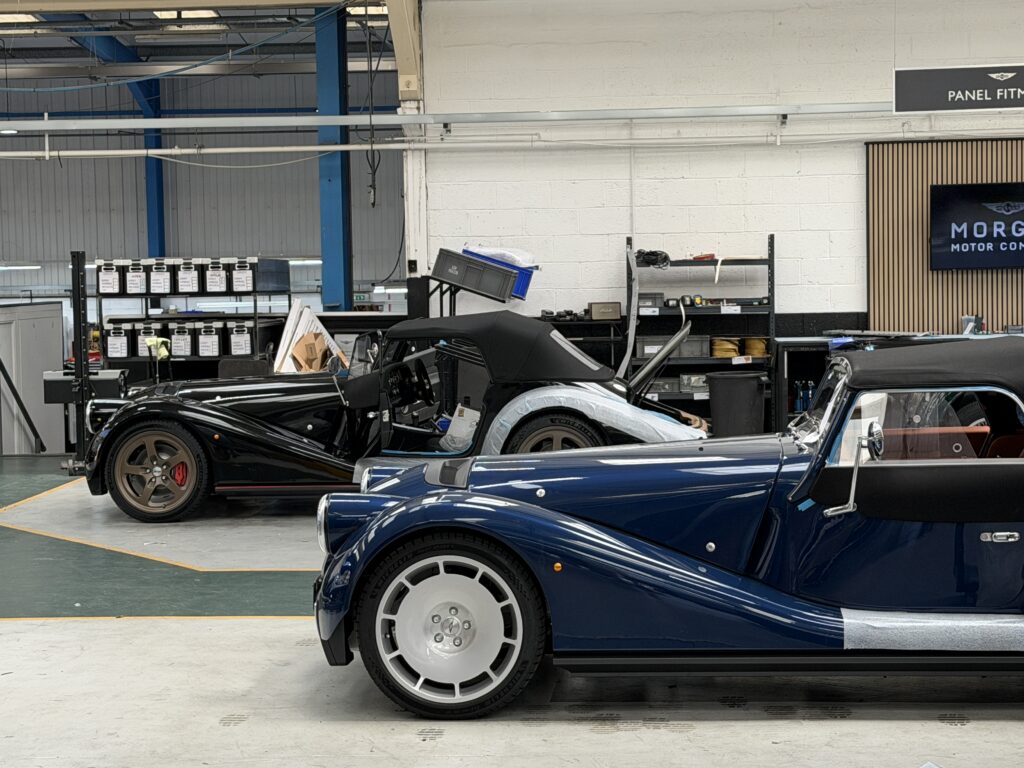
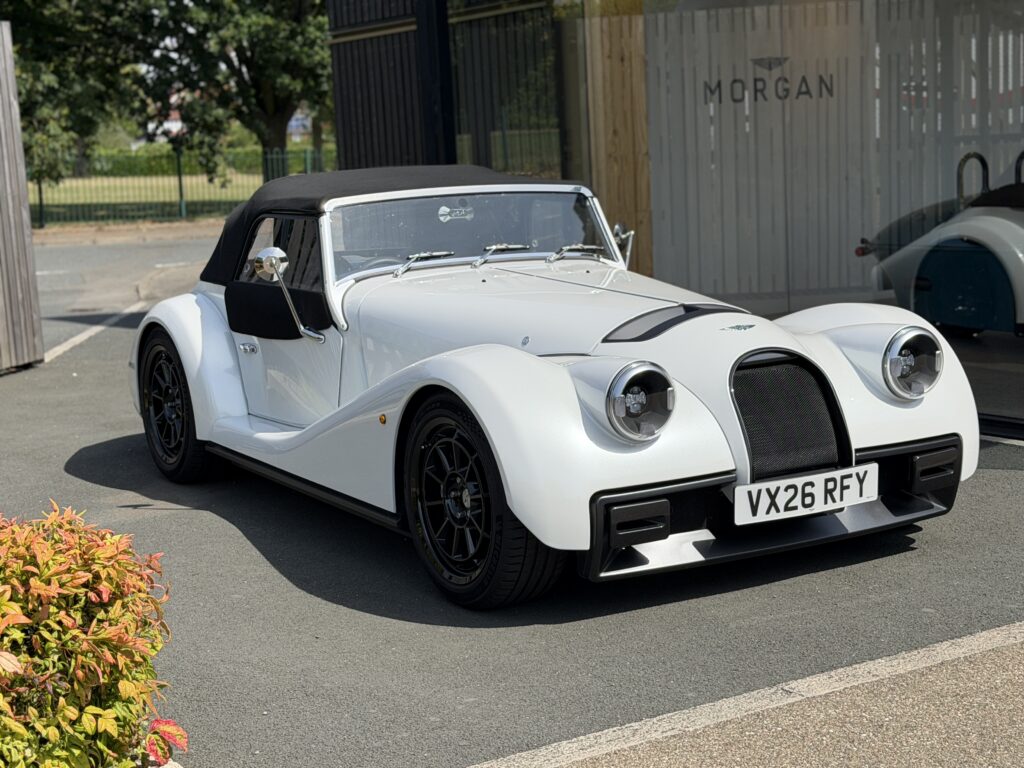
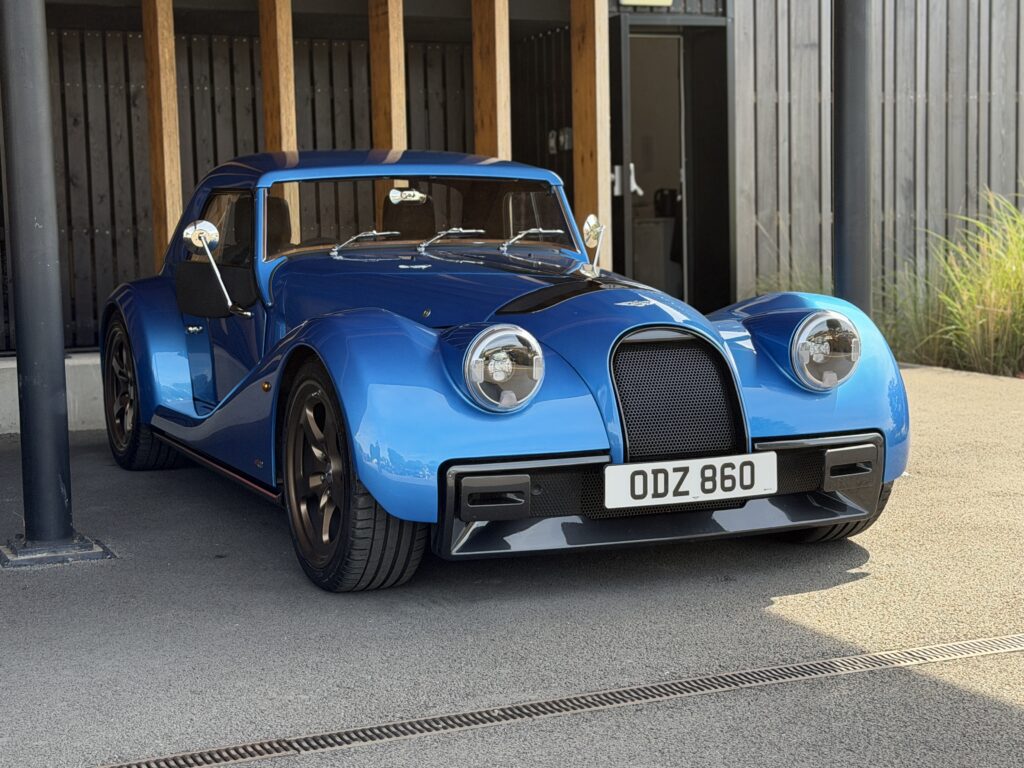
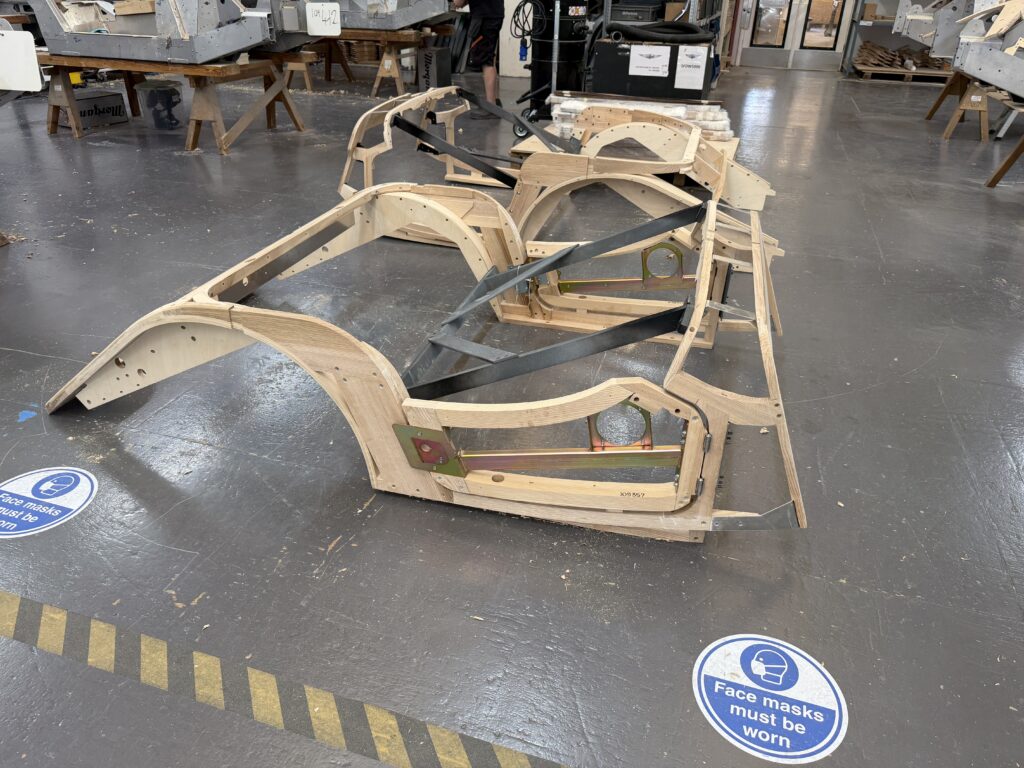
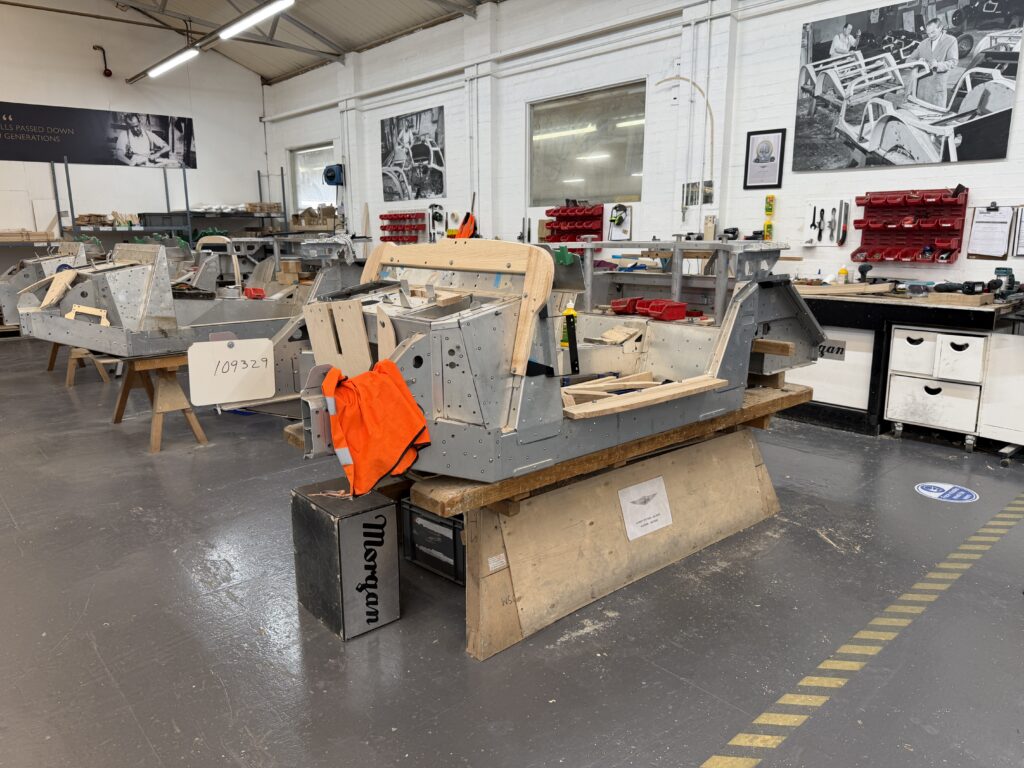
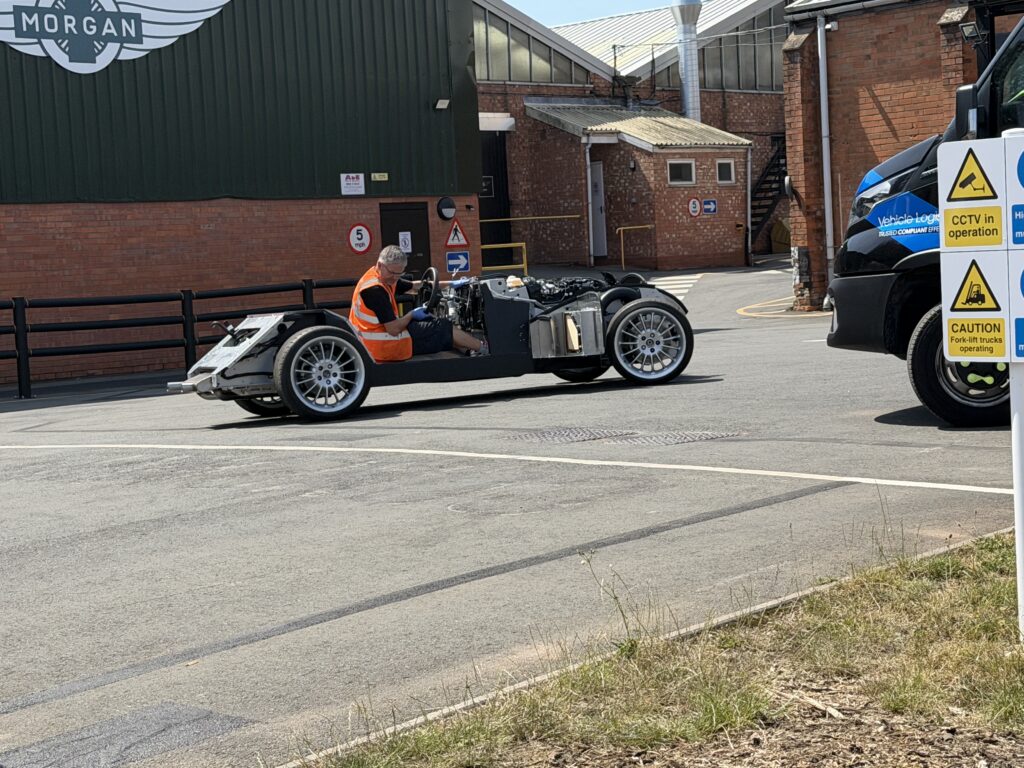
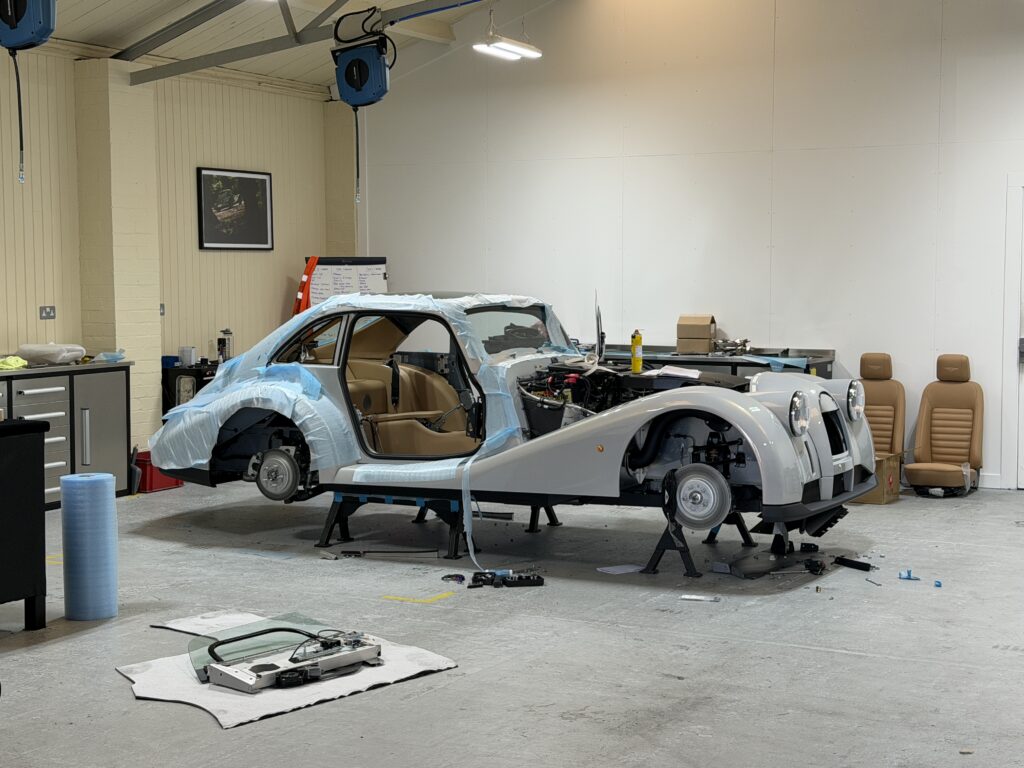
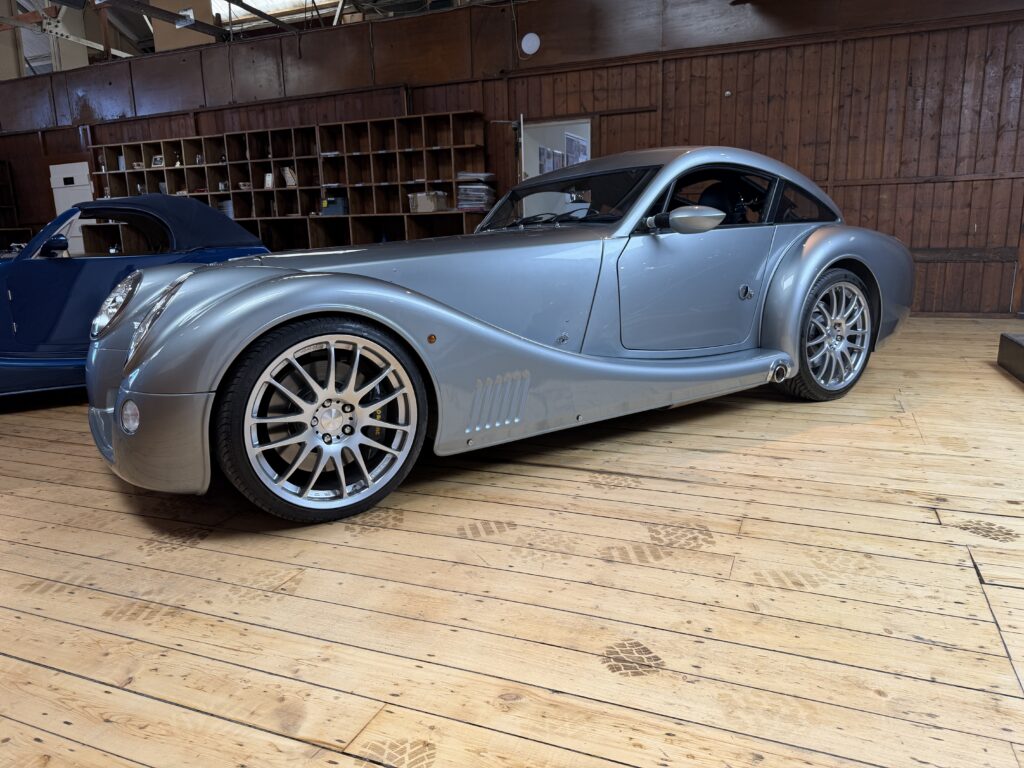
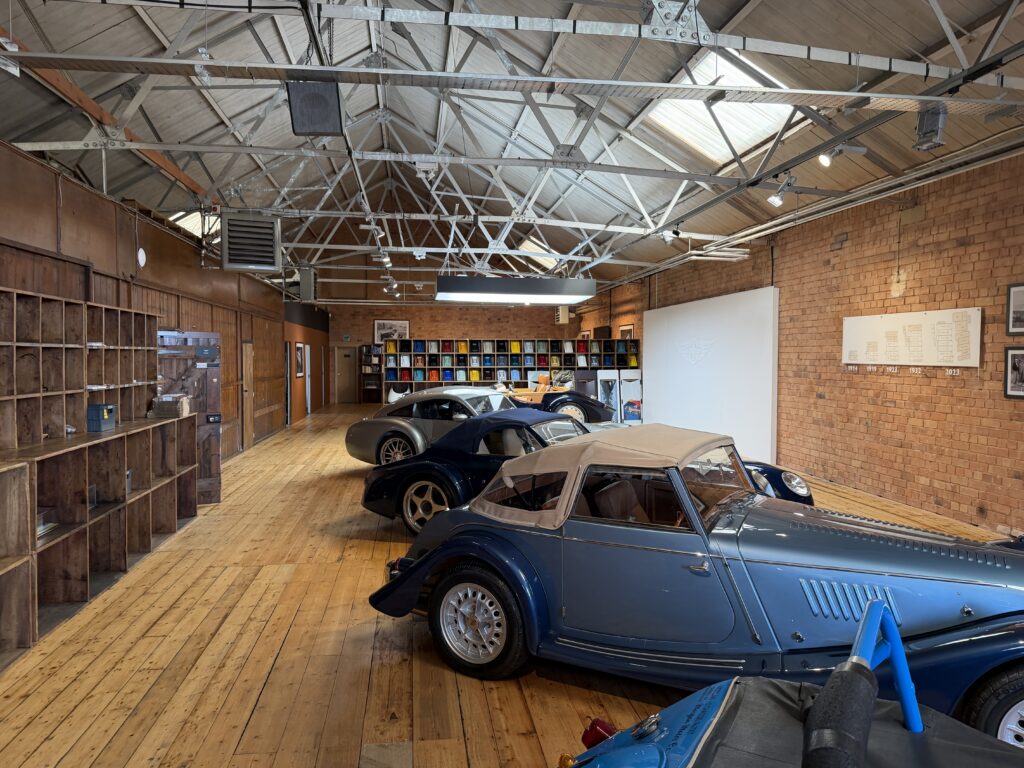
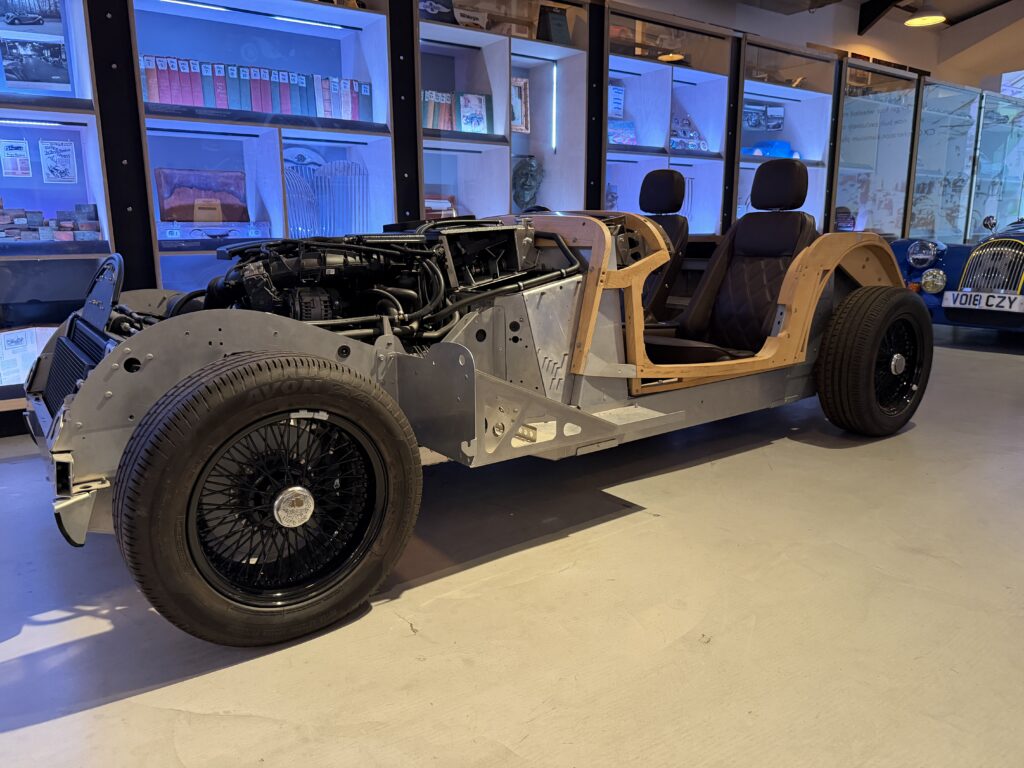
Except that it wasn’t. The Morgan Motor Company continues to labor along in a small shop on the same ground where they were founded in 1909. The original cars grew from three-wheelers with tillers for steering into proper four-wheeled sports cars that were unique, quirky, beautiful, and available in very limited numbers. They have always been built in the town of Malvern, nestled in the hills of the same name, not far from Birmingham. The vehicles still use construction techniques that date back to the time before Henry Ford’s production lines. While the actual frames have always been metal, they build the bodies around wooden framing that looks more like furniture than something for the motorways. Around the lovely ash frames, aluminum body panels are hand crafted and unique to each car. The classic hood louvers are hand punched in the bonnets (read: hoods) as they emerge from the workshop.
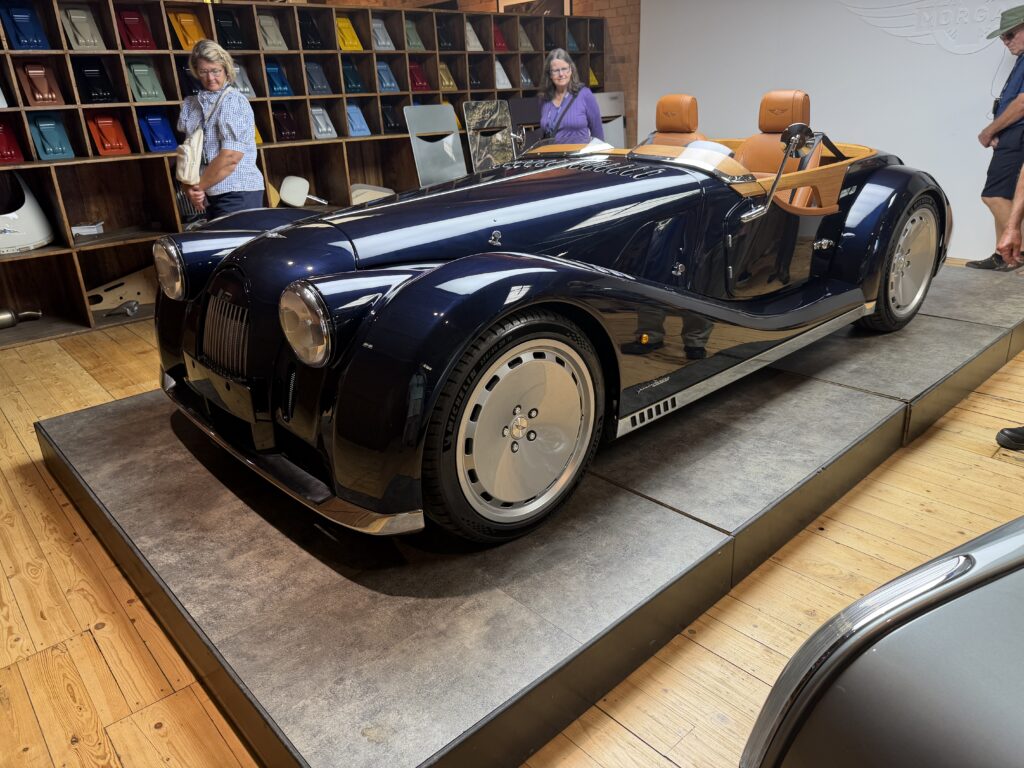
While Ford’s mantra was “you can have any color you want so long as it’s black,” Morgan now operates with the philosophy that “if you can dream it, we will build it.” By hand. As a labor of love. Slowly. On a recent visit to the factory, we were told that every Morgan is built to order, and when all the option permutations are considered, there are around a trillion variations possible. A visit to the factory is a bit like getting lost in a medieval workshop where Merlin suddenly decided to use his magic powers to create a fountain of youth.
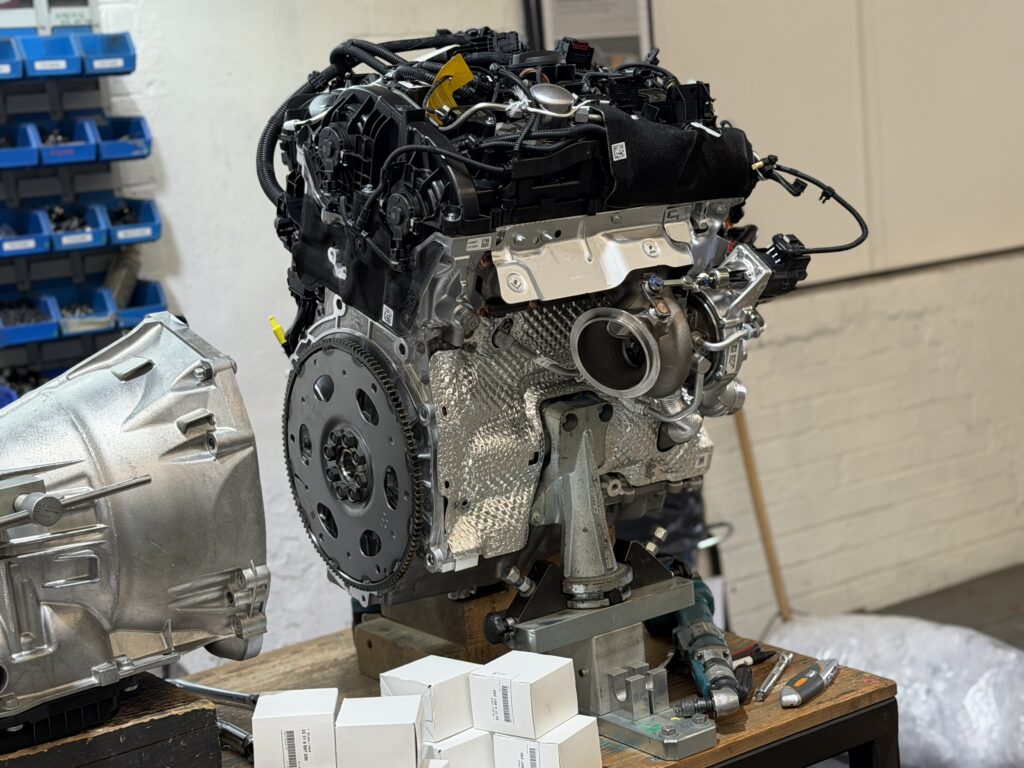
So, what does all this have to do with BMW? In an ironic twist, some years ago Morgan turned to Munich as its source for drivetrains. So now, in a car that weighs half a ton less than a BMW 3 or 4 Series, the Brits have dropped your choice of a B48 or B58 engine under the bonnet. The result can only really be described as “epic.”
While at the factory we had the opportunity to take a test hop in a new Morgan Plus Four. This is the classic roadster, top down, side curtains in place, with the steering wheel on the wrong (i.e., right) side of the cockpit. Clambering in is a more athletic experience than getting aboard an X3, but it is worth it as you settle into the firm—but comfy—leather bucket seats. At the helm, you twist a key that looks like something from my E46 M3 which engages the electrics. Those now appear to be sourced from Germany rather than Sir John Lucas, the inventor of electric darkness.
As the dash comes alive, you realize that the gear lever and other bits have been directly lifted from BMW. Pushing the starter button brings the B48 online with a nasty bark. Blip the throttle, and there a satisfying and instantaneous response. Instrument arrangement is proper British, with the tach positioned so the pilot can easily spot it when looking for shift points. The speedometer is as far away from the driver as possible and seems mostly designed to terrify the navigator. I can confirm that this works well, although with the top down and the B48 thundering along, it tends to muffle the screams from the other side of the cabin. Ingenious, really.
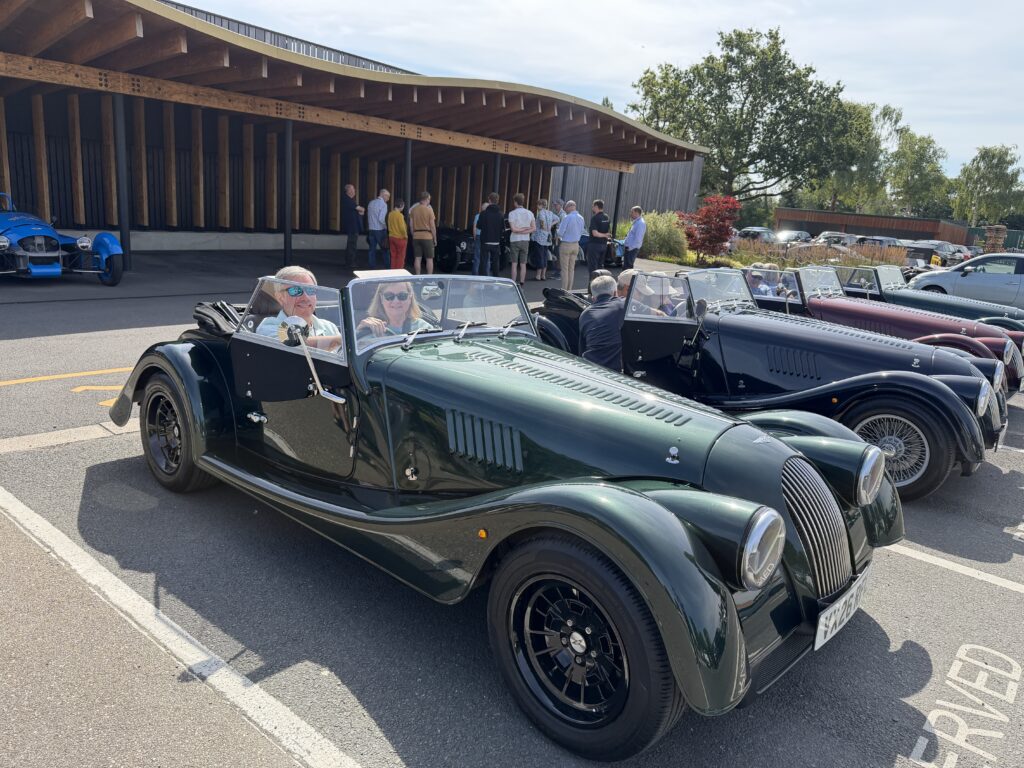
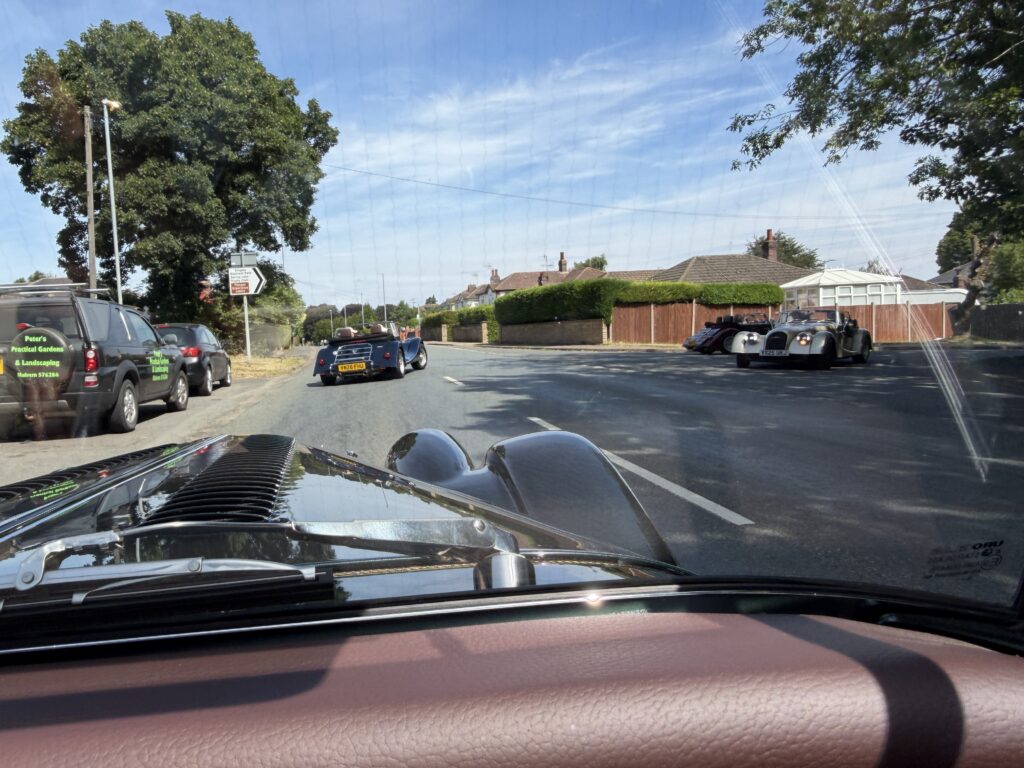
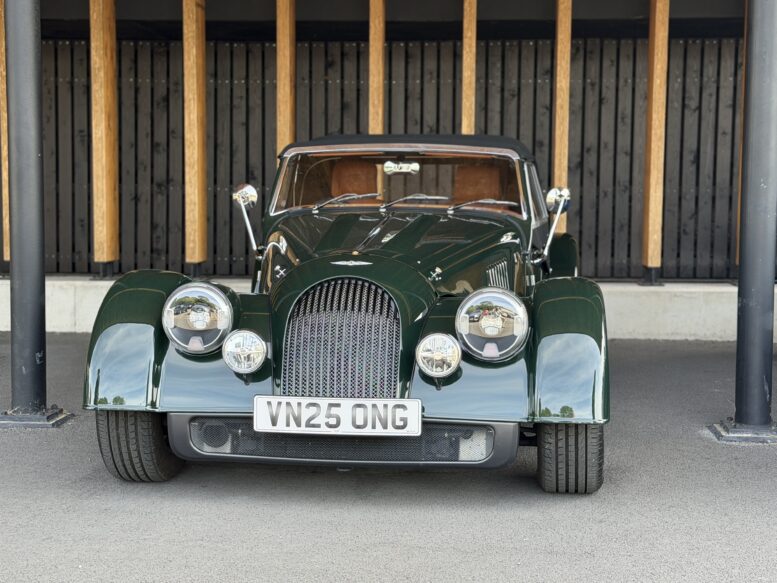
The unit we had was British Racing Green complete with a saddle leather interior. If you’d wanted a Triumph TR-6—or a Morgan Plus Four—half a century ago, this would have been the preferred combination. Ours was fitted with the ZF 8-speed transmission and the same shifter we’ve enjoyed in an X3-M40, so that was a great comfort as we rode around town with period alerts from the navigator to “watch the curb!” This is a clear and present danger for those of us who think more like a driver on American roads than a motorboat captain. We managed to avoid hitting anything noteworthy.
The paddle shifters are huge and work really well. The engine management system does its job ensuring smooth and quick engagement. Downshifts are particularly entertaining since there appears to be very modest baffling in the silencers (read: mufflers). The result is an ongoing symphony of pops and snarls which, in turn, inspire a form of juvenile giggling. The question from over near the speedometer was “should it be doing that?” On the tachometer side of the car, it seemed that the question answered itself, in the affirmative.
All too soon, we were forced to return the Morgan to its minders in Merlin’s workshop. What’s the verdict?
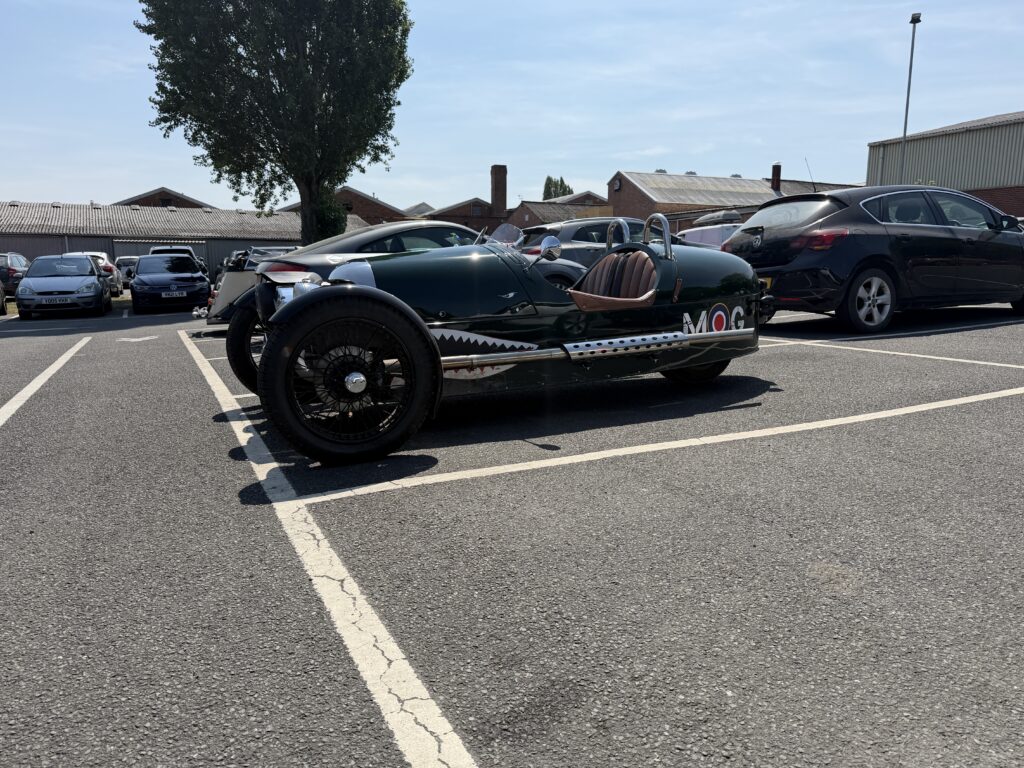
Well, while BMW may have inadvertently spiked the classic British roadster more than 50 years ago, they now appear to be at the core of a resurgence of sorts. It is not, by any means, a luxury car. It is a performance car with a harsh ride, some of the typical creaks that come with having no hood (read: top) and retains a certain level of sophisticated impracticality seeing that it has no boot (read: trunk). Morgan will happily provide matching luggage which can be affixed to a luggage rack on the back of the car. Both are pricey options.
It isn’t the kind of vehicle you’d want to hop in and drive across the United States on Interstate highways. On the other hand, if you wanted to carve up country roads and lanes where getting to wherever you were going was considerably more than half the fun, well, this could well be your ride! If cruising back to revisiting some youth indiscretions is on the menu, well, this is a very proper ticket.
If you want to own a new Morgan, you really need to be committed. There is the minor matter of price to consider. With current exchange rates, the price of entry is likely to be a bit north of $100,000. For a properly configured SuperSport, which comes with the B58 6-cylinder mill, the price is going to be around double that. The dealer network in the U.S. is extremely limited too, which makes the whole endeavor sound like it might be a bridge too far. Although, given that the drivetrain came from a BMW sedan, perhaps a local shop could be talked into keeping things in proper working order.
Morgan can only build around 800 vehicles per year. Of those, around 300 are slated to come to this side of the Atlantic. And there’s a waiting list. So you need to be committed, have deep pockets, and cannot be in a hurry. The closest dealers are in Maryland and Tennessee, so a test drive will be another act of commitment.
Would I consider swapping my M2 for a Morgan? Well… no. The F87 M2 does everything well, satisfies my “boy racer” needs, and comes complete with roll up windows. But if money was no object, they could look really good in a shared bay.
If I ever get back to the Malvern Hills, I’d love to take another spin in a Morgan. You can really never have too many sips from the Fountain of Youth.