One of the few constants in this world is change. The first car I searched for and purchased myself was a 1973 Volkswagen bus (a Type II transporter, if you speak air-cooled VW). I loved the cartoonish character of the bubble-window bus, and being able to camp in the back made it practical as well. My parents appreciated the sub-two-minute zero-to-60-mph time, since it was slow enough to theoretically keep me out of trouble.
My process started by searching the classifieds in the local newspaper. When I found the one, I called the seller, scheduled a test drive, exchanged $1000 in 1993 dollars, and made it barely beyond the city limits before the bus broke down. It spent the better part of the next five years in some state of disrepair, but I loved it anyway.
Compared to the modern world, there was considerable effort involved on both sides of that transaction. In 1993, email was in its infancy, which meant that the seller had to telephone or physically mail their ad to the newspaper and shoehorn it into several dozen cryptic characters for a costly fee. Then they had to wait for it to be published, while also having their phone number publicly displayed in the newspaper. A game of phone tag and answering machines—with literal tapes in them—would likely ensue, since the odds of being home when I rang were low.
However, as arduous as that process was, it helpfully weeded out those who weren’t serious. If you were willing to exert physical effort (especially on our old round-dial telephones), speak verbally with a human being, and then exchange physical money to purchase a vehicle, you probably had a serious interest in it.
As the world marched on, newspapers and specialty publications gave way to digital platforms like online enthusiast forums, eBay, and a list that some guy in San Francisco named Craig started. In the 2000s, the latter had become so popular that several newspapers leveled lawsuits against Craig Newman’s free-form classified advertising. Aside from my website, Craigslist was historically my most successful venue for selling cars.
After another decade or two, these digital advertising entities gave way to specialist auction sites like Bring a Trailer and Cars & Bids. Beyond the auctions, there are still small enclaves and bastions for enthusiasts: BMW CCA classifieds, for example. Still, the world has largely shifted to social media to sell its various and sundry items, including automobiles.
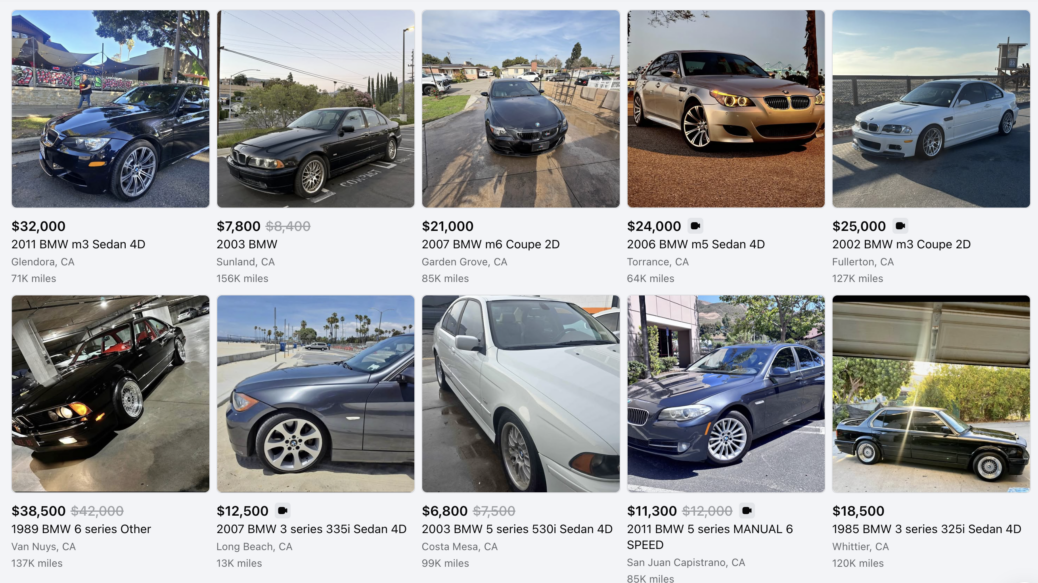
The most generic of these is Facebook Marketplace. Just as Craigslist has faded into its twilight, Facebook has struggled to stay relevant as younger generations flock to other forms of digital connection. The connection with friends for which the platform was established has given way to generic “follow” pages and groups, but the Marketplace tab will likely keep Facebook around. It allows minimal effort and provides maximum instant gratification when selling and browsing, but because of the ease of both, accountability on both sides of the transaction has suffered. It’s very common to get a passionate message in the middle of the night from someone who stumbled on a Marketplace ad, only to be ghosted when rational thought prevails in the morning. That’s the byproduct of a social-media doom-scrolling mindset.
Since closing down my shop and car business, I’ve sold everything from small tools to our near-six-figure shop truck on Marketplace, and I’ve learned a few tips along the way. Fundamentally speaking, the process is the same as my old analog VW bus transaction: I have something that somebody wants, and if the Venn diagrams of our mutual timing, pricing, and hassle circles overlap, a deal is made, freeing some space in the hangar while slightly reducing my debt. Unlike old analog transactions, however, I must weed out serious buyers from background-noise inquiries, such as “Is this still available?” Because there is minimal investment to make contact, low-ball offers are frequent—or the laziest of all, “What’s the least you’ll take?” If I even bother to respond, my canned answer is, “What’s the most you’ll pay?”
But despite all of the riff-raff, there are considerable benefits to selling on Marketplace. It offers none of the hassle or “peanut gallery” comments of the online auctions, and it can be exceptionally convenient: Take a few pictures, make a short video, write a simple description, and filter the responses to those who appear worthy enough of your time. The algorithm will quietly listen and monitor people’s searches, and pump your listing to the right people.
When selling a car, the benefit of being able to share a marketplace post in an enthusiast group is huge. This is the closest modern alternative to the forum classifieds circa mid-2000s, and I’ve made a few friends through these posts.
At other times it’s much simpler. Last week I posted an engine support stand for $40 (half of what it cost new from Harbor Freight). An hour later a guy messaged me, needed exactly what I had; he met me in short order and had the tool he needed to complete his job. His $40 wasn’t going to make a dent in my business-closing debt, but that engine stand would stop making dents in my shin from tripping over it. Seemed like a pretty good deal for both of us!