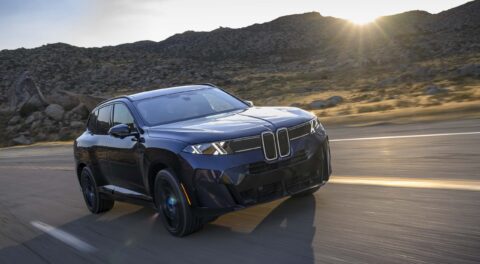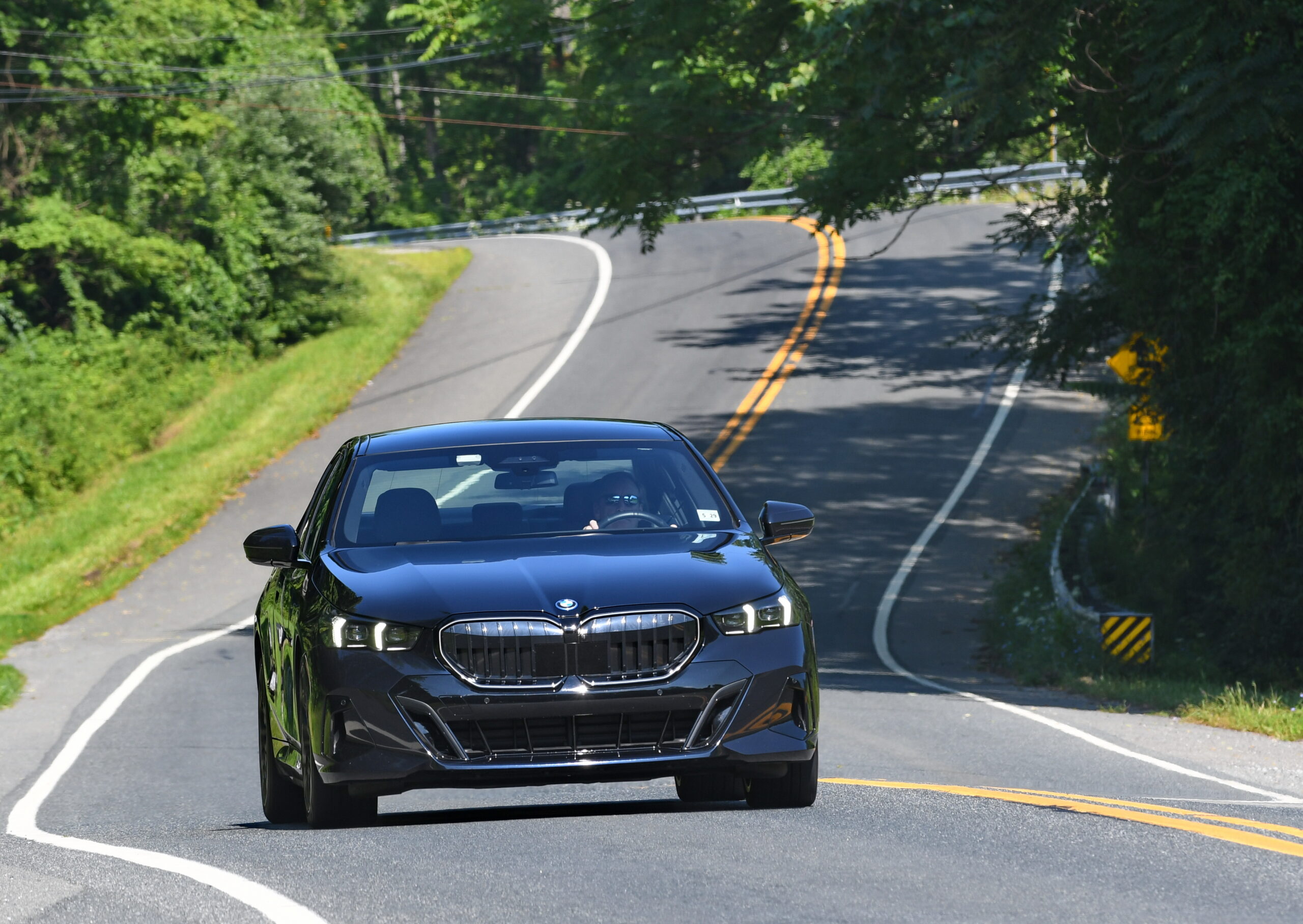
The BMW iX5 isn’t even on sale yet and it’s already getting a bump in range. When BMW first announced the iX5, it was quoted as having 435 miles of range, which was an official EPA rating. However, BMW is now claiming that it will have 450 miles of max range, even though the EPA hasn’t officially confirmed that.
According to Inside EVs, BMW claims that the EPA rating is coming soon but when it does it will be 450 miles. “We have the Gen 6 technology in this vehicle, up to 450 miles estimated EPA range, which is really fantastic for a vehicle like this,” BMW product manager John Kelly told reporters during the iX5’s media launch.
BMW didn’t say why the range is jumping from 435 miles to 450, or if there were any changes made to make that boost happen. However, BMW’s head of the X5 project Michael Ahlers told Inside EVs that 400 miles is the number that makes customers feel most comfortable. So 450 miles allows a comfortable cushion, to accommodate any outside factors that might reduce range, like temperature, driving conditions, or heavy air conditioning use.
An electric SUV with 450 miles of range is mighty impressive and it should make most customers feel more than comfortable. And on the rare occasion that a customer needs more than that, the iX5 is capable of charging from 10-80 percent in 22 minutes, as long as you can find a charging station fast enough. The iX5’s max charging speed is 460 kW, which is among the best in the industry, but finding a DC fast charger capable of that can be difficult. BMW’s charging partner, Ionna, only has chargers up to 400 kW. Some Tesla Superchargers can do 500 kW, but those are few and far between.
All of BMW’s new EVs have impressive ranges, like the iX3 which has a claimed range of 434 miles, and the i3 which has an EPA-rated range of 468 miles. And while they all have impressive efficiency, the iX5 does things the old fashioned way: size. The iX5 boasts a massive 144 kWh battery pack, which is bigger than almost all EV batteries on the market. Only a handful of cars have larger batteries, like some of GM’s Ultium trucks. Is that the electric version of “no replacement for displacement?”