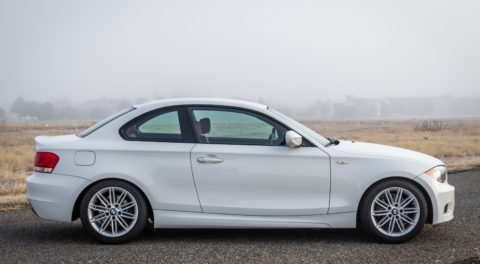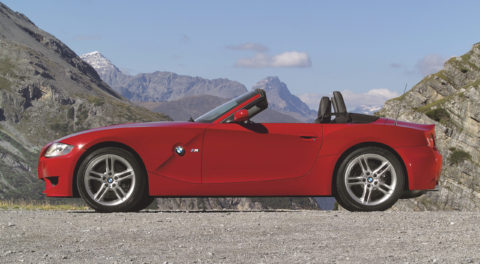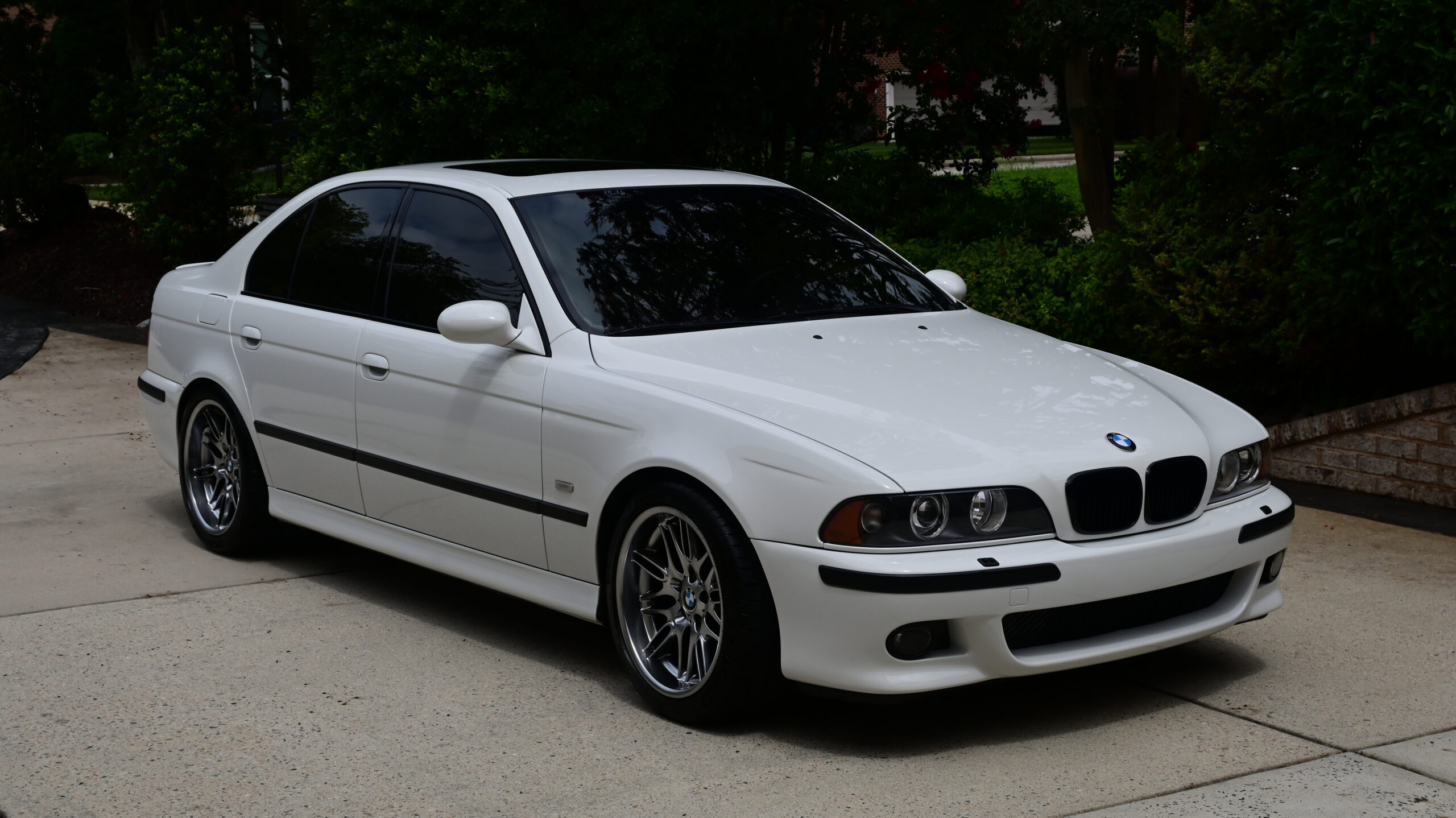
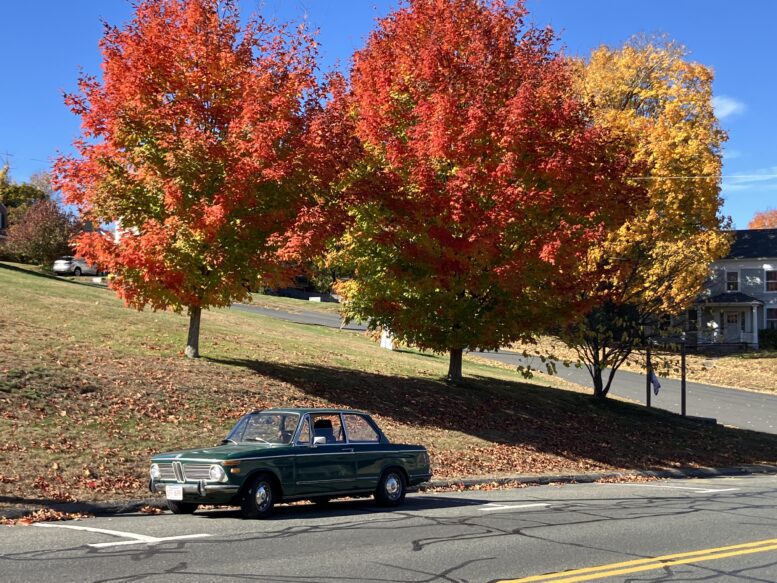
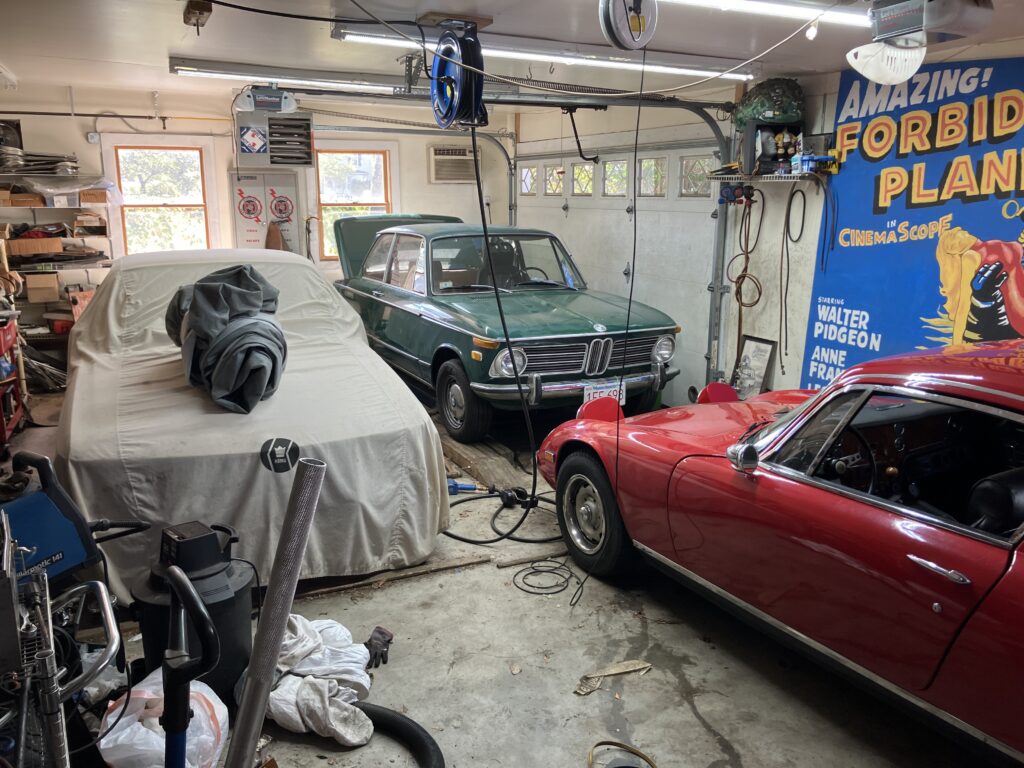
Last July, instead of going alone to the warehouse in Monson where I store five cars like I usually do, my wife Maire Anne drove me and a friend there because I wanted to bring back the M Coupe and the FrankenThirty. The intent was three-fold—I wanted to bring the M Coupe home with the intent of selling it, to have the FrankenThirty around at the house and use it as the knock-around no-worries member of the group that it is, and to reduce the number of storage spaces I pay for from five to three.
But time flies like an arrow (and fruit flies like a banana… sorry, old joke), it had been three months since I’d been out there, and with fall in full swing, before you know it it’s winter, then spring, and you haven’t seen or cared for the cars in six months. So a Monson trip was in order. Plus, as much as I enjoyed having the FrankenThirty here (and the wonderful trip in it to Vermont a few weeks ago), I wanted to swap it for one of the other fun cars, which, storage-wise, was now down to the two 2002s and the Lotus Europa (the E9, the Z3, and the Lotus Elan +2 are here at the house).
So last week, with fall colors cranked up to eleven, out the FrankenThirty and I went to Monson.

Just a little scenic peak-foliage cruise out the Mass Pike.
The main ritual of checking on the cars is pulling off the covers, inspecting the interiors for mildew, emptying the water in the the DampRid containers, and refilling them with fresh desiccant. I have a love-hate relationship with this stuff. It’s very effective at pulling water out of the air, but DampRid is calcium chloride (salt), so what’s in the container is this oily slimy corrosive brine that’s as disgusting as brake fluid to get on your hands. So the operation is to glove-up, remove the two containers from each of the cars, take them outside, empty the water, knock out the remaining hardened DampRid that looks like a urinal cake into a carboard box, clean everything with paper towels, throw the towels and the gloves in the box, then throw the box into a dumpster. All this needs to be done with care. You really don’t want to spill either the dry DampRid or the liquid in the cars. I put each of the containers in their own cardboard boxes on the back floor of the cars to keep them upright, and if they do spill, it’s contained. But it’s all a time-consuming pain.
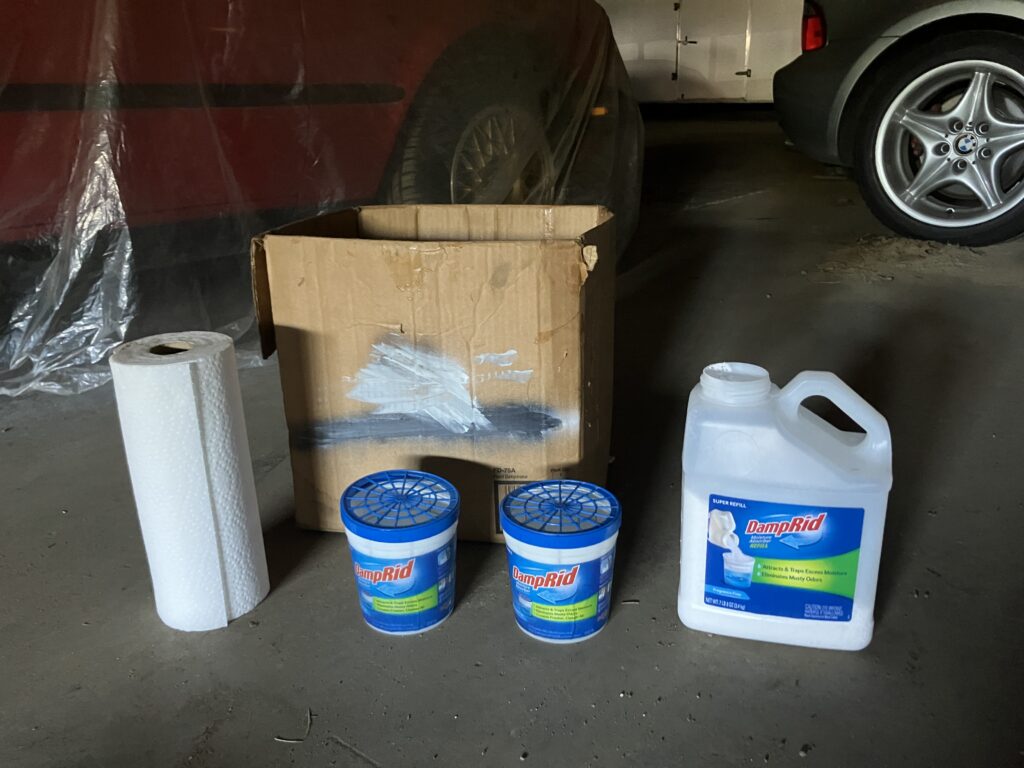
These folks really should pay me endorsement money.
Fortunately, it’s worth doing—none of the cars had any visible mildew inside.
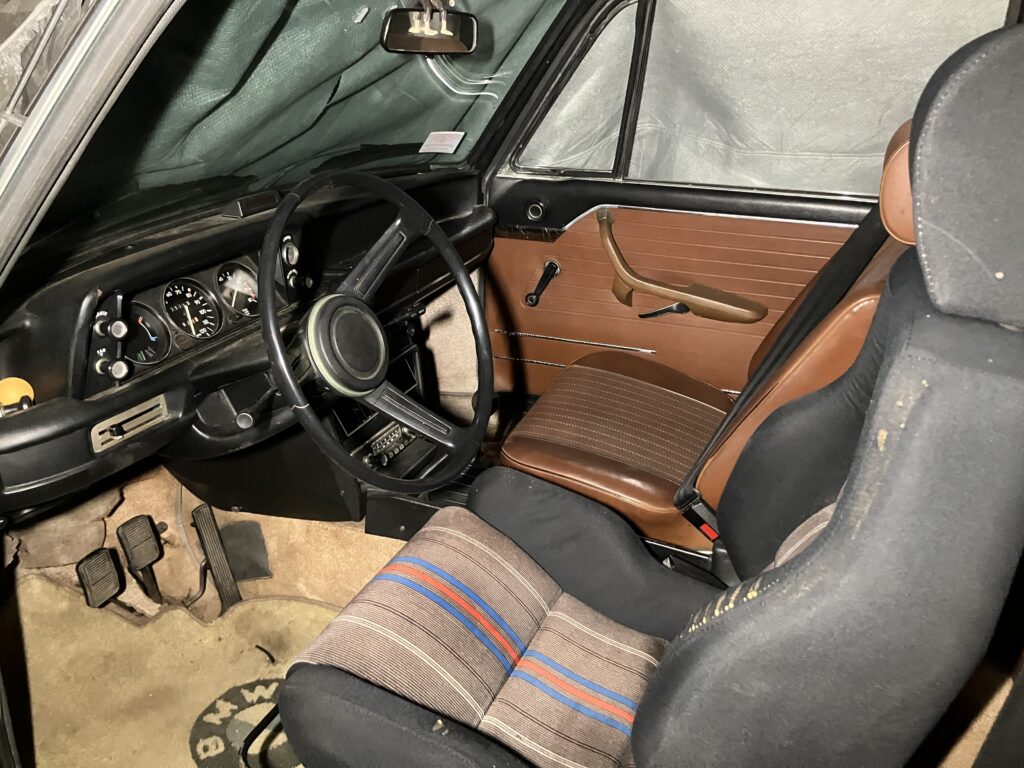
Louie’s interior looking none the worse for sitting.
The Lotus Europa was at the head of the line, so it was the first to be checked out. There are no accessible electrical outlets in Monson so I don’t trickle-charge the cars; I just leave the batteries disconnected. That’s usually fine with healthy batteries if they sit for a few months, but if the battery is old and three months have slipped to six, it can be drained or weak, so I bring a battery jump pack, jumper cables, and starting fluid. The Lotus, though, defied its Lots-Of-Trouble-Usually-Serious reputation and fired up without any electrical or combustion-inducing automotive marital aids.
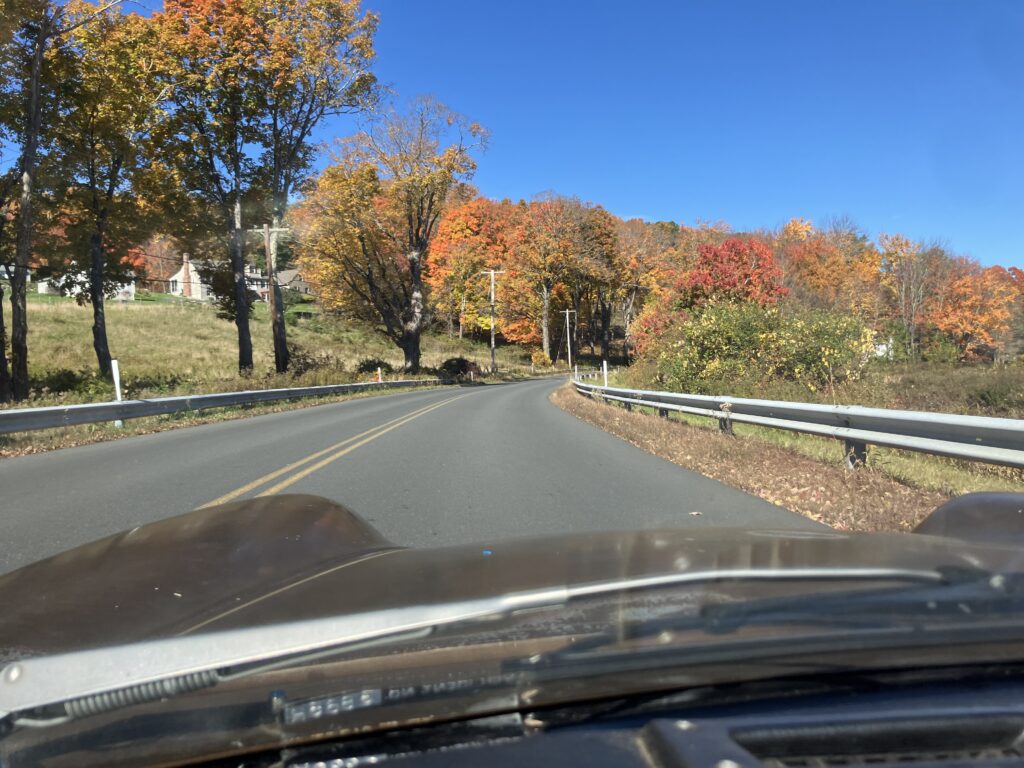
Lolita, helping me live the good life.
As much as I love the 2002s, driving the Europa is a visceral raw experience that hasn’t remotely gotten old since I got the car running in 2019. As soon as I departed the warehouse and hit the pavement, I thought “To hell with checking out and exercising the other cars—I want to spend the day driving around western Mass in this.” However, responsibility got the better of me, and after a 30-ish-minute drive, we returned to the warehouse.
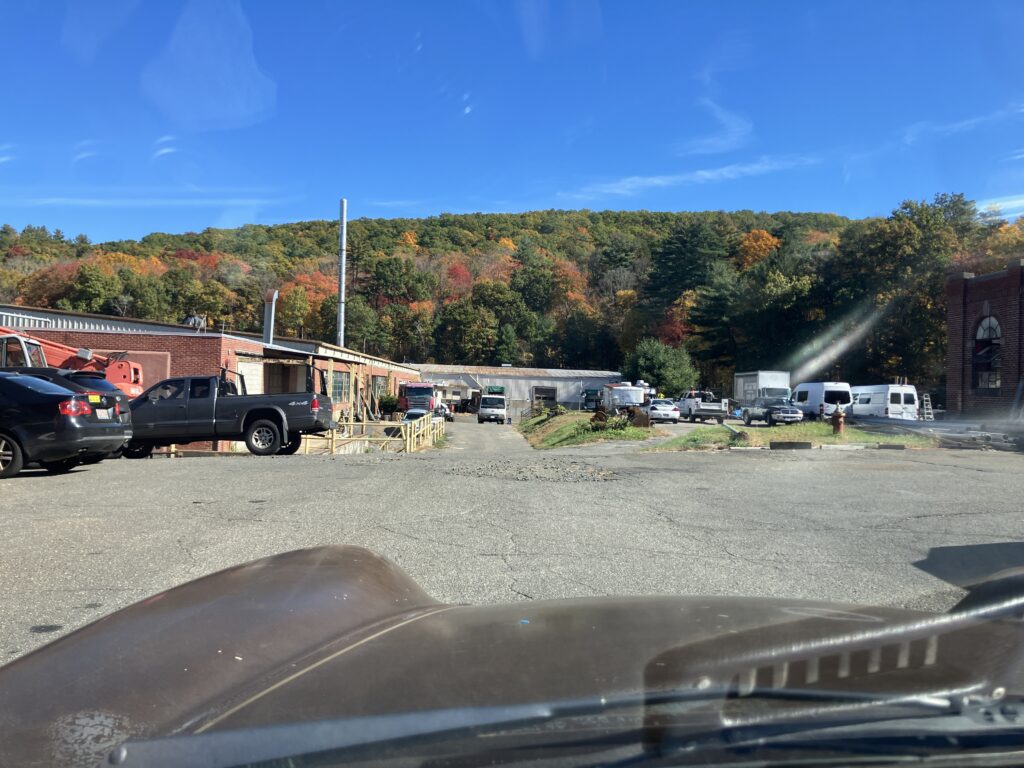
No…
Over and above pleasure-driving, there are reasons why it’s good to exercise lightly-driven cars. It helps keep the tires from getting flat-spotted, the brakes and clutch from binding, the rings from sticking to the pistons, and the all-important rubber seals lubricated. But in addition, it lets us check on the cars’ health. Cars are not biological systems. They never heal themselves. If there are problems, they always get worse, not better, unless we intervene and fix them. Just the act of trying to start a car tells you a lot.
And thus I approached Hampton, my ’73 2002 survivor car with just 52,000 miles on it. Hampton has always had a hard-starting issue, and I mean something above the common one of a carbureted car with a mechanical fuel pump whose float bowl dries out from sitting and takes a lot of cranking for the pump to get fuel into the bowl. No matter how many times my friend Mike Self reminds me to bring a syringe and shoot fuel into the holes at the top of the Weber, I forget, so I rely on holding the linkage open and giving a good blast of starting fluid down the throat to run the engine fast enough to let the fuel pump do its fuel-sucking thing. Doing this a few times usually coaxes Hampton out of his slumber. But this time, other than the one-second of running from the starting fluid, the engine did not want to fire. After enough tries that I heard the battery sagging, it was clear that I needed to stop and actually trouble-shoot the thing.
It’s always gas-or-spark (well, almost always). The fact that it ran with starting fluid meant that it had spark, so it was clearly a fuel issue. I could see gas in the transparent fuel filter, but I couldn’t tell if it was moving. So I looked at the nozzle that aims down the primary barrel while I pumped the throttle by hand, and it wasn’t squirting, hence there was likely no fuel being delivered to the carb. This can be because the mechanical fuel pump has died, or due to a restriction in the line, or because the pump is sucking air instead of fuel (very common). I began to lay my hands on the fuel hoses in the engine compartment, and the one feeding the filter fell right off, which obviously explained everything. I laughed, reconnected it, tightened the clamp, and gave one more blast of fluid, and the car started and purred like a kitten.
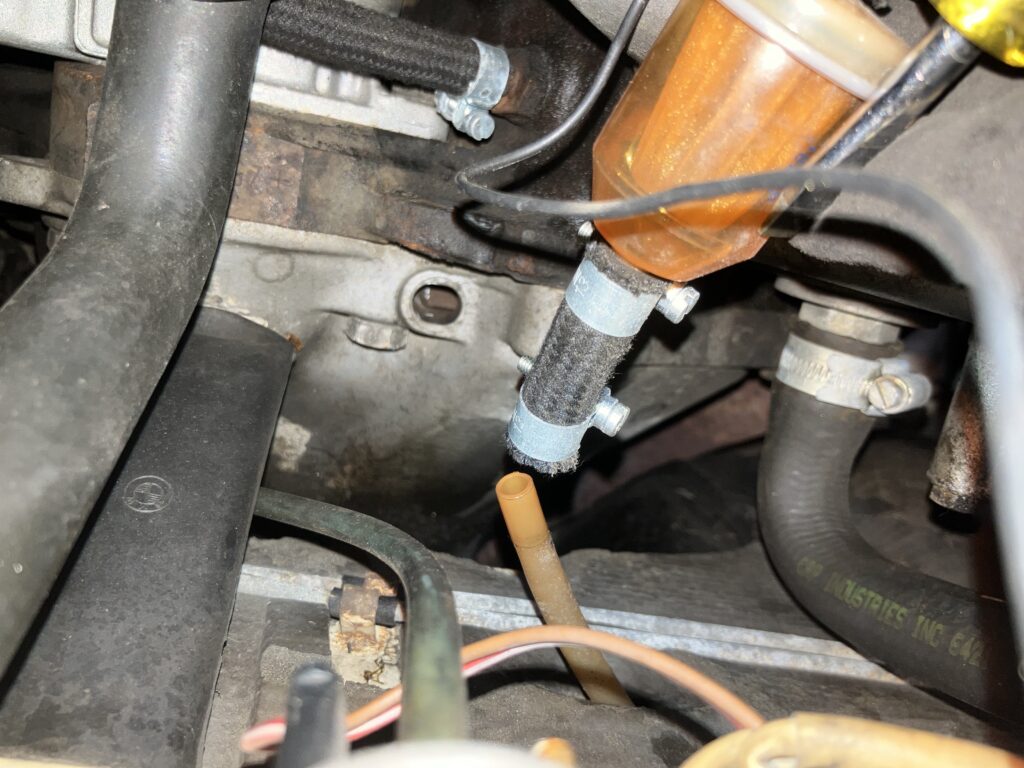
Funny, right?
Hampton and I ran down to the CT border and back. Because the car is stock other than the Weber and the Bilstein HDs, it’s always been a bit sedate in comparison even with the other 2002s (Louie the ’72 tii and now-departed snotty track-prepared Bertha), but it’s quiet and largely thunk-clunk-and-rattle-free, has its own vibe, and is cute as a button.
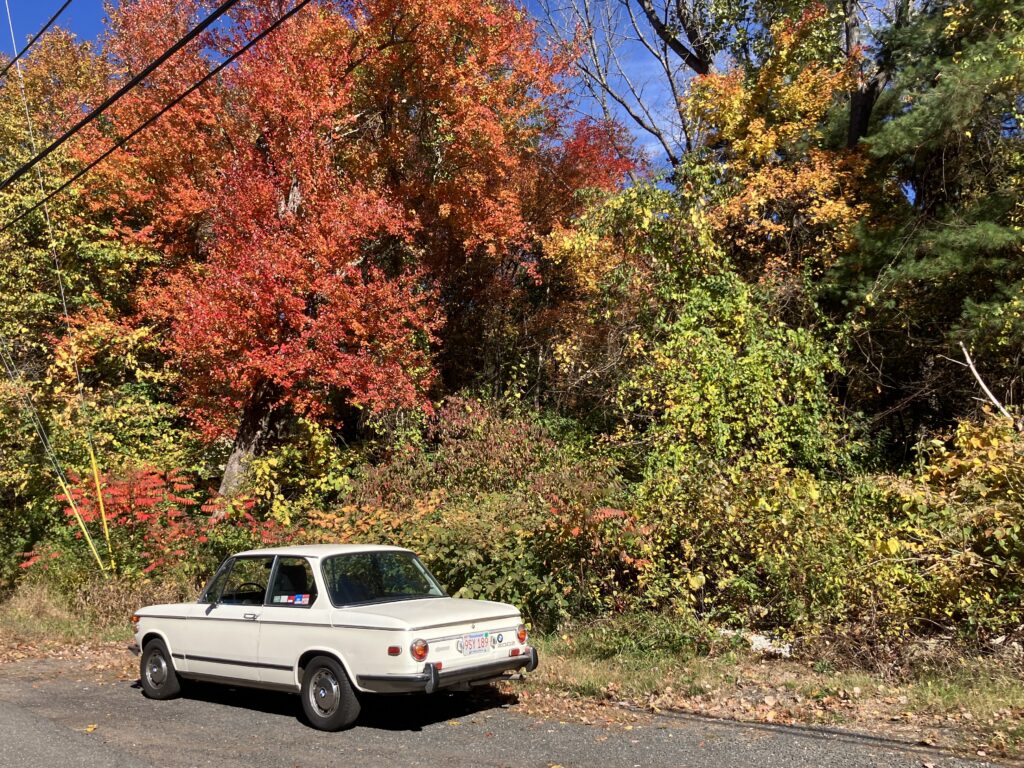
Chamonix by itself isn’t a fall color, but boy does it do its part to make the foliage pop.
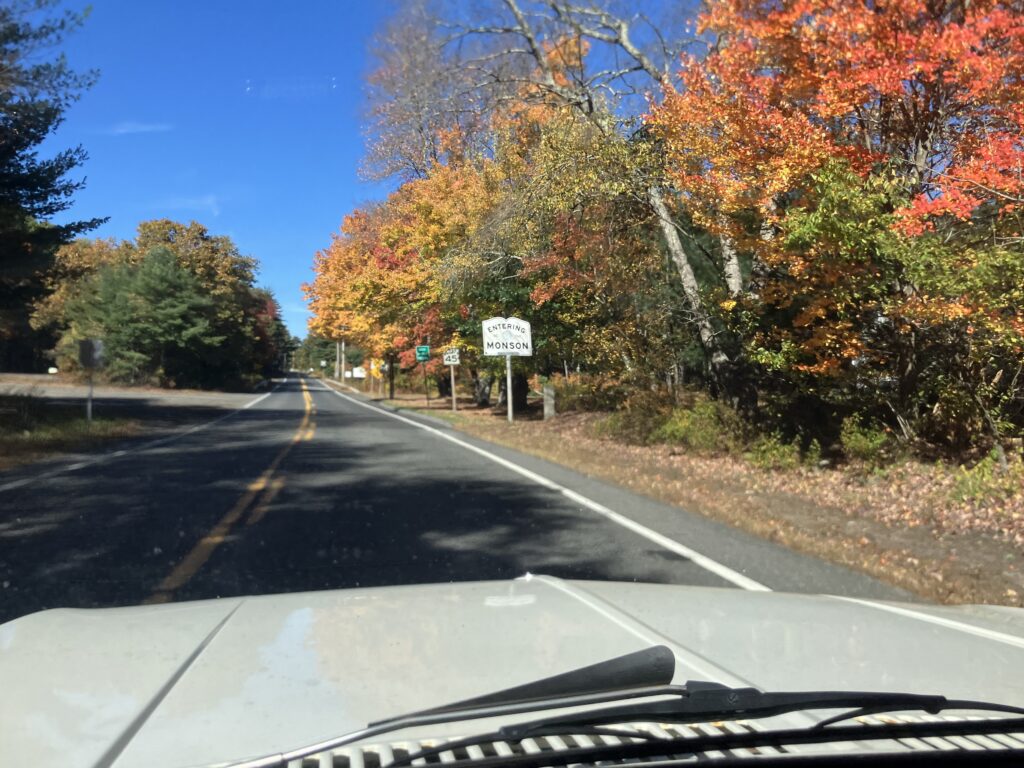
Returning to the mother ship.
That left Louie, the Ran When Parked car. Despite my having installed a push-button that fires up the cold start injector on the throttle body, Louie also had a hard time starting, but it was up and running and out of the warehouse quicker than Hampton was. As soon as I began driving it, though, I was reminded that my having updated its suspension with new H&R progressive-rate springs, Bilstein HDs, and a used set of Suspension Techniques 22/19mm sway bars a few ago had an effect on the car that I didn’t like. For some reason it had become noisy and stiff, and I never put the time into diagnosing why. Still, it’s a beautifully-running ’72 tii with which I have a rich history, and the short drive was lovely.
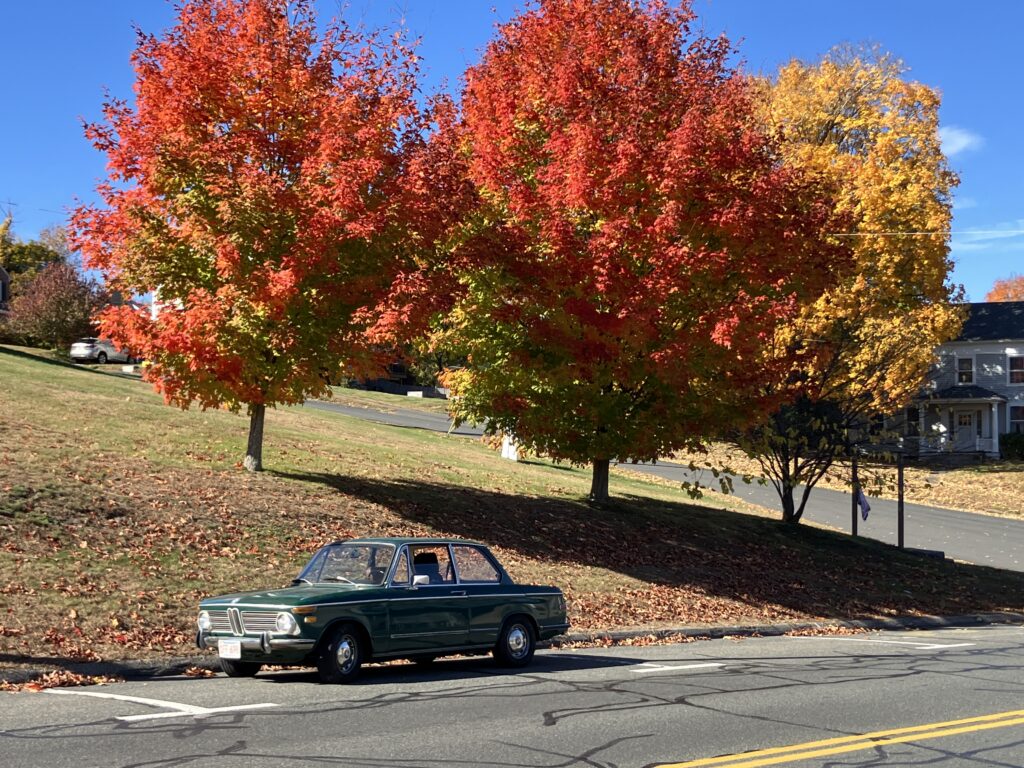
As Carole King sang, my life has been a tapestry of rich and royal hue.
Unfortunately, after I took this picture, Louie wouldn’t start. I cranked it enough that the battery began sounding weak, so I connected the jump pack I’d thrown in the trunk. It eventually started, and we beat it back to the warehouse.
All of this took longer than expected, and it was now late enough that, no matter which car I drove home, I was certain to hit some traffic on the drive back to Newton (suburban Boston). This ran afoul of my goal of bringing the Europa home, as the tiny 42-inch-high car is a bit harrowing to drive in stop-and-go interstate traffic. Instead, I decided I’d head north along Quabbin Reservoir’s east edge, stay on local roads, and leaf-peep my way home in the Lotus. It’d take twice as long and be four times as much fun. I buttoned up the two 2002s, packed the Europa, turned the key, and…
Nothing.
Well, not nothing, but no cranking. Just the solenoid engaging the starter for one tug, then, well, nothing.
I have battery cut-off switches in some of the cars, but not all. Often I just leave the negative battery clamp loose so I can push-twist it down and pull it off without a wrench. I tightened it down, and it made no difference. I then cleaned the terminals with a battery post cleaner, and this didn’t fix it either. So it was either a terminal-contact issue or a genuinely dead battery. I connected the jump pack and the car cranked and started easily, but I wasn’t sure I wanted to take an “it’s fine just don’t shut it off” car on a long drive home. Close inspection revealed that the clamp on the positive battery cable appeared to be cracked. I could’ve run down to NAPA and bought a clamp, but I elected to leave it for another day.
But which car to drive home? It almost seemed like the FrankenThirty engineered this whole thing so it could come back home with me, but I turned my sights back to Louie. Its hard-starting problem was the reverse of Hampton’s—with the cold-start push button, it had oodles of fuel, so it must be an ignition issue. The way I’d usually diagnose this is to run a wire from battery positive to the hot terminal on the coil, and in fact I had a wire with a battery clamp on one end and a quick-connect terminal on the other specifically for this test, but it was part of my road-trip electrical kit, which I hadn’t brought.
Then, for some reason, I looked down into the well at the base of the windshield, and sitting in it was exactly this cable, which told me three things: 1) Louie had this problem before, 2) it was unresolved, and 3) not only had I forgotten about it, I’d forgotten that I’d stashed the work-around in a convenient under-hood location just in case it recurred. Sheesh. It’s a good thing I remember where I keep the cars.
I connected the cable, and the car started instantly, telling me that the problem was almost certainly either in the ignition switch or the wiring to the ballast resistor, a diagnosis I left for another time.
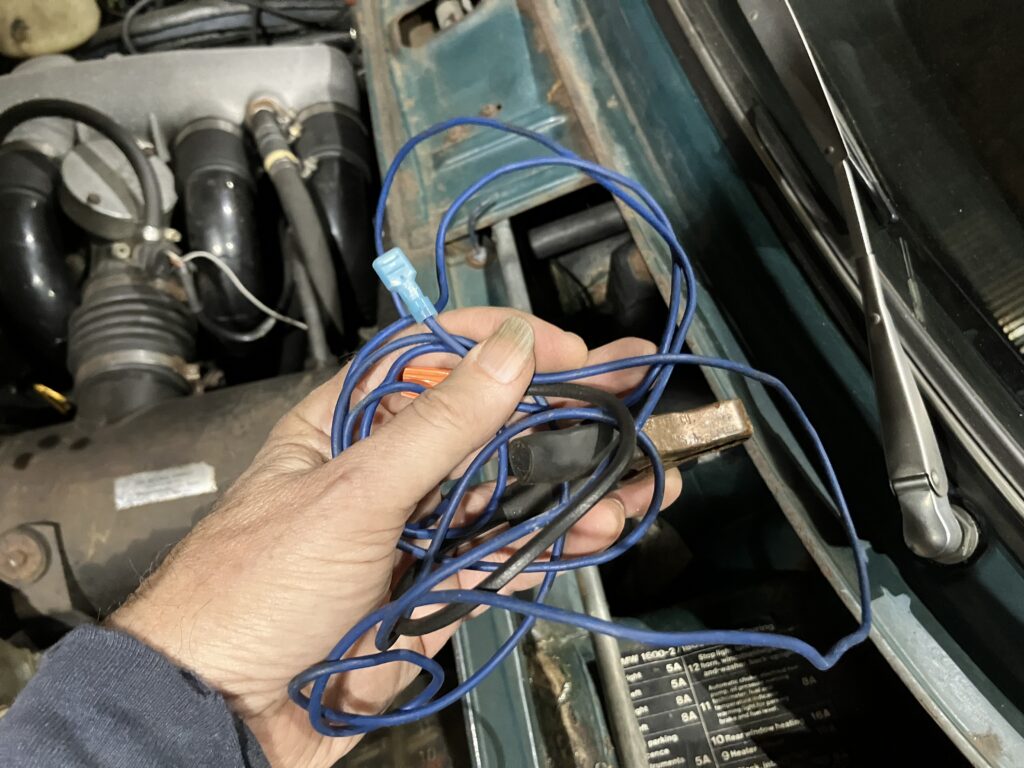
Mind blown.
So Louie and I made a run for it. The noisy-stiff suspension bugged the hell out of me, but the car ran perfectly. It flew home at the 80+mph traffic speeds on the Mass Pike. The drive reminded me of the description that my friend Brian Ach gave after we drove our tiis down to The Vintage in 2016. Brian said there’s that moment when, while driving a tii on the interstate, you pull into the left lane, and the person in the car on your right looks at you with an expression that says “You’re going to pass me in that?” and then you feed gas and the Kugelfischer injection does its miraculous wind-up thing and you blow pass them like it’s nothing, because it’s, well, nothing.
The drive home was like that.
So Louie is back home a bit sooner than I expected. We’ll see if he stays here ’till spring and I dig into the suspension and hard-starting issues, or whether I flip him around and send him back to Monson and grab him again before the snow falls.
—Rob Siegel
____________________________________
Rob’s newly-expanded book The Best Of The Hack Mechanic™: 40 years of hacks, kluges, and assorted automotive mayhem, is available on Amazon here. His other seven books are available here on Amazon, or you can order personally-inscribed copies (including the new Best Of) from Rob’s website, www.robsiegel.com/books.