
Welcome to Tech Talk, where our resident BMW tech Nick Owen answers all your pressing BMW technical questions, frustrations, and issues. Have a question for Nick? Email him at techtalk@roundel.org. Let’s get into it.
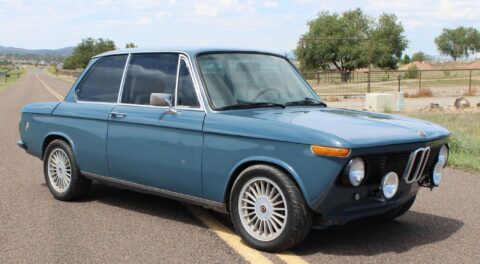
340,000-mile 1985 E30 Eta with Puzzling Engine Issue
I’m an owner of a 1985 325e E30 with 340,000 miles proudly on the odometer. I live in California, which means emissions testing occurs every two years, and it failed once with high NOx. I understand this means it’s burning a bit hot. The car is generally running very smoothly with reasonable power at this age.
Usually, this car passes emissions with flying colors, being an “eta” motor. Oh, we eventually got it just passing last time a year back.
Additionally, in the past year or so, the temp gauge has been moving above the mid-mark in 90+ degree outside temps. Plus fuel mileage has dropped about 25 percent and a mild stumble has begun occurring on the highway after about 10 minutes under light load (either uphill or with A/C on). After driving, and parked for about five minutes, the temp gauge rises one mark, which seems like “heat-soak.” It’s never reached the red zone.
My shop(s) and I have changed plugs, wires, cap and rotor, thermostat, water pump, and the radiator without real success. I don’t smell any exhaust in the coolant overflow tank, although that has not been formally tested. Injectors are original, as is the AFM. Shops are suggesting leak-down tests for possible head or head-gasket issues. It seems reasonable that there may be a leak into the coolant within the channels (via head-gasket, or cracked block or head?). Or possibly something blocking the channels?
I’m rather stumped. What might be your E30 experts’ take on a cause for these symptoms for an otherwise smooth and well-cared-for M20 “eta” engine?
Paul Roland
Here are my thoughts since we are speculating a few different things:
Just based off the mileage alone, I would look at replacing the AFM and injectors, since they are original. I have never been a fan of cleaning the AFM/HFM because the air that is going over the signal wire is post-air filter. Technically, there isn’t much, if any, “dirt” on it. But at 338,000 miles, I would argue that the integrity of that component has degraded to the point where, perhaps, it is not performing optimally. Since the AFM tells the DME how much air is coming in (so it can determine fuel trim) it is wise to be 100 percent sure this part is operating at 100 percent capacity. Same for injectors. Might account for your missing MPG…
Based off the readings from the last three emissions tests, the car has traveled approximately 8000 miles. Yet, all emissions readings are relatively the same, which means I think you have a failing catalytic converter. How many miles are on the converter? Generally speaking, catalytic converters fail when they lose their ability to store and release oxygen. While your CO2 readings are healthy, the 02 readings are high (in my opinion) meaning the cat is letting too much oxygen pass through. Now, the car is from the mid-80s and I would also debate that vehicle components designed and built in this time period may not be optimal to today’s standards. Therefore, I would be curious to see what the emissions look like after renewing the above components, also ensuring you have proper fuel pressure at the fuel rail. Richer fuel mixtures will bring down Nox readings, while lean fuel mixtures will raise them. But a catalytic converter that is not lighting off (failing) will show high(er) emission readings across the board.
If you suspect a head gasket issue, leak down is the only way to go. However, a coolant gauge moving towards the hot side on a hot ambient day, is normal. As long as air flow is over the radiator and the coolant is circulating through it, the car is doing its best to maintain proper operating temperature. Are you losing coolant at all? Plus, its summer in CA. Also, an easy head gasket check is to drive the car and let it sit overnight. Pinch the upper radiator hose in the morning. If it’s still pressurized, congrats you have a problem.
Stumbles can be caused by the fuel system as well. Especially if it’s under load. The eta DME probably isn’t the best at picking up a small stutter either so a fault will never be stored. Again, see my first line item.
E90 Headlight Issues
I am writing about a new issue with my 2009 335i that may affect others who have a similar situation.
Recently my car indicated that a bulb was out. Typically, it is one of the brake light bulbs, but this one was different. My car came equipped with xenon headlights, which are great. However, they do generate heat, and along with the heat of the engine, that created a problem with the wiring.
After searching for the issue, I found that one of the bulbs for the angel eyes was out. I opened the port where the bulb would be found and reached in to unscrew it. During this process I had to move several wires that were in the way and there wasn’t much room to work. I was able to turn it clockwise to get the three male tabs to release and then disconnect the electrical connector so I could inspect the bulb.
After doing this, I noticed that most of the insulation on the wires for this bulb and others was cracked and breaking off, or in the process of cracking. My guess is the heat from the xenon lamps as well as the engine, over the last 17 years, had taken its toll on the wiring.
What a mess! But since I am a DIY type the next step was to figure out how to repair this. My first thought was to buy a new harness and electrical connector, but couldn’t find what I needed online.
I determined it was feasible to do some wire splicing and add shrink tubing to all the affected wires and it worked. This should protect them from further degradation or shorting out, but it was a tedious process.
One other issue was the difficulty of getting the H8 bulb back in the socket through the small opening. I was able to accomplish this by moving the wires out of the way and keeping the bulb parallel to the socket while twisting it to its locking position. Used a mirror to figure out the locations of the tabs in the socket.
Both sides of the car headlamps were affected. The side that didn’t need a replacement bulb did have small cracks in the wire insulation, but not enough to need attention now.
Is there a way to open it up from underneath the car or do I have to pull the whole headlamp section from the car? There must be an easier way to get to these bulbs.
Finally, my thinking on describing this issue is to have you advise others who read your tips and have older cars like mine to check the headlamp wiring. I believe, even without the xenon system, that there is enough heat from the engine and external heat to affect these wires.
John Calabria
The bad news is that there are no internal parts that are serviceable for BMW headlights. We are at the mercy of the manufacturers for parts like this. As someone who also has a 2008 335, I dread the day my headlights start to have internal issues because even I know the only repair is replacement.
Further bad news is that there is no service port under the headlight to allow better access. If you want to replace the module(s), you need to take the headlight out. The bulbs are accessible but some are hard to get to. The trick with the H8 bulb is to connect to the connector and turn it 90 degrees before installing it. That way when the locking tabs are in the spots they need to be and the only remaining step is to turn the bulb and lock it into place. It takes some finger dexterity and patience.
Unfortunately, I do not have a general rule of thumb for headlight maintenance. Aside from replacing a bulb when it goes out, there isn’t much you can do by checking the headlight wiring to see if the insulation is coming off. Most are not the DIY type therefore I do not advise on digging into an issue like yours for the average BMW owner. In the times I have seen this in the past, I was able to change the bulb and the headlight still worked despite the insulation coming off.
Flat Tire Monitor vs. TPMS
I have a Canadian market 2018 M2, and instead of a tire pressure monitor system it has a flat tire monitor. I’ve read messages by a Canadian owner who has changed his FTM to TPMS. I am on the west coast of Florida and need to find someone who can do the conversion for me. Do you have any ideas on this issue?
Dick Baumgartel
Based off my brief research on this conversion, you will need to find a shop that can change the VO (Vehicle Order) in order to allow the car to convert FTM to TPMS. This combined with the appropriate part number TPMS sensor (x4) should allow this conversion to work. Off the top of my head, I do not know a shop in Florida but I think if you do a Google search you will find one.