I’ve nearly made a career writing about what I call “The Big Seven”—the primary reasons other than a flat tire that a car winds up in the breakdown lane. It began as the three main issues that befall vintage cars on road trips (fuel delivery, ignition, and cooling system). I then expanded it to include charging system issues, and added belts because they’re part of both cooling and charging, and even though they’re incredibly simple on old cars, I had several road trips dragged to a halt because the rubber bushings that secure the alternator and the bracket were so worn out that the belt wouldn’t stay tight, began slipping, and the car began running hot. Then, after several instances of failed clutch hydraulics, including the legendary one during the Ran When Parked adventure where the clutch master cylinder of a just-resurrected 2002tii failed as I was about to take the entrance ramp to began the car’s thousand-mile trek home, I added them to the list.
But the seventh item—ball joints—has always struck some people as kind of an odd addition to the list. Ball joints came into the scene in the 1950s when the older kingpin design was replaced by independent front suspension with either MacPherson struts or double wishbone, the former being by far more common. The strut holds the shock-absorbing cartridge, and on top of the strut sits the spring, both of which allow vertical motion of the suspension and absorb shock over bumps. The ball joint sits at the bottom, connected to the lower control arm via a steering knuckle. Its ball-in-socket design not only accommodates changes in camber as the strut goes up and down over bumps, but also allows the strut to rotate as the car is steered.
After the flex in the sidewall of the tires, the ball joint is the first component to feel the pounding from a pothole. The strut and spring prevent the shock of impact from being transmitted whole-hog to the body of the car, but the ball joint feels it with full force. And, because of its location at the intersection of the suspension and the steering, if it fails, there’s nothing fixing the toe-in, caster, or camber of the wheel. It swings out to a jarringly wrong angle like Slovenian skier Vinko Bogataj’s broken angle in that awful scene those of us of a certain age saw as part of “the agony of defeat” montage in ABC’s Wide World of Sports, and you lose control of the car.
There are other ball-in-socket steering components—tie rods, for example—whose complete failure will also cause catastrophic steering loss, but they’re not on the front line of pounding like the ball joints, and thus their failure is much rarer.
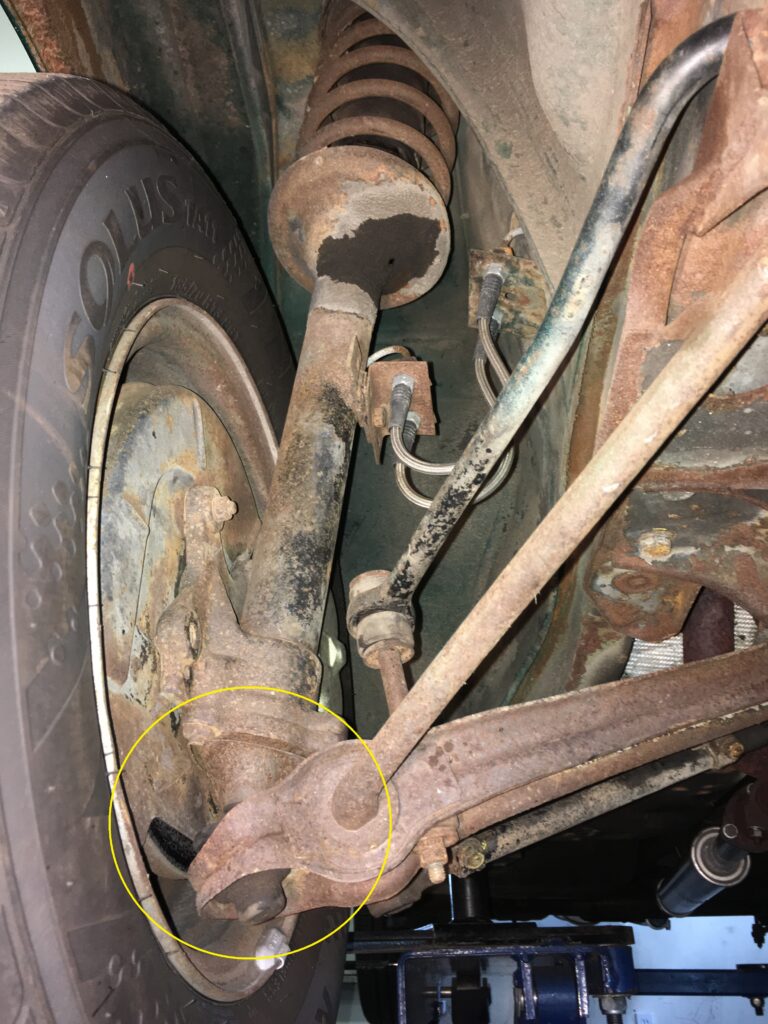
Your basic 50-year-old corrosion-coated MacPherson strut assembly from my 2002 with the ball joint highlighted at the bottom.
Go ahead and Google “ball joint failure” and look at the pics. It’s terrifying. And it’s not asteroid-hitting-your-car-rate in the slightest. The problem is bad enough on first-generation Tundras that Toyota recalled over 1.3 million cars over it.
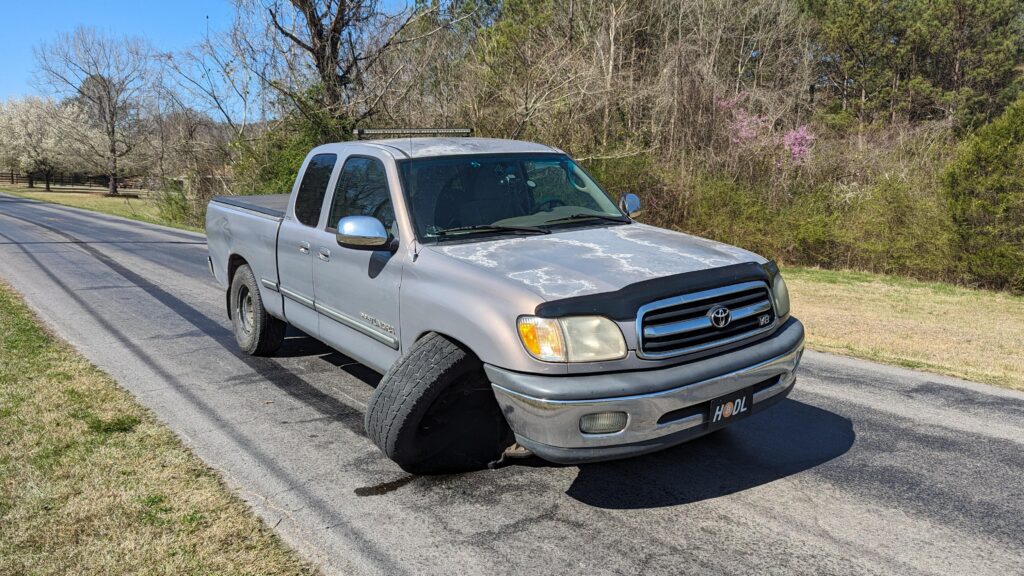
This is what happens when a ball joint breaks. (photo from the Reddit ToyotaTundra group)
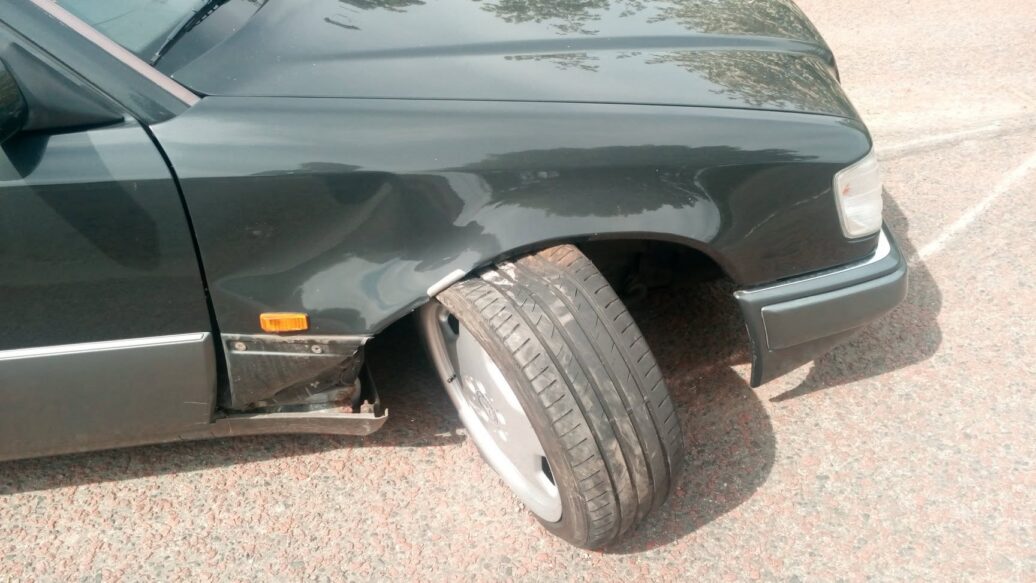
Fortunately, neither vintage nor BMWs are especially prone to ball joint failure. In fact, not only did Goggling “BMW ball joint failure” not reveal page after page of pics like it does with certain other cars, I couldn’t find a single image (the cover photo is of a Mercedes W124, credited to Bill Jones on Facebook). Indeed, on a 2002, they’ve been known to last the lifetime of the car—if you look at yours and see them held in by wide rivets, they’re original. Still, you really don’t want to be wrong about it. In fact, the first ball joint failure I ever saw first-hand was on a big-bumpered square tail light 2002 that was on the exit ramp of the Mass Pike (I-90) in Watertown about 40 years ago. The left front wheel was mashed up at an odd angle inside the wheel well, and had taken the sheet metal along with it.
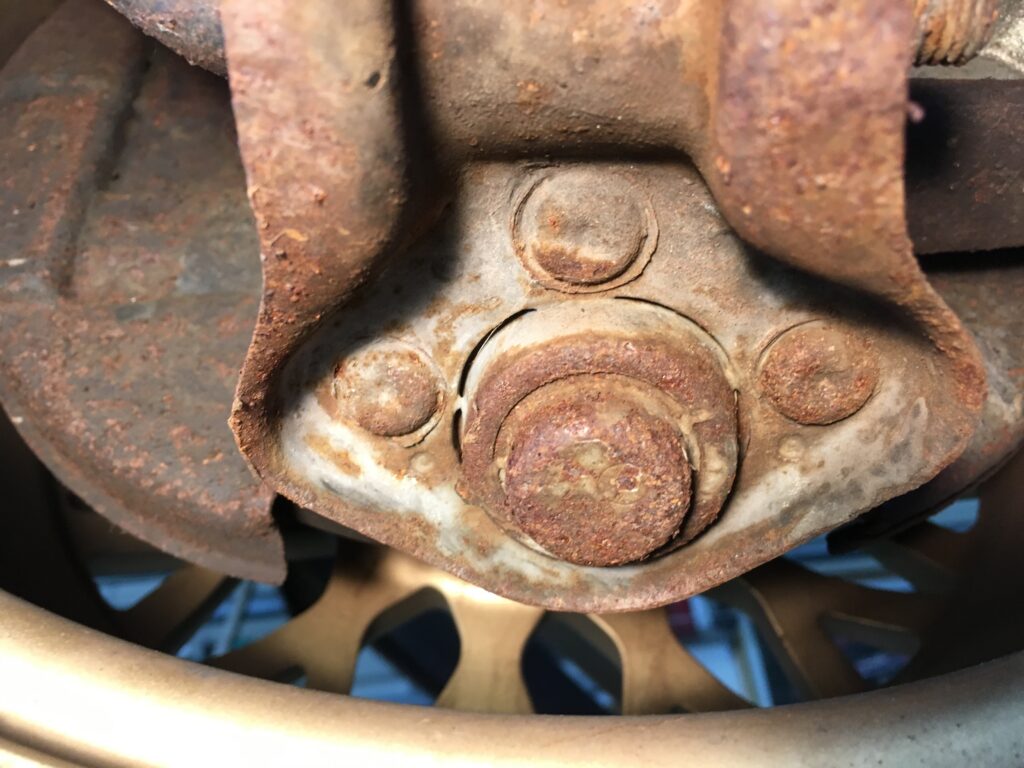
Bertha’s original riveted ball joints during the car’s resurrection in 2019. They’re still on the car.
Failing ball joints on a vintage car usually announce themselves by a knocking noise over bumps, but the the tried-and-true method for checking for them is to jack the car up and use a very large pair of slip-joint pliers (or, as mechanics often refer to them, “the BFPs”) to squeeze them and check for play.
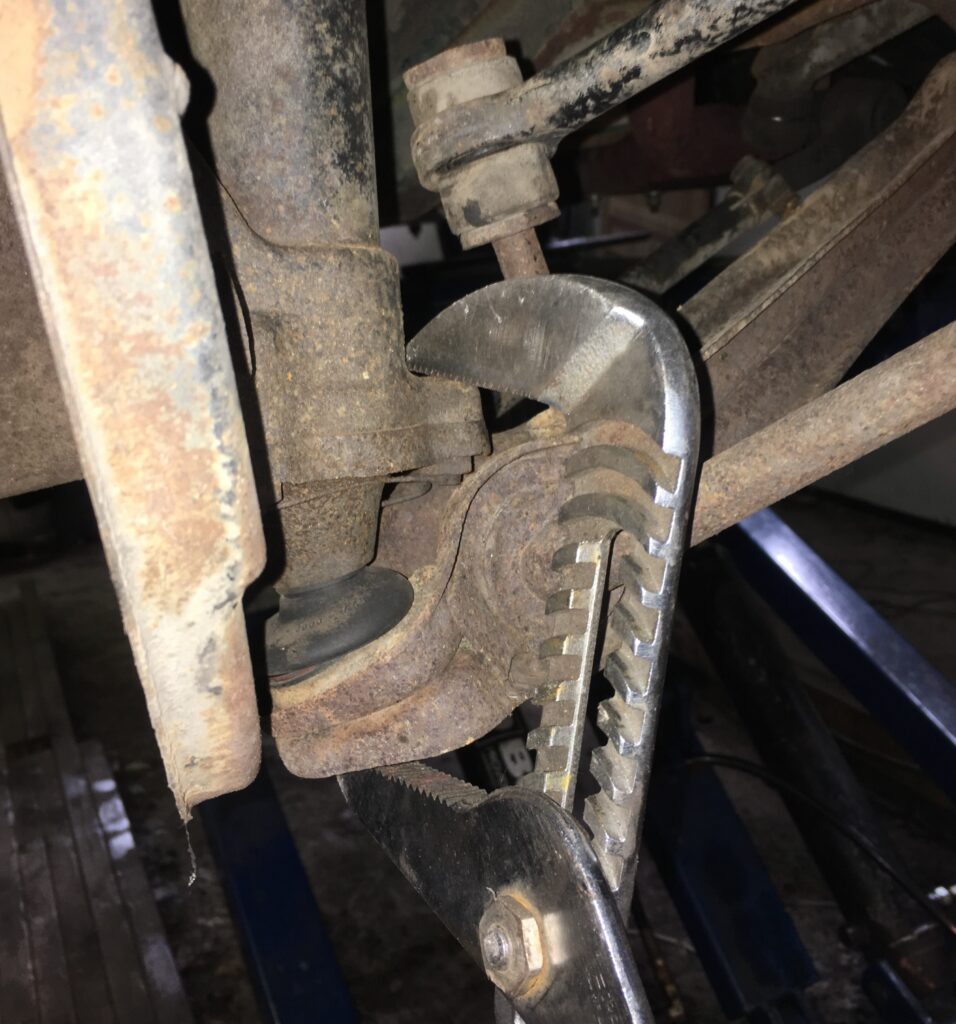
The BPFs pressed into service to check for ball joint play.
Even if there’s no play, you should check the rubber boots. If they’re torn, moisture and dirt are getting in there, grease is getting out, and the smooth ball-in-socket joint will eventually be degraded. In 2010 before my first trip to The Vintage, I found a torn boot on one of the ball joints on my E9. Unlike on a 2002, the ball joints are pretty much an integral part of the control arm, and replacement control arms had gotten very pricey even then, so I pressed the top of the joint out from the steering knuckle, cleaned out what I could, squeezed in some grease, put a generic rubber boot cap over it, and put it back together. That was 16 years and 10,000 miles ago. I check for play annually, and it’s still fine.
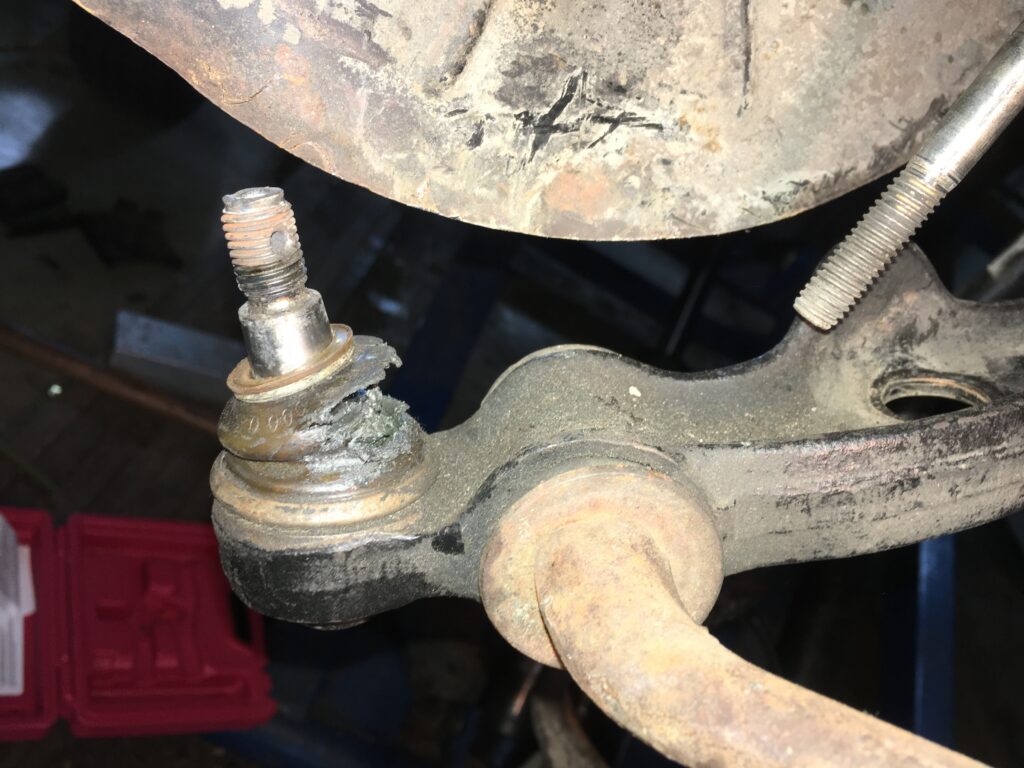
The ripped ball joint boot on my E9.
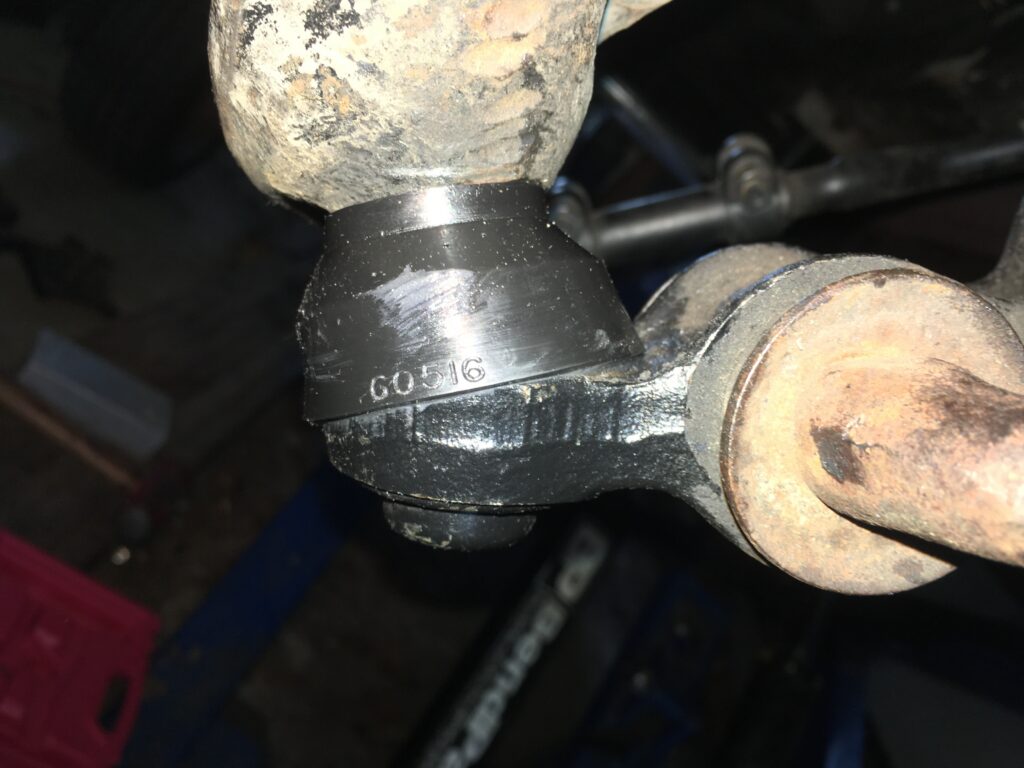
The over-boot that’s still on there.
In a newer car, the front suspension and steering is almost always more complex than it is in a vintage car. The ball joint may be directly integrated into a lower control arm, an upper thrust arm, or both. And for this reason, it may not even be referred to as a ball joint. But its integrity is just as important, and failure can be just as catastrophic.
On a car where the ball joint is integrated with the lower control arm or upper thrust arm, the symptom of wear is often a light knock and/or shudder of one of the front wheels when the brakes are applied. This may sound and feel a bit like a “warped brake rotor” (which I am journalistically required to put in quotes because brake rotors usually aren’t actually warped, but instead there are microdeposits on them that make them no longer flat), but the brake pedal usually doesn’t pulsate during the shudder, and the shudder typically isn’t telegraphed into the steering wheel to the same degree. Jacking up the car, grabbing the front wheel and 3 and 9 o’clock, and pushing and pulling may reveal play in the ball joint or whichever component is the source of the vibration.
Not long after I bought my 2003 E39 530i, what had been a very mild “Is there a little shudder in the left front wheel on braking?” rapidly became noticeably worse. When it ramped up while coming home from a gig, I drove home at 45 mph in the right lane with the flashers on. As soon as I got home, I jacked up the car, set it on jack stands, wiggled the left front wheel, and discovered an alarming amount of play. This car has both a lower and an upper control arm, each with a ball joint attached to the bottom of the strut. I quickly isolated the source to the ball joint that’s part of the lower control arm. At the time, I replaced only the lower left arm, but soon followed it with the right one, and then both upper ones.
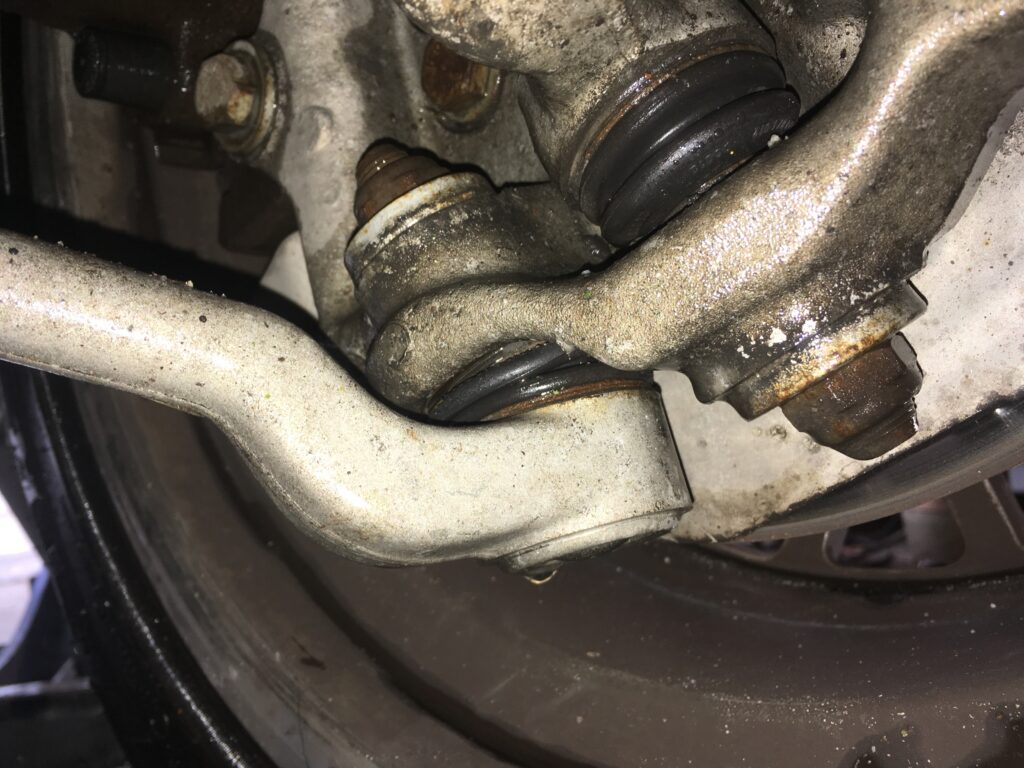
The E39’s ball joints from the lower (left) and upper (right) control arms attached to the steering knuckle at the bottom of the strut. The one that was bad was the one on the left.
A few years later in 2019, when I bought the unicorn-rare 2004 E53 X5 with the six-speed, sport package, and the factory trailer hitch, the fact that it had 270,000 miles on it seemed inconceivable from its appearance. The car was unregistered and uninsured when I bought it so the test drive was a slow and careful run around the block. However, while driving it home, anything but eggshell-on-the-pedal braking caused the car to shudder and pull so strongly to the right that I wondered if the car also had a seized front caliper or a plugged flexible brake hose. On inspection, it turned out to have an alarmingly worn-out ball joint on the right lower control arm that was so bad that it allowed the wheel to be wiggled even without jacking up the car.
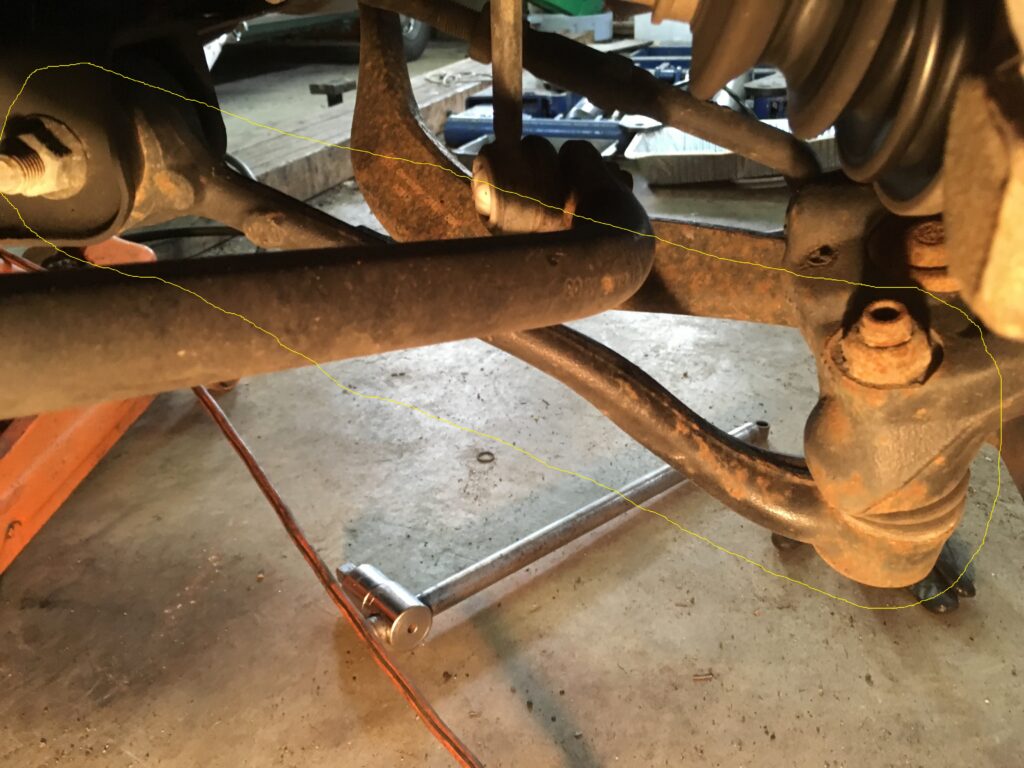
You again!
I needed to use the X5 as a winter driver, so for expedience, I replaced only that part, and had no other issues with the front end.
So, whether vintage or modern, whether BMW or another brand, pay attention to your car’s ball joints. You really don’t want to be wrong about them and have one let go on you. Besides, I think we all owe it to BMW to continue their apparent streak of having Google image search unable to unearth a photo of a BMW with a front wheel folded under like Vinko Bogataj’s ankle.
—Rob Siegel
____________________________________
Rob’s newly-expanded book The Best Of The Hack Mechanic™: 40 years of hacks, kluges, and assorted automotive mayhem, is available on Amazon here. His other seven books are available here on Amazon, or you can order personally-inscribed copies (including the new Best Of) from Rob’s website, www.robsiegel.com/books.