Loyal readers may recall when, about three years ago, the alternator in my 2003 E39 530i stopped charging when I was up in southern New Hampshire. I was alerted by the battery warning light on the left corner of the cluster coming on. I usually drive with a cigarette lighter USB charger and voltmeter plugged in. In this instance, I didn’t have one, but I did have a multimeter in the trunk. I used it to check the battery voltage, and it was already down to 12.2V. (If you don’t know, just to recap Charging System Diagnostics 101, the resting voltage of a fully-charged battery should be 12.6 volts, and with the engine running, it should increase by about 1 to 1.5 volts so it’s about 13.5 to about 14.2 volts.) On a vintage car like a 2002, if the alternator isn’t charging the battery, you can probably drive it hundreds of miles as long as it’s daylight and good weather so you’re not draining the battery with headlights and electric fans, but on a modern control-module-laden car like an E39, you may have less than 45 minutes before the battery is drained to the point where the control modules no longer see the voltage they need to keep running, the dashboard lights up like a Christmas tree, and the car bucks, then dies.
When the 2022 episode happened, it was dusk and rush hour was approaching. Although I’ve written that you may have just 45 minutes or less of battery capacity in a car like an E39 before it wigs out, in truth, I didn’t really know. I pulled into a rest area, thought about the situation, and elected to play it safe and have the car towed home.
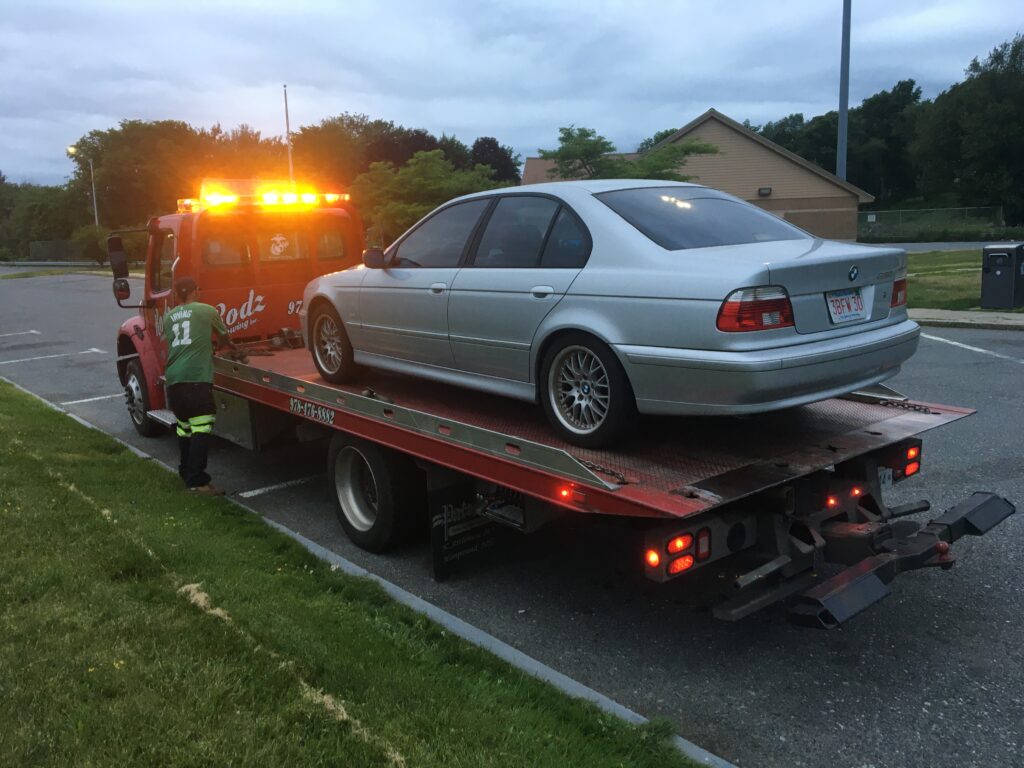
2022. Oh the indignity!
Once the car was in my garage, I elected to look at the brushes on the voltage regulator, as that’s what I was used to doing on E24/E28/E30-era cars where the regulator is held onto the back of the alternator with just two little screws and you can get it out in five minutes. In the E39, it’s quite a bit more involved to remove the regulator in situ, but I did, and found that the brushes were badly and unevenly worn, as were the slip rings. I replaced the regulator, and have been driving the car for the past 3.5 years.
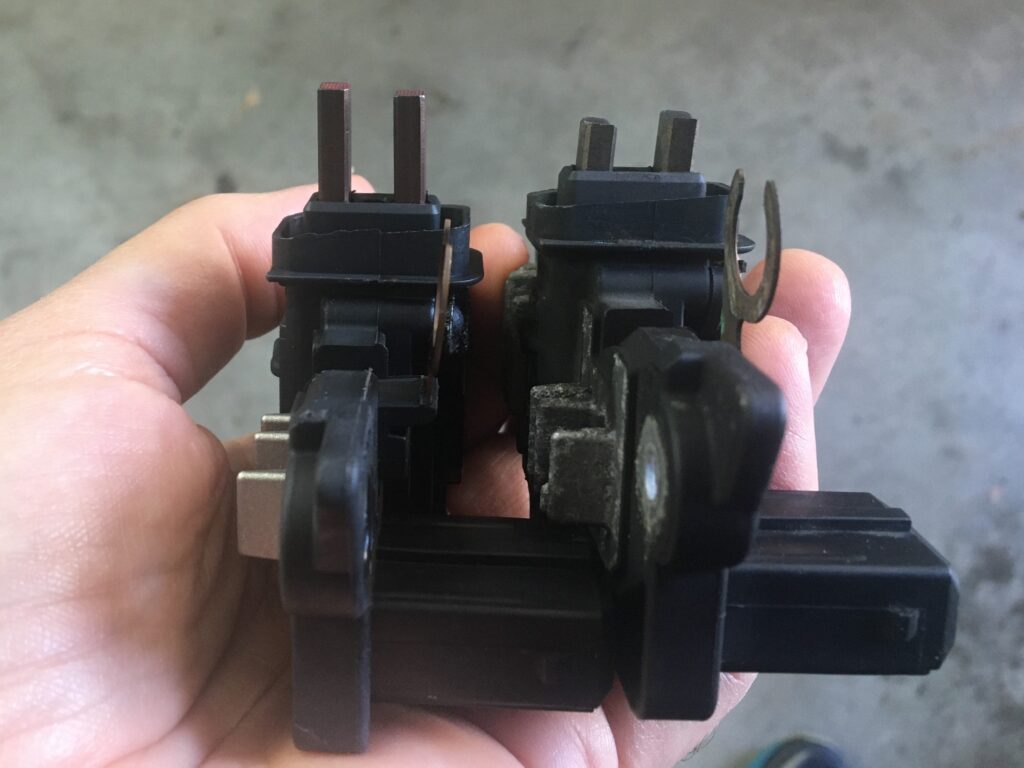
2022, new and old regulators and brushes.
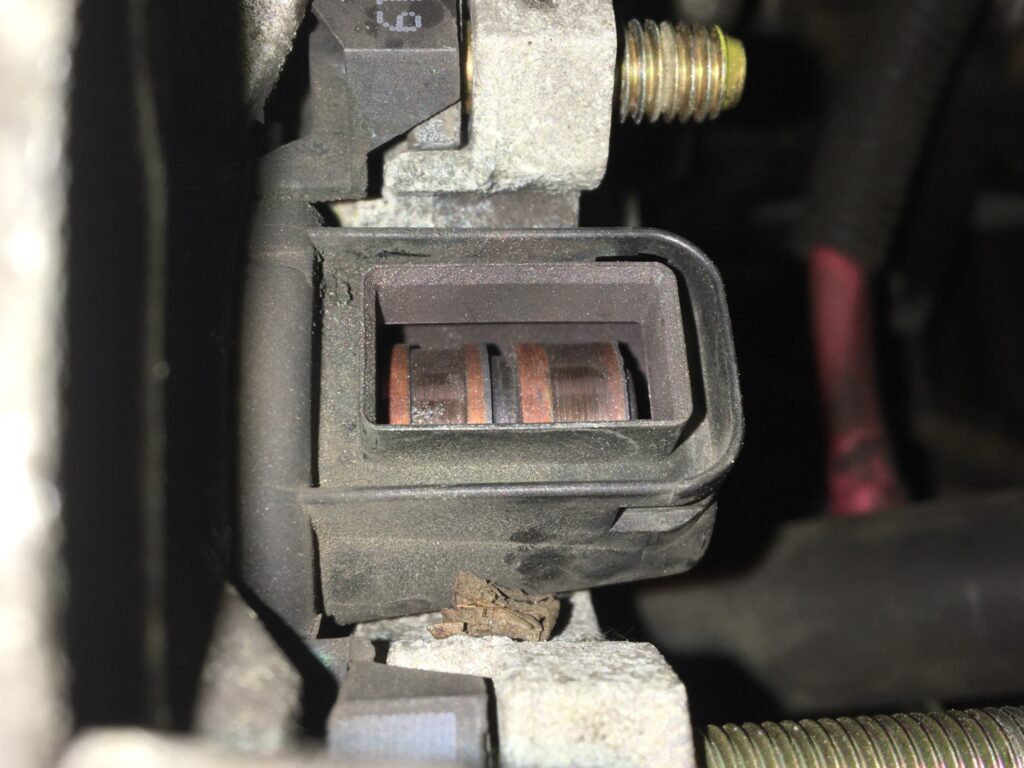
2022, grooved slip rings
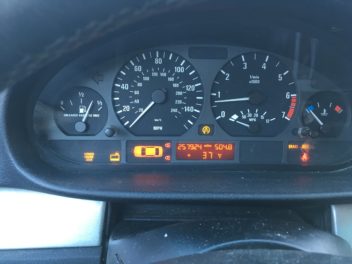
Fast-forward to last week. Maire Anne and I drove up to Nashua NH to drop off her sewing machines for service. We took the E39, which was unusual because it’s kind of incumbent on me to provide “stories-free” transport when we’re both together, so we usually take either her Honda Fit or a very well-sorted vintage car, but for some reason I was feeling like the E39. The 40-minute drive up to Nashua was flawless, but as soon as we began heading back, the battery warning light came on. Maire Anne has been around me long enough to know exactly what that means and what the options are.
“What are you going to do?” she asked. “Call for a tow?”
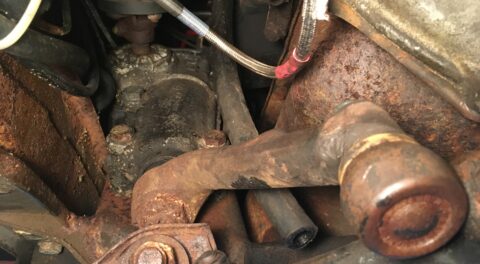
(To state the obvious, an E39 isn’t a vintage car like a 2002 where, if you have a spare alternator (which I didn’t), you can probably swap it, even in winter, in like 10 minutes. It’s located lower in the engine compartment, there’s more stuff in the way, and you have to deal with releasing the tension on the serpentine belt. )
I thought about how my 45-minute battery life estimate stacked up against the 40-minute zero-traffic drive on the way up.
“We’re going for it,” I said.
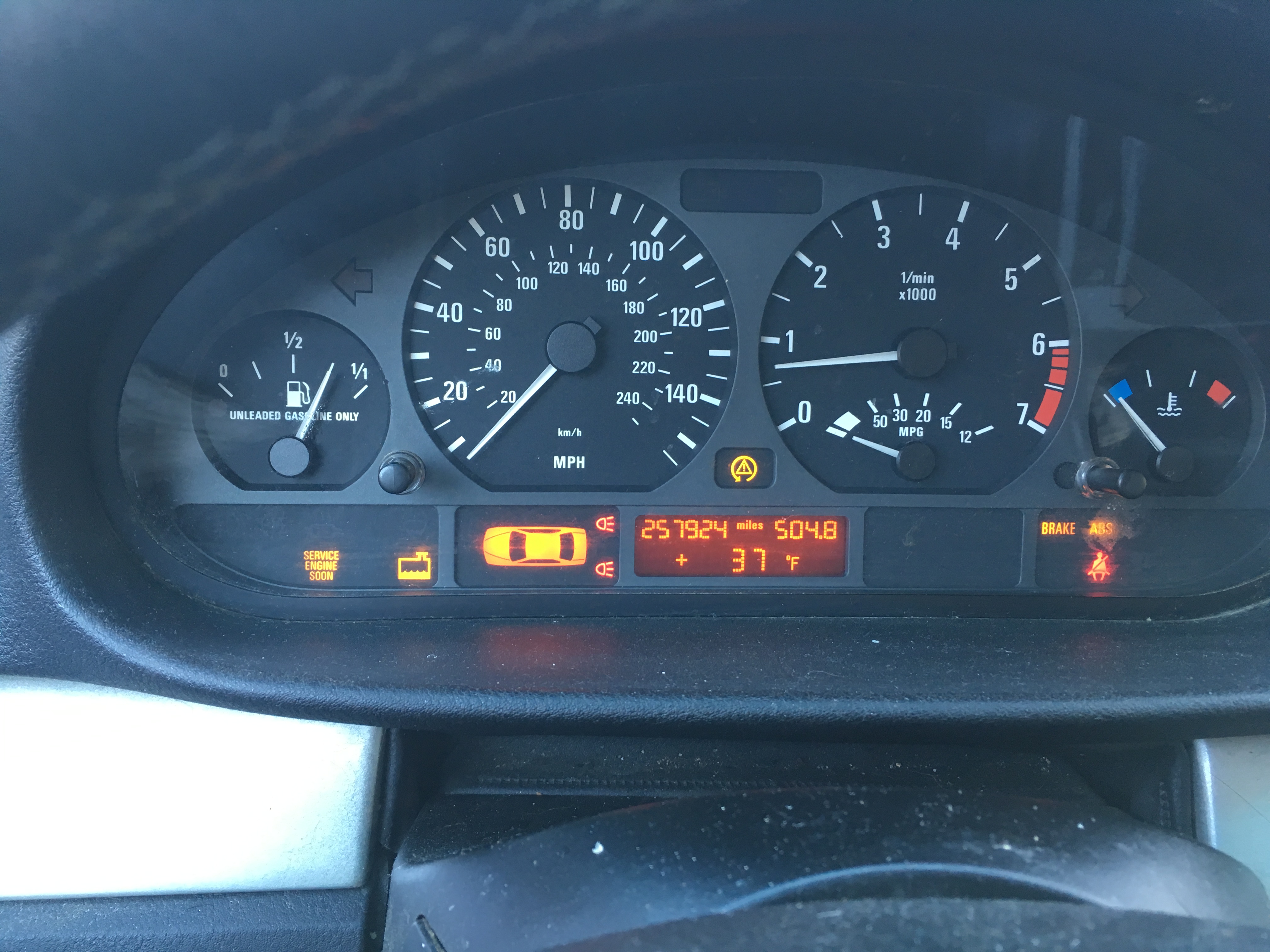
We burned down Rt. 3 and I-95, watching the voltage on the cig lighter like a hawk. Down and down it went, falling below 12, 11, 10, into the unimaginable single numbers. I was amazed that the car was still running. When we got off I-95 at the exit for our home town of Newton, I felt home-free, as if the car died, our son Ethan could’ve grabbed the battery jump pack from the garage, driven it the two miles to us, and I could clip it onto the battery for an ounce of reserve capacity. But we made it. Incredibly, as I turned left to pull onto our street, the directional dash light stopped flashing and the audible clicking stopped, indicating that things were beginning to be affected by the low voltage. A few seconds later, most of the dashboard warning lights came on—things like brake and airbag warning lights that have nothing directly to do with voltage.
As I pulled in the driveway, the cigarette lighter voltmeter read an astonishingly low 6.5 volts.
And it had been 42 minutes since the battery light came on. I guess that 45-minute number I pulled out of my butt a decade ago is pretty accurate.
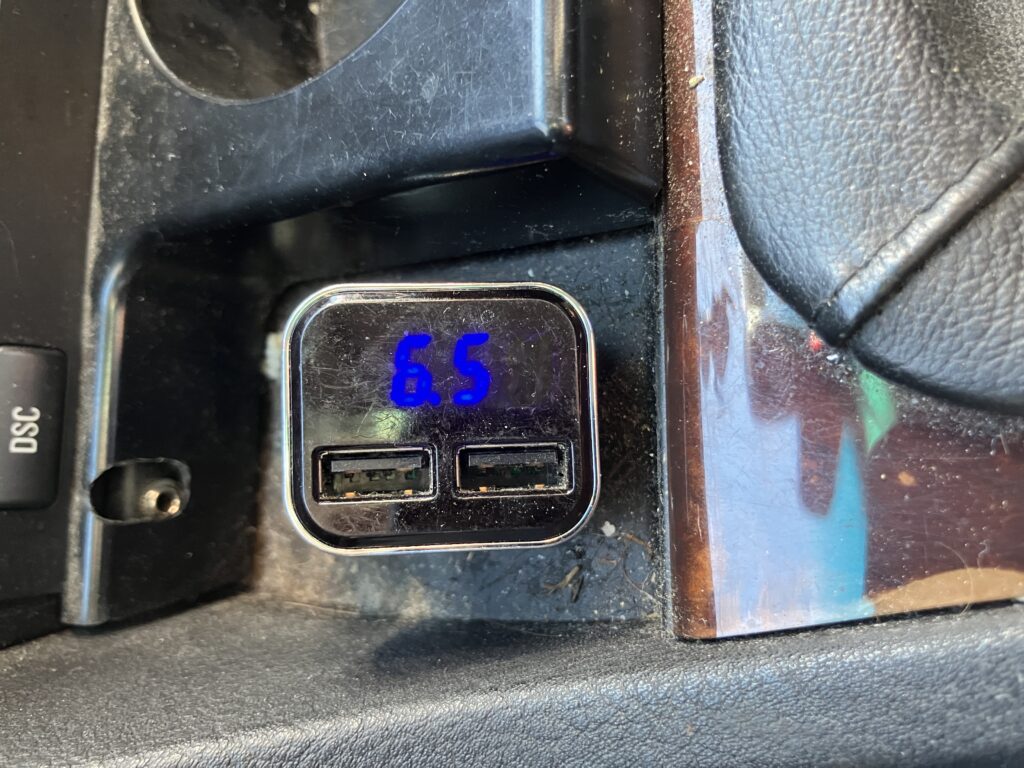
Totally not kidding about the 6.5 volts.
Interestingly, when I shut the car off and put a voltmeter directly across the battery terminals, it read 11.5 volts. I’m not sure exactly what mechanism was causing it to read so much lower at the cigarette lighter.
I pulled Bertha and the Lotus Elan +2 out of the garage, restarted the E39 with the jump pack, backed it into the garage, pulled the Lotus back in, and left Bertha to fend for herself in the driveway.
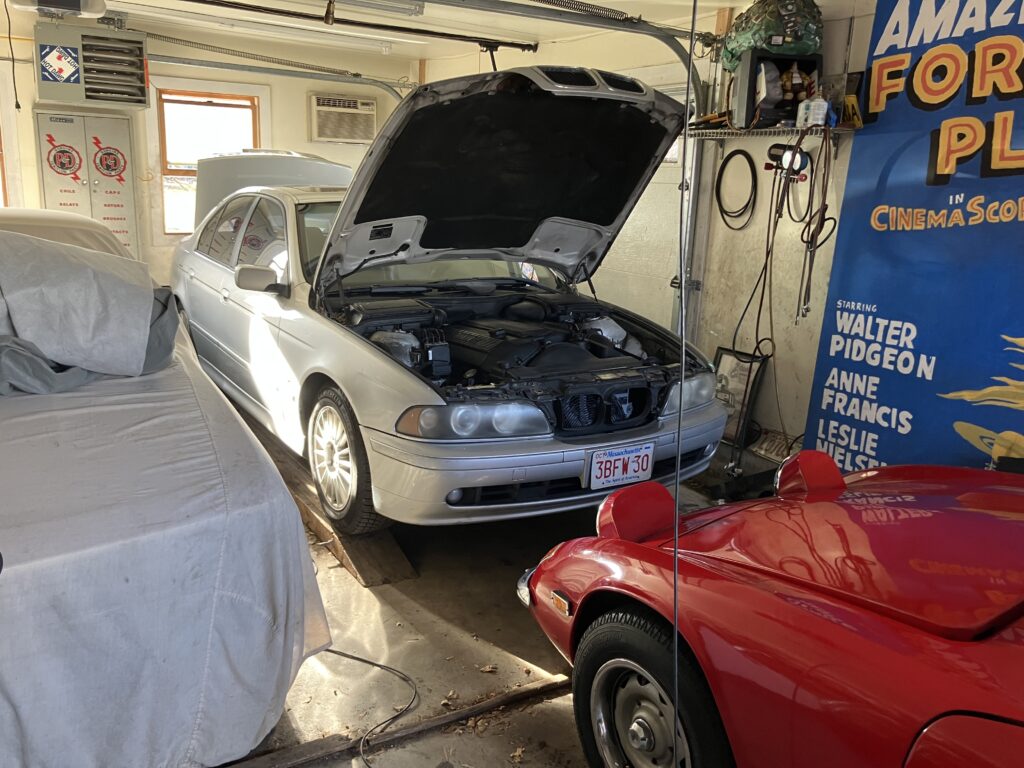
This is against the natural order of things.
I yanked out the alternator to do a proper post-mortem. This is what I found—one of the brushes had broken clean off from the voltage regulator, and there was visible damage to the slip ring.
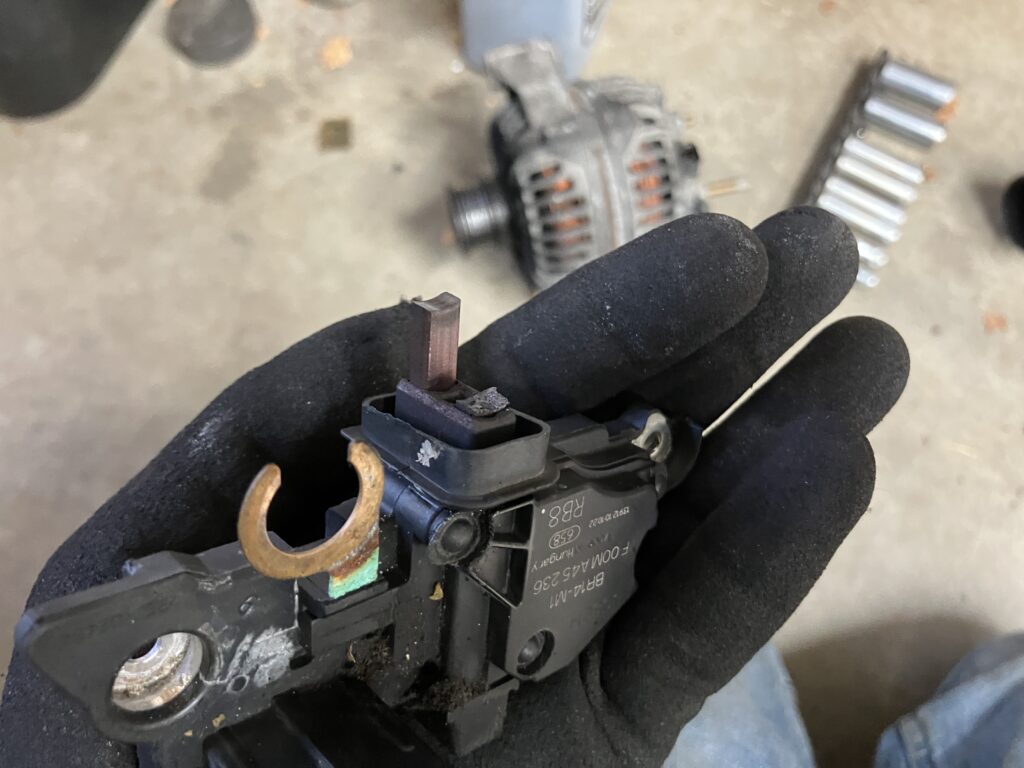
Way not good #1.
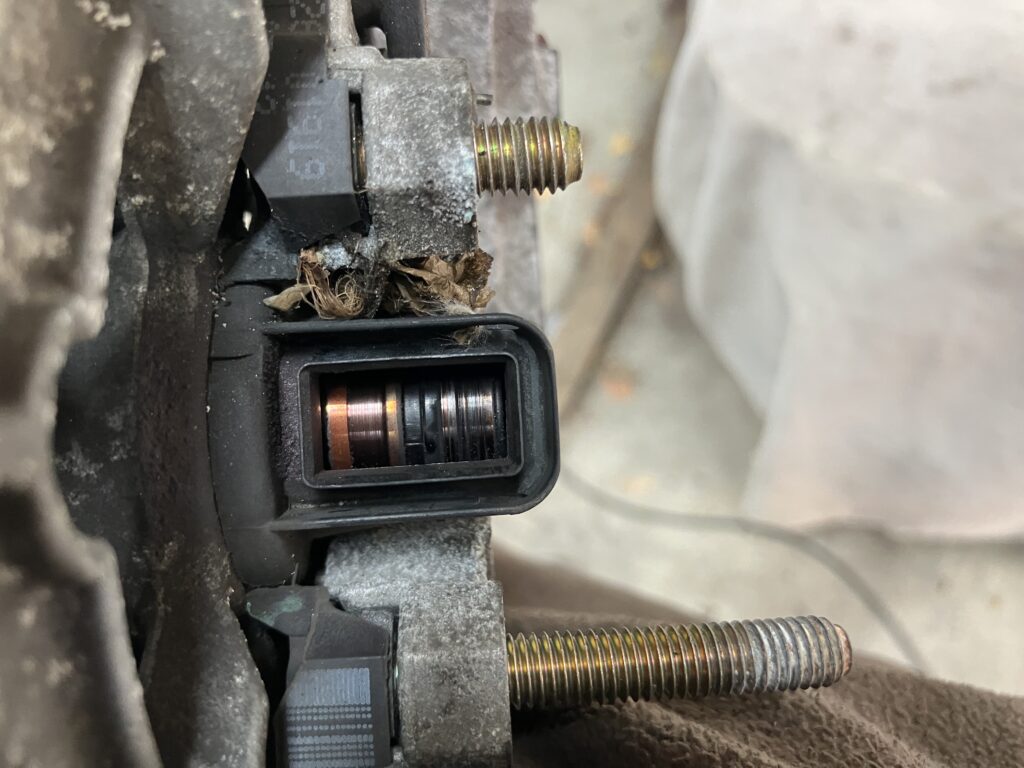
Way not good #2.
Whether the slip ring caused the brush to break, or the broken brush damaged the slip ring, it was clear that this time I needed to replace not just the regulator but the alternator as well.
But what to buy?
I and others often complain bitterly about the poor quality of replacement parts for older cars. The mechanism behind this is that when cars are still under warranty, the manufacturer is on the hook to replace broken parts for free, but as the cars age out of warranty, there is zero incentive for the manufacturer to actively police the quality control/assurance process of whoever they’re buying “genuine/OE” parts from. And it’s even worse with aftermarket parts, as the oft-touted phrase “OEM quality” means absolutely nothing. With alternators, you have the additional choice of buying not just new or used, but rebuilt. The OE alternators on E39s were Bosch and Valeo. The Bosch rebuilds have a reputation that’s, shall we say, spotty, and brand-X web-based click-and-buy rebuilds can be nothing more than a coat of paint. The preferred path is using a local rebuilder you have experience with, but I no longer have one. The cost of a new Bosch or Valeo ($389 and $317 respectively on FCPEuro) gave me pause, as those numbers represent 20 percent of what I could probably sell the E39 for, but I was very hesitant to buy something either used or rebuilt. Of course there are the new brand-X eBay and Amazon alternators in the $100 to $150 range, but looking at the Amazon ratings, I always see a tail of one-star reviews with comments like “worked for a month, then died.”
Then I saw that FCP had another new brand—SEG, who reportedly bought Bosch’s alternator and starter business in 2018. FCP listed a new SEG alternator with an overstock price of $240. That sounded good, and I dragged it into my FCP cart, but I was put off by the fact that I could find virtually no online reviews or ratings of SEG alternators. I decided to sleep on it.
In the morning (last Monday, three days before Christmas), I decided that I needed to get something on order and on the way to me. I called up my FCP cart on my laptop prepared to click and buy, and was stunned to see the “overstock” label gone and the price risen to $334.
No no no no no no no!
Desperate to get something in motion but not wanting to spend over three hundred bucks, I looked on eBay for used alternators within a small radius of me. I found a Valeo alternator reportedly from an 81,000-mile Z3 out in central Massachusetts at a salvage yard I’ve done business with before. I looked directly on their website, and saw that their no-eBay no-fees pick-it-up price was a shade under a hundred bucks. I called to make sure they had it, then shot out there (in the no-stories Honda Fit :^). In addition to the Valeo having low miles on it, the fact that it had been removed from a likely-not-driven-in-winter Z3 gave it a nice corrosion-free appearance.
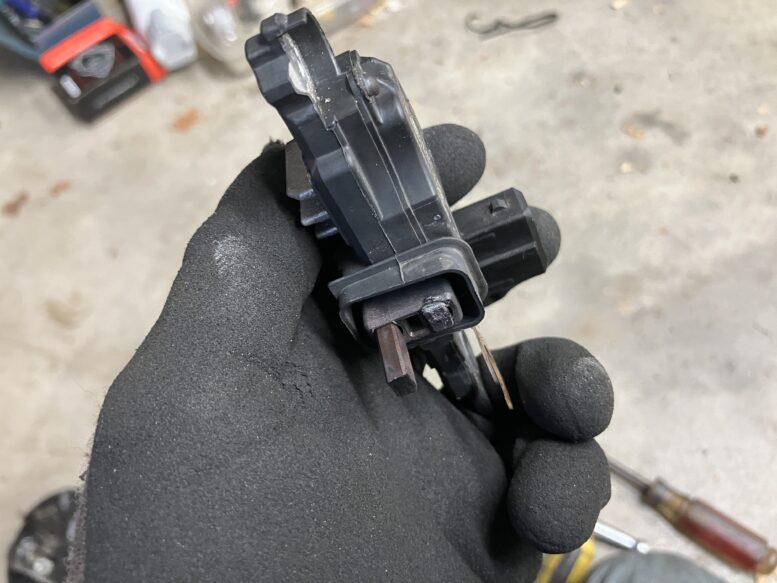
When I got home, I was about to install the Valeo in the E39 when I thought that there would never be a better time than now to pull the back cover off it and check the regulator. It was a little different than the Bosch, but still easy to do. Unfortunately, the brushes on the regulator looked like this:
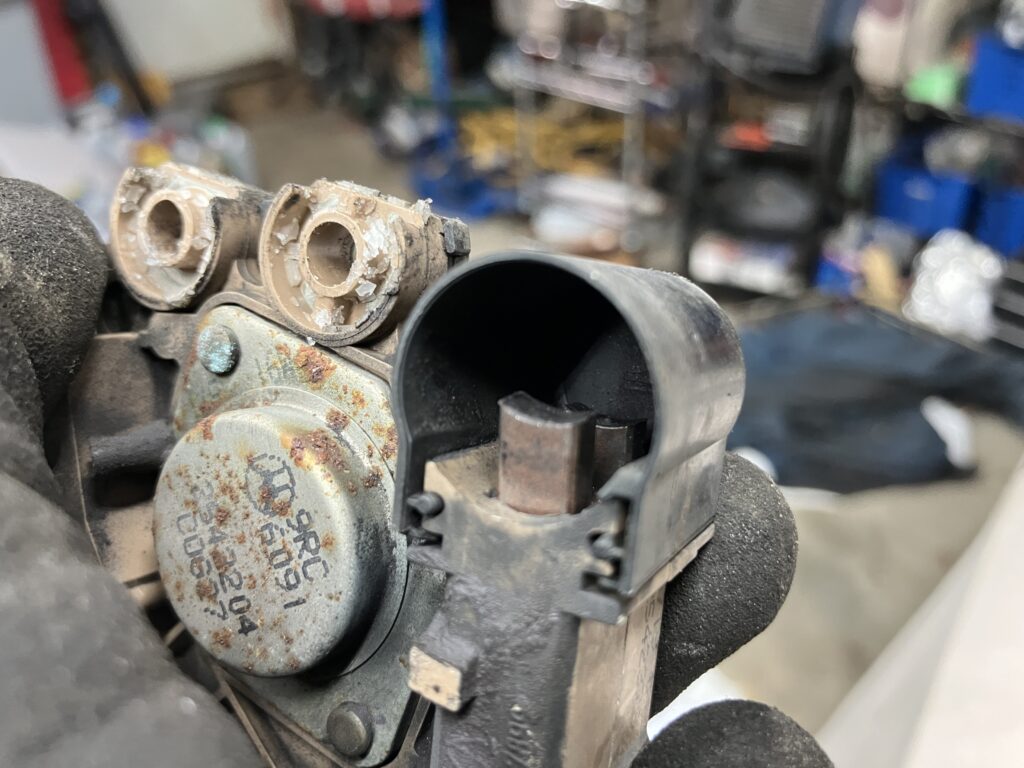
THAT’s concerning.
I slid the dust cover off the brushes so I could see them better. It made them look even worse.
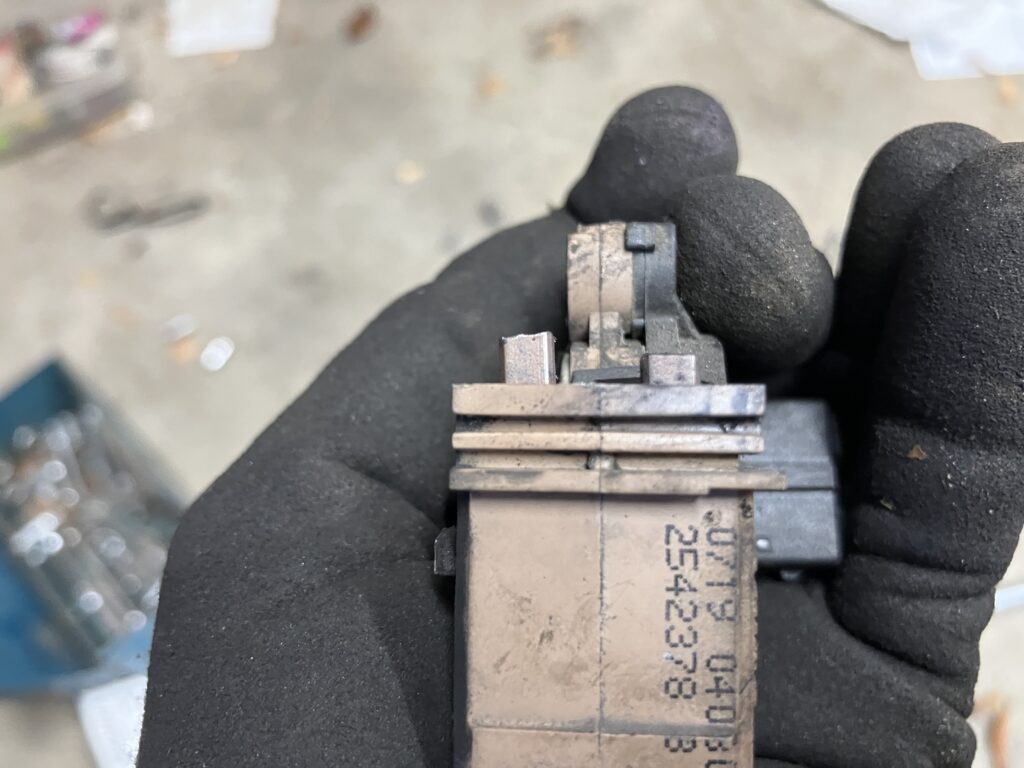
Do those look like they have 81,000 miles on them to you?
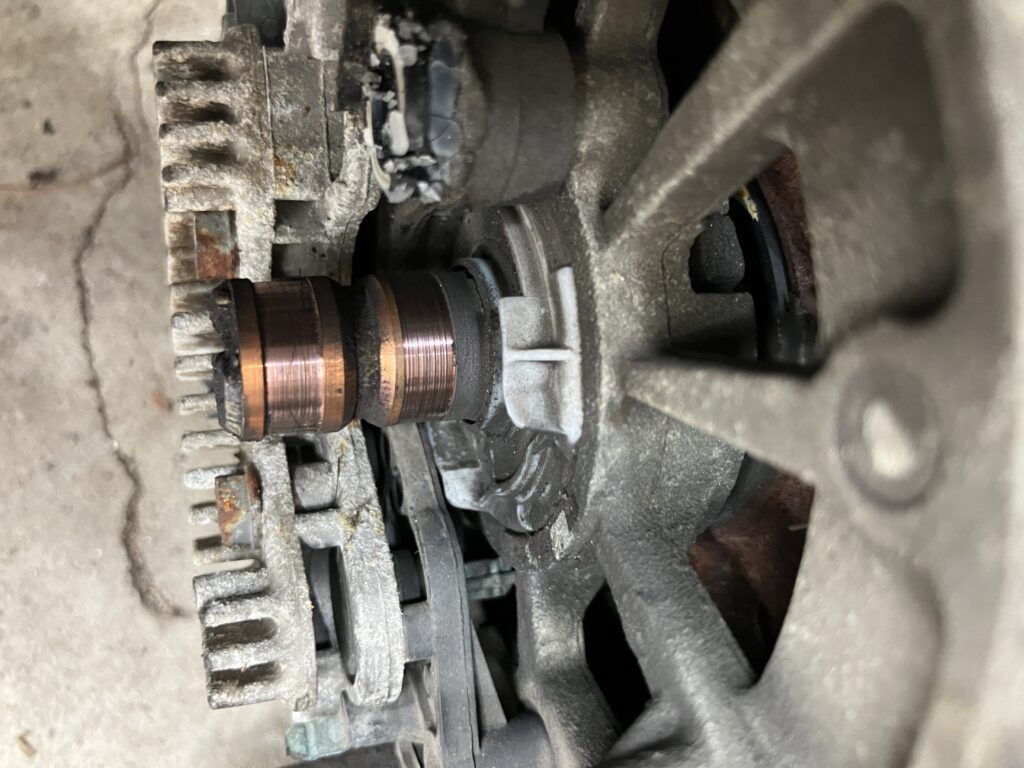
The slip rings didn’t exactly look 81k-fresh either.
I thought that clearly the thing to do was—as I did with the original alternator—just buy a new regulator / brush pack, install it, and be done with it. I went upstairs to the laptop, searched, and was stunned to find that while you can buy a new Bosch regulator for an E39 alternator for as low as $35, the going price for one for the Valeo (part number 12317551153) was closer to a hundred bucks.
Damn!
I thought about what to do, and decided that, in the short term, I just needed the car running again. I returned the regulator and brush pack to the Valeo (and when I did, carefully verified that the short brush was still being pushed backward into its housing, indicating that it wasn’t so worn that it was in imminent danger of not making contact), mounted the alternator in the car, buttoned everything back up, and tested that it worked (it did).
On the one hand, getting the car back up and running in an afternoon for a hundred bucks wasn’t a bad outcome. But having had the alternator die on me twice due to regulator problems, the Valeo’s worn brushes didn’t exactly instill confidence. I did a deeper search on the Valeo regulator, and found that RM European and AutohausAZ had them for under three figures. With a discount code, the AutohausAZ price came in at $79. I swallowed what was slightly bitter in the cup and clicked and bought. When it arrives, I’ll install it.
Out of curiosity, I looked again at the online trail of the alternator I bought. The VIN of the car it was from was listed, so I googled it. I found the bids.cars site where the salvage yard likely bought it. It was listed as having 81,000 miles there. So I don’t think that the salvage yard did anything deceptive in selling it to me.
But it goes to show: Whether new, rebuilt, or used, you pays your money, and you takes your chances.
—Rob Siegel
Rob’s new book, The Best of The Hack Mechanic, is available here on Amazon, as are his seven other books. Signed copies can be ordered directly from Rob here.