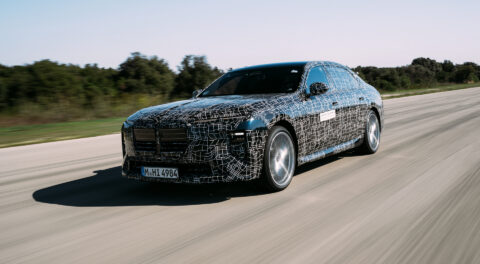
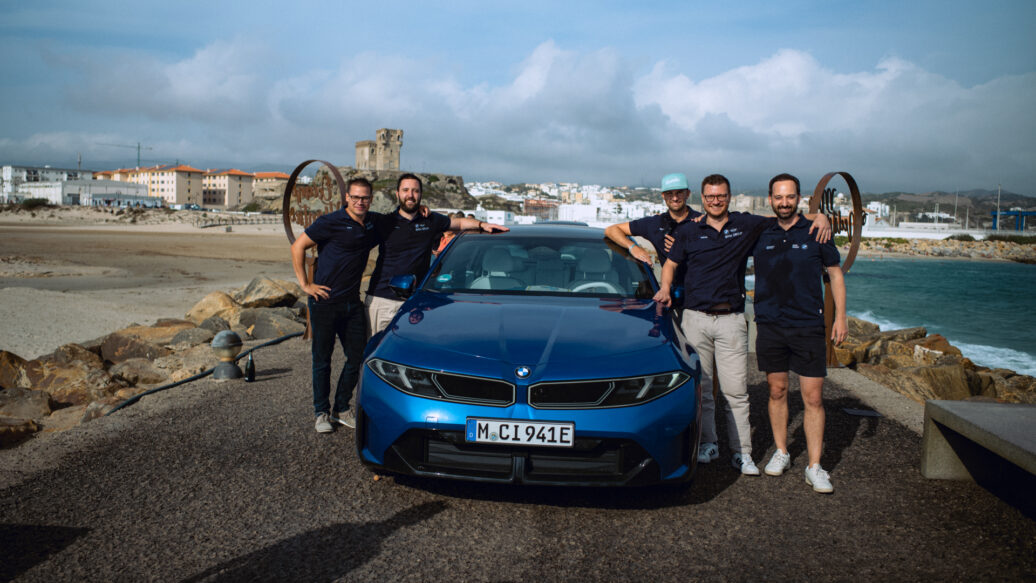
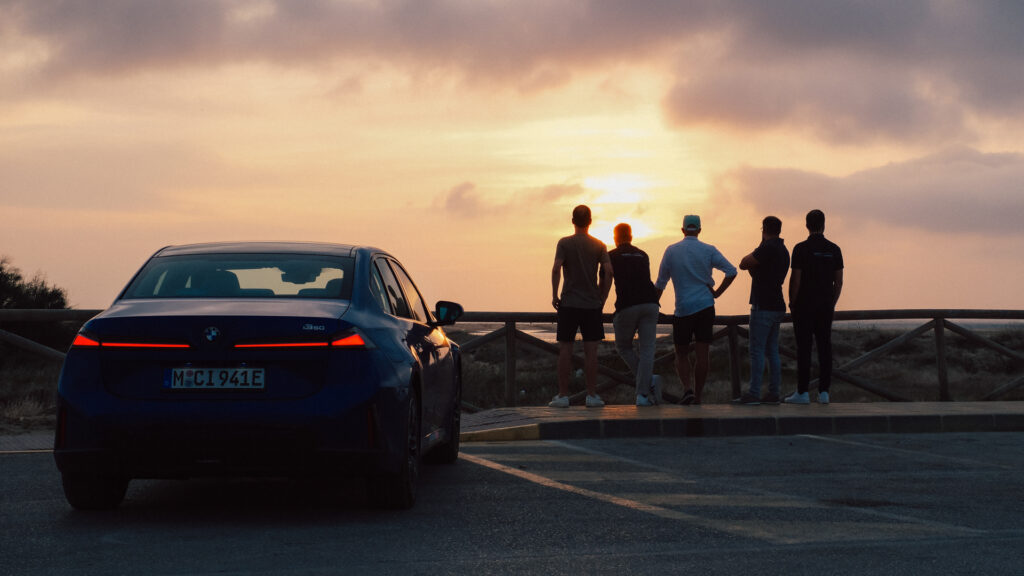
The Paneuropeana is an electric vehicle charging challenge in which an EV drives from North Cape in Norway 3589 miles to Tarifa in Spain. It’s a journey from the northernmost point in continental Europe, to the southernmost point of mainland Europe, while spending as little time charging as possible. The last record was set in 2017, by Michael Willberg & Team, who did it in a Tesla Model S with nine hours and 51 minutes of total charge time. Well, BMW just shattered that record with an i3 50, doing the same run while being plugged for just two hours, 46 minutes, and 54 seconds.
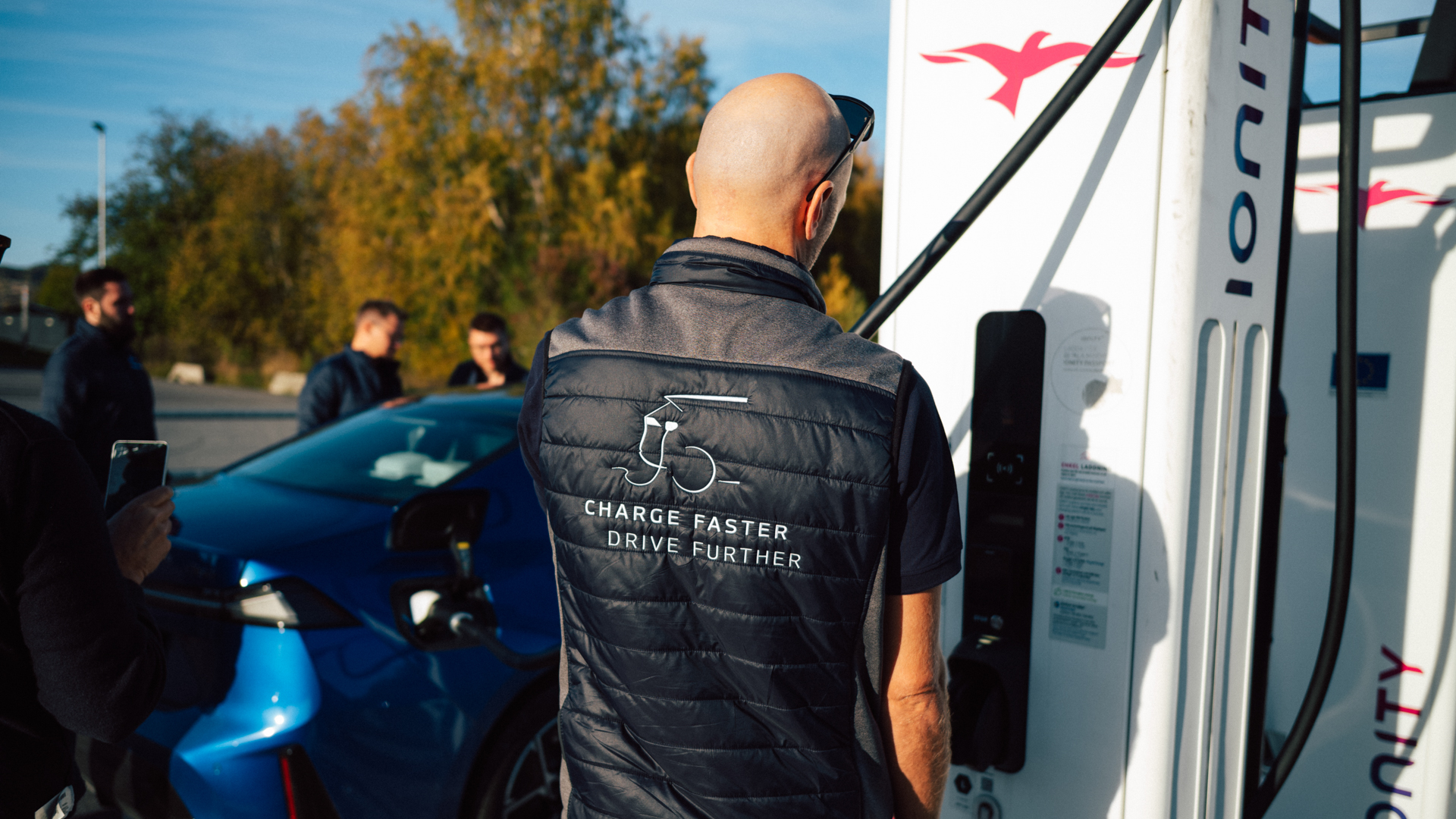
Competing in the Paneuropeana is a lot like any other road rally, where you have to hit certain checkpoints and charging stations, to not only level the playing field but make the competition less about road speed. Instead, it’s about driving carefully, so that you manage your speed, range, and charging as efficiently as possible. BMW Team Neue Klasse and its i3 50 managed to go the first 462 miles (744 km), through near freezing temperatures, without charging. All charging was done at public chargers, and the car was identical to the production version, in terms of hardware and software.
BMW
The BMW i3 50 in this test averaged, 12.5 kWh per 100 km, which is significantly better than the already generous WLTP-rated figure of 18–13.4 kWh/100 km. And it did so while averaging around 50 mph (79.7 km/h) for three days, two hours, and 41 minutes of driving. The average charging speed was 275 kW, so BMW was able to mostly use very fast chargers, which also helps its record. The public charging network wasn’t as vast, nor was charging technology as fast, back in 2017 when the record was previously broken. Plus, the BMW i3 can charge significantly faster than a 2017 Model S, since it using technology almost a decade newer.
What’s also impressive about the i3 50 being so efficient is that it isn’t some stripped-out, slowpoke EV designed for maximum efficiency. It packs a dual-motor powertrain with 462 horsepower and hits 62 mph in 4.7 seconds. It’s a quick and premium executive sedan with all sorts of fun bells and whistles inside. It does have a big battery for a car of its size, at 108 kWh, so that helps with the distance, but that efficiency is still impressive.
BMW
This is a great test to prove the i3’s real-world efficiency. It wasn’t done on a specific loop, it was forced to charged several times, and since it had to hit specific checkpoints, the driver couldn’t hyper-mile it. While the driver’s goal was obviously to drive as efficiently as possible, and customers won’t go to such lengths to maximize mileage in the real world, this test does prove just how efficient the i3 can be in normal conditions.