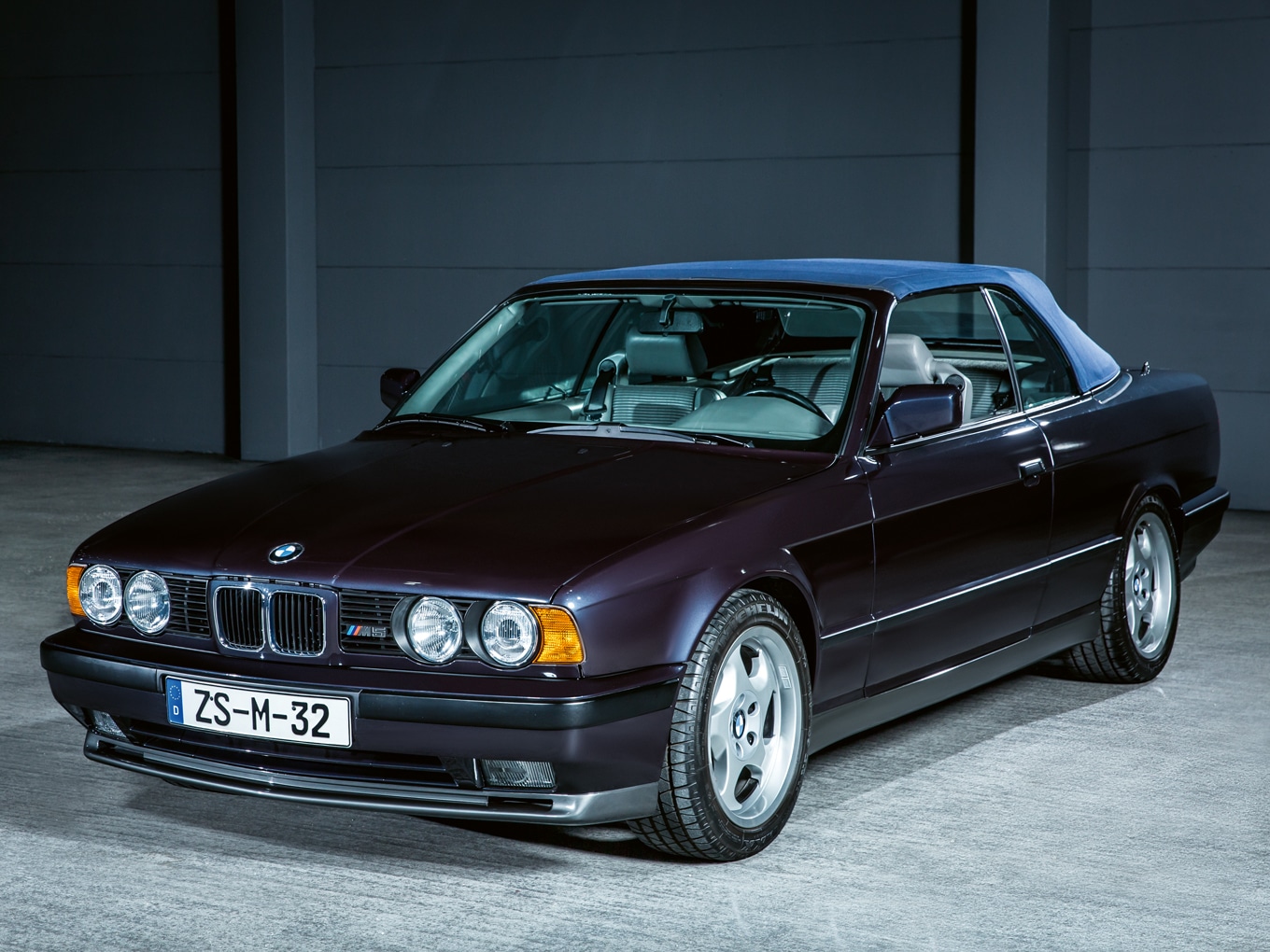
About 10 years ago, I wrote a piece about a ratty 850i six-speed that I could’ve bought for four grand. I walked away from it because, even at that price, the numbers didn’t make sense. The problems included James-Bond-fog-level oil burning coming from one of the V-12’s cylinder banks, a front strut that had broken its shock tower bushing and was banging against the underside of the hood, and a deafeningly-loud exhaust from a hole in a pipe feeding the catalytic converter. The latter would seem to have been a relatively trivial issue, but when I looked on RealOEM and added up the worst-case cost for a front-to-back exhaust, it came to $7200. Now, no one would actually pay that (well, maybe not no one, but certainly not me). Instead, you’d scrounge around for alternatives. But it was a harbinger of things to come in terms of exhaust complexity and expense.
In the distant ink-stained and unburned-hydrocarbon-laden past, exhausts were simple. You never needed to worry about the exhaust manifold that lasted the lifetime of the car. There was a headpipe that bolted to it, a center resonator, a muffler, and maybe a separate tailpipe. Other than a few hangers, clamps, and gaskets, that was it. If you wanted OEM, you could get it without needing to miss a mortgage payment. If you wanted something less expensive and maybe a little throatier, there were multiple choices of reasonable quality. And you could drop the old one and install a new one in a few hours. As someone who has spent 45 years buying needy bargain BMWs, the two most common price-depressors have been clearly-needed brake and exhaust work. I welcomed both if they held the purchase price down.
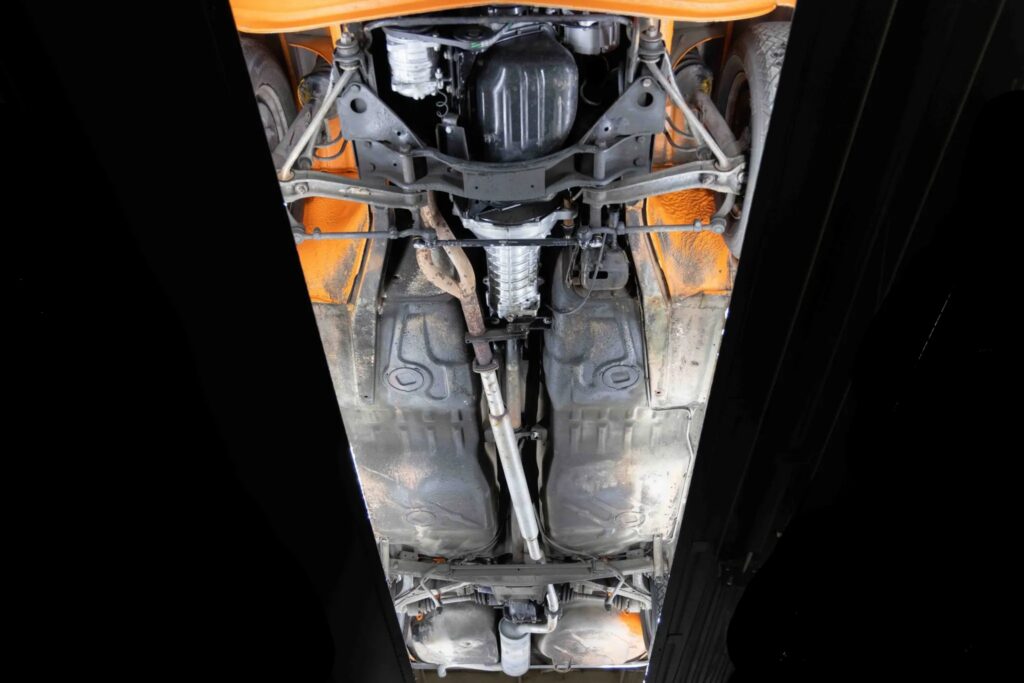
Ah, the simplicity of a 2002 exhaust. (photo Bring a Trailer)
When catalytic converters appeared in the mid-Seventies, initially it didn’t really change things all that much. It was basically just an extra piece that sat in front of the center resonator, either separate or integrated with it. No, the trouble came when, to meet increasingly-strict tailpipe standards, cars began coming with a “pre-cat” either just after the exhaust manifold or directly integrated to it so it could warm up as quickly as possible and knock down emissions after a cold start, and a “post-cat” behind it to handle the larger volume of an already-flowing driving-down-the-road exhaust. And it’s worse than that because on just about any car other than a four-cylinder, there are two exhaust banks, each with a pre- and a post-cat, for a total of four catalytic converters.
Normally, the advice for do-it-yourself exhaust work is “do it all.” This is because if, say, a muffler has blown a hole, the odds are strong that the rest of the exhaust—which has been exposed to the same heat and environmental conditions—is likely to be just as weak, or nearly so. Further, things often go wrong when you try to mate new components to old ones. Sometimes you can’t get them separated and have no choice but to cut them with a Sawzall. Other times you can separate them, but you find that the flange connecting them won’t properly seal due either to wear or because the replacements parts have a slightly different design.
But the problem now is that “doing it all” would include four catalytic converters, and no one in their right mind would include that on their default repair path.
Unless one of the cats is damaged, and then you begin to slippery-slope your way into hell.
Just for fun, since I keep my eyes open for an E91 3 Series wagon, I thought I’d look at the exhaust configuration and the cost. As per the photos below, it does indeed have two pre-cats integrated with the exhaust manifold, and two post-cats. The dealer list price on each of the pre-cats is $1632, and the post-cats list each for $1813. The list prices on the center resonator ($790) and muffler ($1390) are relative bargains.
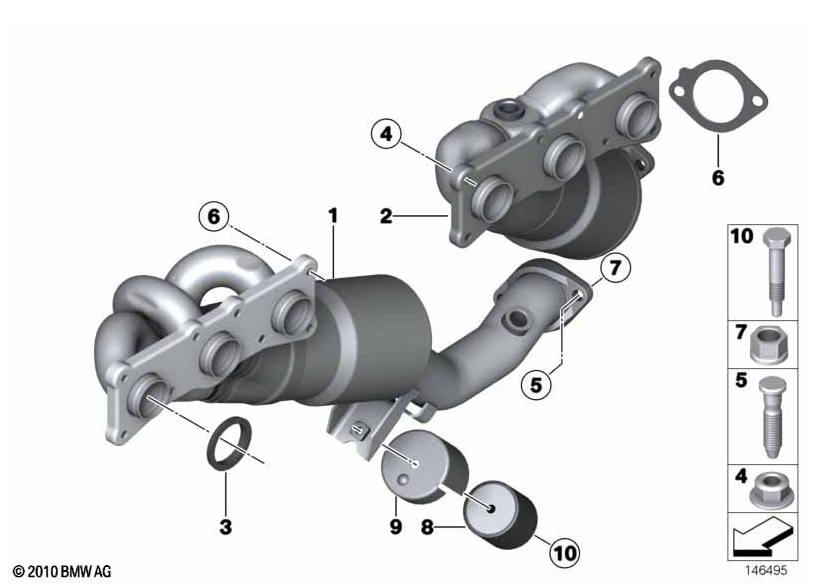
Yup, two pre-cats…
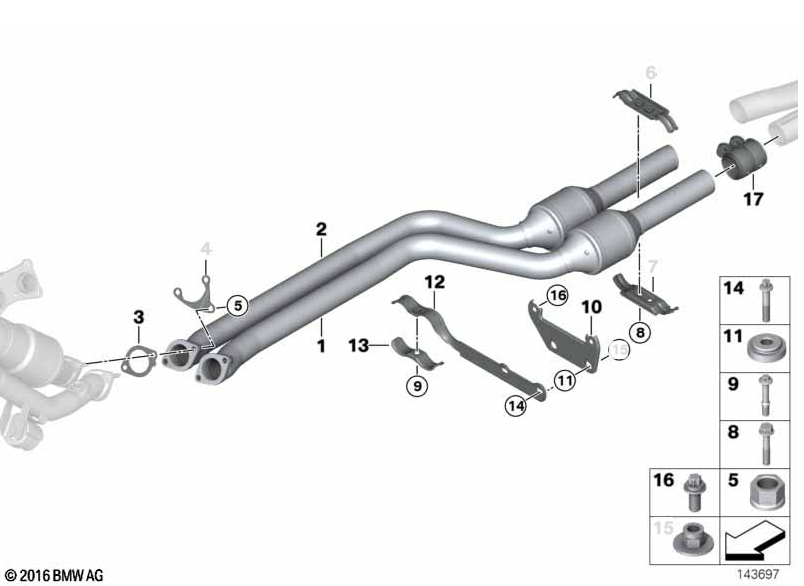
…and two post-cats.
Again, these are list prices, and there are any number of aftermarket options out there. But it certainly changes the game in terms of buying a car with a loud exhaust, or dealing with yours when it gets throaty.
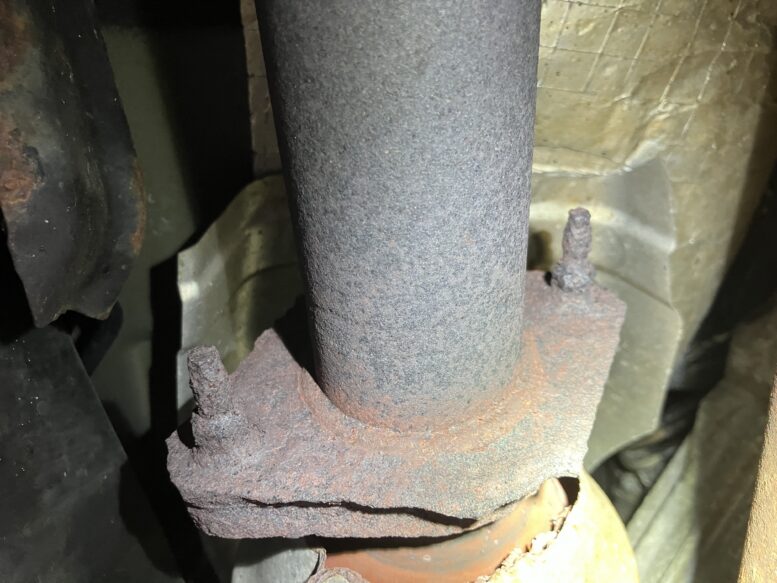
This issue was recently driven home because I needed to deal with all this on my 2008 Nissan Armada. When I bought it two years ago, it was obvious that it had an exhaust leak. I didn’t think much of it, as I routinely do exhaust work. It turned out to be a combination of a small hole in the muffler and a botched attempt someone had done to weld on an aftermarket tailpipe that was the wrong diameter. To get it through its first Massachusetts state inspection, I shoveled muffler cement into the hole, and reattached the tailpipe using a chain of reducing adapters. When it failed inspection a year later, it was because the muffler was no longer patchable. No big deal, right? I found a well-priced aftermarket exhaust on RockAuto to replace everything behind the cats, but the left rear cat flange was terrifyingly weak. I knew that if I broke it, I was going to be in a world of pain, because the flange connecting the pre- and post-cat was also rusty. And if the front cat needed to be removed, in addition to the usual hell of dealing with the studs connecting it to the head, the access to it is really difficult, and folks on the Armada forum recommended removing the front differential to get at it. Yeesh. Fortunately, I managed to get the left rear flange apart without breaking it.
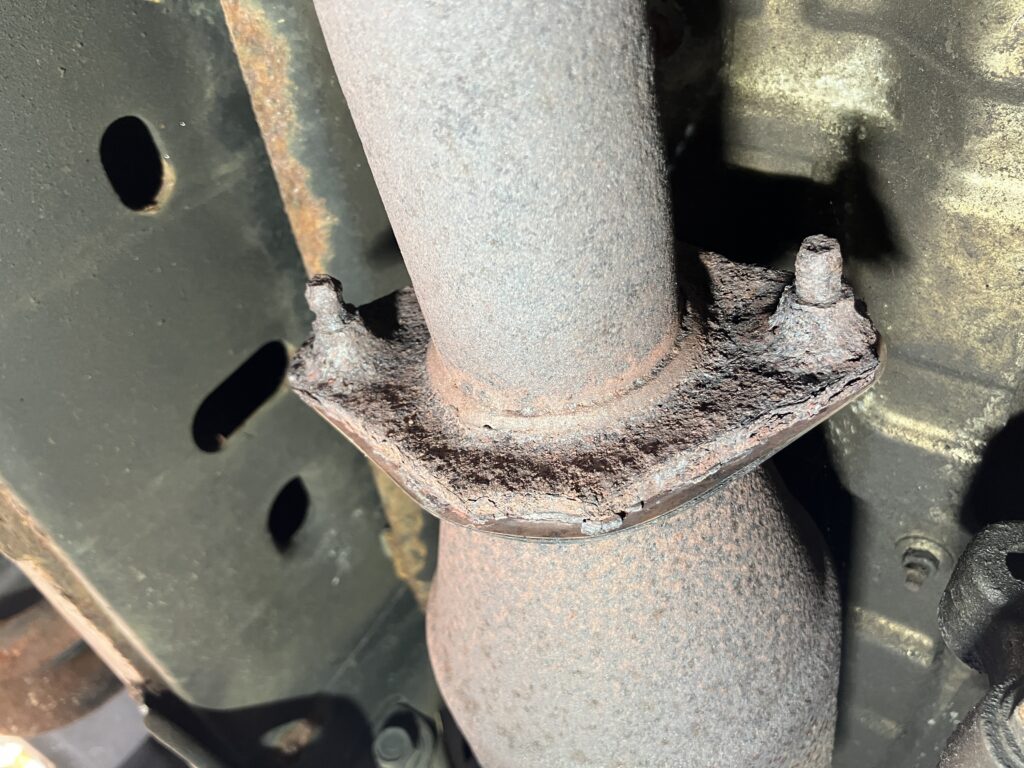
How nature says “don’t touch.” (I did get it apart without breaking it.)
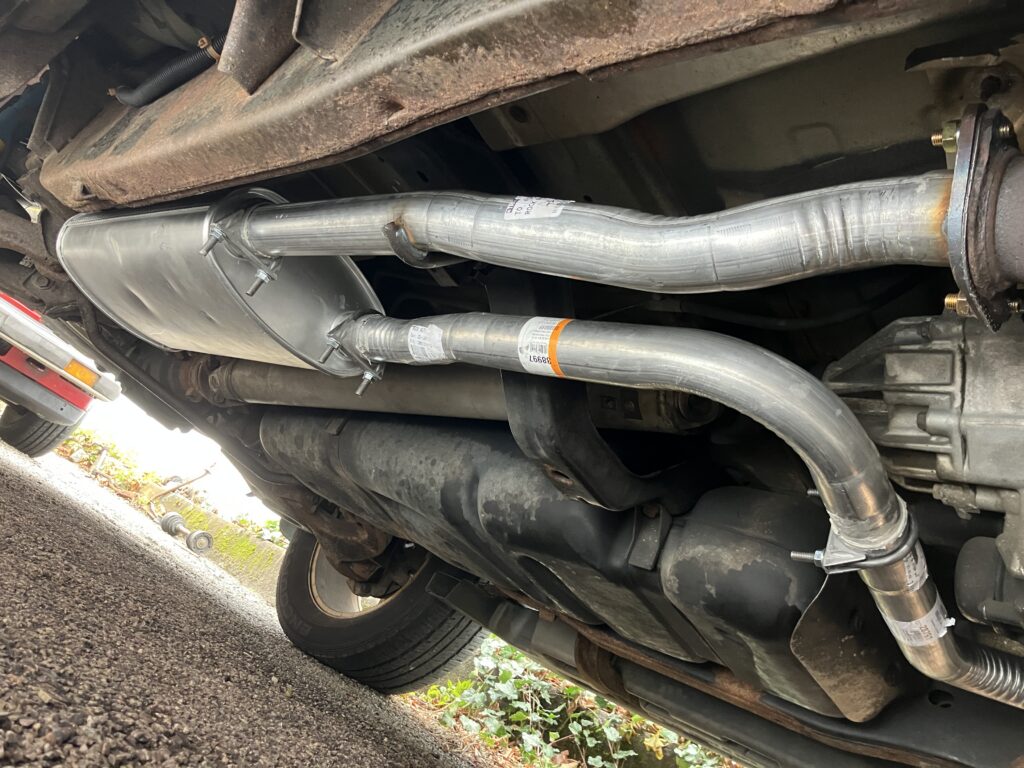
Success, last year.
Last week, inspection time came again, and this time I found the exhaust was leaking at that weak left rear flange. I thought I was going to need to replace that left post-cat. OEM Armada catalytic converters are nearly as expensive as the BMW ones I quoted above. There are dozens of choices of aftermarket cats, from quasi-reputable manufacturers listed on RockAuto in the mid-hundreds each, to parts on eBay for $160 for all four, shipped. Not surprisingly, when you look on the Armada user’s forum, you find complaints that most of the aftermarket cats are hot garbage—they don’t fit correctly, the honeycomb catalyst inside is prone to breaking and rattling, and having oxygen sensor codes thrown is common. And, as I said, I knew that if I touched the flange between the pre- and post-cats, I had hours of drilling and tapping work ahead of me.
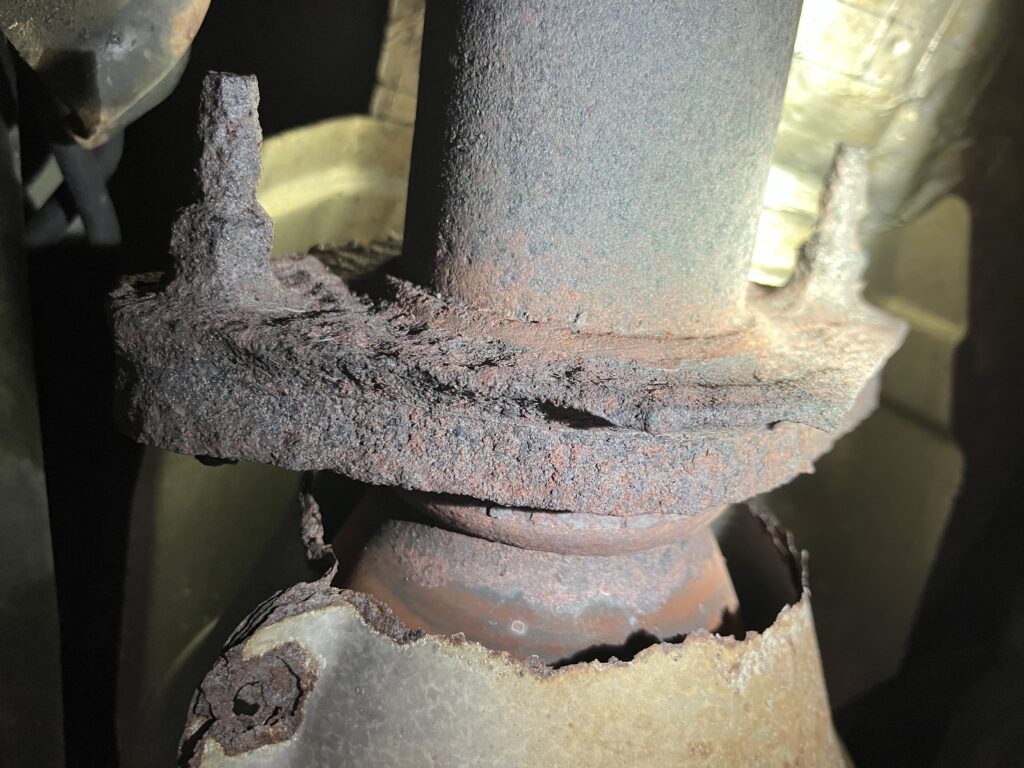
The pre-to-post-cat flange. Go ahead and touch me. I dare you.
For the Armada, I adopted a med-school-like “First, do no harm” approach. I tried detaching the leaky flange where the new exhaust met the back of the post-cat, coating a new gasket with about 3/8 of an inch of muffler putty on each side, and reassembling it it to see if it would work. Fortunately, it did—it sealed it, and the truck passed inspection. But I know that I’ve probably kicked the can as far down the road as I can, and that next year, if I still own it and it leaks, I’ll need to replace the left post-cat. If I’m lucky, it’ll stop there.
Again, the point of all this is that my days of assuming that I can come out on the upside with a car being sold at a good price because it has a loud exhaust are behind me. We’re now in an era where, with the 150,000-mile 15-year-old BMWs I usually buy as daily drivers, if repairing an exhaust leak involves replacing one or more of the cats, even if you do the work yourself, the cost of quality parts can exceed the value of the car.
Tread accordingly.
—Rob Siegel
____________________________________
Rob’s most recent book, The Best of The Hack Mechanic, is available here on Amazon, as are his seven other books. Signed copies can be ordered directly from Rob here.