Welcome to Tech Talk, where our resident BMW tech Nick Owen answers all your pressing BMW technical questions, frustrations, and issues. Have a question for Nick? Email him at techtalk@roundel.org. Let’s get into it.
2012 335is o2 Sensor Problem
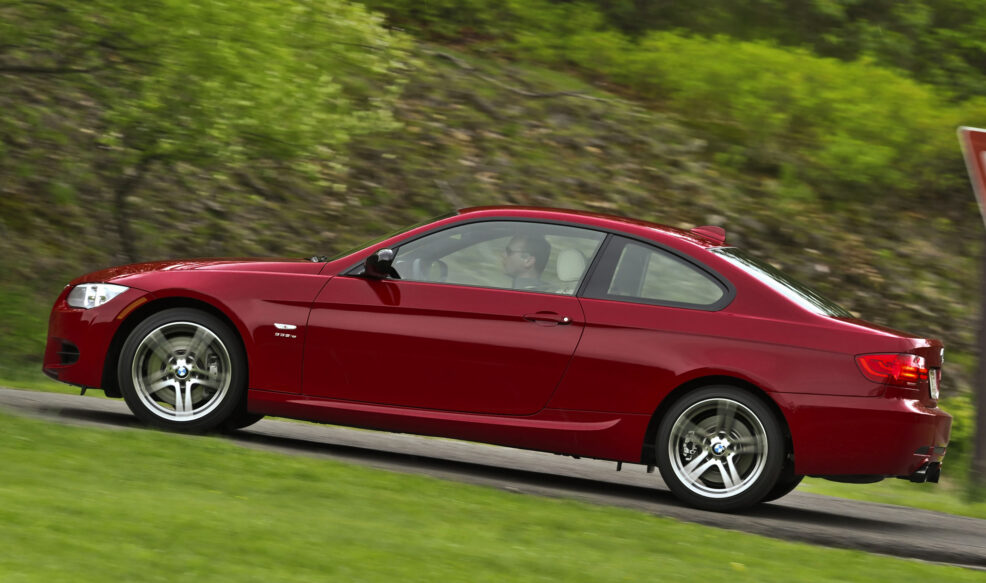
I’d appreciate your help with a friend’s E92 335is with 69,700 miles.
About five years ago, the “Service Engine Soon” light intermittently started popping up, code P2096. But there was seemingly nothing wrong with the performance. A code reader canceled the code, which would come back with increasing frequency. After resetting the code, the car always passed emissions tests. Even when displaying the error, it delivered normal fuel mileage, and good power/drivability.
Starting 2.5 years ago, the following actions were taken:
- A couple of cans of engine/injector cleaner run through the gas tank.
- Then a smoke test… no vacuum leak
- Then the PCV valve was replaced… and after a few cycles, the code persisted.
- Then (a couple of weeks ago) Bank 1, o2 sensors were replaced (pre and post cat) with OEM parts. I also reset the vehicle computer (disconnecting the battery, etc.)
I ran the car around town for about a week, and the code did not pop up. I then took it on a 20-mile highway trip to a neighboring town and, on the way back, the code popped up again.
I did not clear the code and drove the car around town for a few days. It disappeared on its own. However, it resurfaced on the next short trip at sustained highway speed.
Without resetting the error, the car was connected to an OBDLink MX+ scanner using its software, also Bimmer Link and Bimmercode applications. This confirmed the P2096 error with code 2C31, (bank 1 O2 sensor, before cat). Voltage was detected at all four o2 sensors. Both bank’s pre-cat values matched each other, as did both post cat voltages. Pre and post values were different from each other. ~256-ohm resistance was measured for all o2 sensors except bank two post cat, which showed 0 ohms.
The tool did not have a function to delete previous engine adaptations. The car runs great, except for that code. Any ideas on how to eliminate this issue permanently?
Thanks very much for any insight.
Dan Blankenship and Robert St George
As a fellow 335i owner I think I know what is going on. But I need to know, what is the fault code description that is stored? Is it for bank one every time?
Pro tip: Disconnecting the battery does not delete faults. That tends to be a mythical form of resetting the vehicles ECU. Only way to do it properly is with a scan tool. Even a generic OBD-II reader is sufficient in resetting faults.
For the faults to return, certain drive cycle criteria must be met which is why the fault returned when driving on the highway. Which makes me think the vehicle has a fuel trim issue. Have the injectors or high-pressure fuel pump been replaced?
Answers to your questions:
The stored code is P2096, code is 2C31. We understand that to mean bank one pre-cat sensor too lean, although the site bmwfault.codes lists 21 different line items for that combination, with differing descriptions, so we’re a bit uncertain which applies.
To our knowledge, the P2096 always indicated bank one. Understand your comments on deleting faults. We did not have a tool with that capability. We’ll have to deal with that if resetting the ECU is required.
No injectors or high pressure fuel pump have been replaced. Your logic that either of these could cause lean mixture to be detected by the pre-cat o2 sensor makes sense. Is replacing injectors or HPFP your suggested step? And if so, which would you recommend replacing first? Finally, does it make sense to replace only the 3 bank 1 injectors, or should all 6 injectors be replaced at the same time?
What other info do you need?
Based off the information I now have, I am suspecting bank one injector issue. At one time there was a recall to have the injectors removed, scanned and replaced if necessary. But during that time period BMW indicated that the index level of the injector is to be a minimum of 11 or 12. This means that if the injectors are below this level they are to be replaced even if the seem to be operating properly.
While I can’t tell if your 335 got this recall, it’s possible that the injectors are failing and not flowing enough fuel to satisfy the DME specs for fuel trim. The injectors require to be replaced in banks. So, if the index level of one injector was off to the others, then we would replace all the injectors on the bank. In your situation I think you should look at replacing the bank one injectors and if you’re inclined, do bank two while you’re there. Call it preventative maintenance. I recommend having an experienced shop do this job due sensitivity of the injector seals and the process to register the injectors in the DME after replacement.
If the car isn’t long cranking on start up or throwing a fault for high pressure pump plausibility, then I think your high-pressure pump is ok.
Parking Brake and Auto Hold Issues on 2023 M550ix
I am leasing a 2023 M550i xDrive. I love the V-8 and the car build in general. This is our 11th BMW, and I plan to buy this car off lease. I have about 34k miles on the car so it is still under factory warranty 3yr/36k.
The parking brake and auto-hold combo switch has been acting up for a while (hard to press and not engaging-increasingly often). I recently had the car serviced at the dealer while still under warranty, so had them inspect the switch operation. The dealer said that drink fluid becoming sticky is the reason the failure is occurring, but I am generally a neat freak with the interior of my car. I inspected the replaced park/auto-hold combo switch and the service writer showed me a minute spot on the side of the switch, which was said had caused the switch failure. The switch is designed so that the press part of the switch covers the switch toggle area, so would really need a lot of excess fluid to stop the switch from working. I have a feeling the toggle of the switch area is just worn out from age, and the sticky part is a common way to have the customer buy the new part/labor.
Has BMW been having issues with these combo park/auto-hold switches wearing out in three years or less? Does BMW have any voluntary recalls on the switch replacement issue?
If I own this vehicle for another three to five years, I do not want to have to spend $765 for a new switch down the road.
The dealer performed a “goodwill” repair/replace of the switch for $150 total, which I accepted. I did not want to incur any extra time with fighting BMW and the dealer over their view of the switch replacement.
James Wilson
Clarksville, Maryland
I am sorry to hear about the parking brake switch. From my time at the dealership, if the part does not have obvious signs of outside influence, then you give the customer the benefit of the doubt and cover it under the 3yr/36k vehicle warranty. Although I was not present for your situation to offer my two cents, I feel the switch should have been completely covered under warranty. While I am sure the dealership told you that they are doing you a favor by offering a goodwill repair, I am sitting here, fuming a little, that the situation got to that point. Especially if this is your 11th BMW and you are a regular customer with your local dealership.
With that said, given the switch has 34k miles of use on it, I can see how it could wear out over time and use. But, situations like this do not constitute a recall. This is textbook wear and tear. It is possible you got a bad part from the factory and the new part will last much longer. But I do not have a crystal ball to predict the lifespan of the switch. Since you intend on keeping the car and it has an N63 based V-8, I would highly, highly recommend a good extended warranty that covers everything from the parking brake switch to the engine itself.
Clicking Noise
I have a 1996 328i convertible with a manual gearbox and 134,000 miles. I have been hearing a click in the driver’s front end over the past year. I had the car looked at in the spring at my local mechanic and they could not find anything wrong—so I have self-diagnosed the issue as needing a new front wheel bearing.
I want to ask two things: Should I replace both bearings (hubs) at the same time, although this seems like I should not need to? Also, should I go with the original BMW part for this? I see there are several available hubs online, but I do not know if they will be of good quality or proper fit. There is a big difference in cost.
Your thoughts are appreciated.
Jim Callaghan
Chanhassen, MN
You can just do the suspected wheel bearing unless you feel inclined to do the other side as preventative maintenance. Not a bad idea, just depends on what you want to do.
As for the brand, FAG is what most BMW parts are made from. OE BMW is made by FAG but branded BMW and sold at a higher price.
Be sure you have a 46mm socket to get the hub nut off.