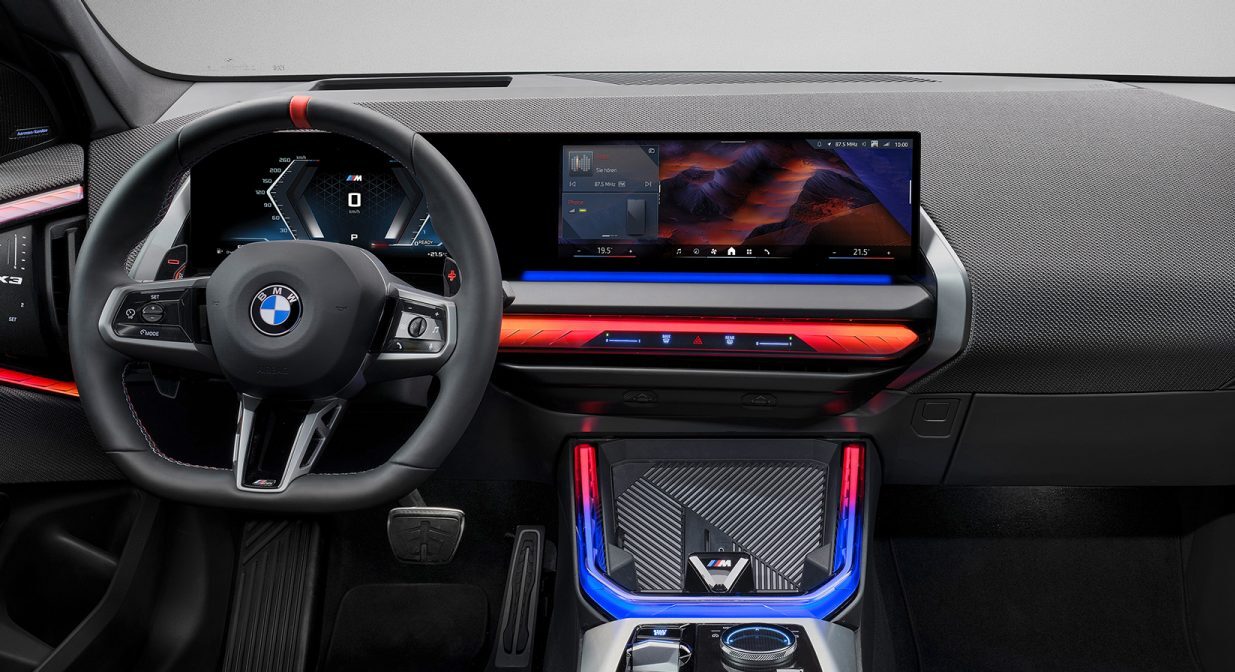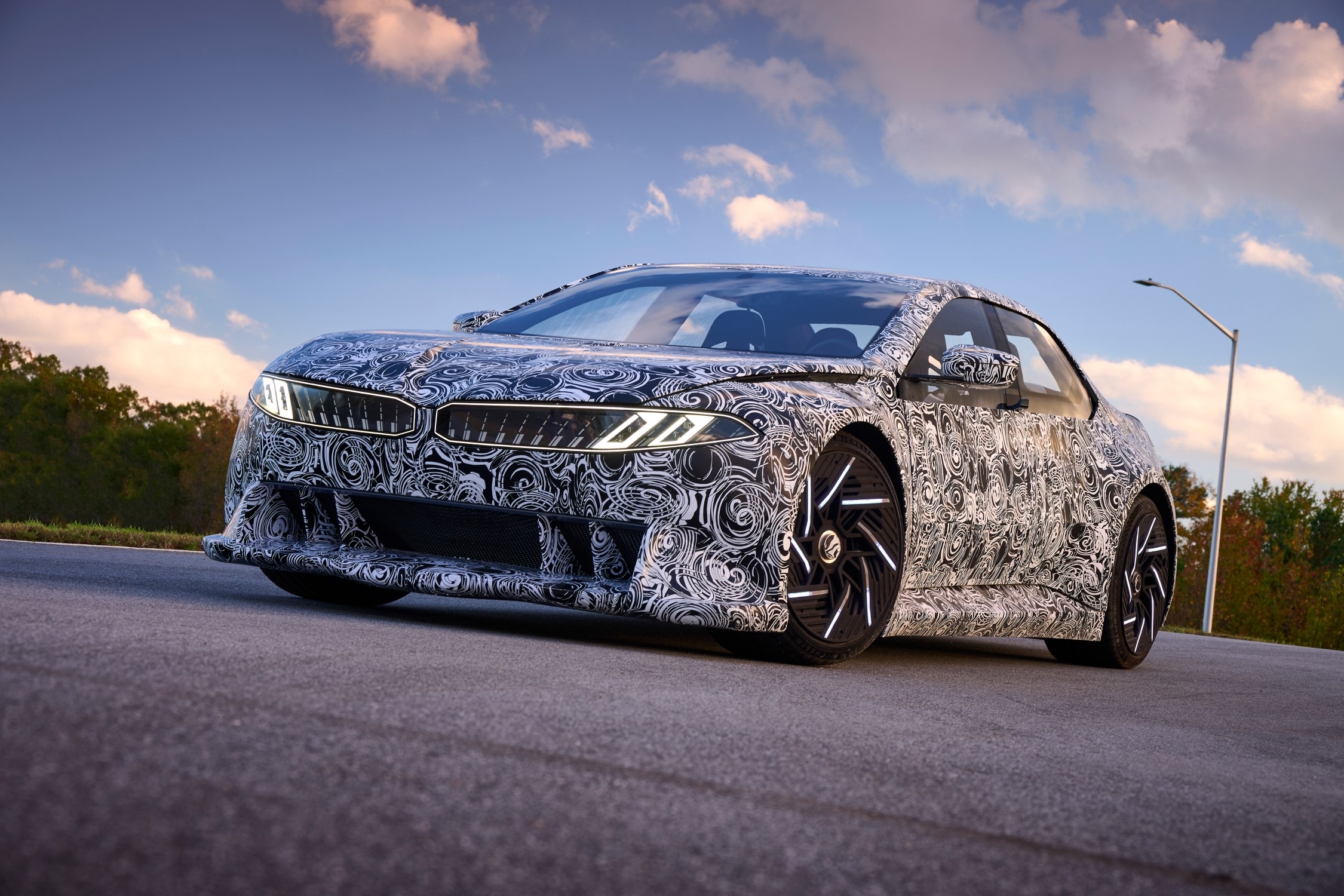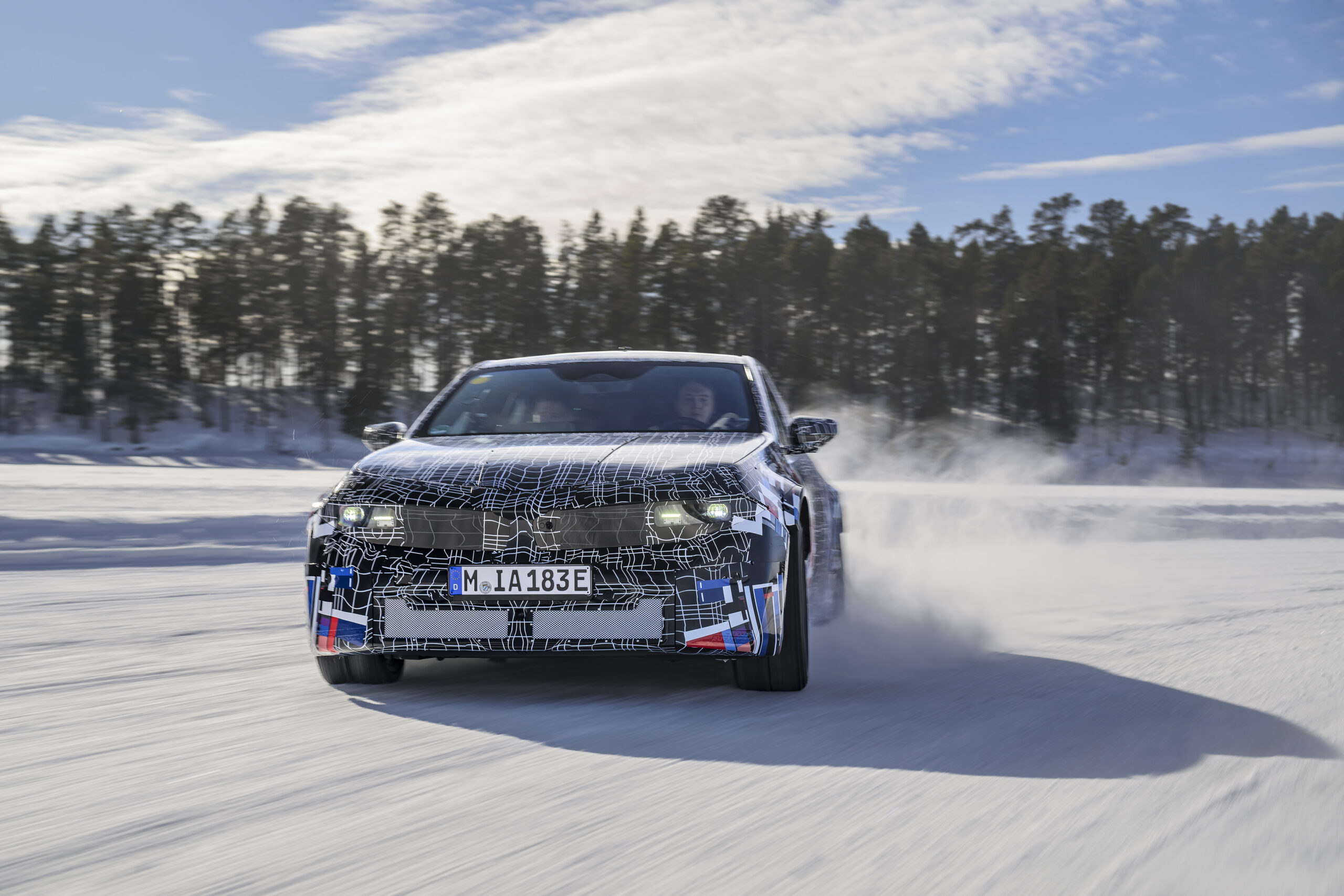
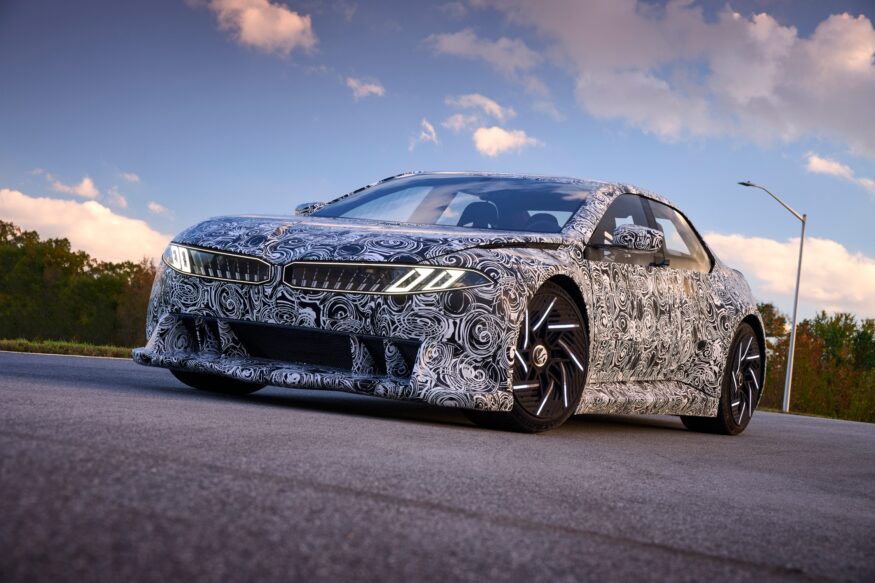
You may have seen the BMW Vision Dynamics Experience—VDX, for short. This car is yet another Vision vehicle leading to the introduction of the first all-electric BMW M model; however, this “test bed” is more a look into further possibilities for electric vehicles.
Right now, this thing is mind-blowing: Imagine more than 1300 horsepower with 13,269 pound-feet of torque in a four-motor AWD four-door sedan—with GT3-level downforce.
As a little bit of history, since it’s been a long road to this point: You may recall the first Vision vehicle, the BMW Vision Circular, a small one-box car that was unveiled at IAA Munich in 2020. That vehicle showcased recycling materials for use in a new vehicle, hence the term circularity. The second concept was called the Vision Dee, which showcased a little bit more of the design direction of some of the Neue Klasse models to come—and introduced the idea of a head-up display projected onto the entire windshield, as well as further promoting the ability of the vehicle to communicate with the driver directly via speech.
The third Vision vehicle was the Vision Neue Klasse, which homed in on some of the design cues for Neue Klasse sedans and showcased the new Human Machine Interface (HMI) that will launch in the Neue Klasse. Finally, in 2024 the Vision Neue Klasse X revealed more details of what the first production NK model will look like. As the name implies, this one was an X model roughly the size of an X3.
I think it is important to reiterate that the Neue Klasse is not just two models, but rather the entire electric-only architecture that will underpin a complete range of vehicles.
One really important aspect of the Neue Klasse story is the way in which the electrical-system architecture is arranged. Basically, four super-fast computers will control all systems in the vehicle—all developed in-house by BMW. The most important for us as driving enthusiasts is the computer that Frank Weber, BMW AG’s board member for research and engineering, calls the Heart of Joy. It’s a bit of a goofy name, but think of it as the heart of the Ultimate Driving Machine. All modern cars have computers—one for engine management, one for transmission functions, another to look after braking abilities, and so on. But for the first time, one computer—yes, the Heart of Joy—oversees all of the driving dynamics of the car; engine control, stability control, ABS, active steering, torque vectoring, brake regeneration, and active suspension are all integrated into one box.
Why is this a game-changer? Well, we enthusiasts have a familiar need for speed—in this case processing speed, and the reduction of latency. Think of it as the time each processor takes to communicate with another—it’s the difference between two tin cans on the end of a long string and two people—or many more—talking in a small room. Time will reveal the true capabilities of the system, but based on a short ride in the VDX, it will be staggering. Just imagine what the men and women from BMW M will be able to do with such a powerful driving dynamics system.
Still not convinced? Well, the engineers tested with the VDX at the Performance Center in Spartanburg, and after a couple of days I was asked if I had any contacts at Michelin, because they needed more tires. “Sure, no problem; what do you need?”
“Two sets of Pilot Sport Cup 2 Rs, 325/30-21. It’s the current Porsche GT3 RS rear-tire size.”
“Just rear tires?”
“No—this is a square setup, We need eight tires of the same size, please.”
That’s a lot of rubber. Now imagine the monster that can gobble down those donuts so quickly.
The VDX is configured with three driving mode programs: Comfort, Sport, and Drift. Comfort is basically like comfort in a G80 M3 Competition; switch to Sport mode, and you immediately hear the fans spool up, while the power is raised to about 1300 ponies. Those six fans–two at the front and four at the rear—generate M4 GT3 levels of downforce at all speeds. The result is like being in a M4 GT3 race car, except with a lot more acceleration.
I’ve been in my share of fast cars, but I have never experienced this level of performance before—and the Performance Center was not the ideal arena for the VDX to show off all that power. I’d love to see it do a lap of VIR or Laguna Seca.
Finally, our driver, BMW pro Jens Klingmann, switched to Drift mode, and between his skills and the Heart of Joy computer, the VDX was doing some very smoky, controlled four-wheel drifts on those meaty Cup 2 Rs.
As a test mule, the VDX is not the next BMW M3, nor will it go into production. However, the computer that runs it is production-ready. Just imagine how that electric M3 will feel.