If you’re on this site, that means you’re a BMW fan. And it’s likely the comments below will sound familiar:
For long-time enthusiasts, the new direction feels like a loss of ‘soul’ and a departure from the driver-first engineering and distinctive look that initially attracted them to the brand.
The push for electric vehicles and the need for low drag coefficients impose substantial limits on design possibilities, which some fans feel restricts styling and leads to less visually interesting cars.
Perceptions of their new designs generally center on their move toward a mass-market, minimalist aesthetic, particularly with the all-electric line, which some feel compromises traditional luxury, quality, and interior space. Concerns include a loss of classic proportions, generic design elements, perceived cost-cutting and cheap elements.
Sentiments toward their design primarily center on a perceived decline in interior material quality, the use of frustrating haptic touch controls instead of physical buttons, and buggy infotainment software.
Beyond the exterior, there is criticism of interior changes, such as the increased reliance on touchscreens over physical buttons, which some perceive as a cost-cutting measure and a step backward in usability and material quality. Some reviewers and owners describe the new aesthetic as ‘blocky’ and lacking the previous ‘predatory’ or dynamic character, questioning whether the style will age well.
Well, guess what? These comments are describing Audi, Porsche, Mercedes-Benz, Volkswagen, and Audi again. If you thought these might be complaints about BMWs, this is proof the keyboard ninjas with the contagious and repetitive vitriol might be critiquing the wrong thing. Instead of new design, maybe it’s our individual inability to evolve with the majority of the automotive landscape. Or maybe it’s that the average or even above-average automotive fan might not have as clear a grasp of how and why design has brought us to this point—and the points ahead of us.
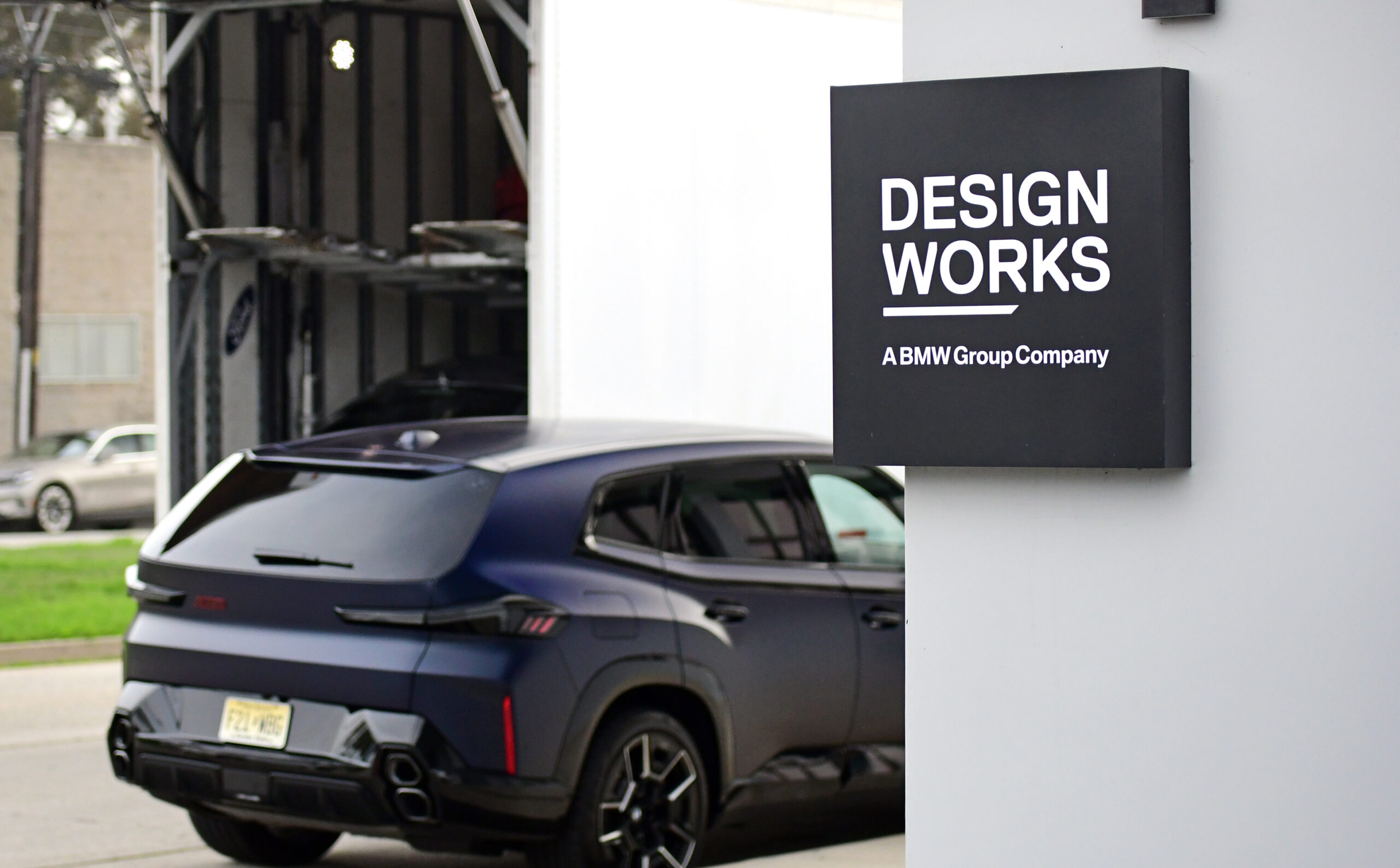
It seems as though there must always be fun activities around BMW Group’s Designworks.
To help connect some dots, BMW invited a handful of fans, friends, media, and automotive professionals first to Designworks in Santa Monica and then to the Petersen Museum rooftop for the presentation of the pre-production iX3. Designworks is BMW Group’s design and innovation hub for creative design. The event also celebrated the 50th anniversary of the BMW Group in the U.S. as well as the 30th anniversary of Designworks being wholly owned by BMW Group.
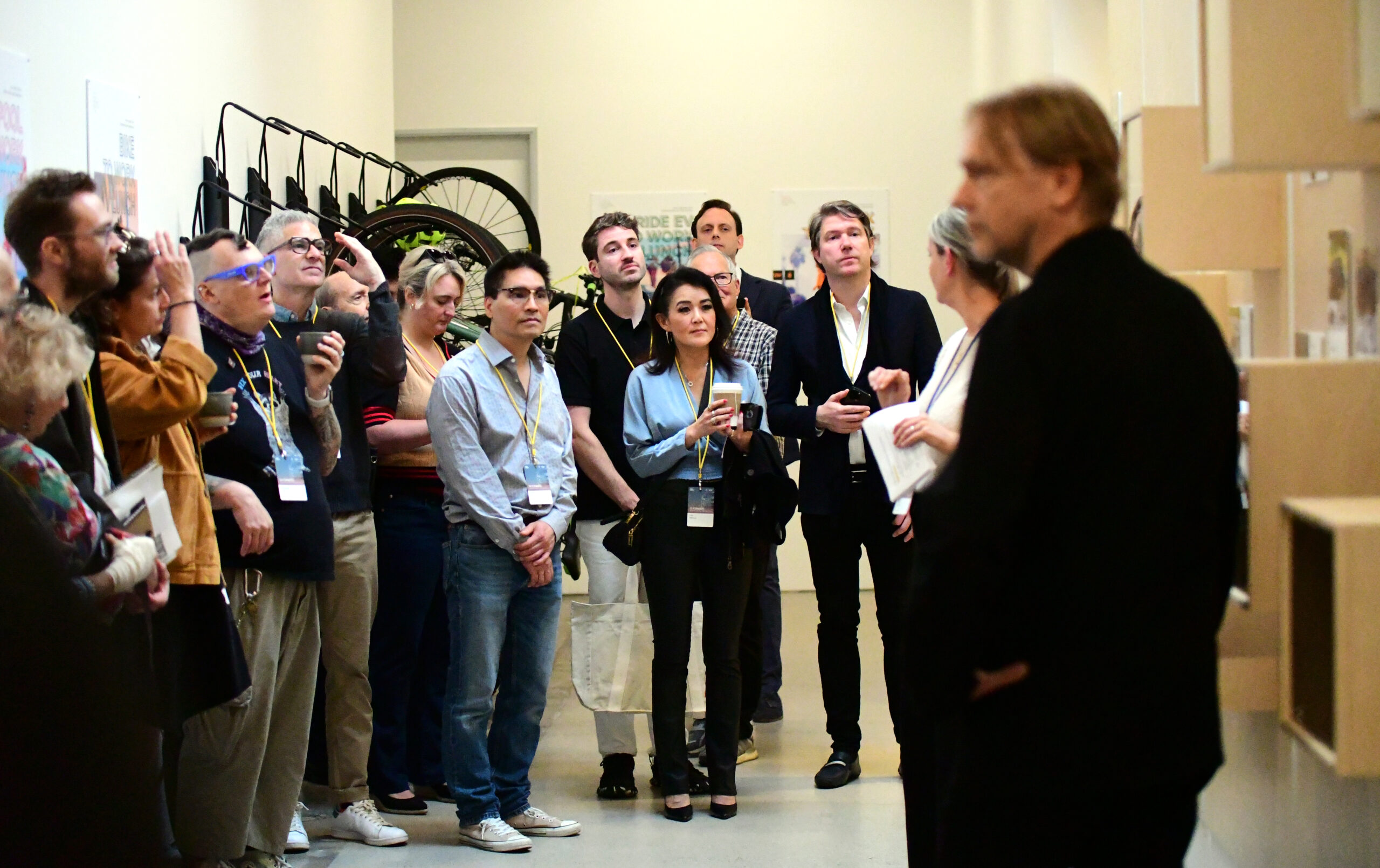
Johannes Lampela shares some Designworks insight with the guests.
It wasn’t just a tour; it was an education, and honestly, an education the naysayers who blindly cast dispersion on anything new should hear. This doesn’t mean everybody should like every design—it doesn’t work that way. It means that when you understand how and why decisions are made and results arrive, it starts to make more sense.

CEO Julia De Bono introduces the day to the gathered guests at Designworks.
We met and heard from Designworks CEO Julia De Bono and Senior Vice President of BMW Group Design Adrian van Hooydonk. We also heard from and had the opportunity to speak with the four Los Angeles Studio discipline leads: Hussein Al Attar, Director, Automotive Design; Matthew Potter, Director, Interactive Design; Paul Ferraiolo, Director, Strategy and Partnering; and Johannes Lampela, Director, Industrial Design.
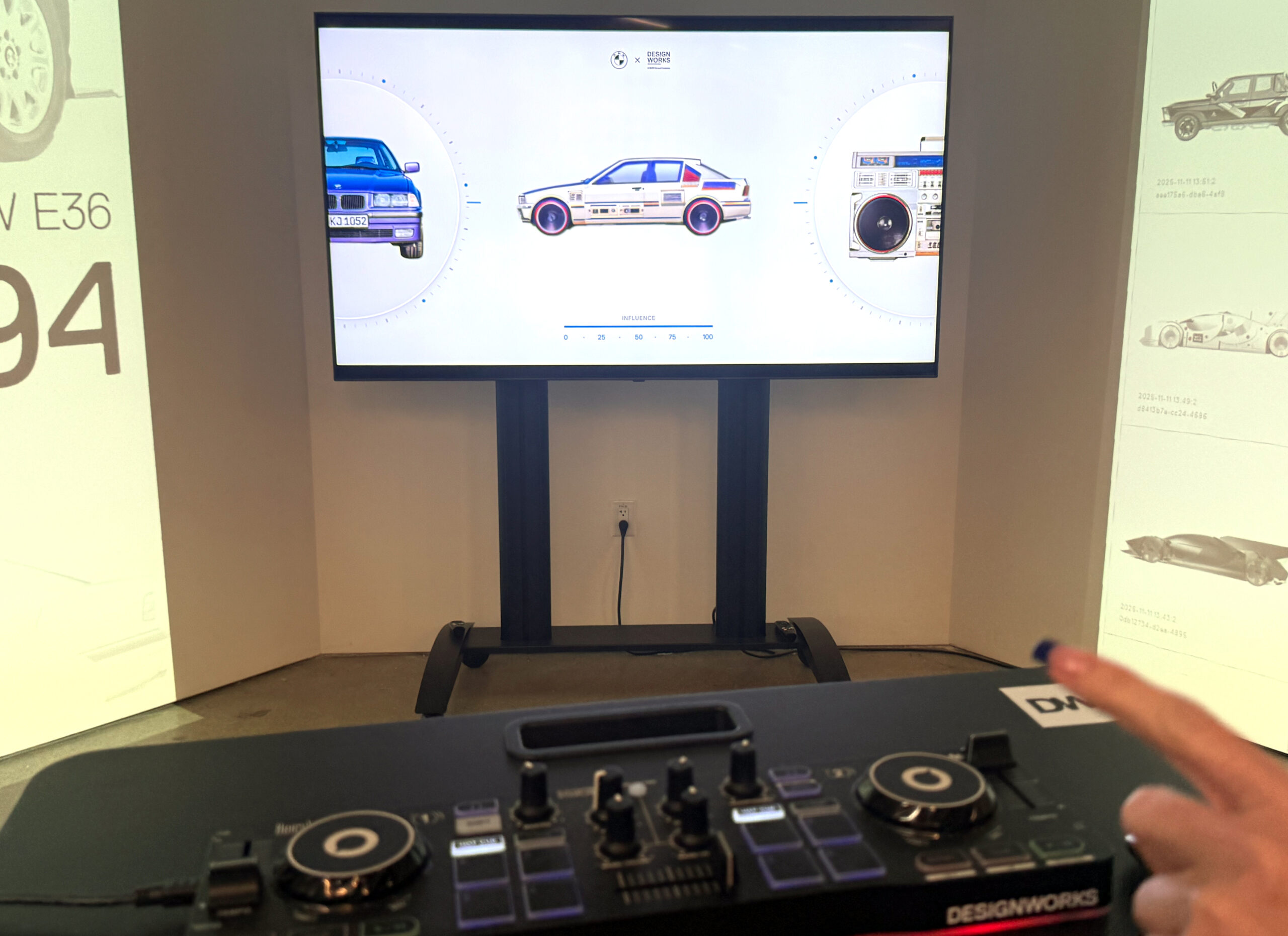
Using one of the AI tools, I blended an E36 with a boombox and selected my level of influence and that’s what it generated. (Thanks, Jessica, for the tutorial!)
We learned how artificial intelligence was incorporated—and even got to try our hand at some of the same processes. They shared how Designworks’ non-automotive clients (industrial, aeronautical, railways, etc.) contribute to them understanding consumer behavior and how design can create constant interaction with the outside world.
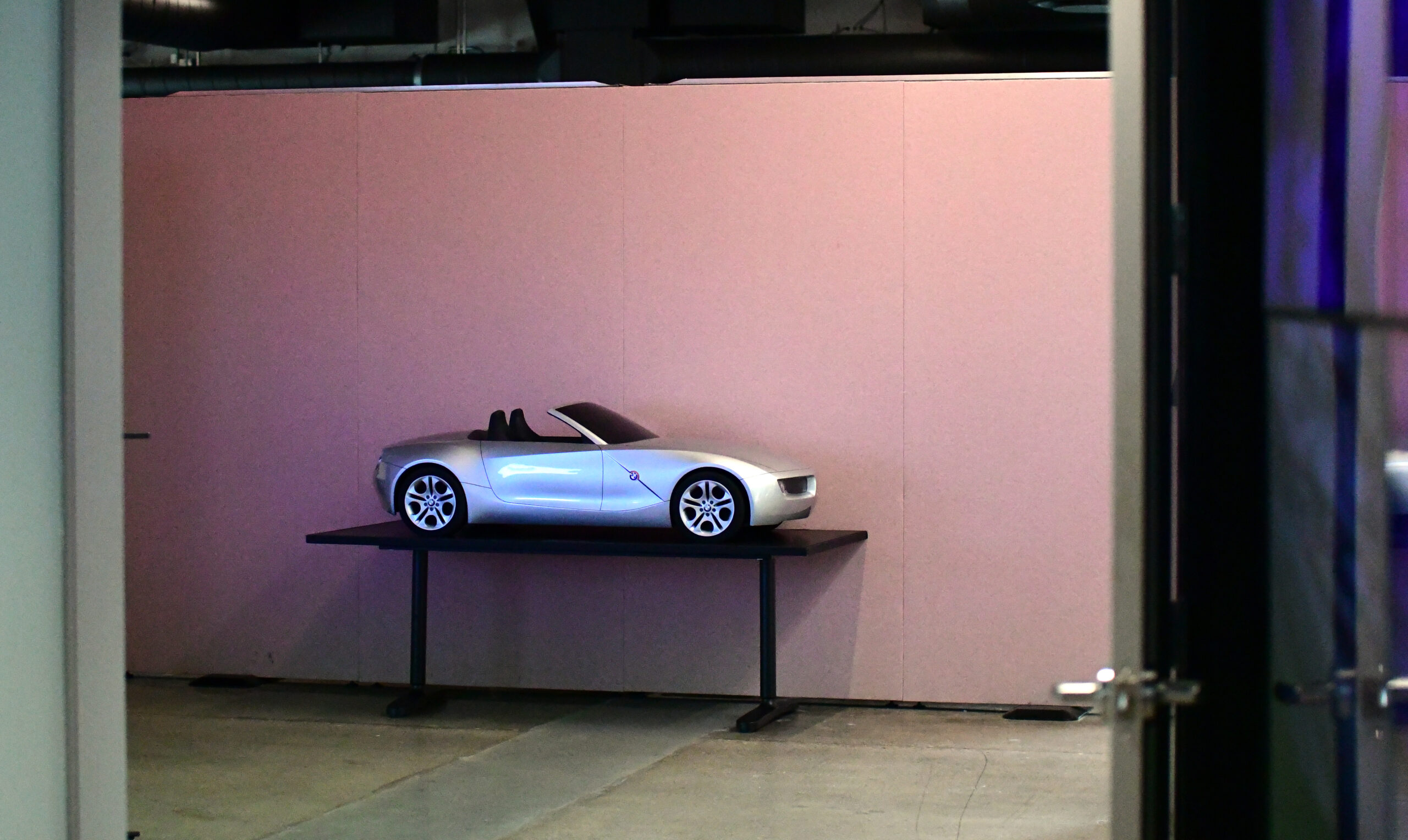
This model sits front and center as one enters what might be a forbidden sanctum when Designworks isn’t hosting events like this.
We’ve heard criticism from fans saying BMW is catering to the Chinese market more than the U.S. market. The team at Designworks pointed out how they study the differences of each market. And while there is a studio in Shanghai, Designworks Santa Monica brings the U.S. to Munich to create models like the X5; born in California for the world. The iX3 shares much of that evolution.
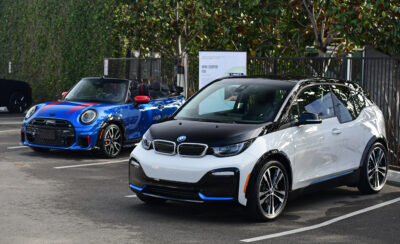
Other cars with origins or complete designs emanating from Designworks Santa Monica include the E46, most of the X line, the E85 Z4 roadster, the G30 5-series, the i3, the GINA Light Visionary concept, and more. Van Hooydonk added that “California is the most competitive market maybe in the world,” implying that if they can create successful designs in California, success should follow.
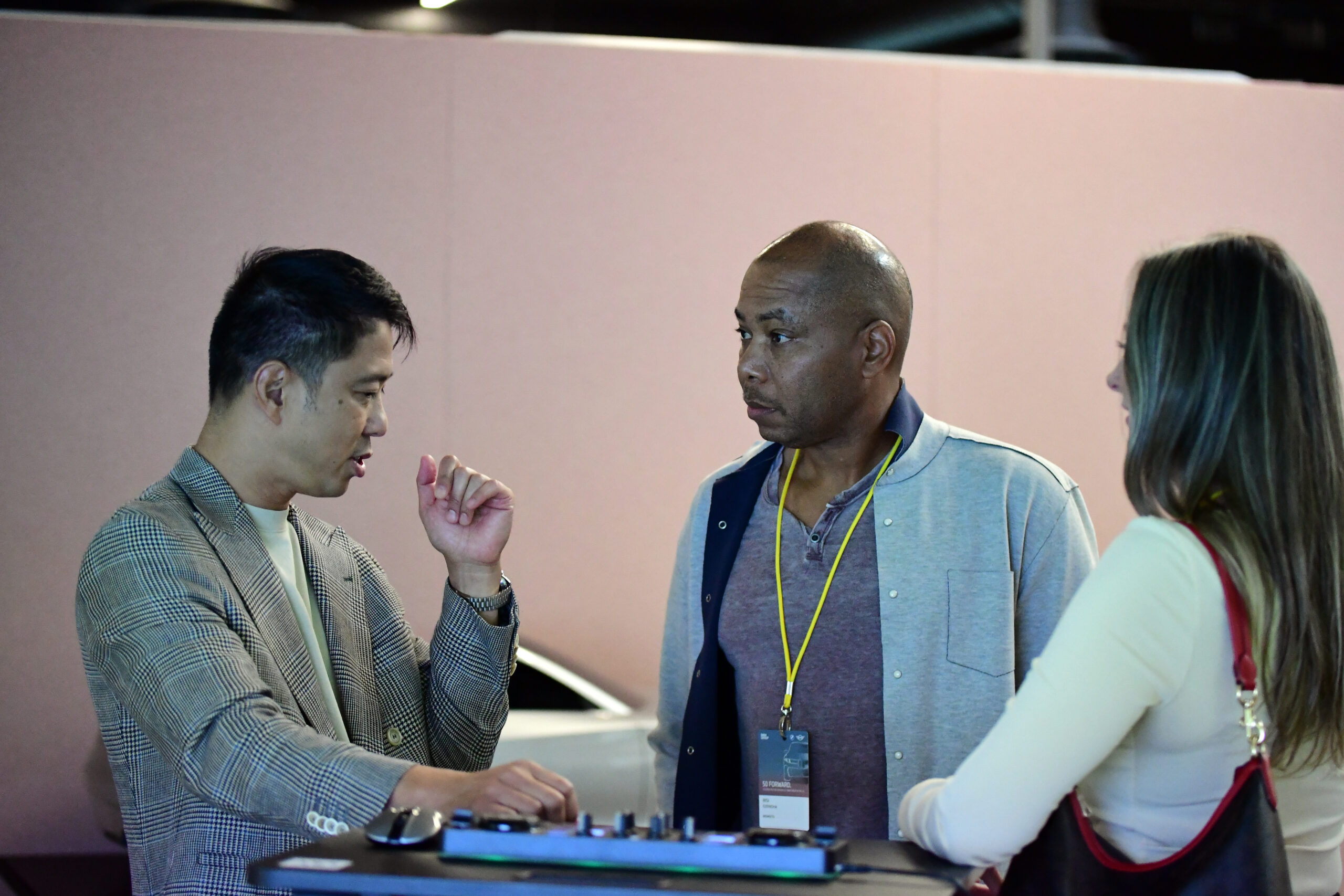
Bisi Ezerioha and his wife Jessica chat with RJ de Vera during a break.
Bisi Ezerioha, CEO and Chief Engineer of Bisioto Engineering, attended both portions of the day, making his first visit to Designworks. “I did not know what to expect. Something technical? Aesthetic-based?” Ezerioha recalls. “By the end of the evening, I had a new-found respect for the BMW brand, especially around its profound dedication to design, tech and its strong racing pedigree. Designworks and their processes are very unique. Like us, the team blazes the path least traveled…with a flair for being first in industry.”

Moby X is one of Bisimoto’s cars that he designed and built that was recently at SEMA.
Ezerioha had just wrapped up a busy SEMA week during which he had seven of his builds on display. He has worked for major OE manufacturers and built both gas and electric cars, including an all-electric Porsche 935 K3 and his latest, Moby X, paying homage to the 1978 Moby Dick Le Mans race car. He knows a thing or two about recognizing the past with current design.
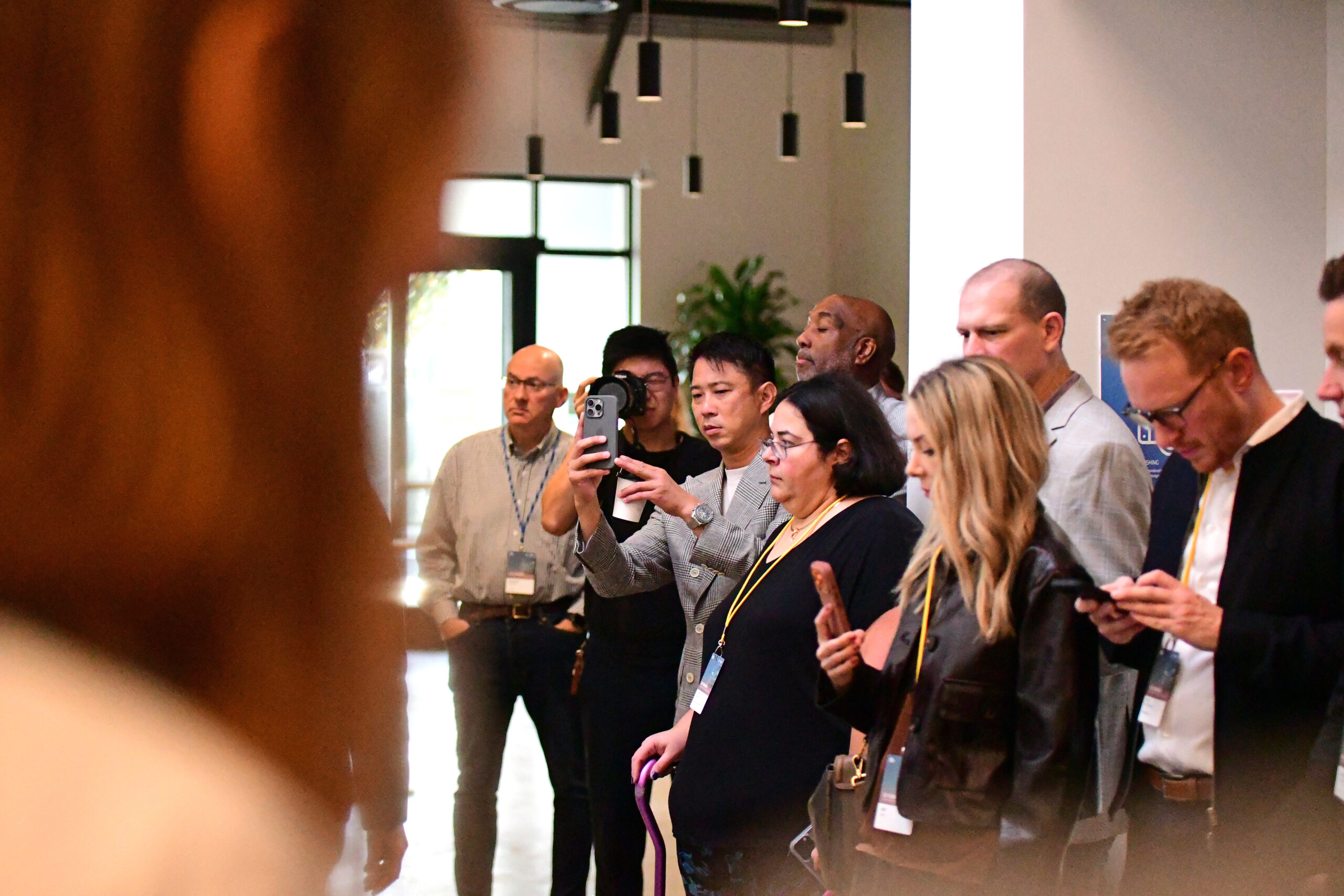
RJ de Vera captures some of the magic at Designworks.
Another guest at the events also spent some time at SEMA, RJ de Vera, considered one of the OGs in the tuner culture, a former consultant for the first Fast and the Furious movie, and now Vice President of Marketing for SEMA. This was also his first time at Designworks. “It was really intriguing and inspiring to see the approach and mindset of the Designworks organization, de Vera says. “Creativity is one area in the business world that is very difficult to maintain and Designworks has an approach that has allowed them to continually evolve and push out award winning designs. Kudos to their leadership and the ecosystem they’ve developed and honed. Their success is proof that it’s an approach that works.”
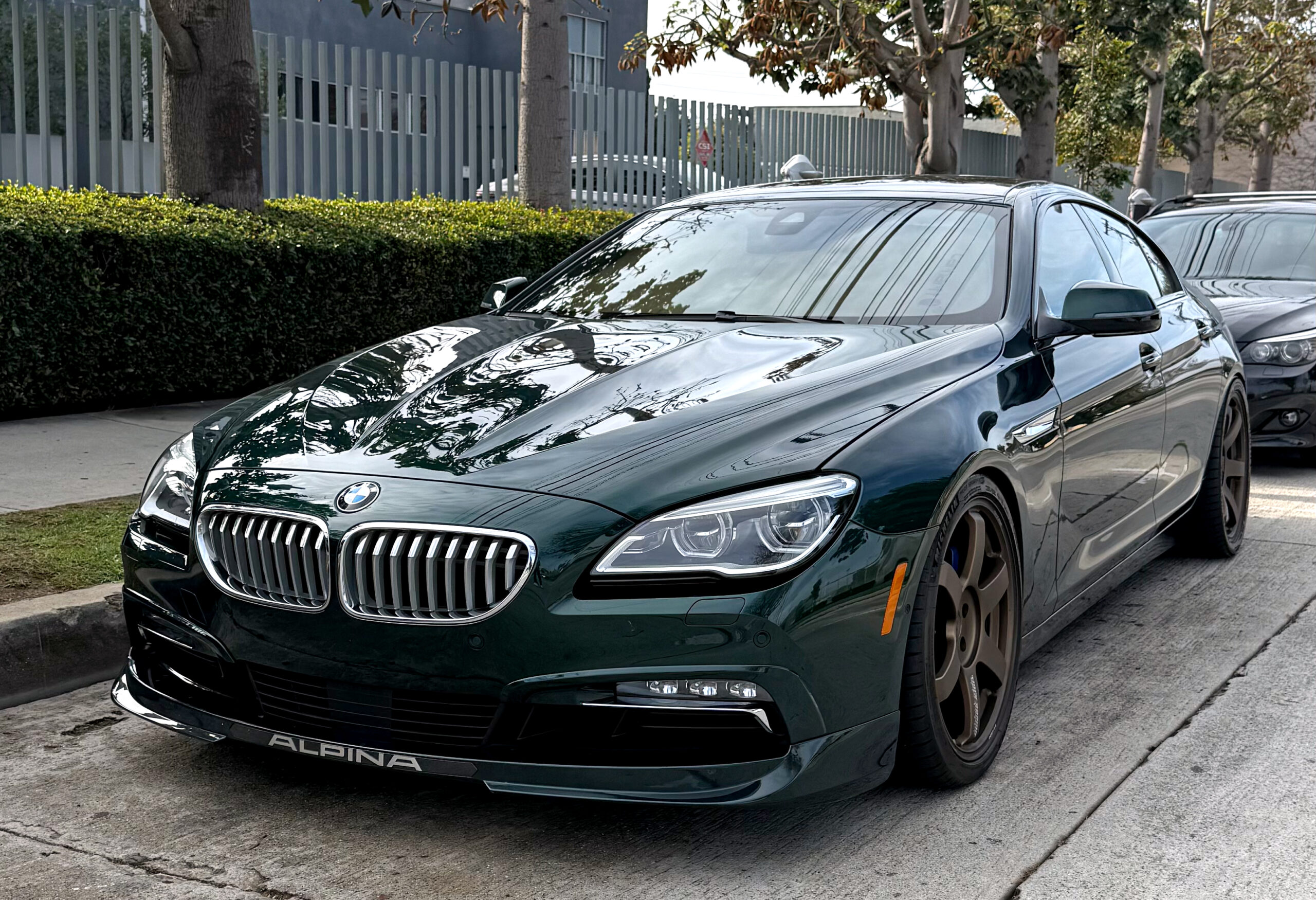
SEMA’s VP of Marketing, RJ de Vera arrived in his beautiful ALPINA B6,
While de Vera honed his early automotive passion around Japanese brands, he’s covered all the bases, most recently with an Aston Martin and now a spectacular ALPINA B6 with Volk Racing wheels.
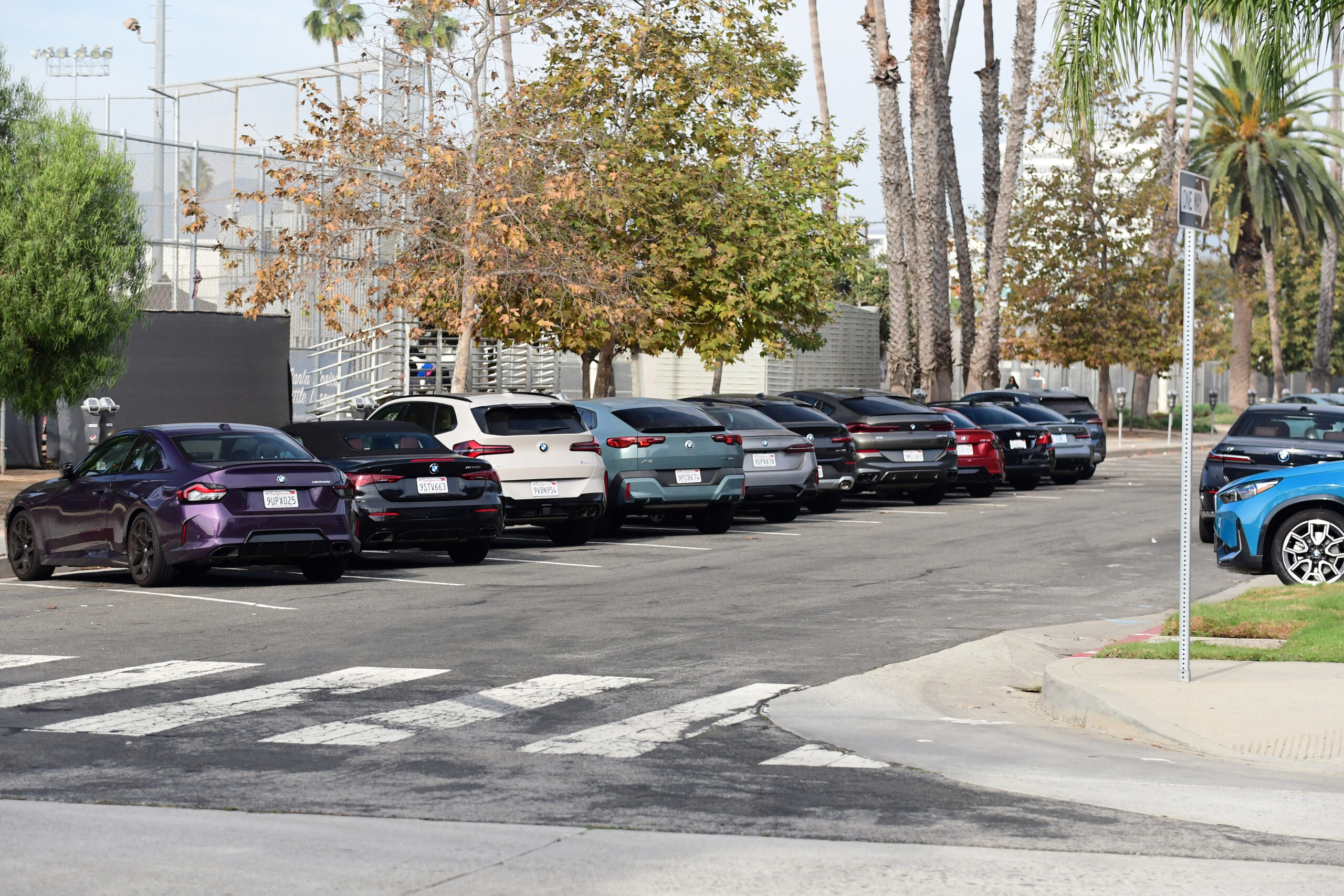
We’re not sure this nearby parking row always looks like this, but it looked pretty cool for a BMW fan during the event.
Greg Lennox can also be considered a BMW fan, but perhaps not as much a fan of where he’s seen the design go lately. “My first BMW driving experience was a 1600 in 1978,” Lennox shares. “American car owners couldn’t understand why anyone would want one of these odd little cars. But it was the ‘ultimate’ driving experience that made BMW special. I bought a new 1979 E21 320i, and I thought the exterior was aggressive and the interior was ‘driver oriented’ in a way that fit the car’s driving personality.
“Recently, I’ve felt BMW has lost its way in terms of both design and driving experience,” Lennox continues. “Maybe it’s been trying too hard to be all things to all people with limited resources. Sticking to the question of design…BMW has always been a relatively small automobile manufacturer with a niche market. To me, this requires focus to carve out and protect that market niche. As BMW brought in new design chiefs, the new team worked too hard to make their design mark without careful regard for the design language of BMW—which must always speak to the core value of ‘Ultimate Driving Machine,’ as we say in the U.S. market.”
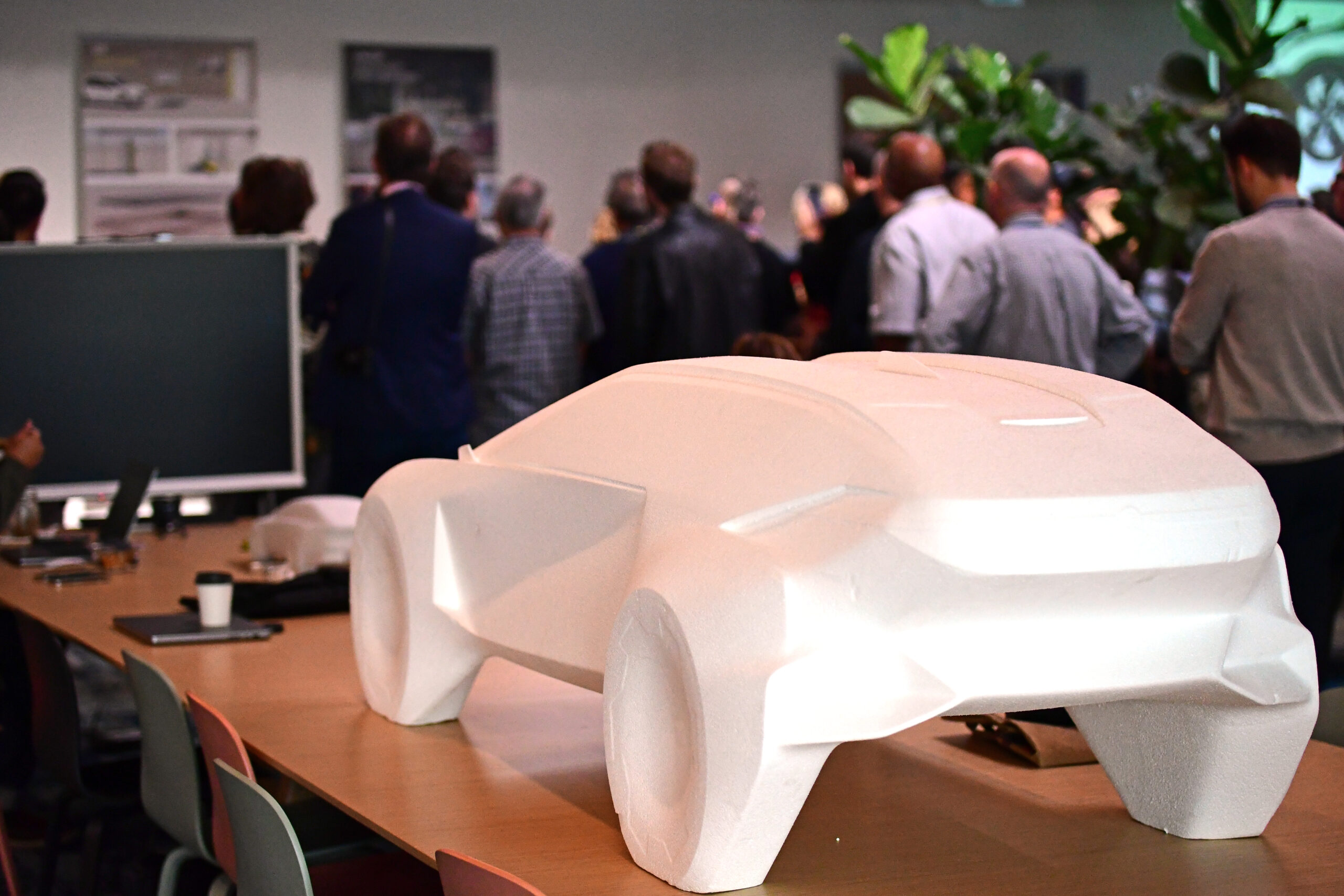
Models were everywhere in the Designworks studio.
Lennox continues to be passionate about the brand, including being a constant in many local and regional driving events with his 2002 Turbo and 2002 Tii, as well as a more modern model, too. “I see the ridiculously oversized and functionally obsolete kidney grilles on recent designs, including my iX, are a great example of losing one’s way in design,” Lennox adds. “Drastic changes from generation to generation of 3-series car details—like rooflines and headlight and taillights—are another.”
You don’t own cars across such a wide span of years and technology without still being open minded. “The Designworks presentation was actually quite helpful to me, as I understood how BMW approaches design for its global markets,” Lennox recalls. “The notion of design competition between four global design centers sounds great until you consider the likely result—a lack of consistent design language and purpose. I think we see this clearly in the current product range. I was, though, intrigued by the idea of tapping into the creative juices of the Westside, while taking on non-automotive industrial design contracts as a way to connect to the emerging West Coast culture.”
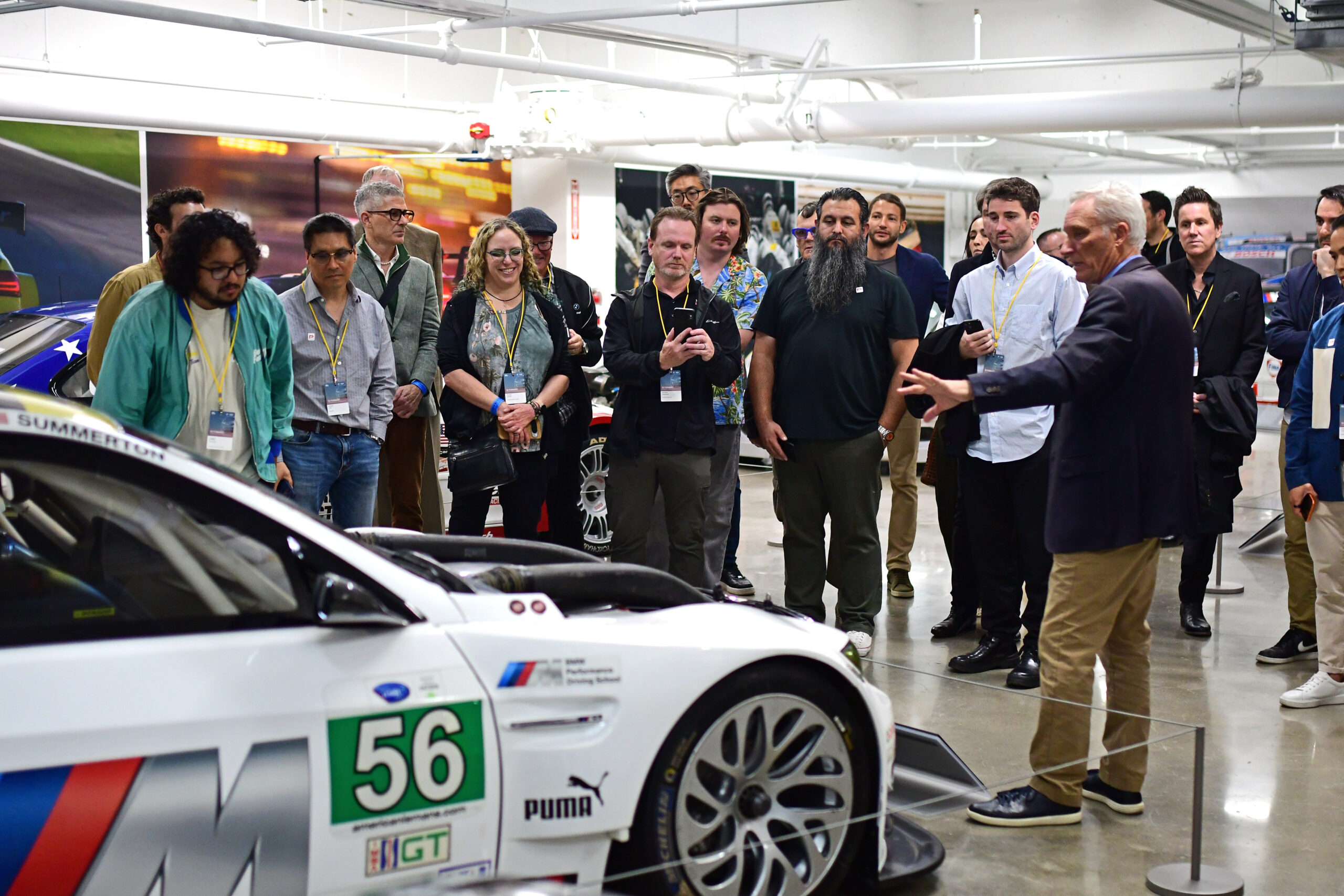
Tom Plucinsky gives some unique background on the E92 car, including that it’s his favorite in the 50 Years of 3-Series Racing exhibit at the Petersen Museum.
After the time at Designworks, guests ventured across town to the Petersen Museum. Early arrivals got to visit the Vault and the “50 Years of BMW 3-Series Racing” exhibit with a special bonus—a tour of it by Tom Plucinsky, Head of BMW Classic NA. The 25 or so attendees who heard Plucinsky provide unique stories around the examples of seven generations of BMW 3-Series racecars also got to see the GTR street car during its last day in the exhibit; it left the following morning to head back to Germany.
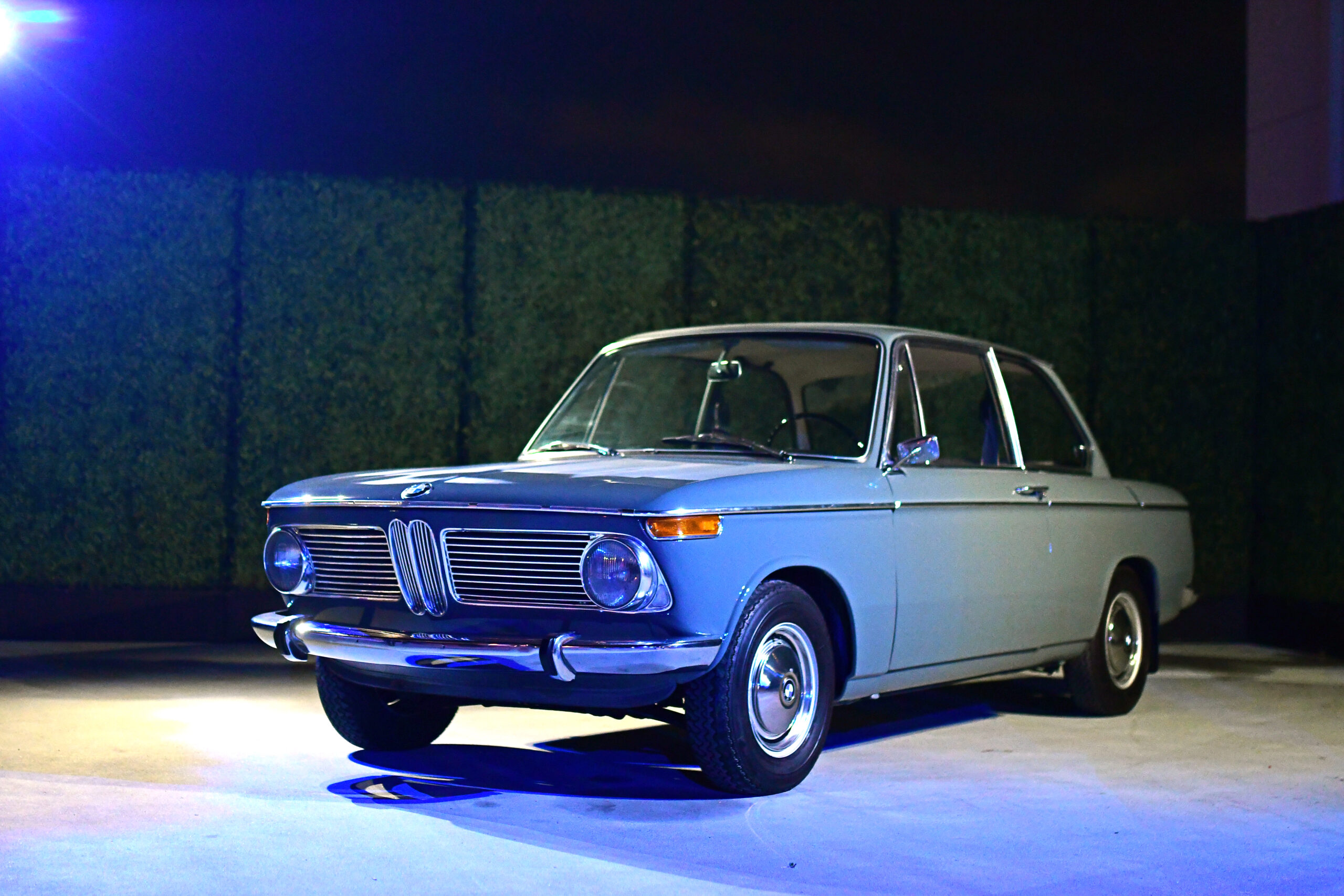
Lisa Hong’s 1967 1600 provided a good balance as the newest Neue Klasse, the iX3, was positioned across the patio.
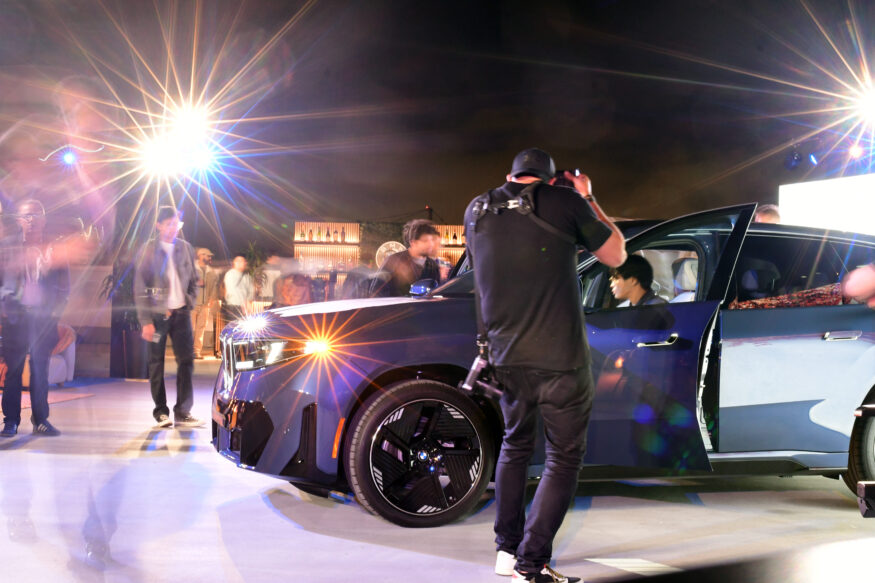
As everyone made their way up to the third floor and out onto the patio, they were greeted by two BMWs spanning more than 50 years: the 1967 1600 “Derby” owned by Lisa Hong and then the pre-production model of the iX3. Both caught plenty of attention as guests swarmed both cars before the Shape of Icons panel, set adjacent to the first modern Neue Klasse example, the iX3.
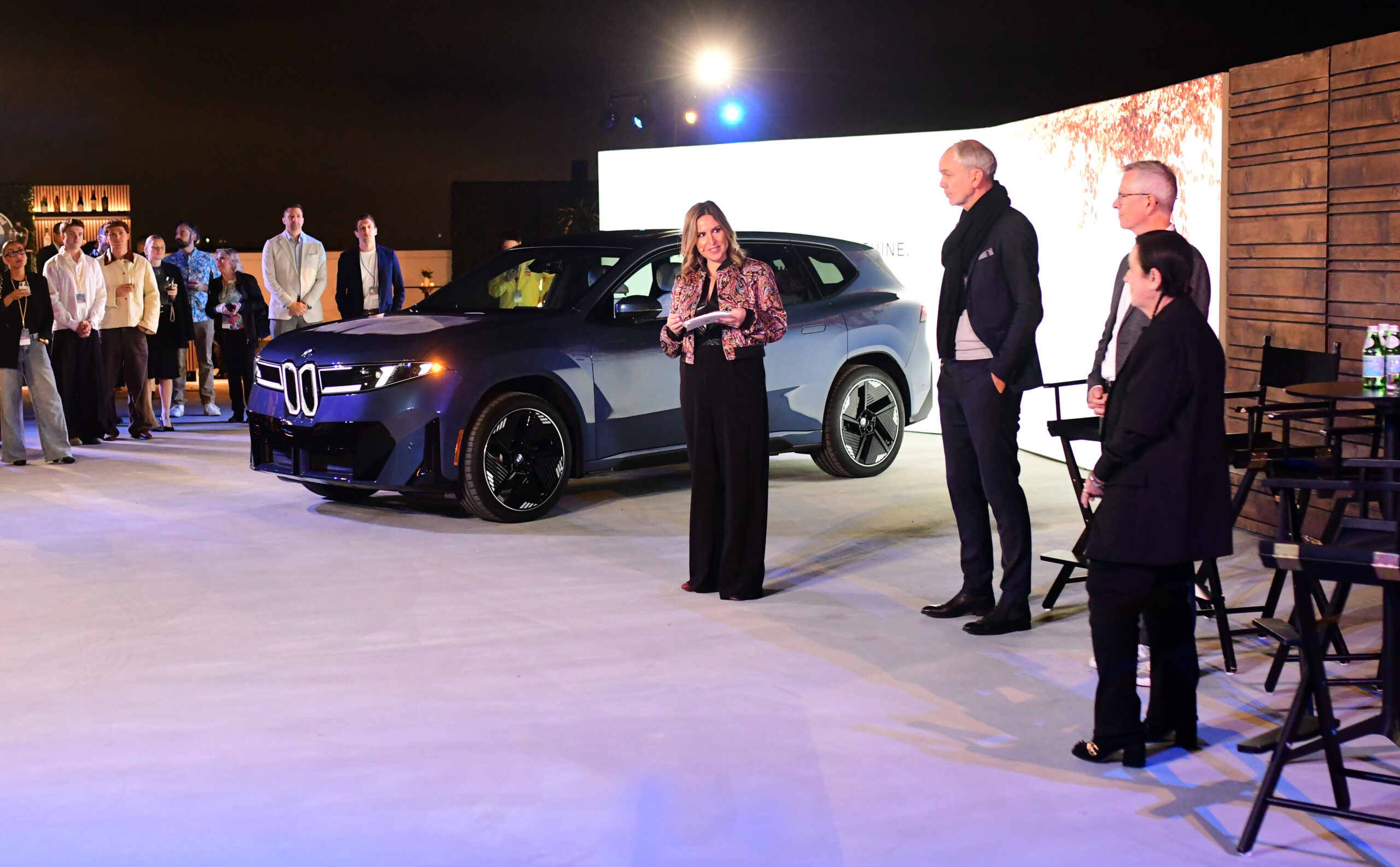
The Shape of Icons panel was a highlight for many for the night.
Adrian van Hooydonk tied the two together well. “The 2002 was different than what everyone had seen at the time,” he says. “And that helped it succeed,” implying that what many see as striking differences with the iX3 may very well be what will propel it to similar success as the 2002 enjoyed.
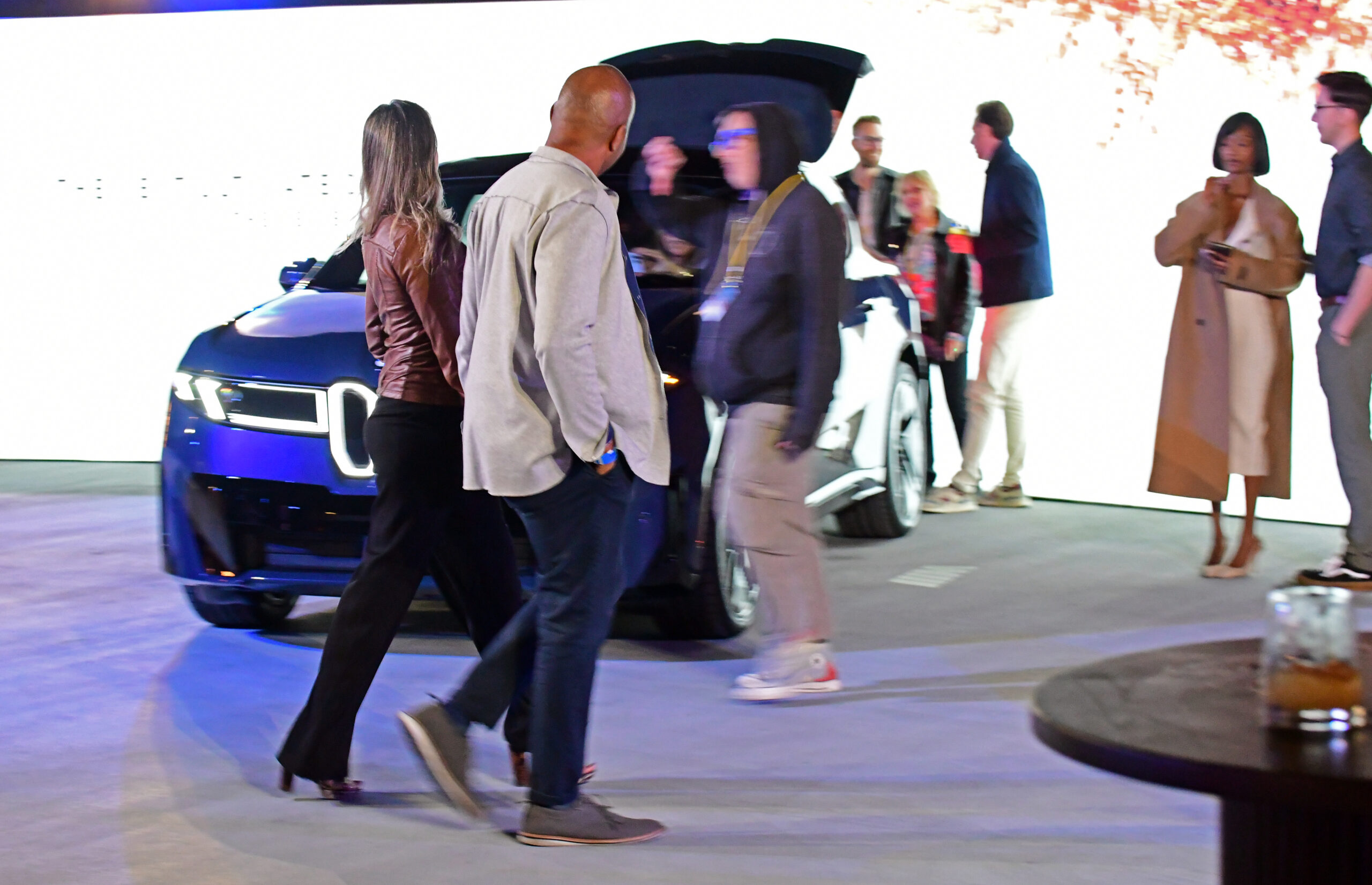
The iX3 definitely turned heads all night, as it did here with Bisi Ezerioha and his wife, Jessica.
Ezerioha also attended the events at the Petersen and was impressed with the iX3. “It’s an absolutely gorgeous automobile, chock full of useable tech,” he raves. “They hit the nail on the head with its design and appeal. I would love to participate in a classic and modern day build set with emphasis on modern tech, while paying homage to the past. An electric E21 track car, and a new IX3 would be my go to!”
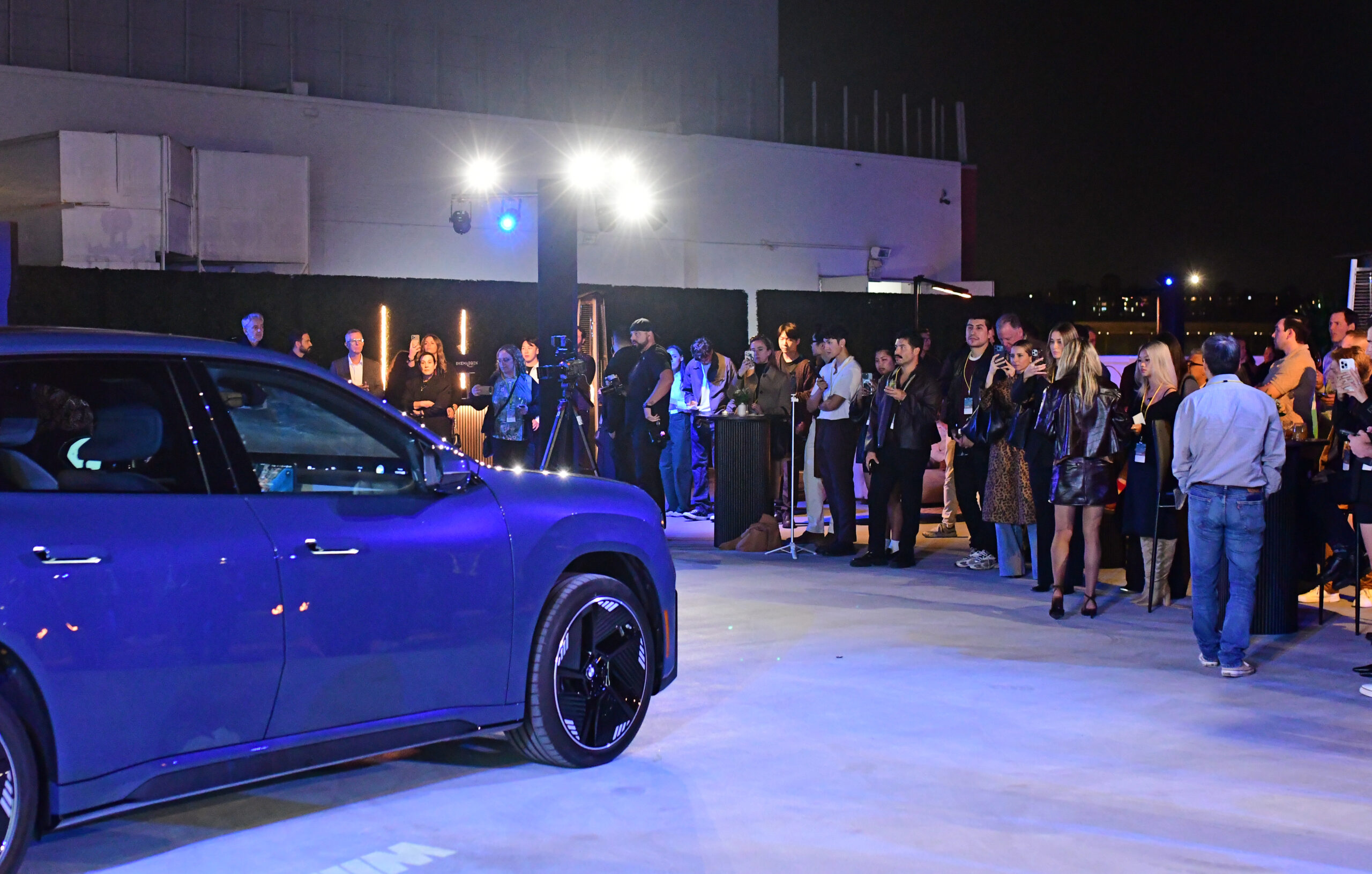
The crowd was certainly attentive during the Shape of Icons panel, also eagerly awaiting their chances to explore the iX3.
The evening event had many more attendees than the mid-Tuesday Designworks event. Hailey Magoon, automotive photographer, brand ambassador, and staple in the Southern California car community, stopped by and saw the iX3 for the first time. “It was really interesting listening to Adrian van Hooydonk speak about how design turns objects into icons and ideas into experiences,” Magoon explains. “I thought it was really an exciting conversation. As a bigger fan of classic car design over modern design, it was nice to see some references from the classic BMW 2002 in the design of the iX3.”
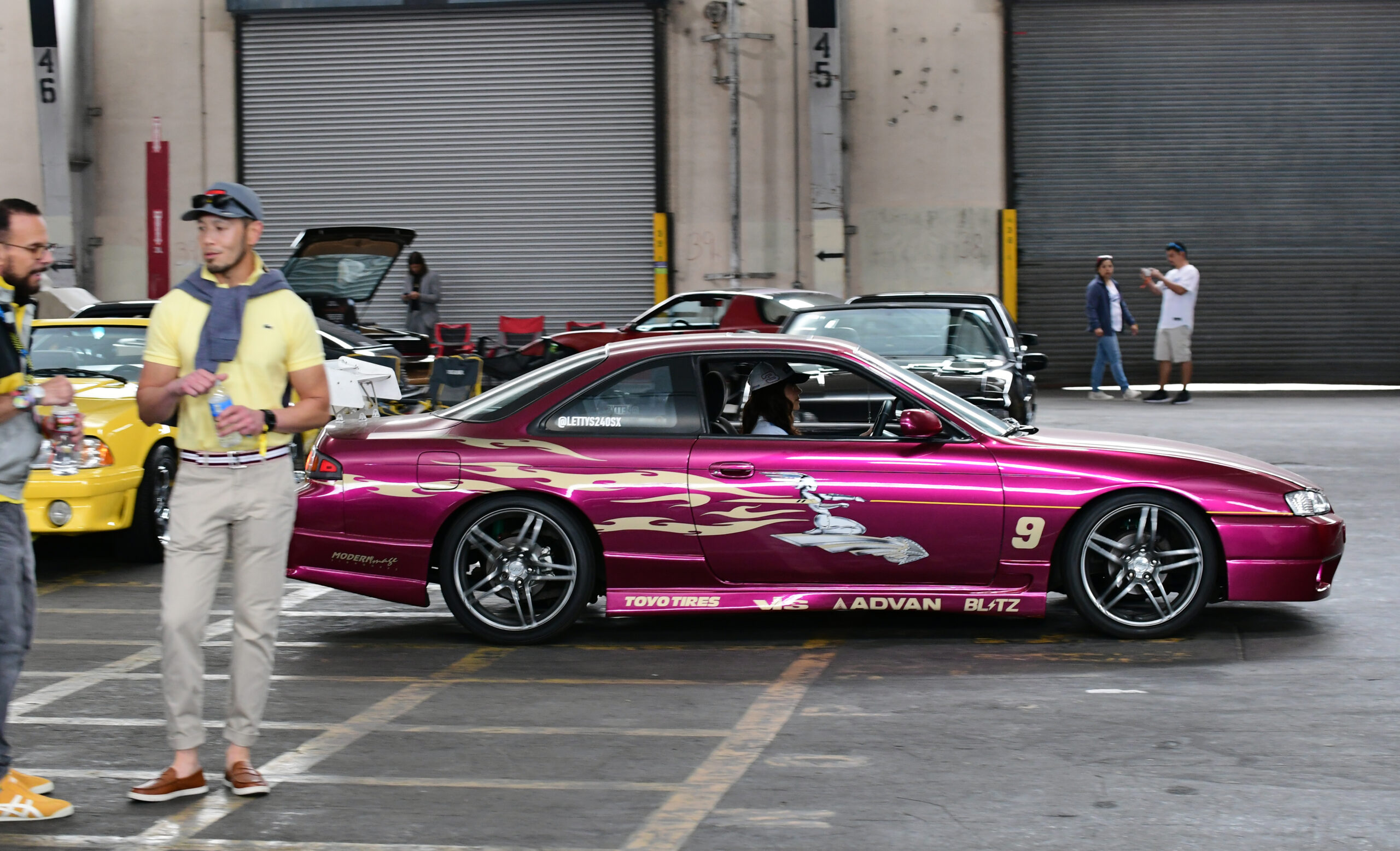
Hailey Magoon stopped by the event at the Petersen, but just two weeks prior, she had one of her classics out at RADwood LA.
She isn’t kidding about the passion for classic cars. Her newest car is a 2011 Camaro, but she recently brought her 1995 Nissan 240sx to RADwood Los Angeles and also has a 1992 Chevy Blazer, a 1971 Chevelle, and a 1969 Camaro.
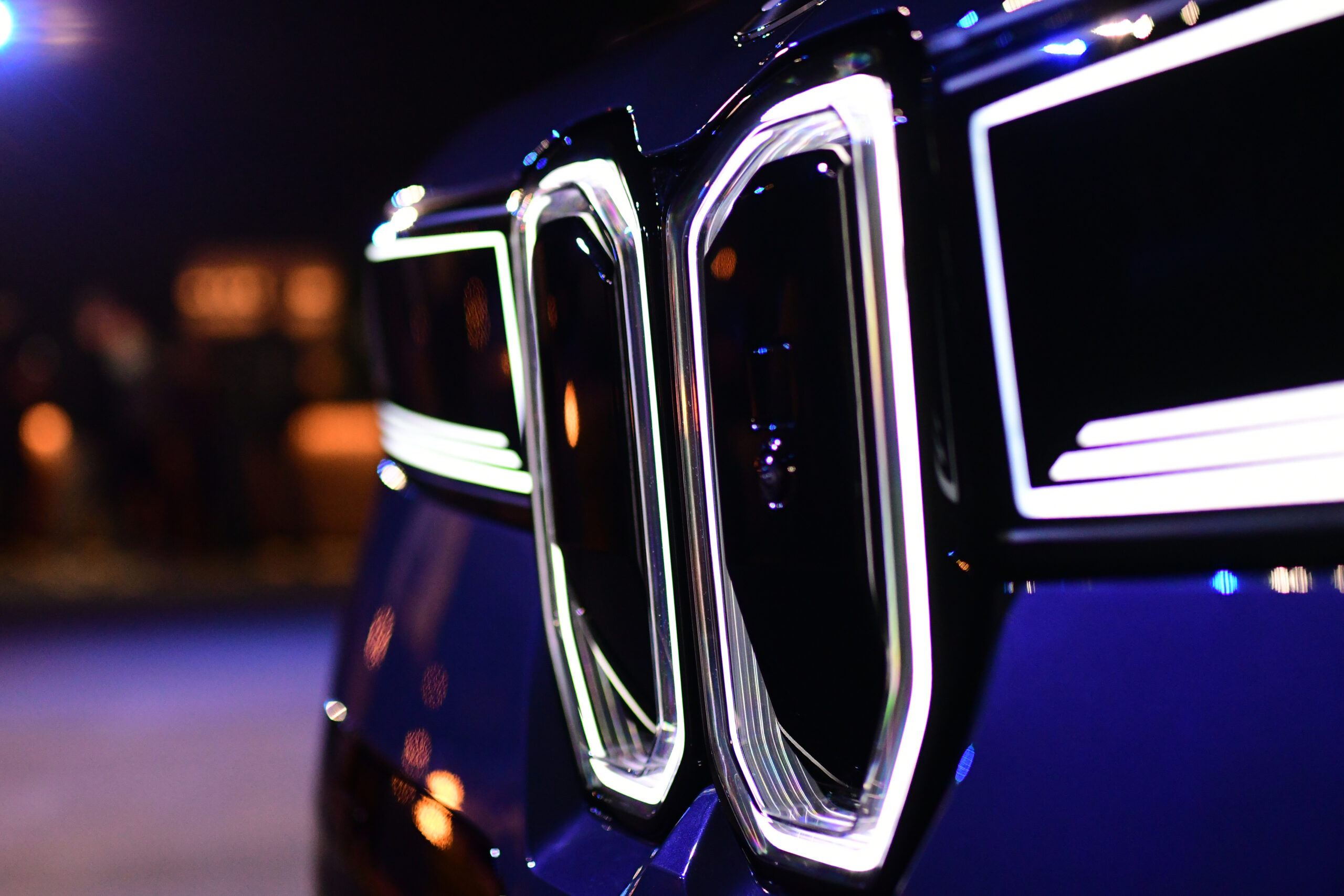
The grilles on the iX3 are definitely more reminiscent of the 2002 than the more recent iX.
Lennox also attended the evening activities but was not entirely sold on the direction of the Neue Klasse. “The iX3 looked like what automotive journalists once referred to as an ‘automotive appliance—a derisive compliment of sorts. It looks like an efficient package which will prove to be functional and reliable without being engaging…in other words, not the Ultimate Driving Machine,” Lennox fears. “The interior, and especially the ‘screen’ driver interface, look rather sterile, and definitely not as driver-oriented as my 1979 320i. The front end does do its job as an artistic homage to the iconic 2002 but without any functional meaning. At least they got the memo on hideous, equally non-functional oversized grilles on current models.”

It was still getting attention even as the event had mostly wound down.
De Vera recognized the design cues from the 1600/2002, as well. “I’m excited with the new design language that BMW is rolling out with the iX3 both on the outside and inside. The Neue Klasse exterior design language that takes some cues from the beloved 2002 looks fantastic. I have a feeling that BMW enthusiasts will gravitate toward it. The new interior design also feels fresh, engaging, and well-sorted. I can’t wait to see what the aftermarket does with the iX3 as a platform to customize.”
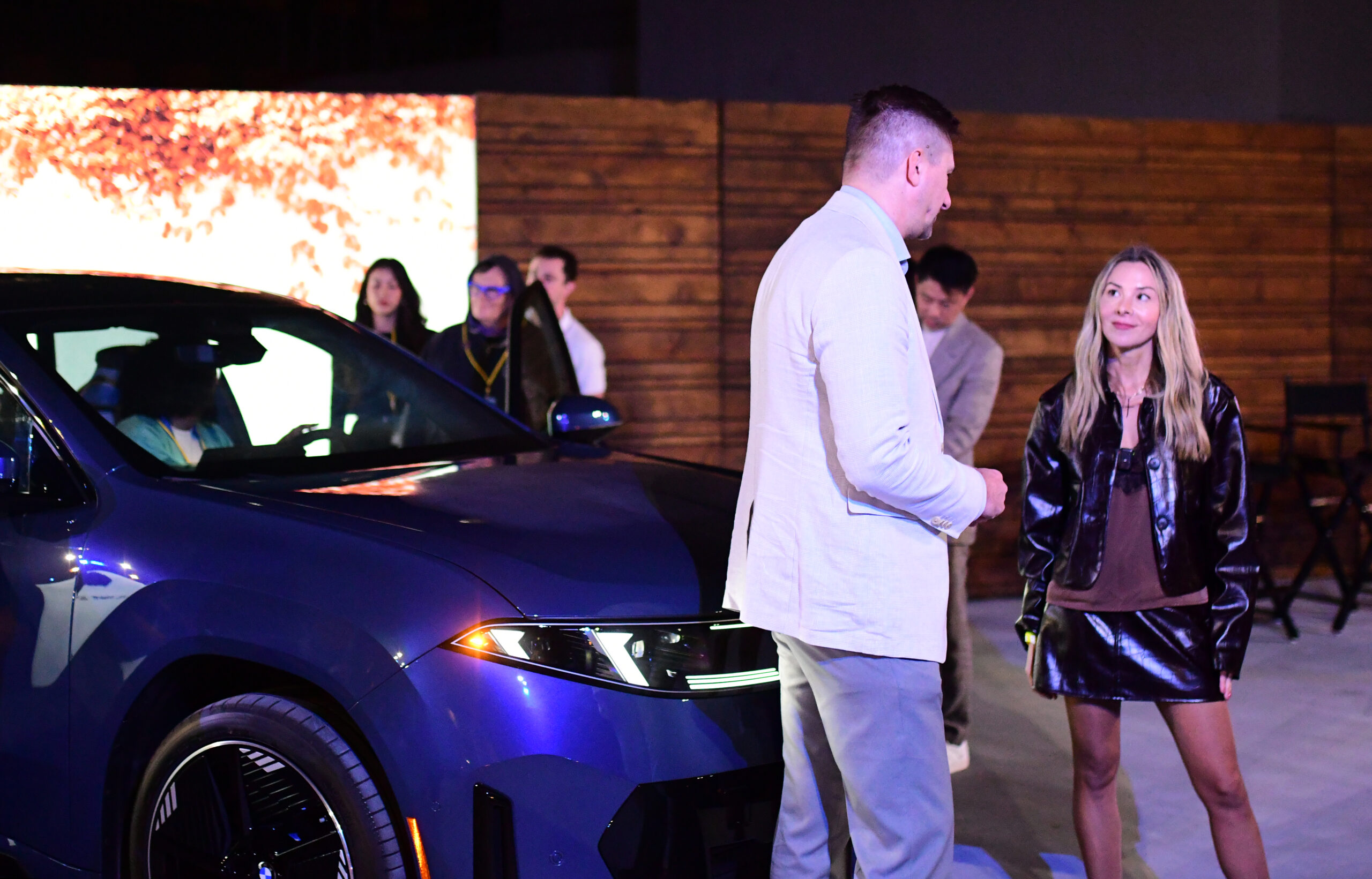
Product Manager Nick Gerstner talks with Kim Java about the iX3.
Product Manager Nick Gerstner emphasized that this is the first of many Neue Klasse models to come. “This is one of the most exciting times to be at BMW. This is the first of 40 Neue Klasse models to come over the next two years,” he says. “This specific vehicle has an estimated 400 miles of range and charges 175 miles of additional range in 10 minutes. You can expect to see this one on dealer lots by mid 2026 at a price point around $60,000. The whole package really brings this car together, not only the new design language that shows the future for BMW, but also the technology integration, space and roominess, and it drives great.”
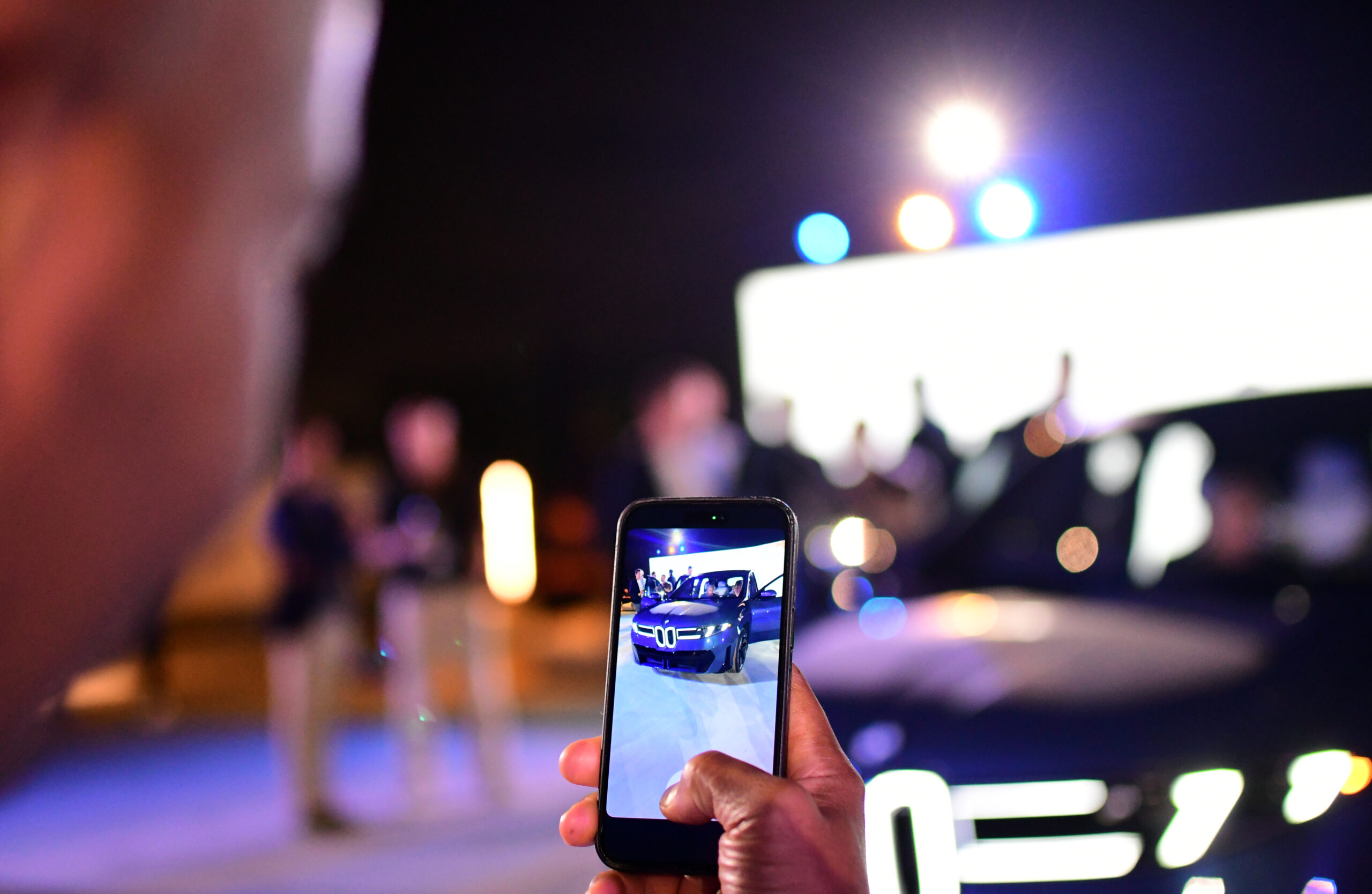
Ezerioha was not the only one capturing photos of the iX3 all night.
Gerstner wasn’t going to forget the question a lot of us had. “The core of the brand is still the ultimate driving machine and that’s where the heart of joy comes in. It is the actual control module that is integrated into the vehicle that controls all of the driving dynamics, stability control, power distribution, everything. The car anticipates what you want to do; sporty when you want it to, smooth and comfortable when you want it to be.”
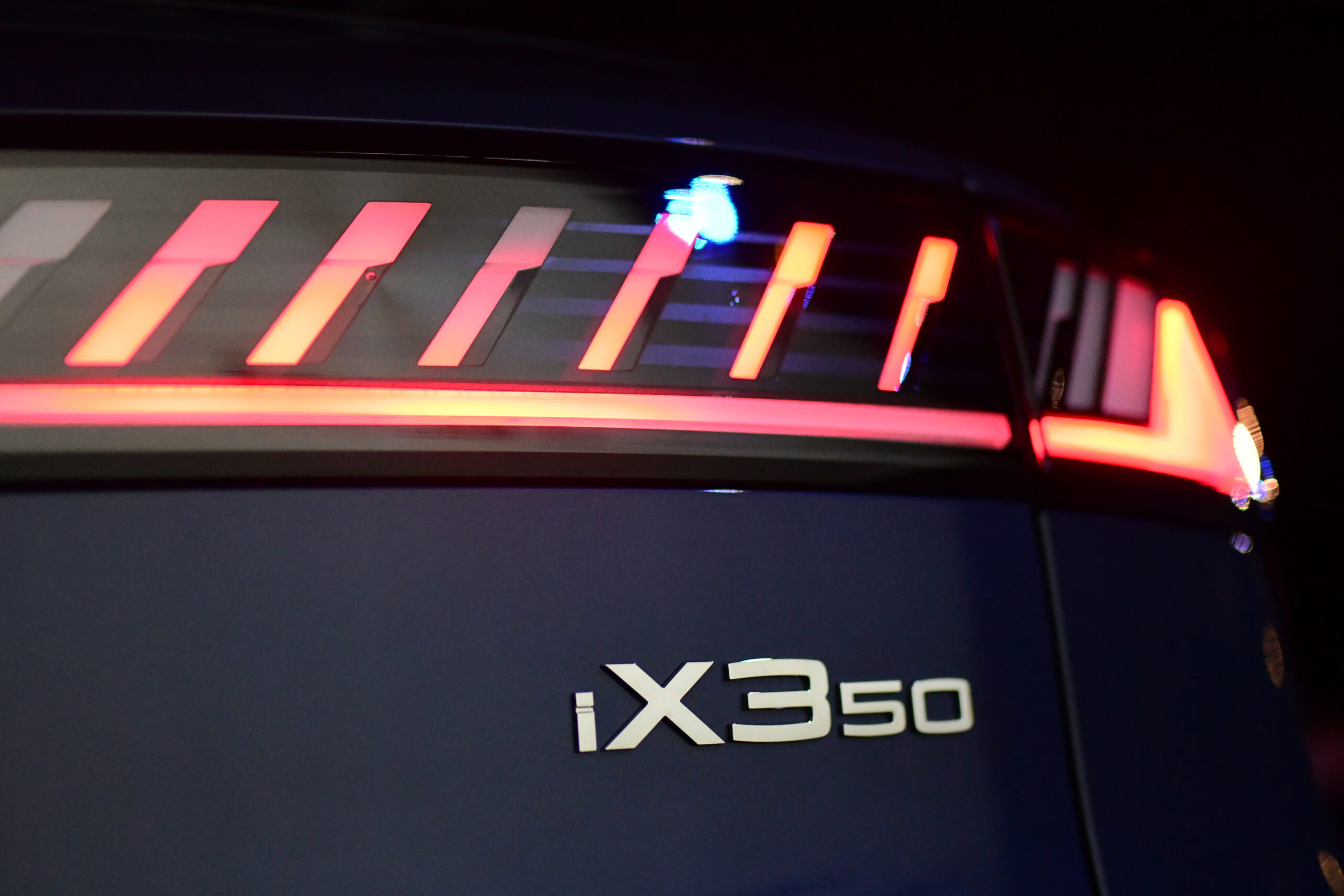
The iX3 will slot in just below the current iX.
He also acknowledged that any new product or design will have opinions on both sides. We know we can’t build a 2002 again and we hear the same frustration from fans of most brands. Based on what we heard about how the Neue Klasse has been designed and developed, it looks as though it is indeed an exciting time for BMW and BMW fans.