
The Pikes Peak International Hill Climb (PPIHC) is now just one month away and preparations for the car and the crew are getting more critical. Tom Tang has already been preparing for months to reach his goal to get up the mountain in less than 10 minutes with his E46 M3.
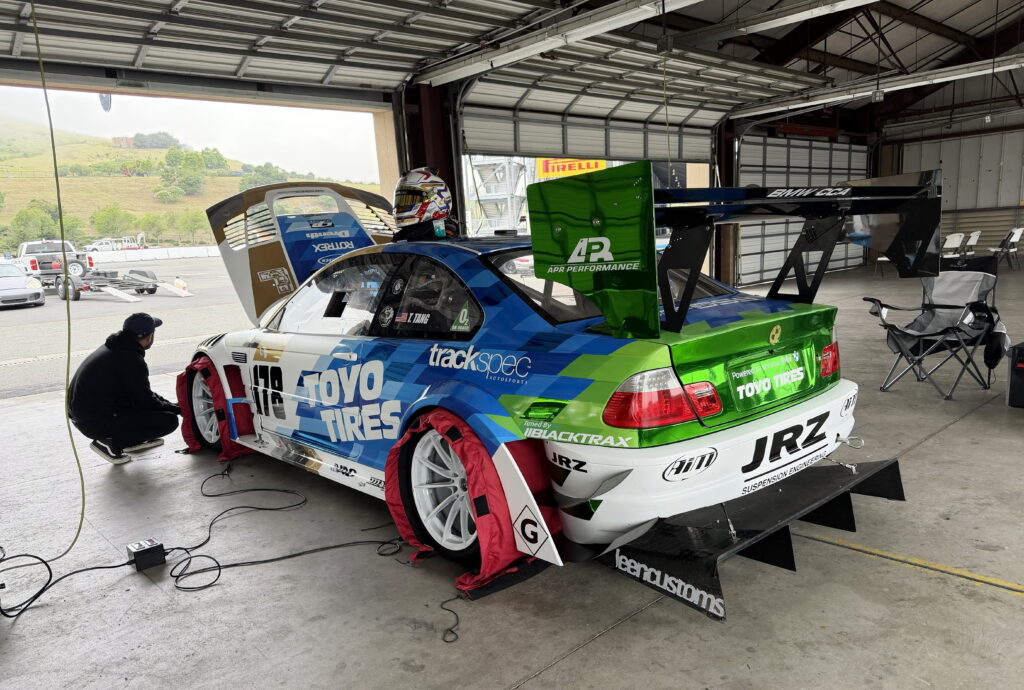
Tom Tang will be taking on the Pikes Peak International Hill Climb for the third time in 2026 and we’ll be with him along the way, reporting on his preparation and planning here on BimmerLife.com, followed by a report on the big event in BimmerLife magazine. In this second installment, we focus on Tang’s very special and very modified E46 M3.
Tang’s physical regimen to prep for the race begins right after the holidays are over, and runs right up to the PPIHC at the end of June. “I’m always in much better shape the first half of the year,” says Tang. “After the holidays, I get back to being stricter about eating and drinking. Typically starting in January I focus on dropping any holiday weight and getting back into shape.”
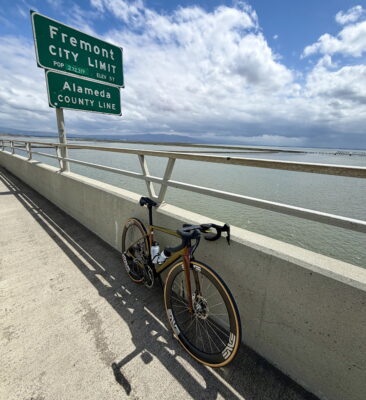
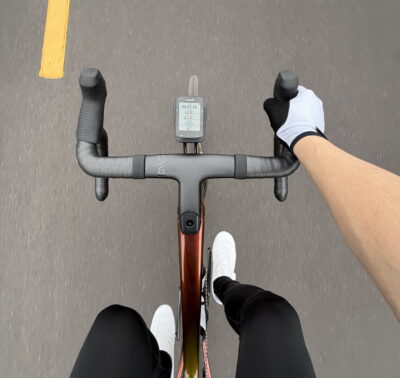
To get back into top shape, which is needed when driving flat-out in the thin air at the top of Pikes Peak, Tang takes time every day to work out. “I do at least 45 minutes of a workout every day during the week, either weights or calisthenics,” he says. “On weekends, I do a lot of cardio. I’m usually on my road bike for 40 to 60 miles every weekend to get my heart going. While I’m biking, I drive Pikes Peak in my head.”
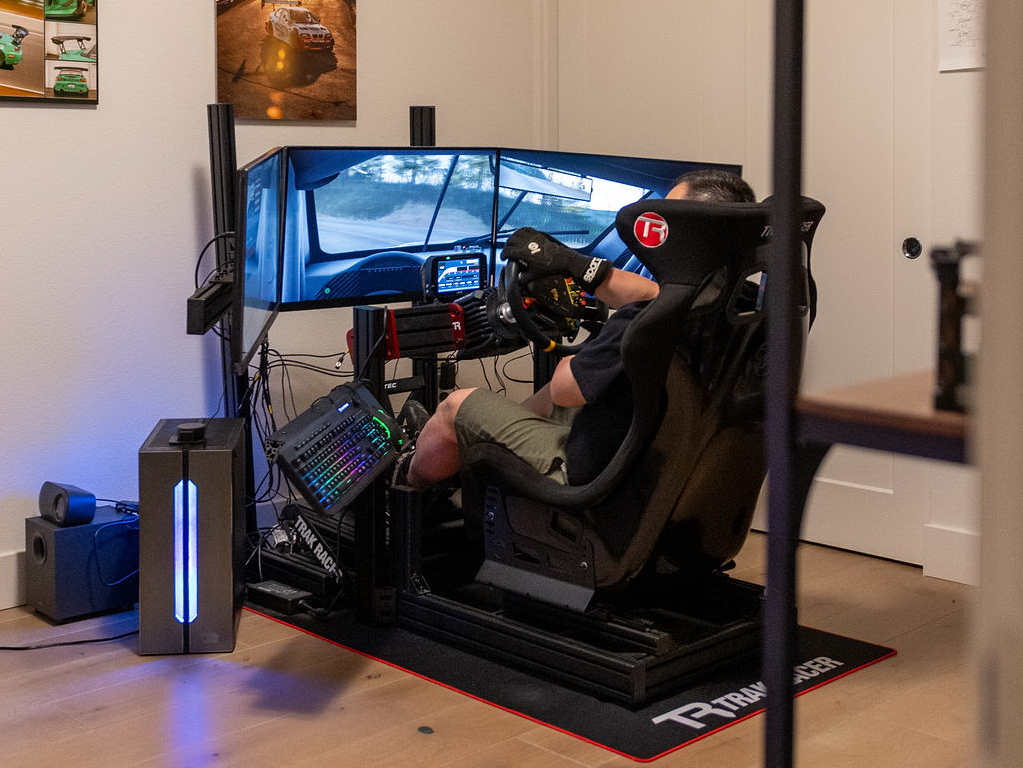
With no testing allowed during the year on Pikes Peak (which is a public road every day except for race day), racing the mountain on a simulator is also crucial. Tang has a routine where he spends at least 30 minutes a day driving up the course on his sim, which is enough time to get in three runs.
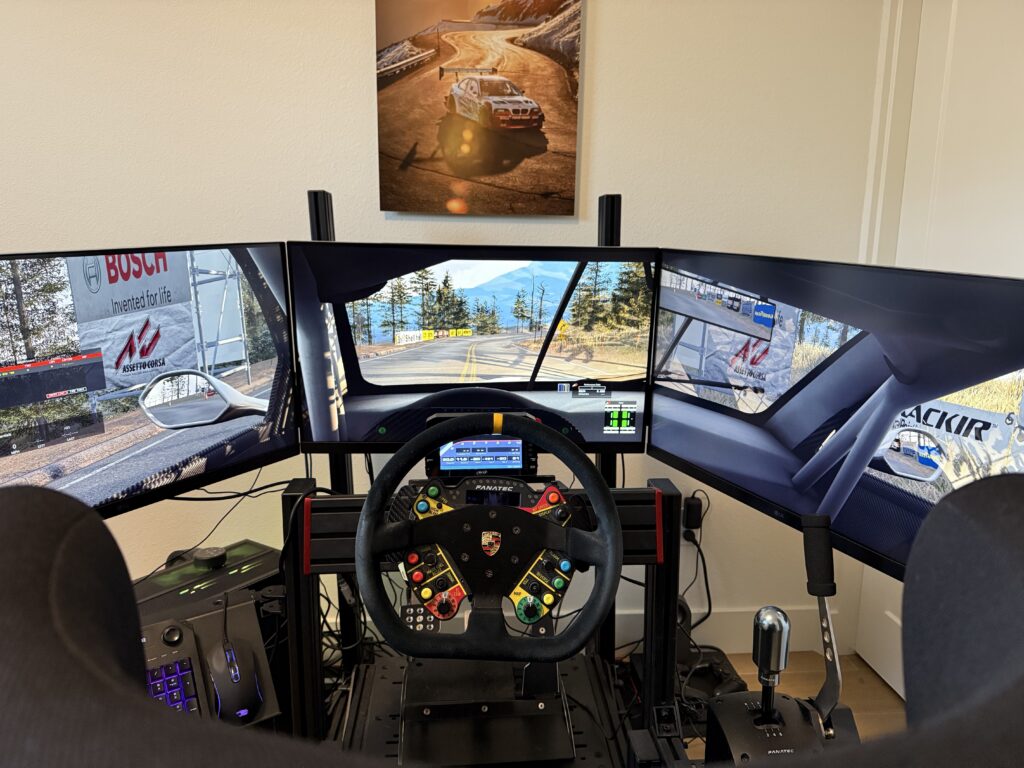

Tang’s simulator setup is tailored to make conditions as close as possible to the M3 and what it will be like on the mountain. “Over the last few years, I’ve really been dialing in the setup on my simulator to match the setup on my BMW, everything from the handling characteristic and power to how the tires feel,” he says. “The only thing we’re not able to replicate on the sim is power loss at altitude when we’re climbing. I adjust for that by driving a slightly slower car on the sim to make up for it. We have dyno data from the car, so we load that into the simulator and we make an adjustment to allow for the loss in power based on altitude.”
All of the components on the sim, from the diameter of the steering wheel to pedal and gearshift placement and the seating position are nearly identical to the BMW, and Tang has the sim dialed in for expected conditions on the mountain. “We usually run Pikes Peak in the morning, so I have the sim set for morning with broken clouds and some sun in my eyes, and I always put the road surface at slightly dusty. It’s as close to the real thing as possible.”

Tang’s sim setup is so close to the M3 that sim lap times at his home track of Sonoma Raceway are within a second of what he runs in the real car. On his latest sim runs up Pikes Peak, he’s consistently getting up in 9:30. Even with a cushion of 15-20 seconds, that puts him well below his goal of 10 minutes. “Our hope is that we aren’t too far off on the sim versus reality when we get there.”
Tang also gets out to open test days at Sonoma Raceway to shake down his car before the PPIHC event. “What I’m looking for at the test days is to continue to be comfortable with the setup as we tweak things like the brakes and the suspension setup, and how it delivers power. We also work on fine-tuning the nitrous delivery and gathering data to tune it better when we get to the mountain.”
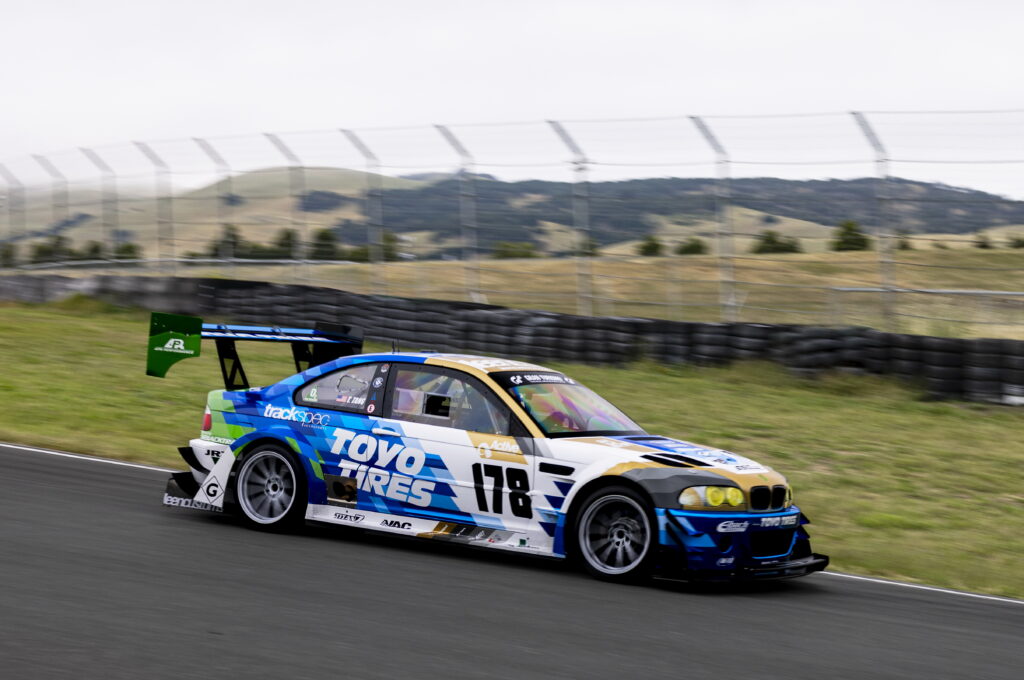

With only a few weeks left before the hill climb, Tang and his crew have done just about everything they possibly can to make sure they’re ready to meet the challenge of getting up in under 10 minutes. Of course, now all they will need is for the fickle mountain to cooperate.
—David Haueter
[Photos courtesy Tom Tang, Nick Cahill]