
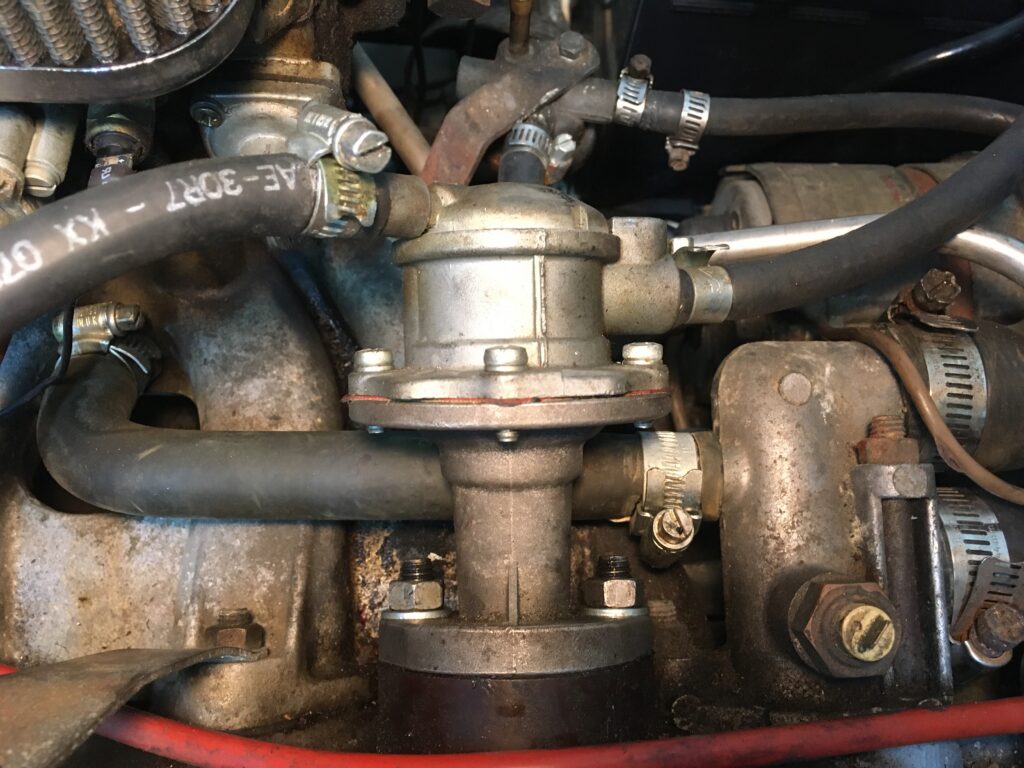
A friend messaged me this week with a fuel delivery issue on his ’76 2002. The car had the original-style mechanical fuel pump installed, and a fuel filter before the pump. As I wrote about here, I don’t believe that any carbureted 2002 ever had a fuel filter installed there, or anywhere for that matter—they have a mesh screen at the bottom of the pick-up tube in the tank, and that’s it. Over the decades, mechanics and do-it-yourselfers have understandably installed fuel filters to keep sediment and rust out of the carburetor, and it’s often put before the fuel pump, as that way it keeps contaminants out of the pump. However, that can create the problem that I had. Mechanical fuel pumps are designed to pull, not push, so they need to create a vacuum in the length of fuel line running all the way back to the tank in order to suck the fuel up. If there’s extra air in the line due either to a dry-rotted section of hose, a clamp that’s not tight, or the presence of an empty fuel filter, it can result in a no-pump situation.

My definitive test a few years ago that the fuel pump itself pumped perfectly fine when the filter, fuel line, and tank were removed from the equation.
My friend asked me if I thought the problem might be vapor lock. I said that I thought that was more of a 100-degrees-at-the-racetrack issue, not an early-April-in-the-rustbelt one. We agreed that the fuel filter location might be the problem. He removed the filter, and the problem appeared to go away.
But the problem came back, with the car acting like it ran out of gas. Note that fuel delivery issues usually feel this way because the car is running out of gas in that even though it may be in the tank, it’s not reaching the engine. He fixed it by doing something he didn’t want to do—installing an electric fuel pump. He had one of those little square Facet pumps of unknown age and origin lying around, tried it, it didn’t work, so he bought a new one. Hating the way most trunk-mounted electric fuel pump installations look, he cleverly mounted the fuel pump and a high-quality pressure regulator beneath the battery tray. And that solved the problem.
Until it came back while his significant other was driving it. On the highway. In traffic. Without a breakdown lane. Everyone’s worst nightmare. The car was towed to a service station. When he got there, he cracked the key to turn on the electric fuel pump, unclamped the fuel line, and very little fuel came out. He temporarily spliced in a different electric fuel pump, and it appeared to solve the problem.
But then it came back again. Hence the phone call, and this article.
Of course, many of these problems are simply caused by a gas tank loaded with rust or sediment, and it clogging either the fuel screen in the trunk or a filter in the front (or, in the case of a tii, the barrel-shaped screen in the Y-fitting at the front of the Kugelfischer injection pump).
I had a similar issue with Bertha about for years ago. It died on me one evening when I was driving it out to Fitchburg to swap cars. I verified that no fuel was coming into the carbs. The combination of falling dark and cold, a nearly-depleted cell phone battery, and the absence of a charger and cable made me call for a tow (the only time I’ve ever had a 2002 die and towed home in 40 2002s over 45 years). It started right back up in the driveway, died soon after, and like my friend’s car, was solved by replacing the electric fuel pump, only to have it recur a few days later. I eventually replaced the fuel pressure regulator between the Webers (often needed with an aftermarket electric fuel pump because many of them run at too much fuel pressure).
After we both scratched our heads for a bit, I offered that while his mounting the electric fuel pump under the battery tray was a cool idea, my understanding was that electric fuel pumps are essentially the opposite of mechanical ones in that they push, but they don’t suck, and thus need to be gravity-fed fuel. That’s why they’re installed under the car in vintage fuel-injected BMWs. I, like many people, have one installed in the trunk of Bertha, so it’s not gravity-fed, but it should be. So my advice to him was to relocate the pump to the rear of the car, below the level of the tank, and see what happens.
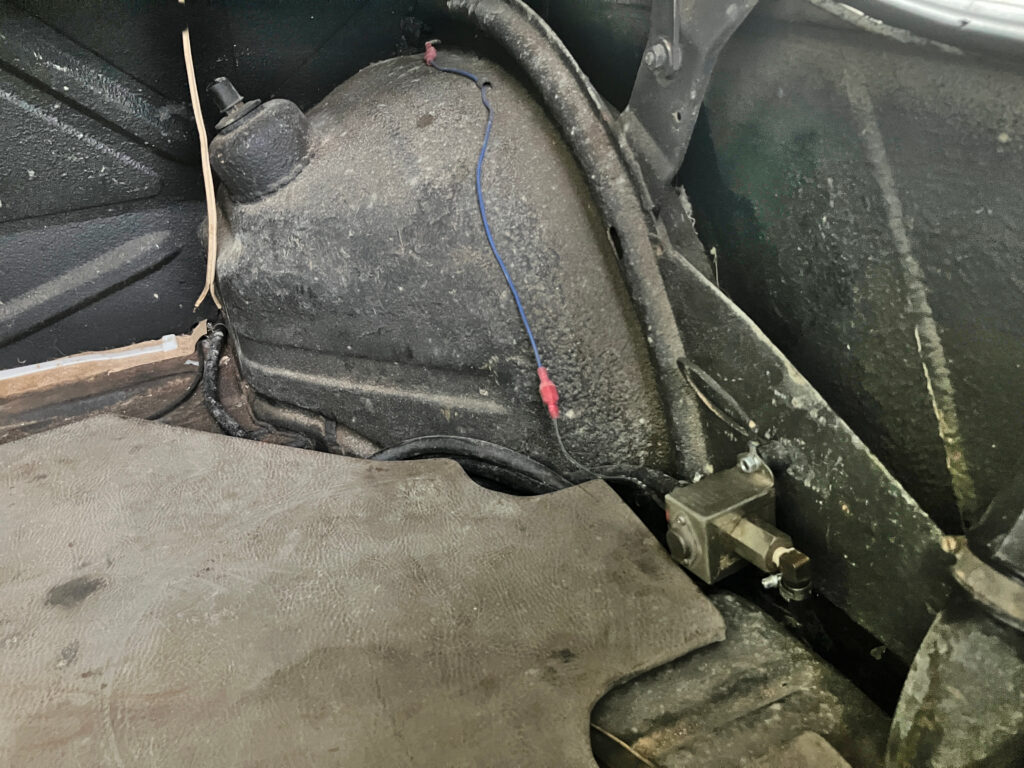
The fuel pump in Bertha. It’s slightly above the fuel tank, but at least it’s not on top of the wheel well where many folks put it.
As my friend and I were talking, he mentioned once encountering a failure mode I’ve never seen—the pump not being able to suck fuel because the fuel is under vacuum in the tank because the tank isn’t vented (like gas not pouring smoothly out of a canister because the empty space isn’t being replaced with air).
Having said all that, I thought I’d lay out a checklist for the way I’d diagnose a problem like this if I had the car in front of me. I mean this to apply primarily to carbureted cars, and it’s most meaningful if the car is non-running and right in front of you.
- Have a fire extinguisher at the ready.
- Take an empty bottle, undo the far end of the hose coming out of the fuel pump, stick the end of it in the bottle, and run the fuel pump (if it’s an electric fuel pump, crack the key to ignition, and if it’s a mechanical fuel pump, crank the engine).
- If fuel is streaming into the catch bottle, then the fuel pump is working and it’s pumping fuel (note these aren’t the same thing). Ergo, the problem must be between it and the carb.
- If there’s a fuel filter, a pressure regulator, and/or a fuel return valve (most 2002s had a fuel return valve, though very few of them are still connected) between the fuel pump and the carb, temporarily bypass them all—connect the output of the fuel pump directly to the carb and run the fuel pump again.
- If the car then starts and runs, and if there was a fuel filter you disconnected, take it completely out, drain the fuel out of it, thoroughly wipe off the input end, wrap your lips around it, and blow. You should feel virtually no restriction. If you do feel obvious push-back against your blowing, replace it and try again.
- If it still won’t start, unscrew the top of the carb, pull it off, and inspect the float bowl. If the bowl has a decent amount of gas in it but the car won’t start and run, you need to be sure that this is really a fuel delivery problem and not an ignition problem.
- If the float bowl is empty, the needle valve might be stuck closed. Manually move the float up and down to see if pressurized fuel begins to flow. If not, and if you’re certain that there’s pressurized fuel in the fuel line, try replacing the needle valve.
- If there’s a pressure regulator in the system, reincorporate and see what happens.
- If fuel is not streaming into the catch bottle, you need to directly test the fuel pump. I recommend doing the test I show above where you feed it fuel from one bottle and squirt it into another one, as this tests the pump in exactly the configuration it’s in in the car.
- If the fuel pump itself seems to be working but nothing is coming out, you need to trace things back to the tank. As I said above, with a traditional engine-mounted mechanical fuel pump, I’ve had the presence of a fuel filter between it and the tank prevent the proper suction of fuel. I’ve also had a section of dry-rotted gas line at the top of the tank allow air to get sucked through it.
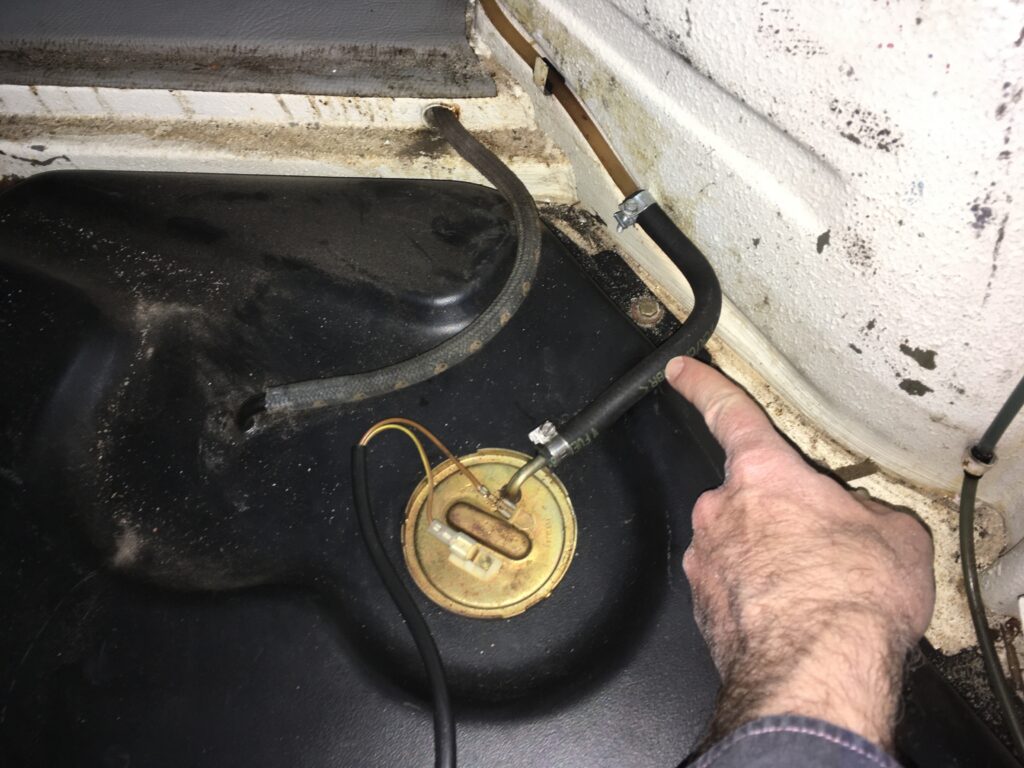
A new section of fuel line replacing an old dry-rotted one that was sucking air.
- This is a bit easier to troubleshoot when there’s a rear-mounted electric fuel pump, as you can connect a short hose to its output, feed it into a catch bottle, and run the pump. If fuel comes out but doesn’t make it up to the front of the car, there’s likely a restriction between the pump and the carburetor.
- If no fuel comes out, there is likely a restriction between the tank and the pump. You might think this is simple because the pump is right in front of you in the trunk and is connected to the tank with just one hose, but the inlet of the pump may be clogged from rust and sediment it’s pulled up from the tank, or the bottom of the pick-up tube may be clogged. This isn’t as easy to check as blowing through a fuel filter. And checking it dovetails with checking to see if the bottom of the tank is full of crud, and that may not be easy to do. E30 and E28-era cars have an in-tank fuel pump that’s part of an assembly with the pick-up tube and the whole thing drops in from the top, screws in place, is sealed with a rubber gasket, and the hole is big enough that you can not only look inside but reach inside to clean things if necessary. The 2002tii also has a large pick-up assembly with a send and return line that’s big enough to allow inspection and cleaning. But on a carbureted 2002, the pick-up tube is part of the fuel level assembly, it twist-locks into the top of the tank into a hole that’s big enough to look through, but not big enough to reach in and clean through. In either case, on cars that have sat for a long time, I’ve seen the pick-up tube and /or the screen completely clogged up with goo.
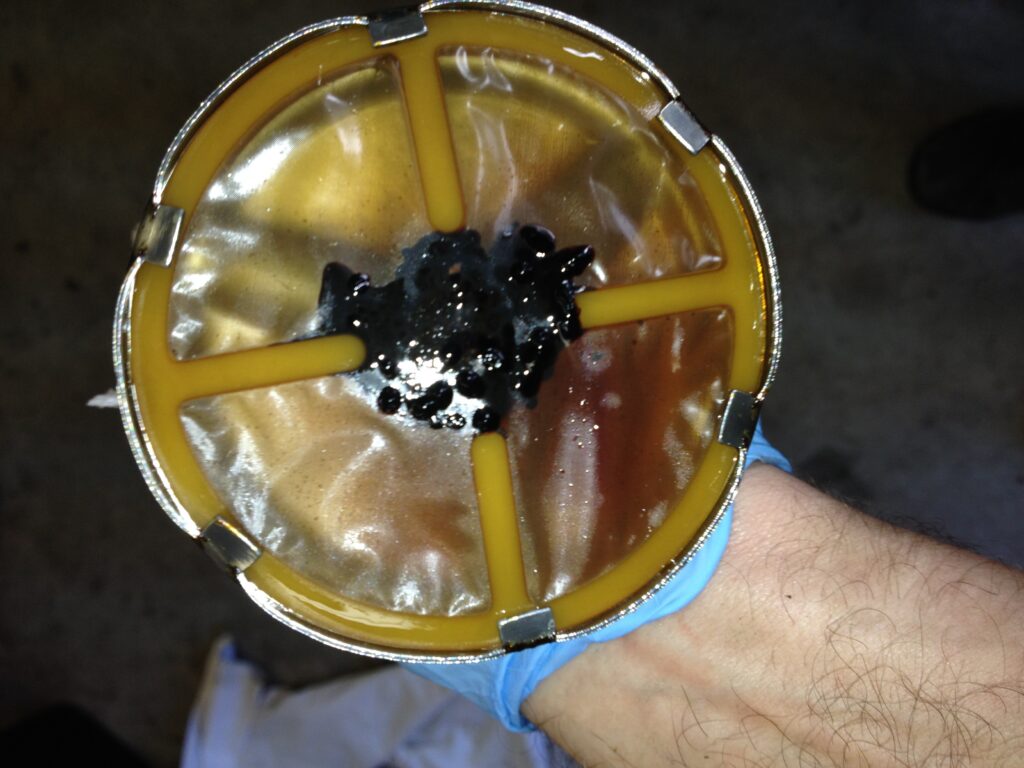
Not kidding about the goo.
If you’re still stumped, I’d then add in the two non-intuitive checklist items:
- If an electric fuel pump has replaced a stock mechanical one, and if it’s not in a rear-mounted gravity-fed location, consider putting it under the tank and seeing if it solves the problem.
- If pumping stops after a certain amount of time, try undoing the gas cap. If there’s an inrush of air and pumping commences, then you have the “vacuum trap” problem that my friend described, and there must be some restriction in the tank venting system.
And if my friend comes up with a definitive solution to his problem, I’ll let you know what it is.
—Rob Siegel
____________________________________
With summer around the corner, you might want Just Needs a Recharge: The Hack Mechanic Guide to Vintage Air Conditioning, available on Amazon here. Signed copies of all of Rob’s books can be ordered directly from him here.