
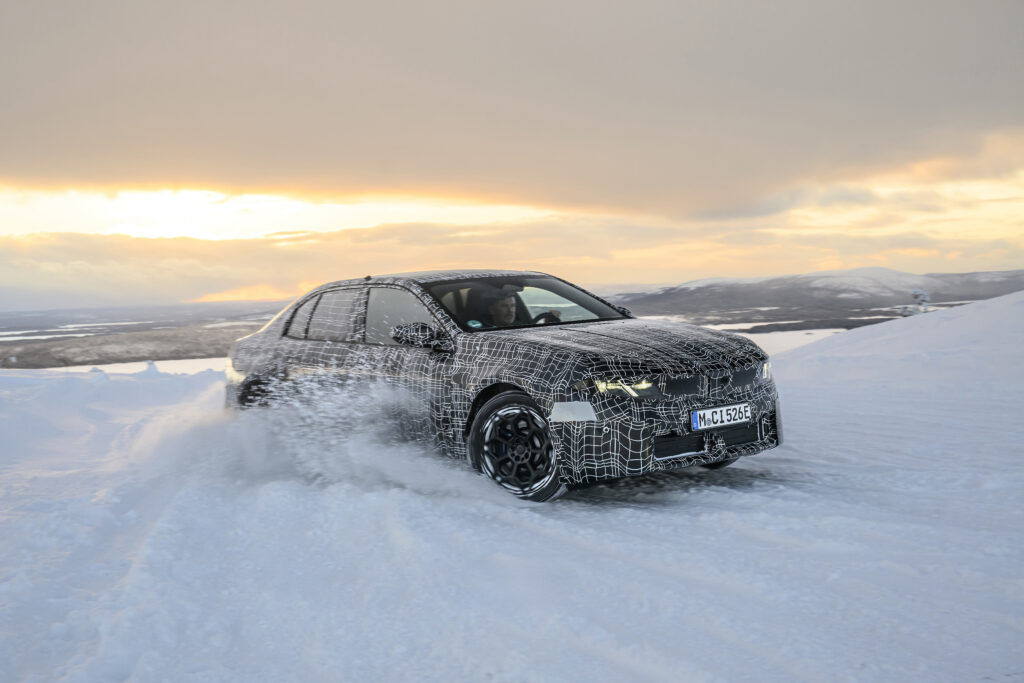
After spending half a decade developing the Neue Klasse platform and the various technologies that make it work, BMW is wasting no time rolling out the resulting models. The iX3 still hasn’t hit American dealerships, but here’s your first look at its smaller sedan cousin, the i3.
No, this isn’t a reboot of the first i3, the dearly departed darling of a hatchback that was discontinued in 2022. This is a wholly new model, a next-gen electric 3 Series, and after a day behind the wheel of a prototype model at BMW’s winter proving grounds in Arjeplog, Sweden, I’m even more excited about what Neue Klasse can do.
The Fundamentals
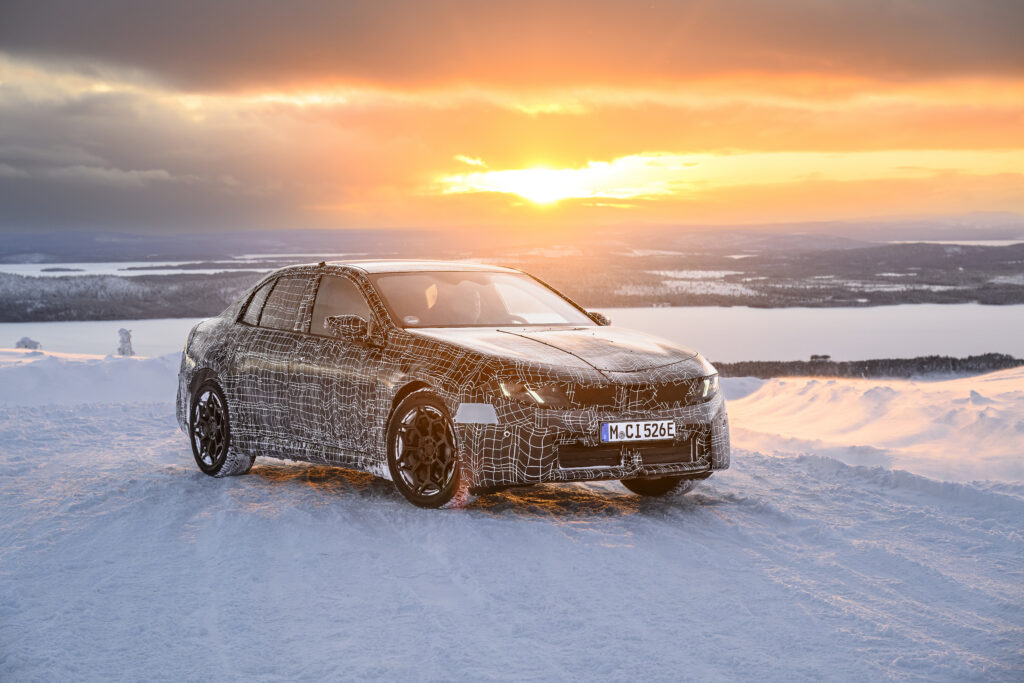
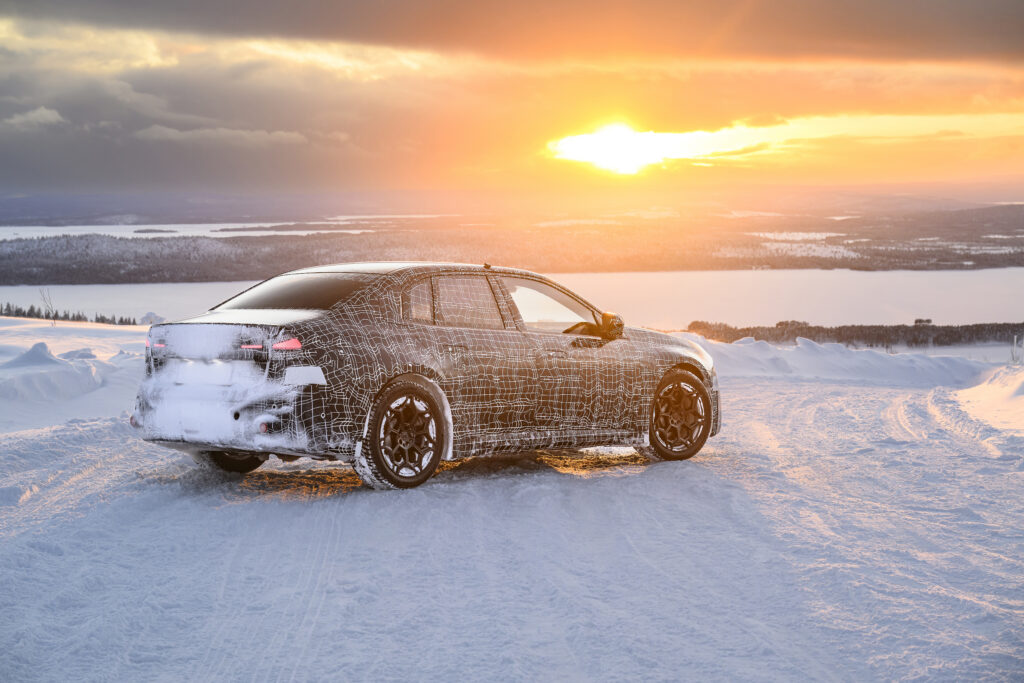
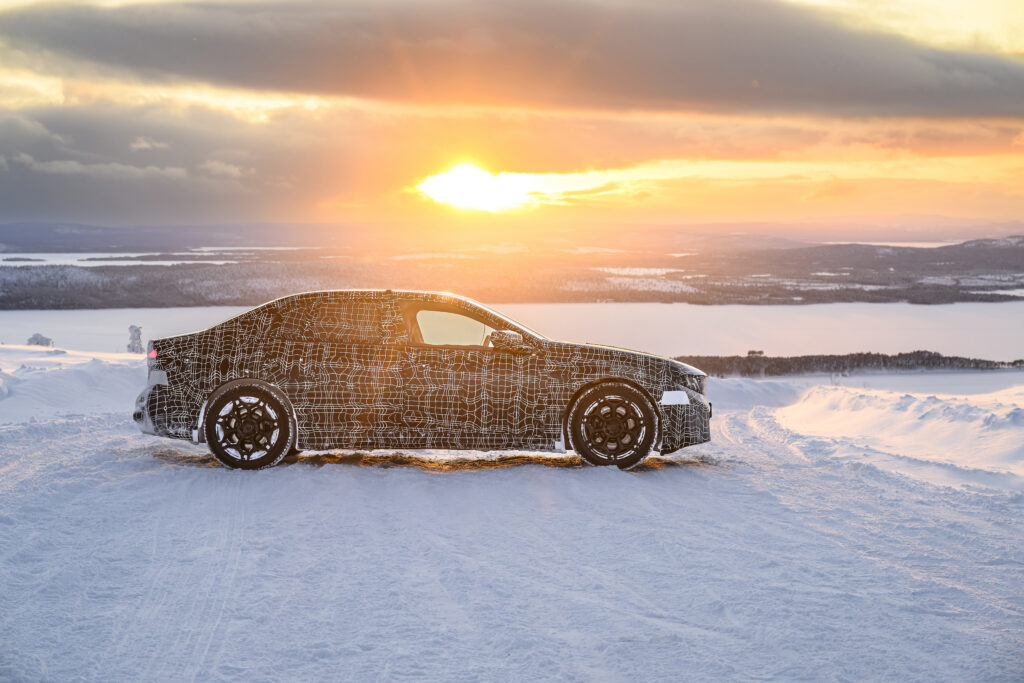
BMW hasn’t shared all the details on the new i3 just yet, but we do have some key performance figures. The first version of this electric sedan will be dubbed the i3 50 xDrive. BMW has talked about and shown off future Neue Klasse machines with three or even four motors, but this first one will make do with two: one front and one rear.
Total system output is 463 horsepower and 476 pound-feet of torque. That corresponds exactly with the iX3 50, so it seems like a safe assumption that it’ll be using the same pair of motors front and rear. That means a standard asynchronous motor up front, and a more powerful electrically excited synchronous motor at the rear. Like the first iX3 versions, it will have steel springs and fixed dampers.
Similarly, we don’t have a total battery capacity or range yet, but again expect similar to the iX3’s 108.7 kilowatt-hour net battery pack. In the SUV, BMW says to expect somewhere around 400 miles of range on the EPA cycle. The smaller i3, then, should go even farther and charge just as quickly, an 80 percent charge in 21 minutes. That’s thanks to an 800-volt architecture in the battery pack and a maximum 400-kilowatt charging rate.
The i3 also inherits the Heart of Joy, BMW’s flowery designation for the “superbrain” powered control system that aggregates typically disparate features like ABS, traction control, stability control, and electric motor control. The intent in bringing all those systems together was always to make a car that drives and behaves far more seamlessly than your average everyday car.
I got a chance to put that to the test on ice.
Ice Time


default
Arjeplog, Sweden in early March is a haven for the automotive industry. Here, automakers, tire companies, and component manufacturers gather to test prototype machines of all shapes and sizes. Idle your way through the parking lot of any of the hotels in town, and you’ll see more than a few bumpers and fenders clad in oddly patterned vinyl, hiding some future refresh or performance variant.
The wholly new models, though, are usually kept safe in closed proving grounds, like BMW’s Sweden facility. It’s right on the shore of one of the country’s many lakes, most of which are well and truly frozen this time of year, creating Arjeplog’s biggest attraction for vehicle testing. Climb to the top of a hill called Galtis, the tallest point around in this generally flat landscape, and you’ll see miles and miles of test tracks plowed out across the ice.
But that wasn’t enough for developing Neue Klasse. A few years ago, BMW carved a test track through some desolate woods, creating a closed road meant to replicate the local rural lanes but without the worries of local rural traffic. They created an absolutely epic little rally stage, and it was there that I got my first taste of the new i3.
Starting in Personal mode, the default with all the safety features on, and rolling on a set of Hankook snow tires in 245/45R19, the i3 was all too easy to drive. The course had a firm base of ice with some light snow on top, absolutely the worst-case scenario for winter driving, but I had no problem making good pace, easily keeping up with an M4 Competition expertly piloted by one of BMW’s tame testing drivers.
With all the assists on, the i3 was safe, but it wasn’t exactly fun. It quickly pulled power when it detected wheelspin and aggressively braked the inside wheels to help the car pivot around corners. I didn’t need to think about countersteering or relying on any of my hard-earned winter driving skills. I just had to turn the wheel in the direction I wanted to go, and that’s the way the sedan went.
I got to sample this more comprehensively on a wide stretch of cleared ice on the lake. The way the i3 manages power in this mode is something of a marvel. You can literally keep your foot on the accelerator flat to the floor and still navigate everything from hairpin corners to tight slaloms. As you turn the wheel, the car seamlessly and smoothly cuts power. Unwind the wheel, and it instantly starts bringing the power back, however much the terrain can handle.
I’ve driven plenty of high-end performance machines with advanced stability and traction control over the years, many in low-grip situations like this, and I’ve never sampled anything this smooth. Most, when in their safest mode, abruptly and dramatically cut power as soon as any loss in traction is detected. Then, they usually make you serve out at least a few seconds of penance before they think about giving that power back and starting the cycle over again.
The i3 was far more seamless, which made me convinced that even a total novice could easily get through some extremely challenging conditions. That said, I’m not a novice in these conditions, and I was eager to push it a bit further.
Slip Sliding
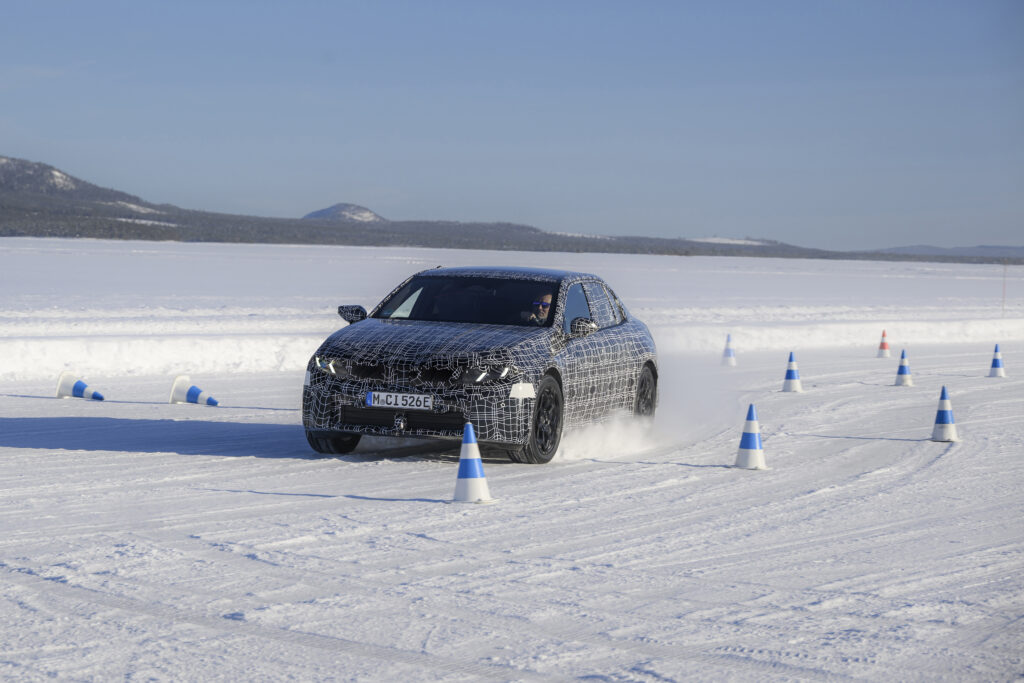
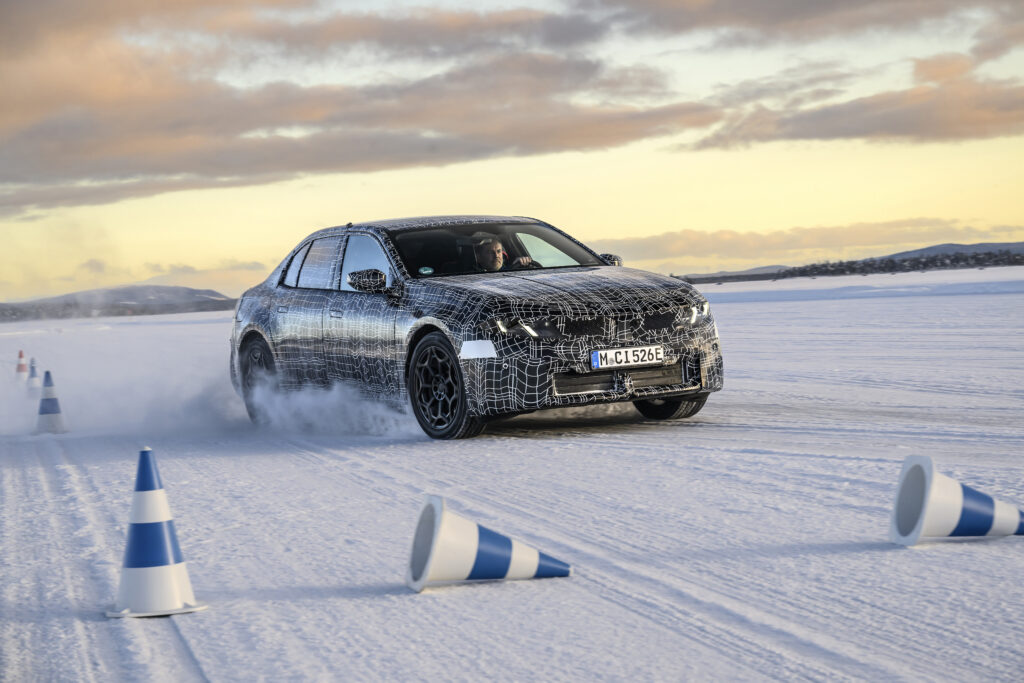
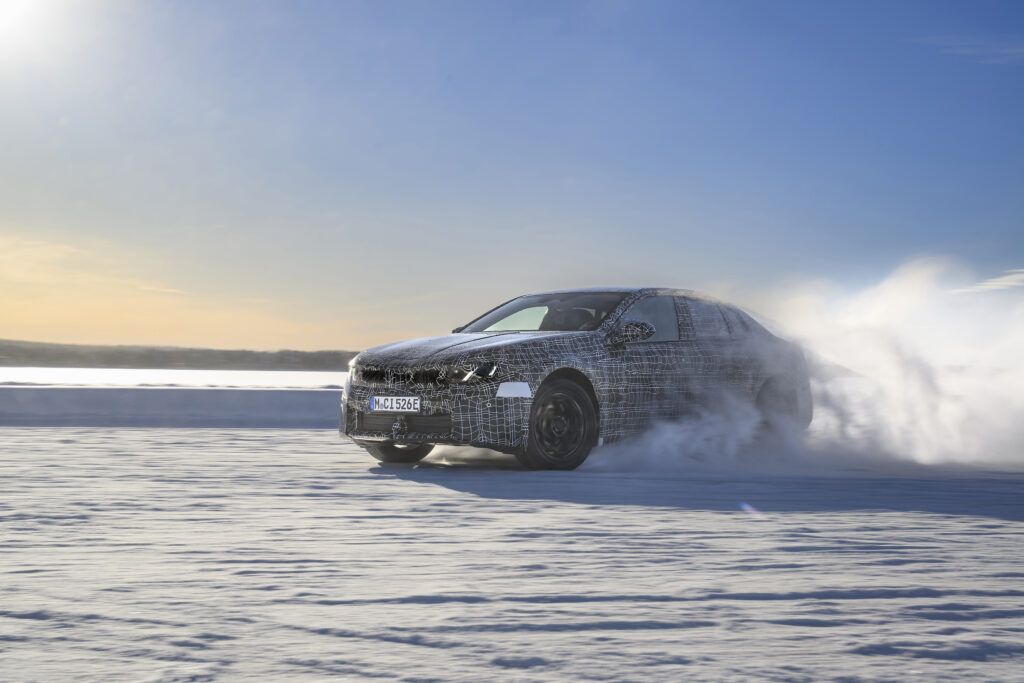
Switching over to the i3’s Sport mode surprisingly didn’t make much of a difference. The sedan was a little more aggressive in feeding the power back in when possible, and the steering picked up a fair bit of additional feedback that I appreciated, all without gaining much in the way of additional resistance. However, the car still wouldn’t let me engage in the kind of epic ice drifting that I’d come to Sweden to sample.
To do that, I had to dial the Dynamic Stability Control (DSC) over to its more aggressive setting. This is a separate toggle from the drive mode, and it really opens things up. In this mode, the rear motor is free to spin wildly. Instead of cutting power as I turned the wheel, the i3 now careened sideways and immediately sent itself into a big slide.
It felt wonderfully free and loose in this mode, but the DSC system was still doing its thing. I could just hear and feel the inside front wheel braking itself as I turned into corners, helping pull the nose in and make the car pivot. It’s just enough help to make anyone feel like a total hero on the ice.
If you want even more control, turning DSC off entirely is just a single tap on the touchscreen. Like this, I was completely on my own, and the i3 felt, again, totally different. With its more powerful motor at the rear, the i3 definitely still wanted to send itself sideways in most situations.
However, on the ice, initiating a slide isn’t always that easy. Especially in a car with all-wheel drive, it’s easy to push the nose forward when applying the throttle, overloading the grip at the front.
Without DSC, I was left to using my usual ice driving techniques like Scandinavian flicks and left-foot braking to get things to pivot. The i3 was receptive to all of those things, even letting me apply the brakes and accelerator at the same time. Plenty of other EVs get extremely confused if you try that.
Smooth Braking
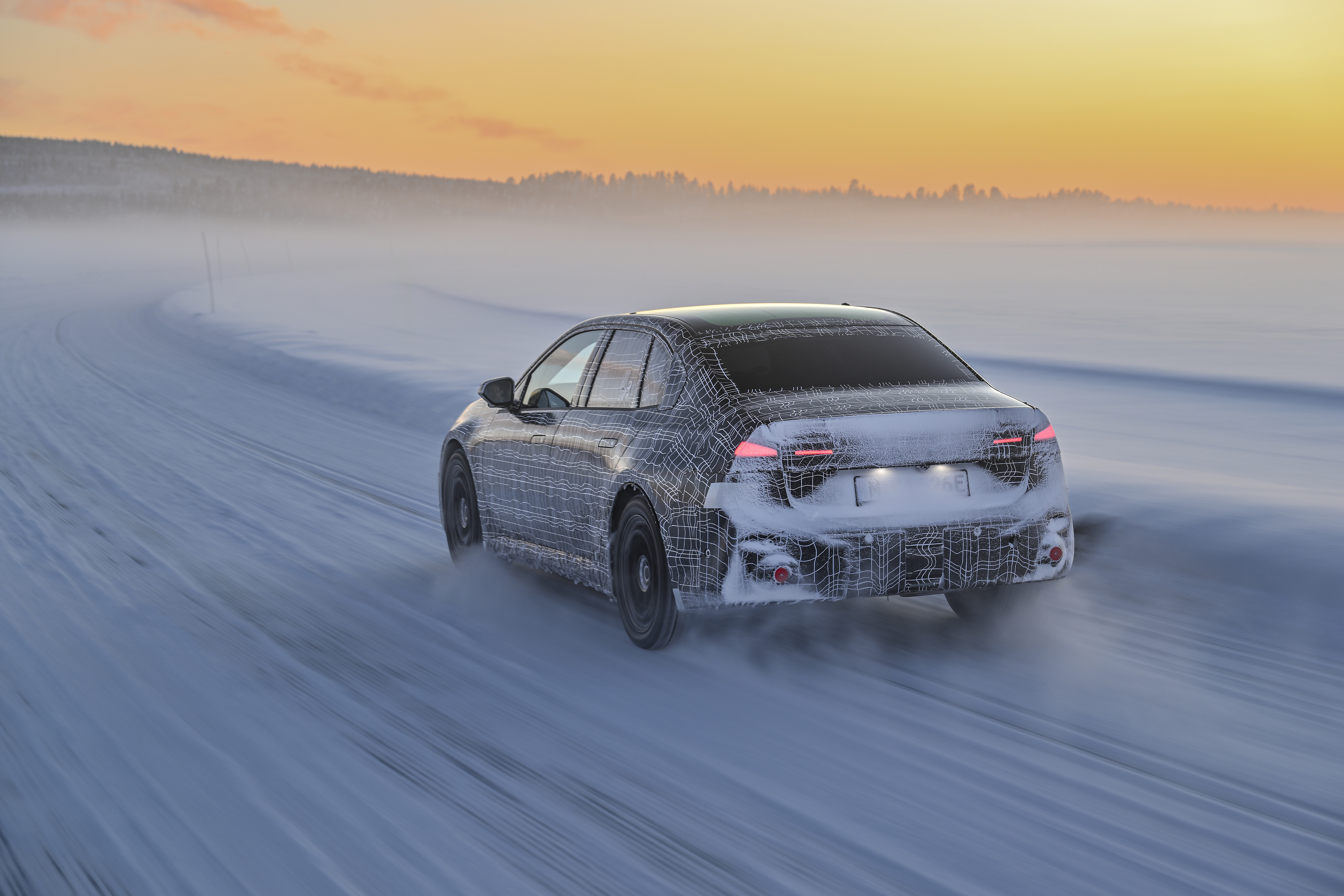

While the stability control and dynamics of the i3 are what really wowed me, its ability for ultra-smooth braking still impressed. As on the iX3, the i3 has far more advanced control of the recuperative braking of its electric motors, able to bring itself to a blissfully smooth stop using the electric motors alone.
I was able to test this repeatedly, both on the ice and on a steep stretch of snowy road. It was only on the steepest, slippery stretches that I could still feel the ABS kicking in and the physical brakes firing to help bring the car to a stop. I say hear and not feel, because there’s no sensation of pulsing through the pedal.
I could also hear the brakes firing on occasion when accelerating and, again, when turning into corners on the ice. When accelerating, that’s because the i3 has open differentials both front and rear. On low-grip surfaces, the only way to keep one wheel from spinning out of control is to apply the brakes on that corner.
On turning, again, the car brakes the inside wheels to help it pivot. BMW’s test engineers hinted that subsequent versions of BMW’s performance machines would no longer need to rely on the physical brakes to do this, but wouldn’t say more than that. The implication, of course, is that a future quad-motor machine will simply be able to do the same with regenerative braking.
An Amazing Next Step
I left Arjeplog hugely impressed with what I experienced. While the iX3 is fun and competent, the i3 definitely feels a step more aggressive and engaging, yet still comfortable and compliant enough for a daily driver. More than anything, though, I’m excited to see what comes next. This platform clearly has a lot more to give, and I can’t wait to see it.