Fifty years ago, a preppy art dealer and scene connoisseur with a thirst for auto racing was trying to find some kind of sponsorship deal for his own racing career. One day, in 1975, when all of Europe was suffering from the first oil shock and driving your car on Sundays was strictly “verboten,” Hervé Poulain had an idea and happened to talk with Jochen Neerpasch, then head of the newly formed BMW Motorsport Group. He pitched the idea of a race car as a work of art, and wanted to woo Neerpasch in having his friend, the famous artist Alexander Calder, paint a BMW that could be raced in LeMans later.
Hervé had tried the same ‘spiel’ with Renault before, almost successfully, but the French ditched the idea at the last minute. Neerpasch’s attitude, surprisingly as he’s not really famous for being a patient man, was basically “If it makes us fast, we’ll use it!”

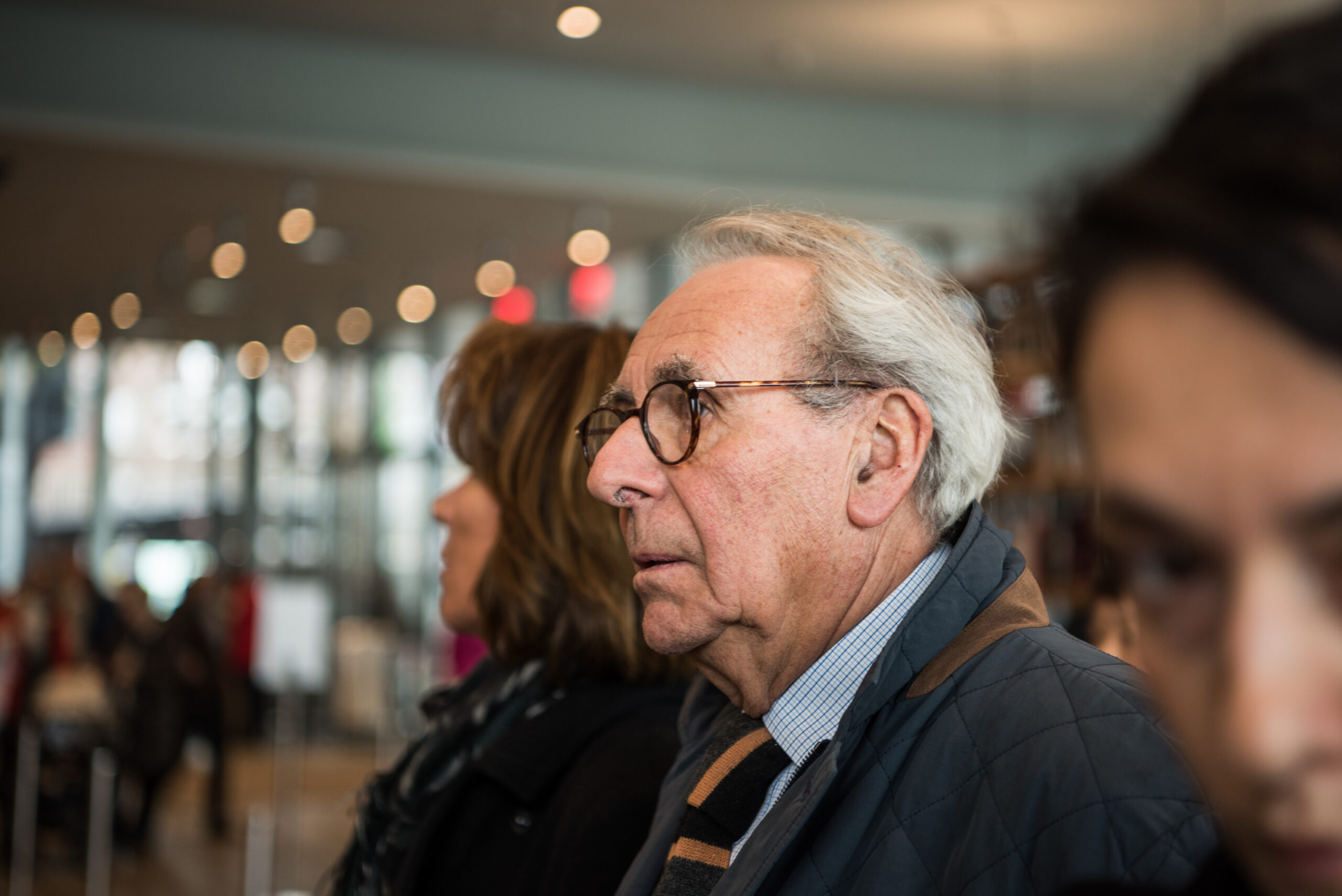
Hervé Poulain looking at the art cars.
The Bavarians at the time were lamentably underwhelmed in racing terms. They had just started to invest some major funds and manpower in motorsports, trying to cash in on their great new cars, the fame of yesteryear and the glory of the pre-war 328s. So why not try something extraordinary?
Start with a car that is good enough to win, but one that still is also a tremendous piece of eye candy when it’s not.
Such a powerful argument swayed even the all-powerful marketing guys in Munich, and so BMW’s Art Cars series was born. Too bad for Renault.
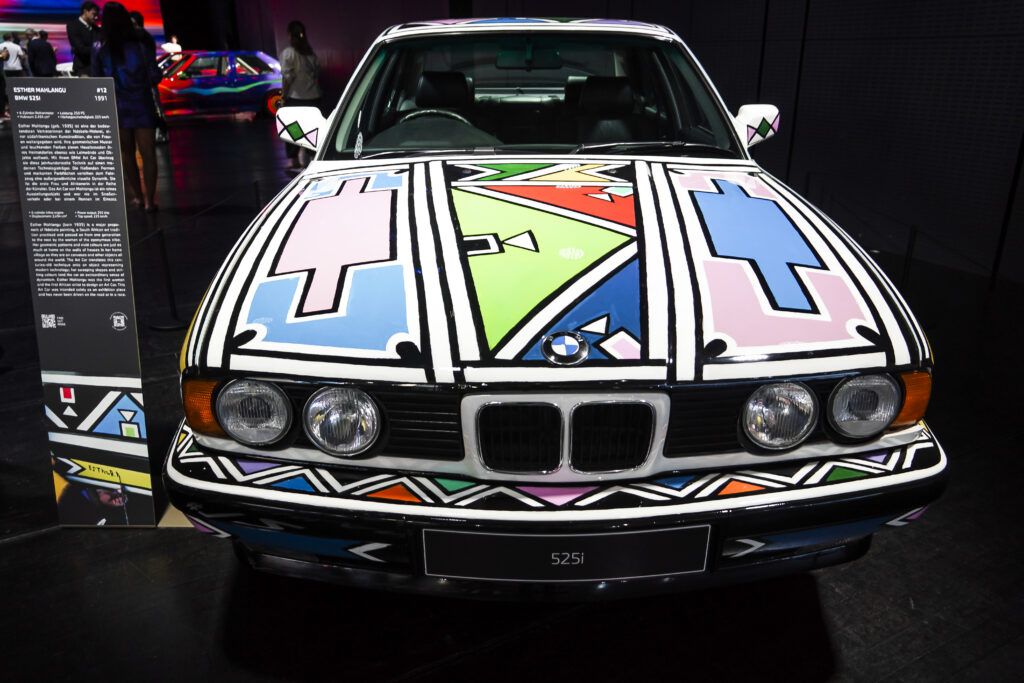
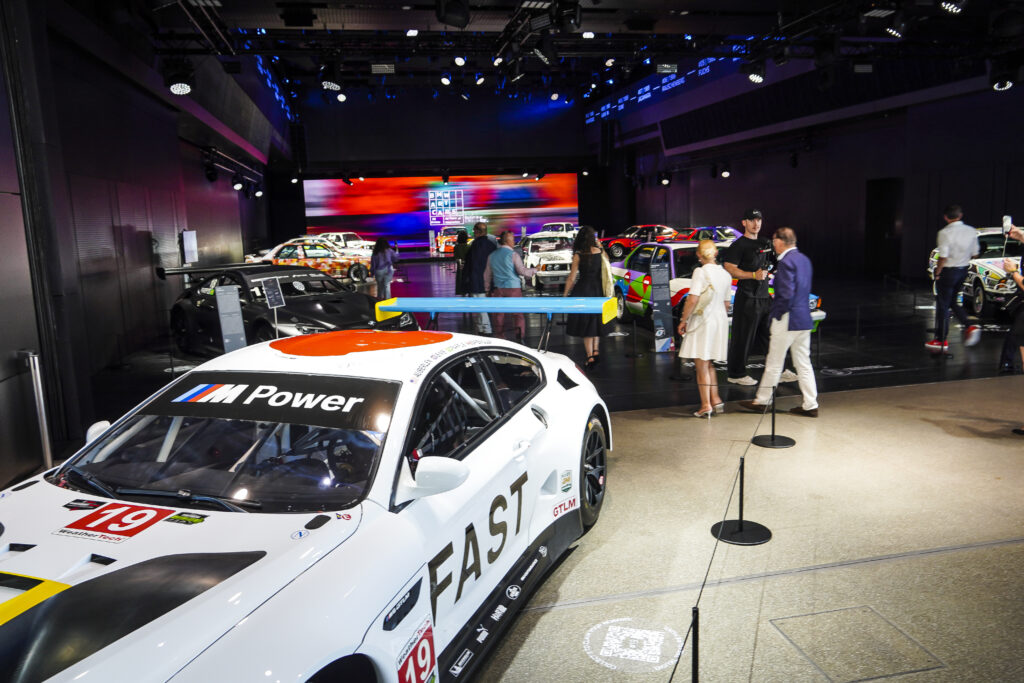
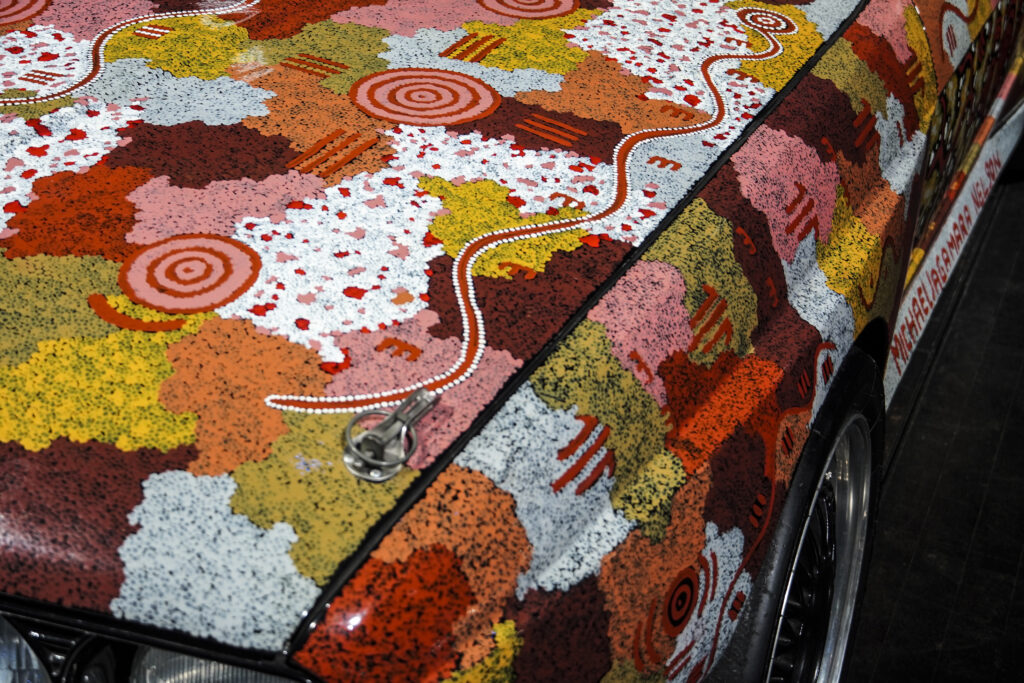
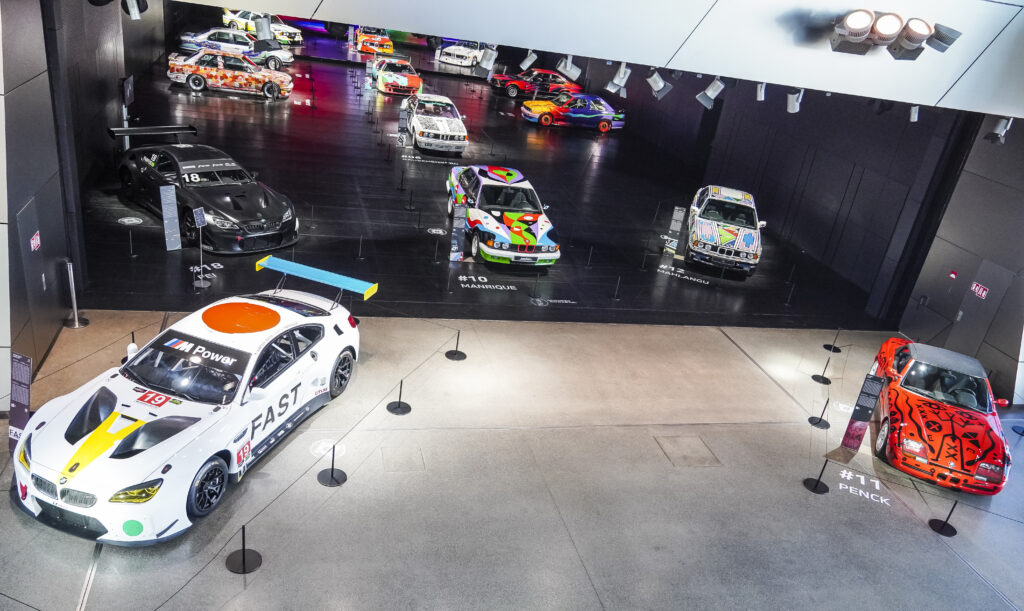
Now, for the first time in those 50 years, all 20 Art Cars that were built and painted and frozen and sometimes just imagined over that last half-century are together in one place: the BMW Welt, Munich’s most impressive statement of modern architecture and the HQ of our favorite car.
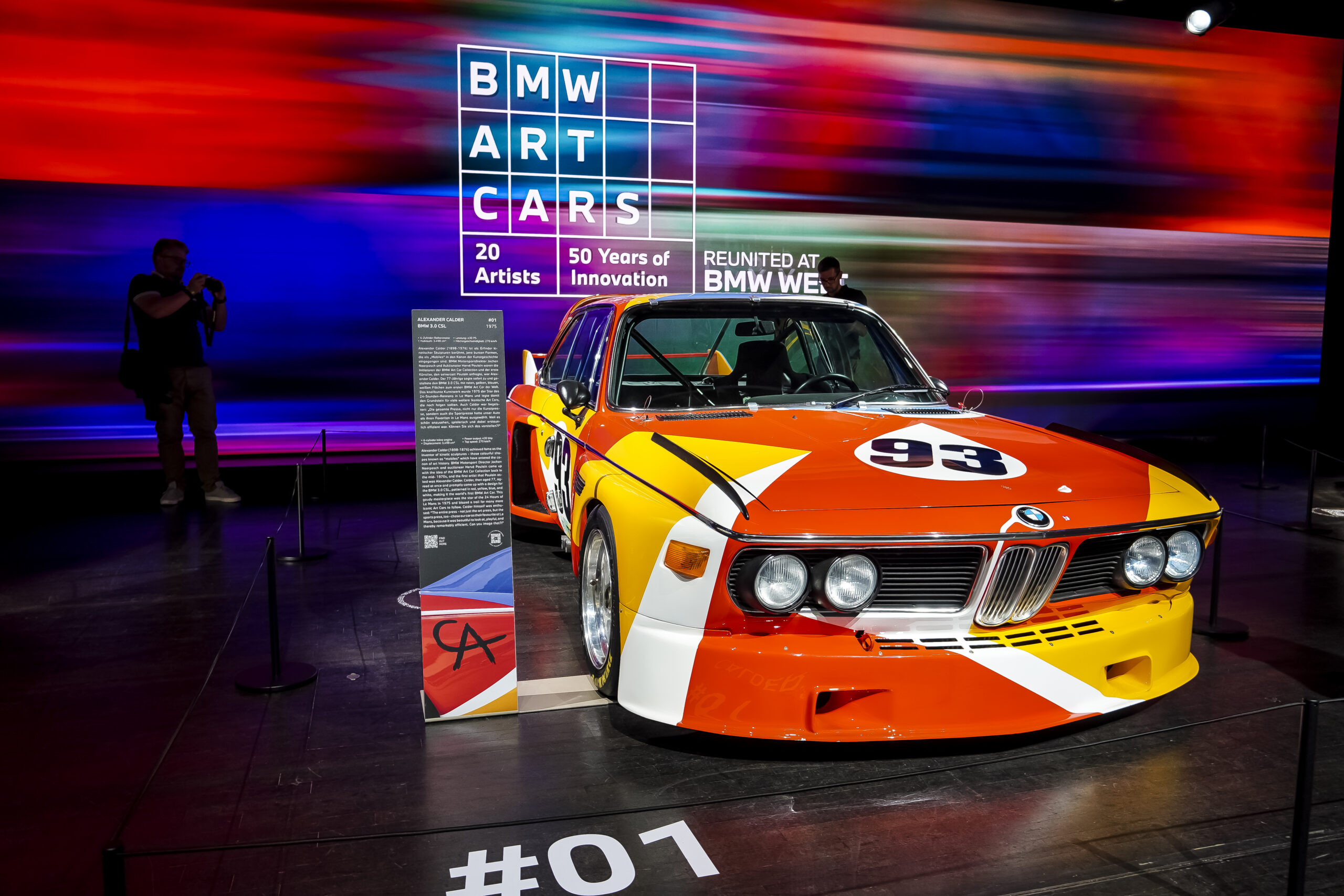

Alexander Calder’s BMW 3.0 CSL was the first in 1975, and therefore rightfully at the heart of the exhibition. The car was painted by Calder, a sculptor who had revolutionized not only the way we see mobiles and stabiles, he also made history with his giant statues. The unthinkable did become a reality after Poulain convinced Jochen Neerpasch, then BMW’s Motorsport Director, of his so far unheard of idea.
“I went to Jochen with no great hope, really. But surprisingly, he thought it would work just fine.” Not only did Calder deliver his car in only six months time (as promised), Poulain then raced the piece of art at the 24 Hours of Le Mans in 1975, along with co-driver Jean Guichet and American Sam Posey. “It sure has been a nerve-racking experience for me to drive the car at the 24 Hours,” smiled Poulain when I talked to him at the Guggenheim in NYC, “but just imagine what all the other drivers were feeling. You don’t want to crash into a Calder creation and be guilty of destroying a modern masterpiece.” Unfortunately, the strategy of “don’t-touch-my car!” didn’t work out so well. The Calder car had to retire around the last third of the race. Win or no win, the car had become an instant favorite with the spectators.
It was, as they say, the beginning of a nice friendship.
Ever since that fateful day in 1975, BMW continued to commission world renowned artists to paint their cars (in most cases the cars were their only way of reimbursement). And BMW’s commitment is far from over with 20. The Art Cars concept is unique, especially in today’s economical environment. The next series of Art Cars are to be expected from 2027 ‘till the end of 28. As the artists are chosen by an anonymous jury, BMW claims not to be involved in the election process. Thomas Girst, BMW’s Head of Cultural Engagement, insisted that the choice of artists had “absolutely” nothing to do with them coming from influential markets of the brand. “The creators of the all Art Cars are chosen by an international jury of museums directors, and by artists and curators from the most famous museums in the world.”
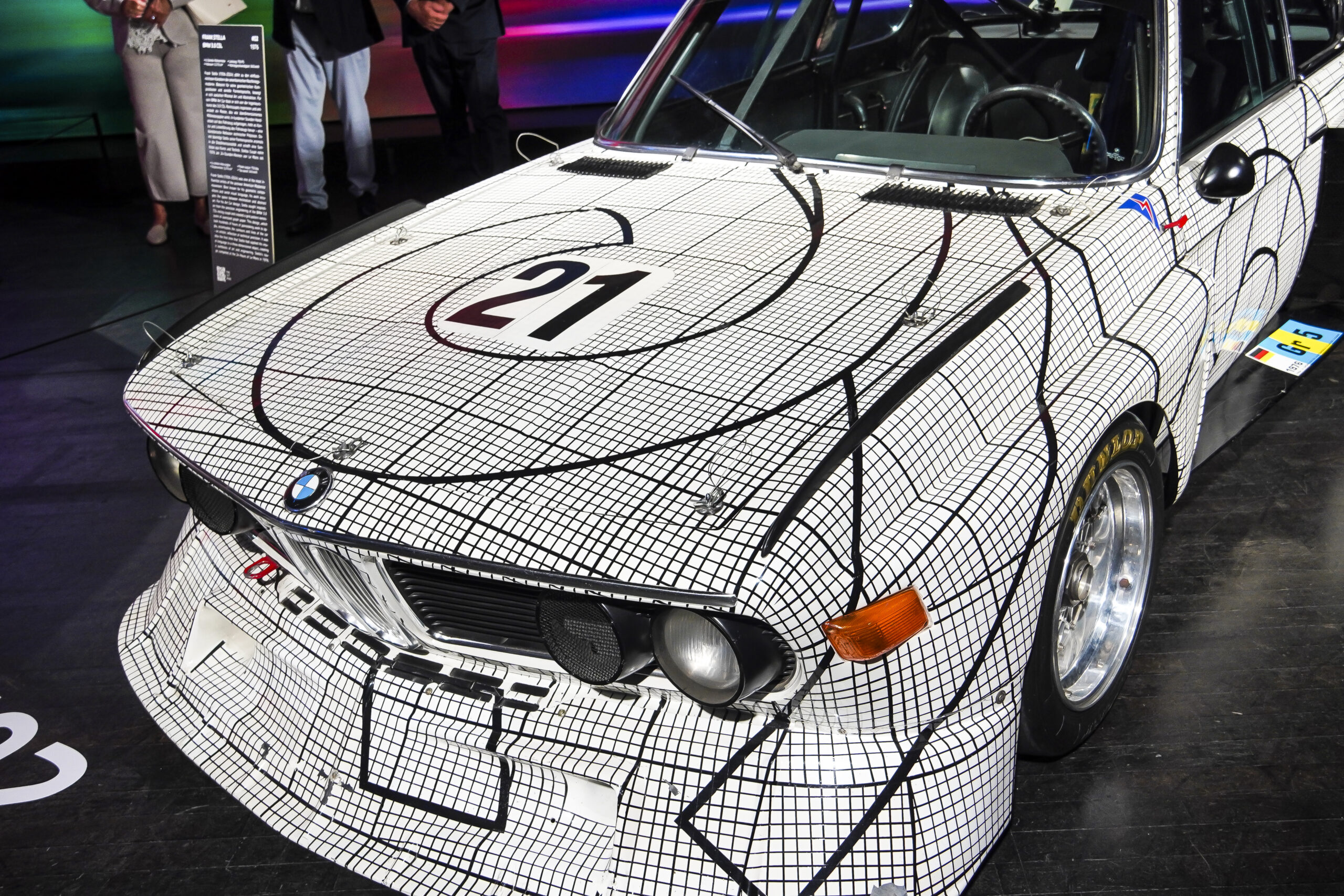
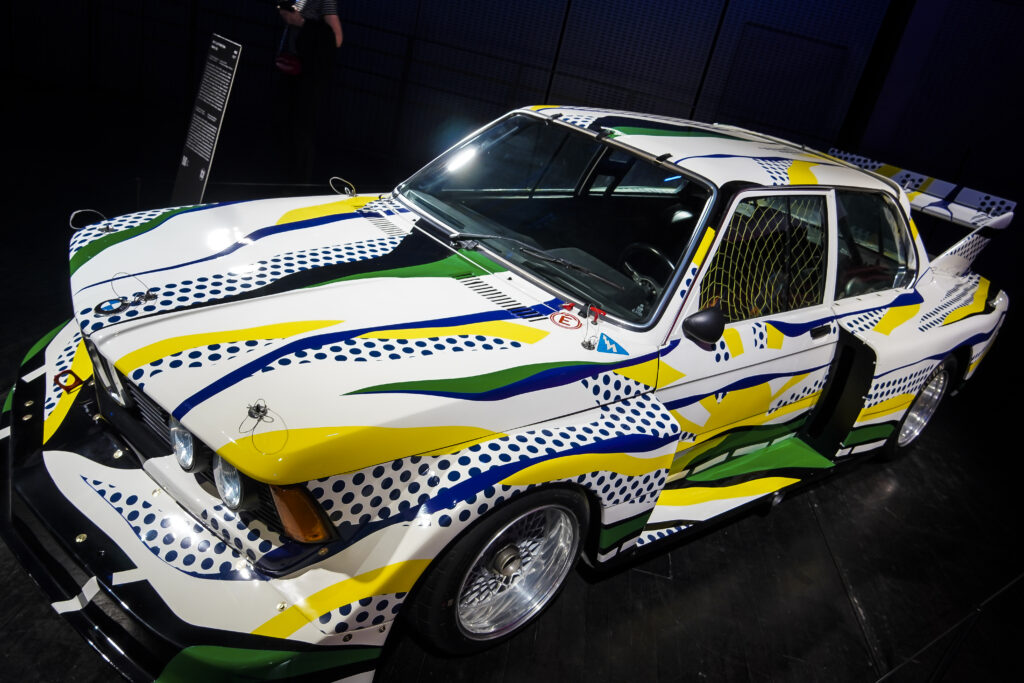
Frank Stella’s 3.0 CSL was next, Roy Lichtenstein’s 320 Group 5 and Andy Warhol’s M1 Group 4, they all raced in Le Mans. None won, nevertheless Neerpasch was happy. The entire BMW brass was happy, one can imagine. After all, financial outlay is moderately benign on the corporate side, and returns are still being counted. Race victories mattered for Jochen Neerpasch and his team and drivers. But no overall winner could match the splash in the public eye those Art Cars made. Strangely enough, after the initial group, BMW began using production cars to offer as “Art Cars” as well.
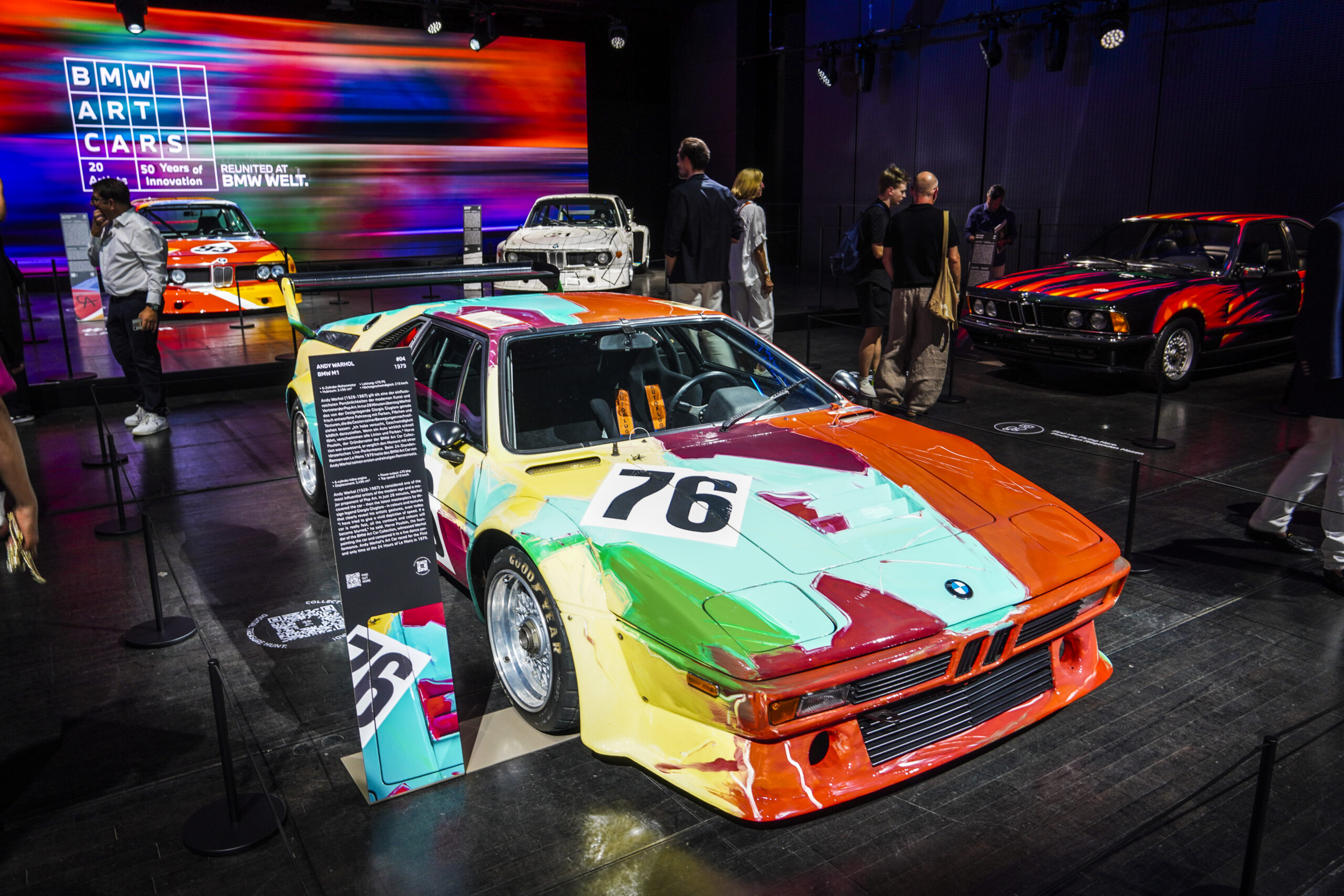
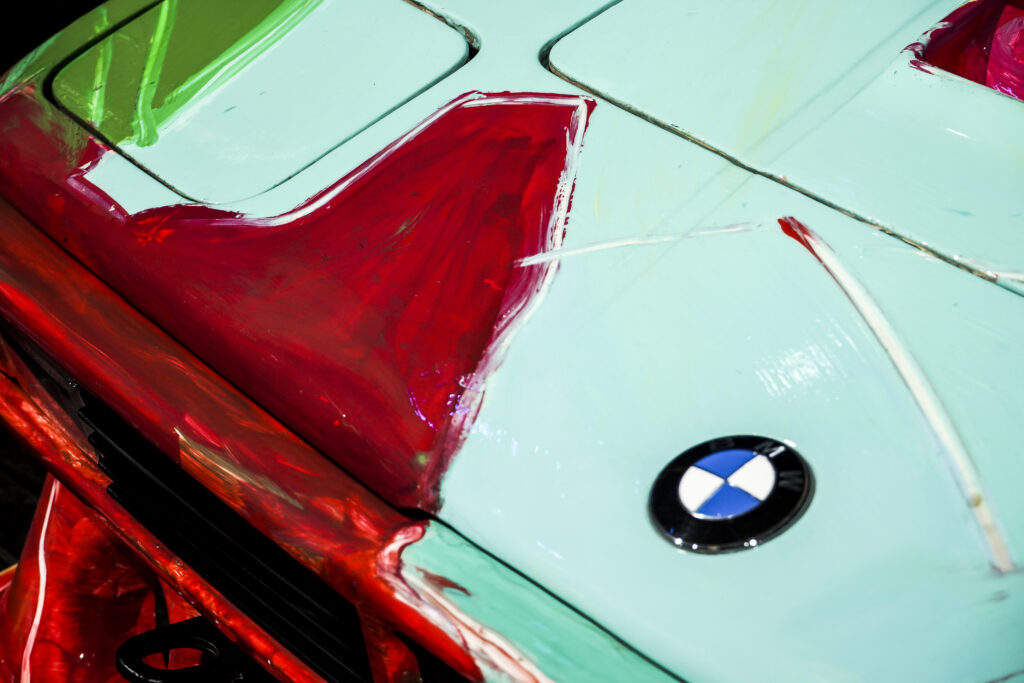
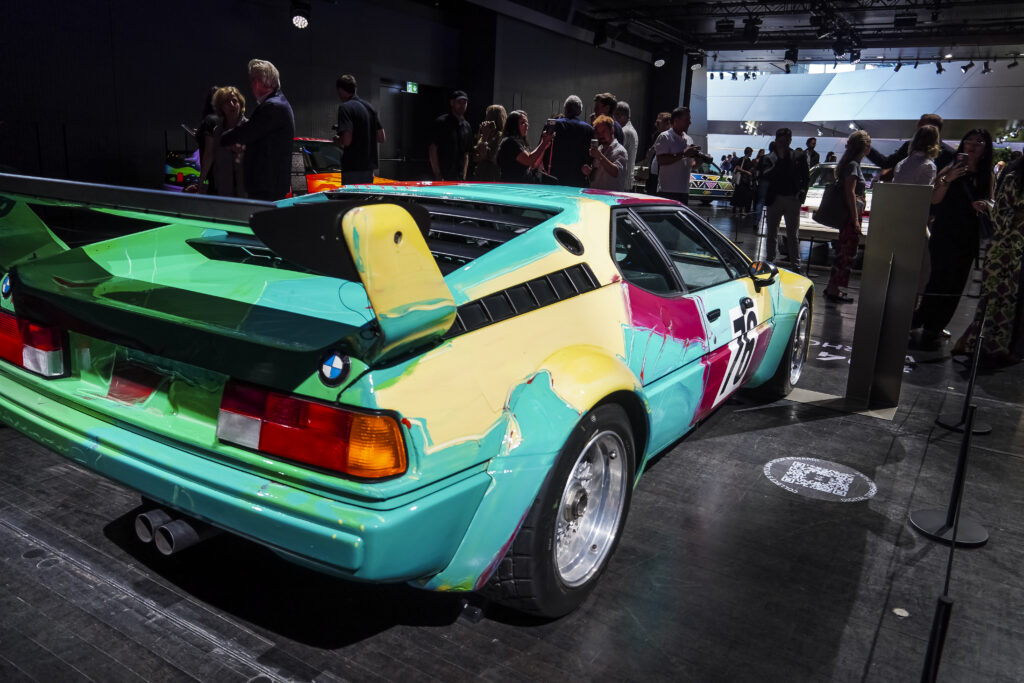
Andy Warhol’s sensational M1 was still a conceptual race car as well—24hrs of Le Mans in 1979—but it is probably the most famous of all Art Cars, and even more famous for its own 28-minutes-of-fame. That’s how long it took Warhol “to paint and scratch and drip all over a perfectly nice M1,” according to a rather grumpy German TV-personality at the time. Warhol, for his part, was in a poor mood when he arrived in Walter Maurer’s studio in Dachau near Munich. “In the end, he actually smiled,” remembers Maurer after Warhol had performed the 28-minutes miracle. “After he was finished with his brush strokes and scratches, he looked at me and said, I could paint your car now.” Maurer just had bought himself a brand-new 321 in gold-beige. “I whispered, ‘You’re not gonna paint my car!’”
A decision Maurer probably rues to this day. Warhol’s M1 stands now at $40 million, Maurer’s 321 would have made for a cozy retirement.
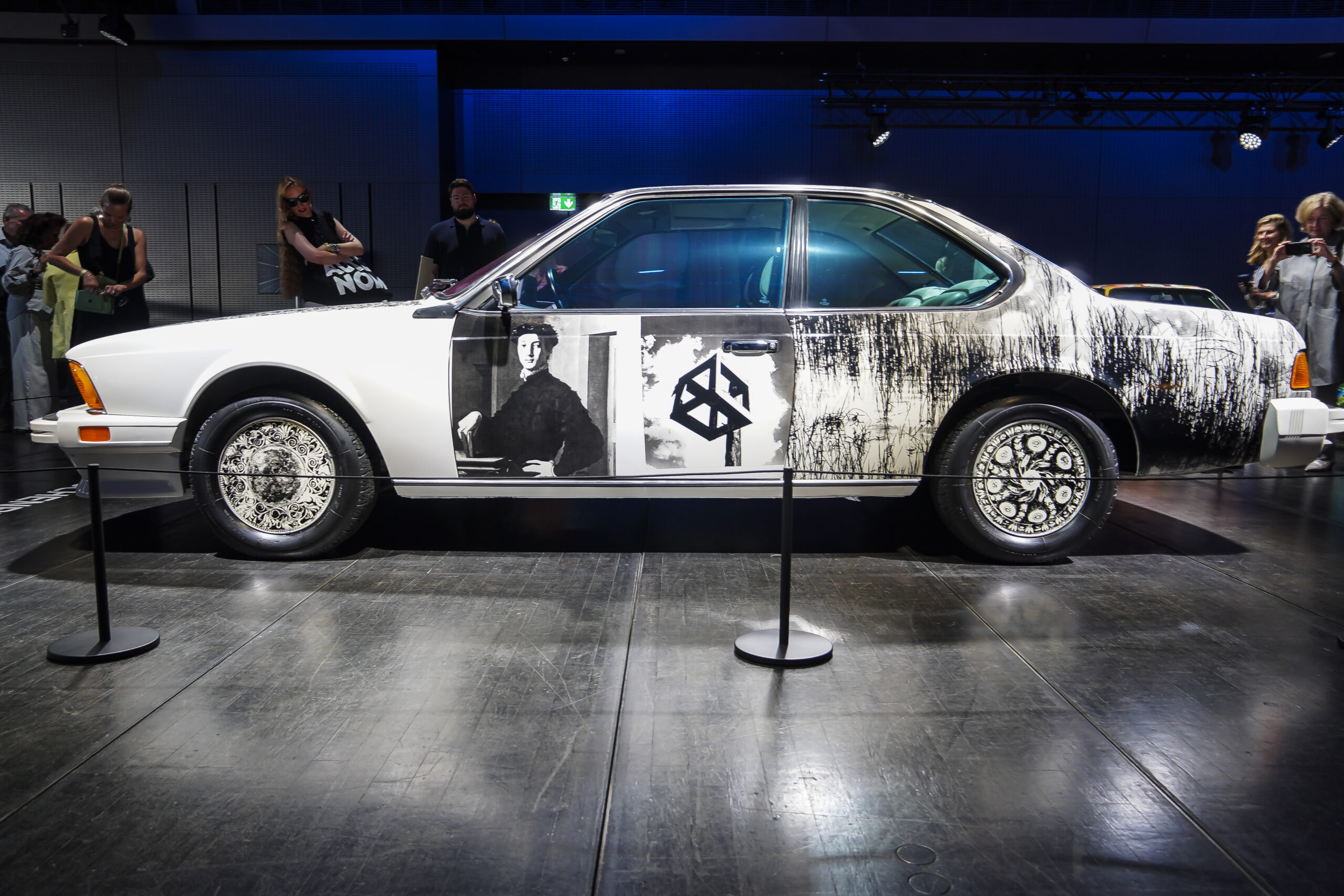
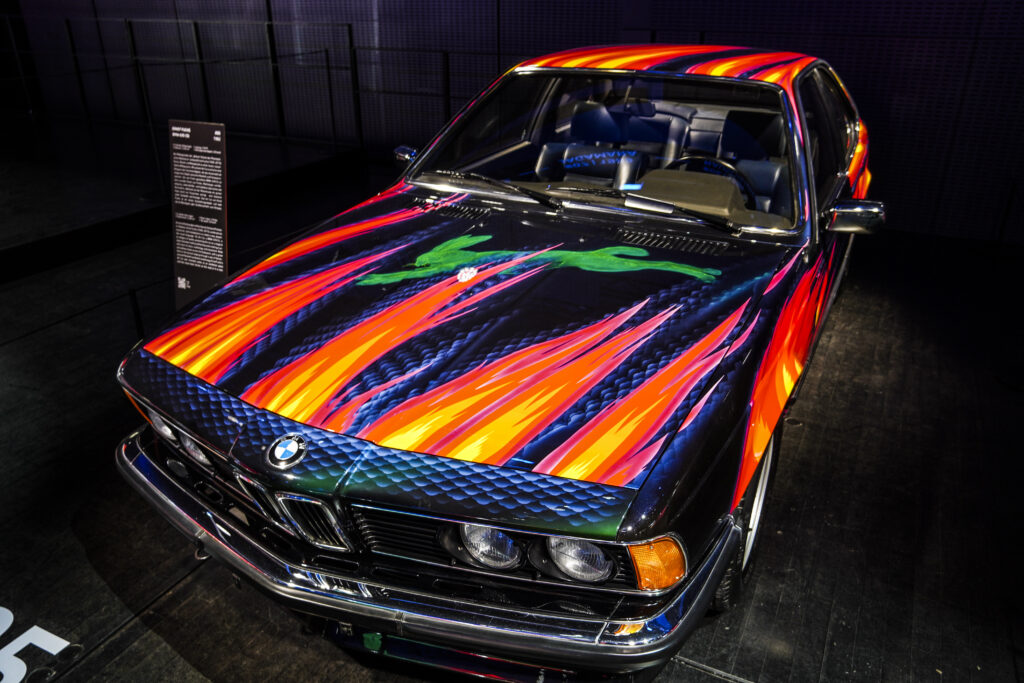
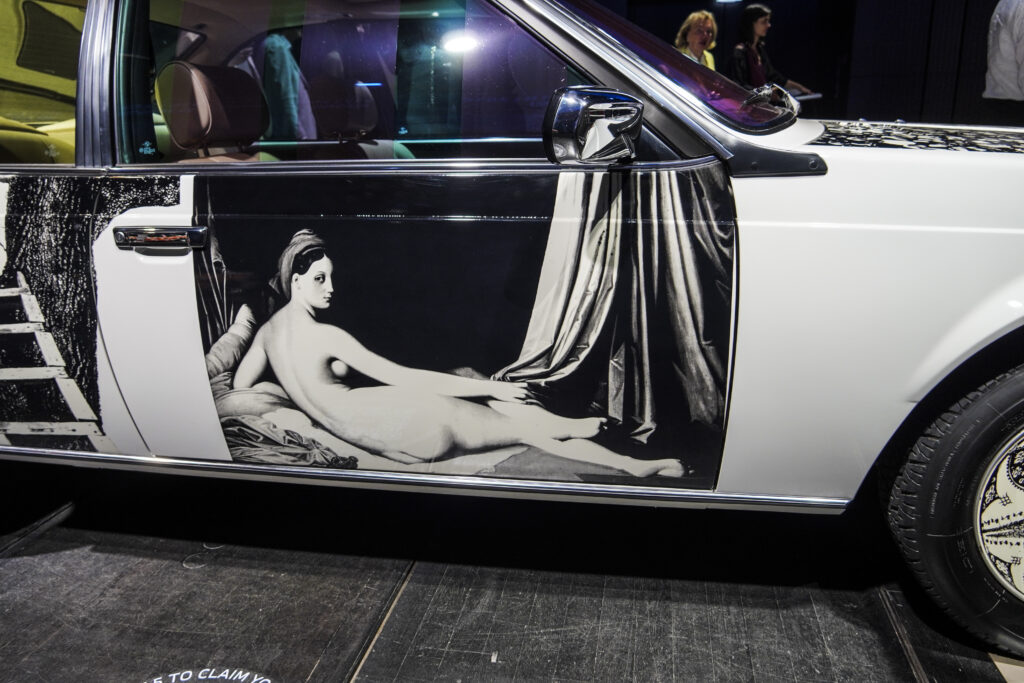
“To drive a museum would be fantastic,” said Robert Rauschenberg famously once. With Art Car #6, a BMW635 CSi his dream did come true. With the pictures of paintings decorating the doors and his organic black-and-white paintings of grasses and plants the car became a bold statement in 1986.
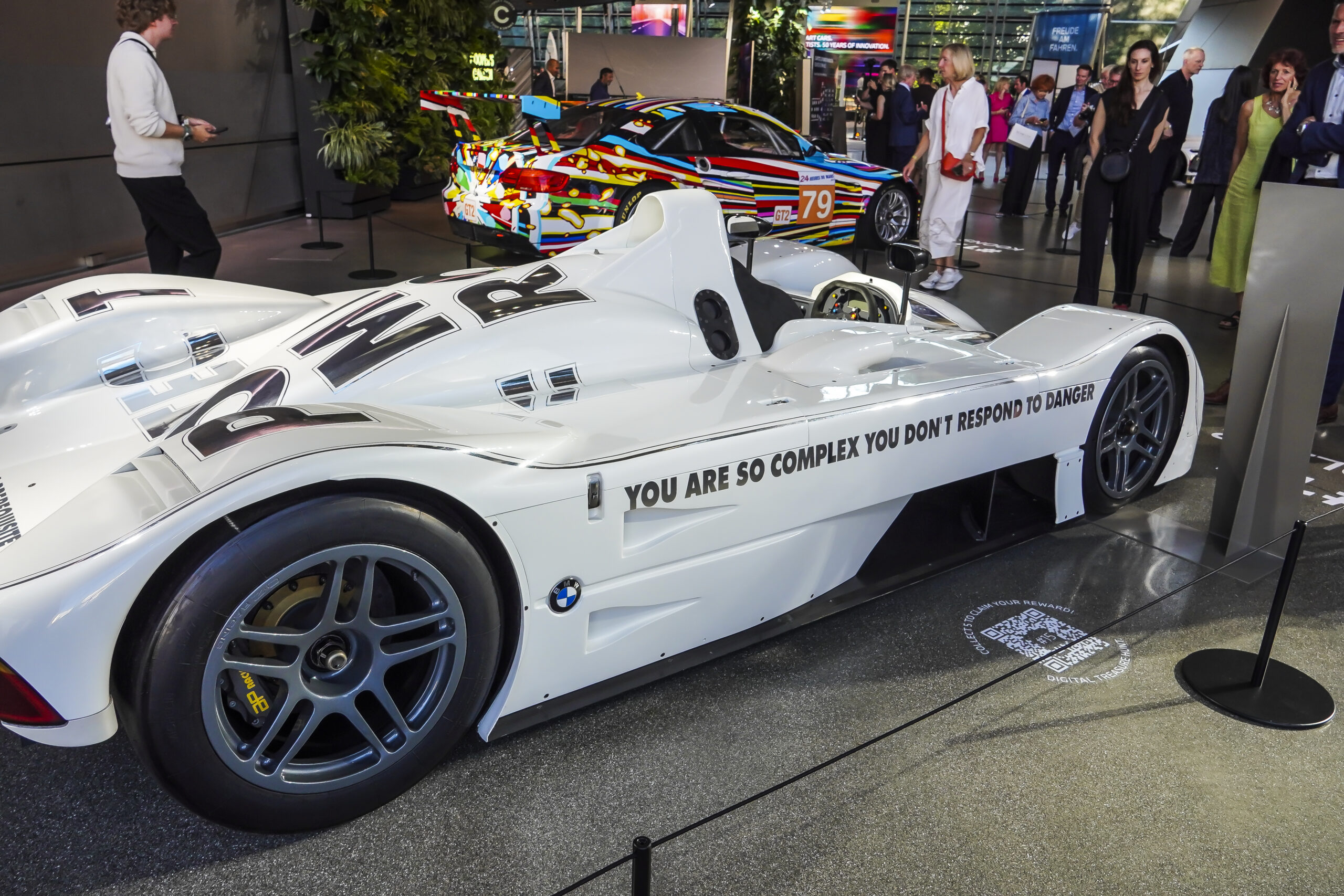
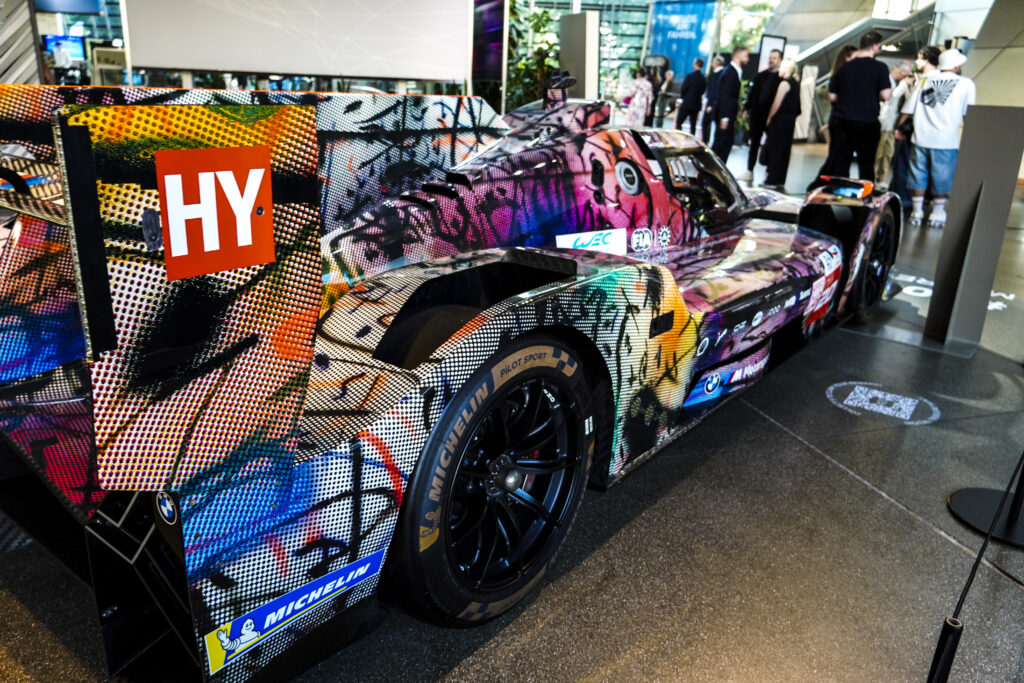
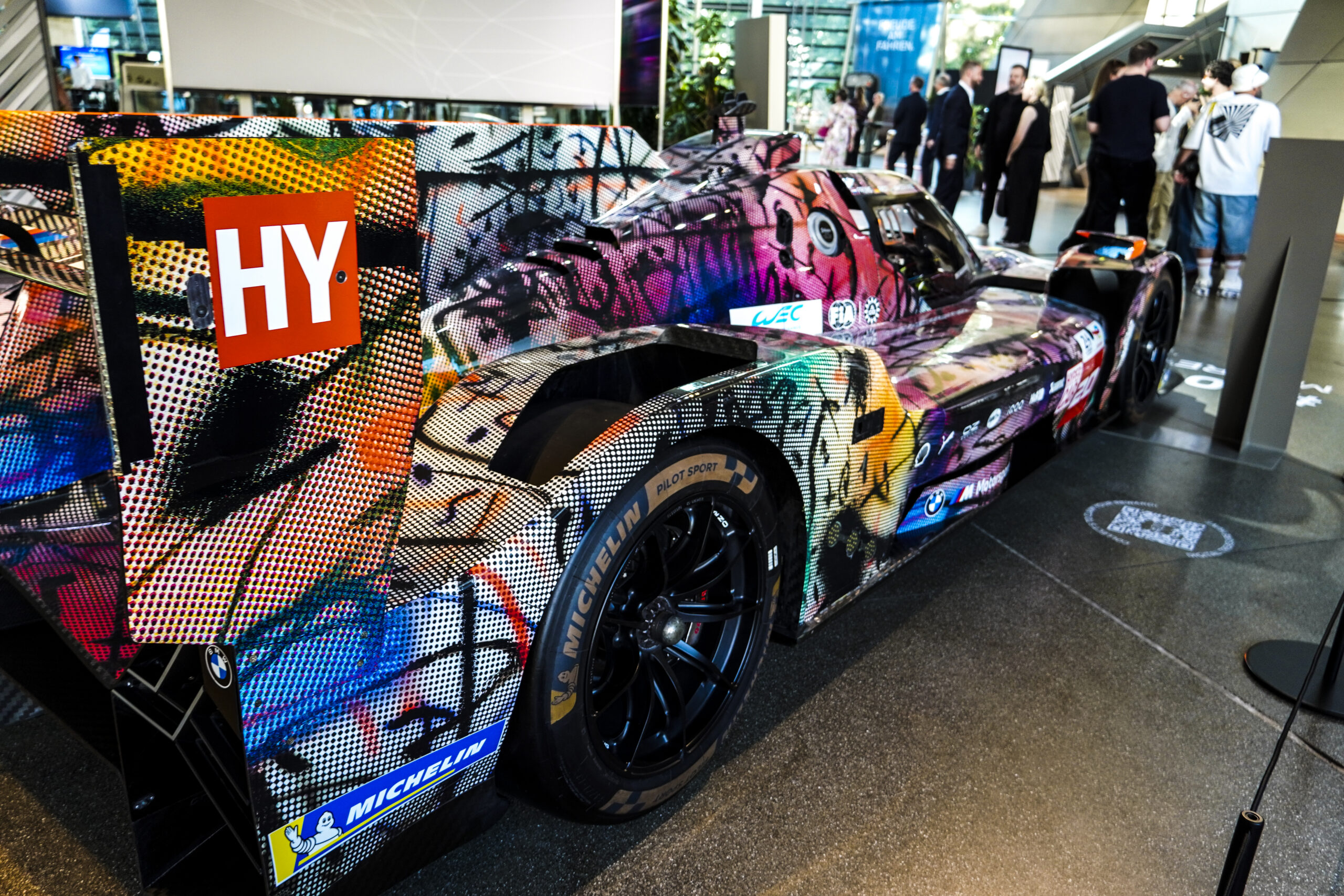
Despite all the fanfare for your production-car-as-a-piece-of-art, BMW likely wanted the attention back from where they had received it when they sent their prized pieces from the track to the studio. Ken Done, with his stunning version of the M3 in 1989, marked a successful return to the fame of speed, crowned in 1999 by Jenny Holzer’s BMW V12 LMR, a car who never saw a track but still raised some hackles among the race aficionados, and the glee of all the others. In 2024 Art Car #20, Julie Mehretu and her BMW M Hybrid V8, marked the glorious return to motorsport for BMW’s famed cultural engagement.
Jenny Holzer’s was certainly not the first Art Car that “voiced” an opinion. But it remains still one of the most memorable ones. Göksu Kunak from Turkey and Robin Rhode, South Africa, the two artists who were present at the opening of the “20 Art Cars” at the Welt in Munich, responded to the question about their favorite Art Car of all time both with Jenny Holzer’s creation.
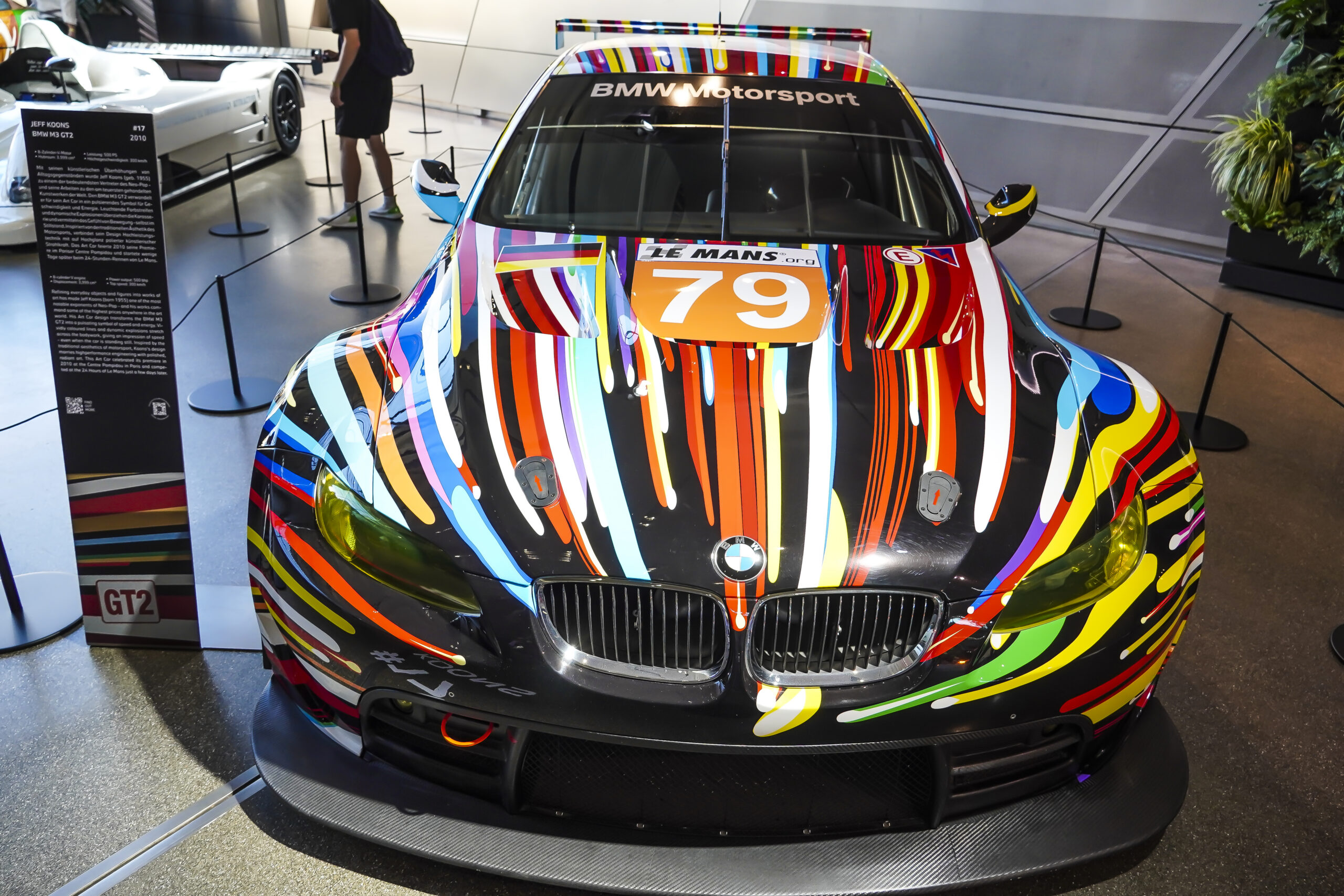
In the “pantheon of contemporary artists”, according to David Hockney, belong of course “the Brit’n El Lay” himself; Jeff Koons, of course, with his M3 GT2 from 2010 (above), a car that makes motion visible – almost tangible – like no other, then raced in the 24 hrs of Le Mans; and Jon Baldessari who took hints from actual race car liveries in designing his own. When asked by Thomas Girst at the presentation of the car why he painted a Japanese flag on top of his car, race aficionado Baldessari was surprised. “I’m watching these races from my comfy chair in my house in Santa Monica,” he said, “I wanna see on TV where my car is during the race.”
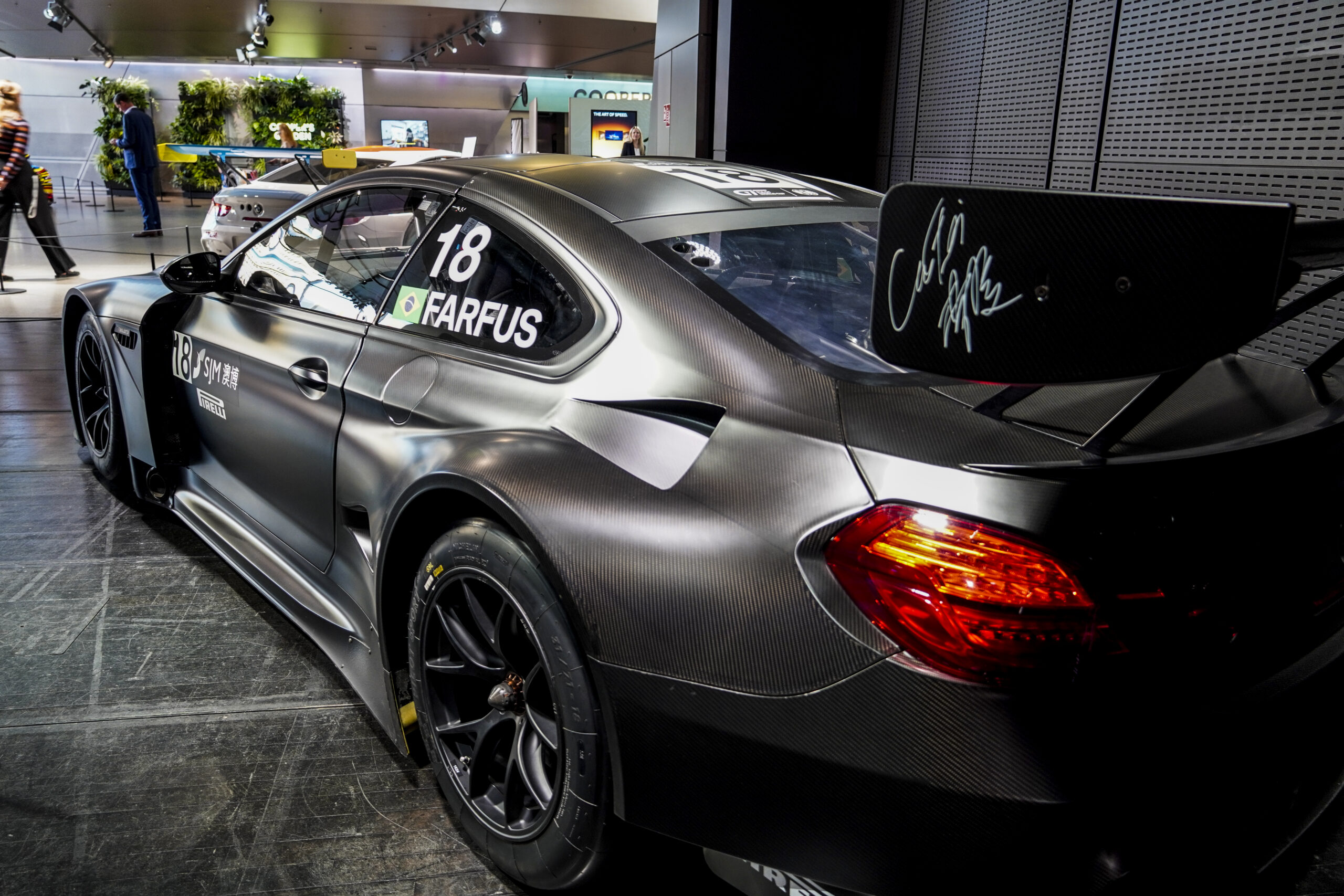
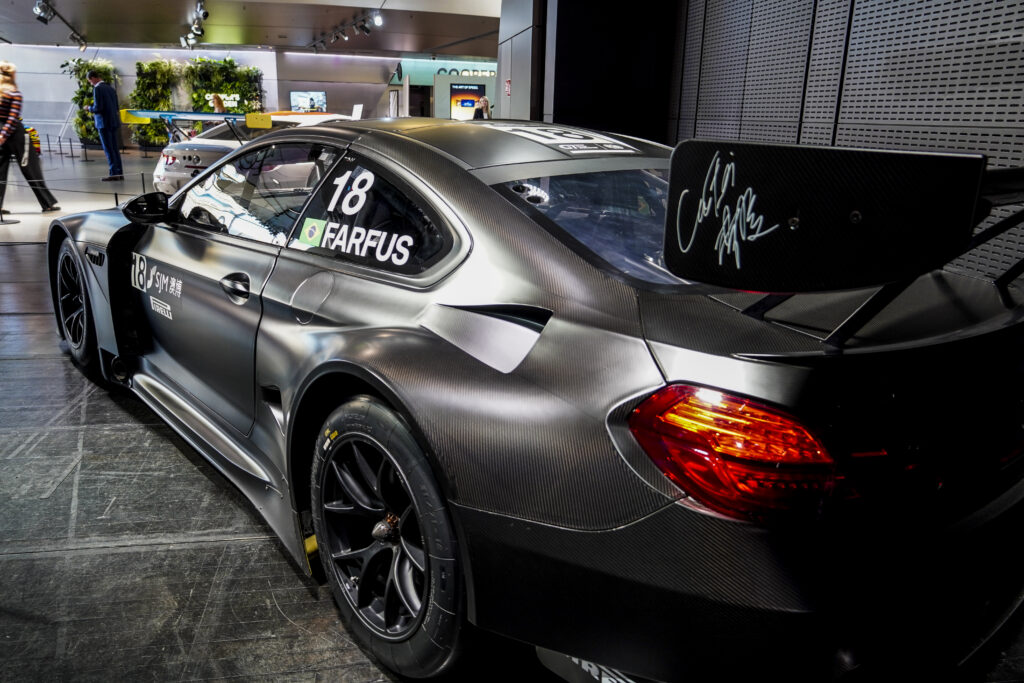
One year after John Baldessari unveiled his Art Car, Chinese concept artist Cao Fei released her study. Standing in Munich’s Welt, the BMW M6 GT3 looks like few other race cars but far from an Art Car. Pitch black livery, the usual stickers, the car breathes racing, why is it standing here?
It’s an Art Car with an App, that’s why. Only with the help from your phone can you understand it: the M6 becomes a being from another universe, a universal fun factory, a moving, streaming, flowing thingie from another dimension. Turn off the phone, it’s a roaring beast from here.
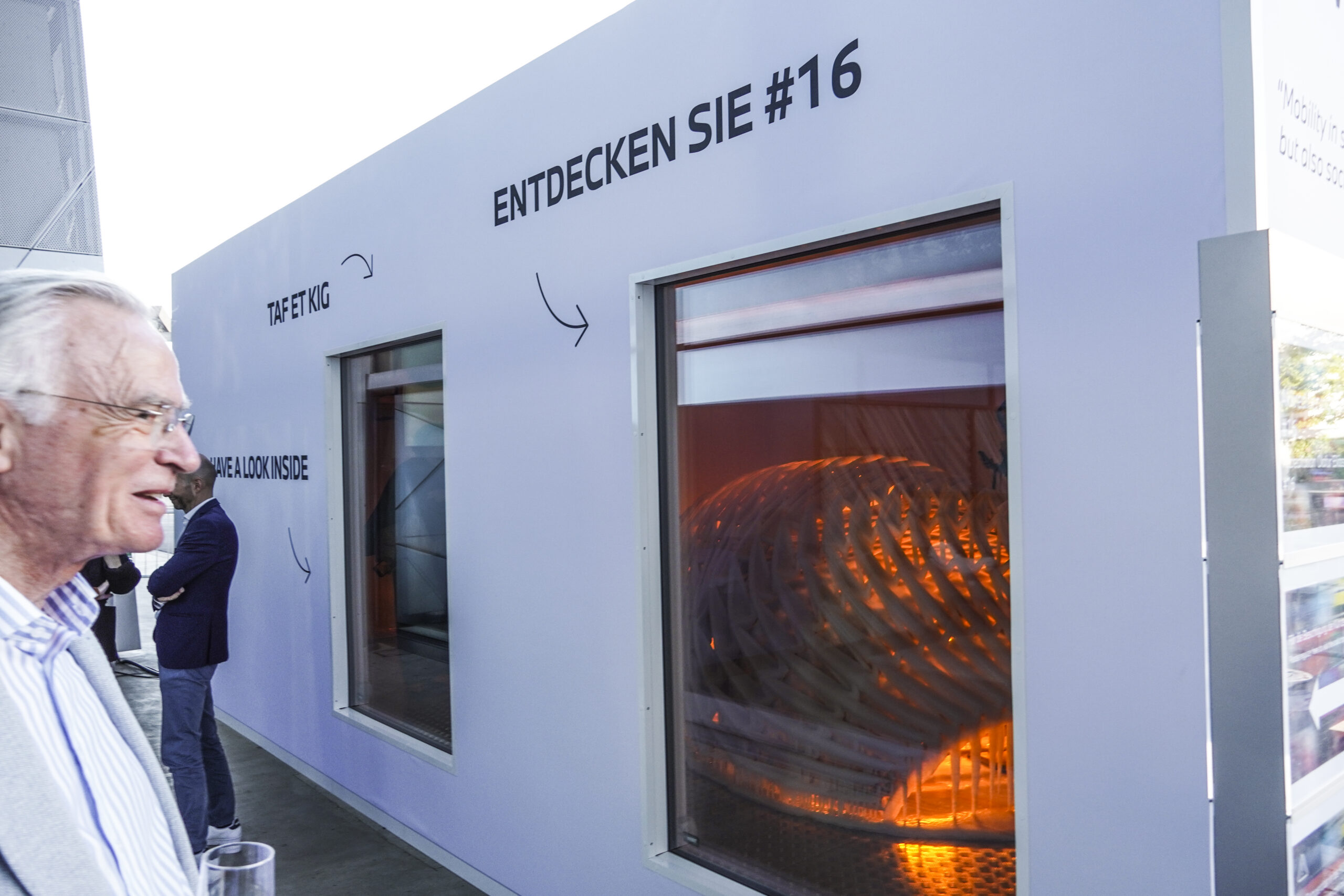
Every now and then an artist comes along blowing apart what we expect a car to be. Olafur Elliason is one of them. His Art Car #16 can only be seen and experienced in sub-arctic ice. Minus four degree Fahrenheit is #16’s favorite temperature. A BMW H2R Hydrogen prototype, iced over several times, and needs to be kept in a giant cooler. You have to be from Iceland to come with something like that. But you’ll never forget it either.
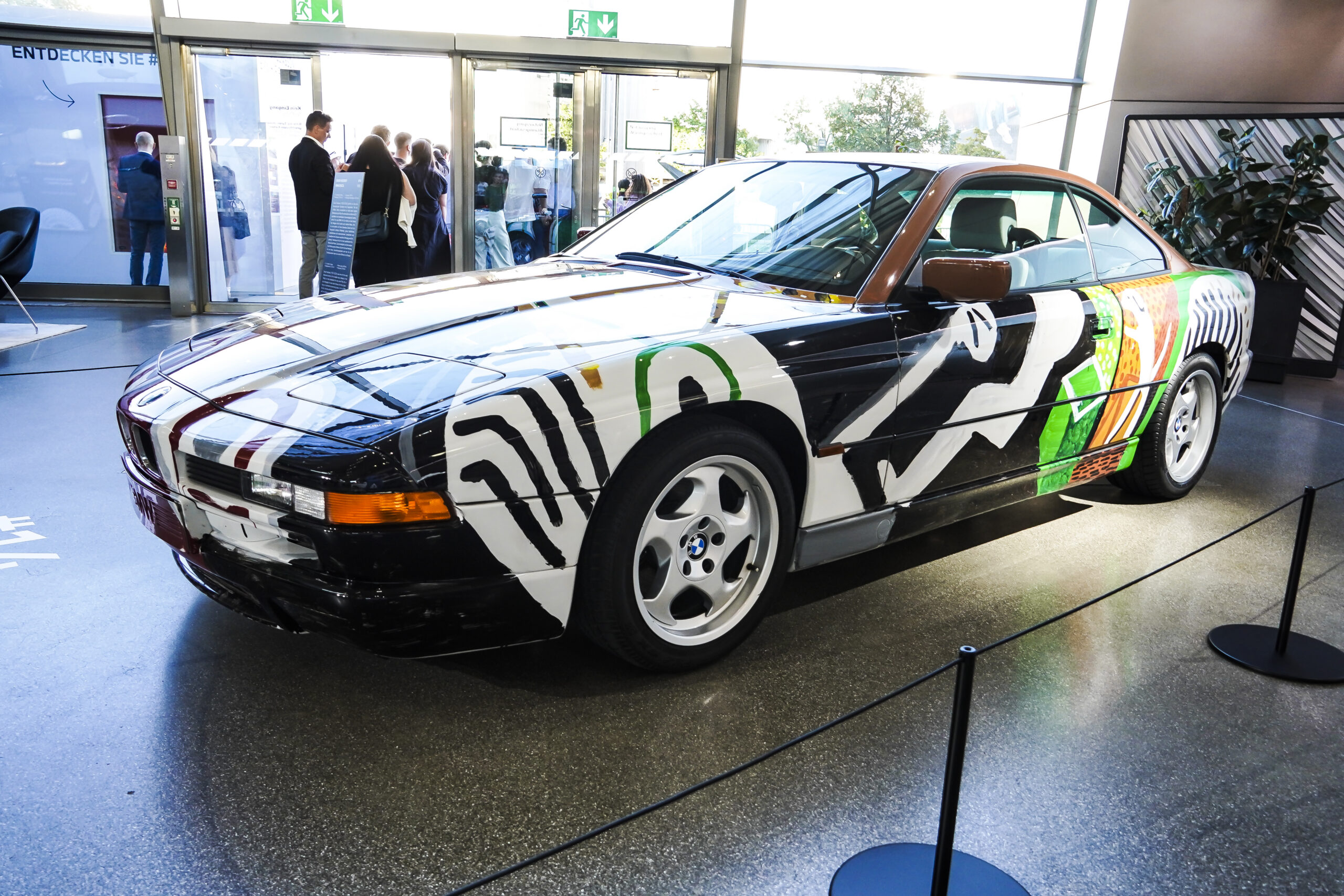
And last but not least, David Hockney’s ode to Los Angeles, a BMW 850 CSi with a dedicated seat for the doggie (including its own water fountain). If you can afford a trip to Munich this year, go and see this exhibit.