
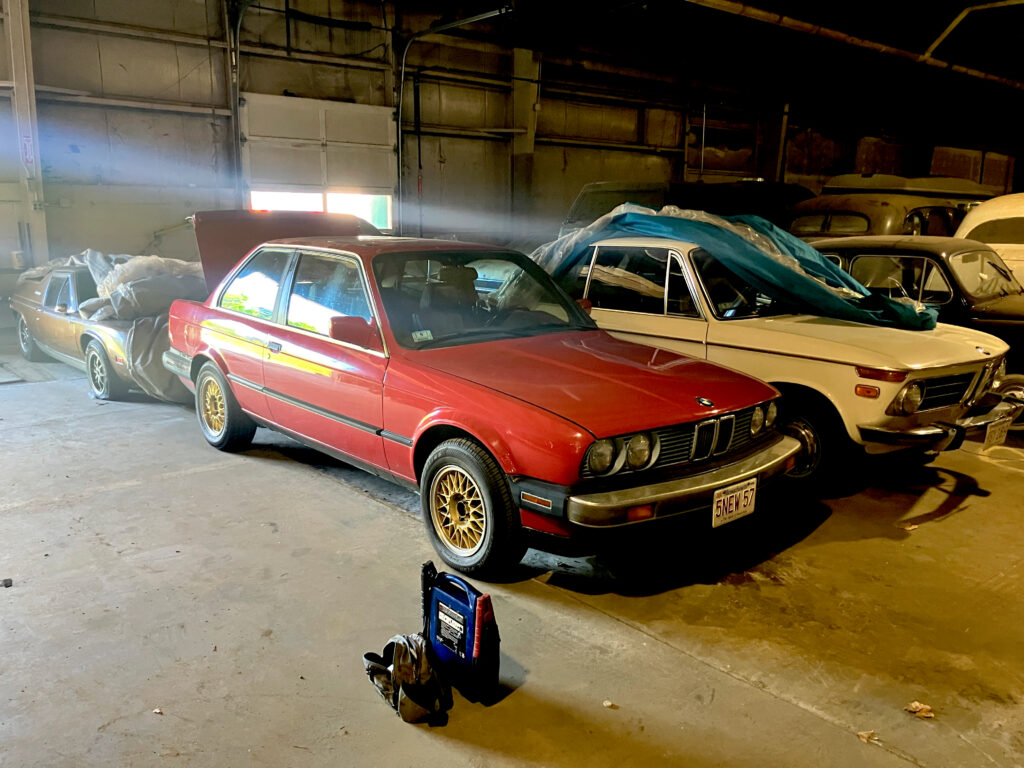
One of the issues with storing five cars 70 miles away in a warehouse in Monson, MA is that it’s pretty easy for the hypothetical three-month winter storage to creep up to six. The cars that need to over-winter there are typically down for their nap around Thanksgiving (if I wait much longer, the campers, RVs, and boats which comprise the bulk of the warehouse’s seasonal business make it difficult if not impossible to access my spaces), so even if the snow has melted and the rain has washed the salt off the roads by the end of March, that’s four months.
The length of time is important for a few reasons. The first is batteries. There’s no electricity available in the warehouse for trickle-charging, so I disconnect the batteries, show up in the spring with a jump-pack, and hope for the best. Sometimes the batteries recharge completely on the hour-and-a-half drive home, and sometimes they don’t—the battery is still dead, killed by a combination of age and inactivity. A decade ago I used to bring batteries home with me and trickle-charge them here at the house, but those days are long gone; with my history of back issues, I don’t lift batteries unless I’m stranded and have no other choice And by that I mean: Vintage cars are largely immune to dead battery issues—just jump-start them and they generally don’t care if the battery isn’t taking a charge. The control modules in post-OBDII cars, however, are sensitive to voltage, and will often wig out if the voltages are too low because the alternator is struggling to charge a dead battery, so to get back to reliable driving, you often need to yank the dead battery out and drop a good fully-charged battery in. But for all of the cars, it’s best if they’re driven regularly if for no other reason than to allow the batteries to take a charge.
The second is fuel. There is no ethanol-free fuel available at commercial pumps in Massachusetts (yeah, yeah, I know, pure-gas.org shows stations that sell it here, but I guarantee you that none of them are at drive-up commercial gas stations and instead they’re all at either airports or marinas or they’re places selling Sunoco Optima for a hundred bucks a keg, and if you can show me that I’m wrong, I owe you a beer), so the best you can do is keep the tank full so there’s as little air as possible for moisture to be pulled from, and use fuel stabilizer. Still, it’s best to run fuel through the cars, and for me to do that, the cars need to make the trip to Monson and back.
You also should drive stored cars so the tires don’t get flat-spotted, so the hydraulics stay exercised, and as the years roll into decades, so the rings don’t stick to the cylinder walls.
But for me the primary issue with leaving the cars out in Monson for long periods is mildew. I pay $70/month per car, which is about as cheap as storage gets, but you get what you pay for, and the warehouse is the antithesis of climate-controlled storage. It’s a huge rambling metal building attached to a large old mill building, and when it rains a lot, small leaks in the roof can create puddles. A few years ago during a particularly rainy summer I went out there to find my cars literally sitting in a puddle. This spiked the humidity levels, which caused blooms of mildew inside the cars.
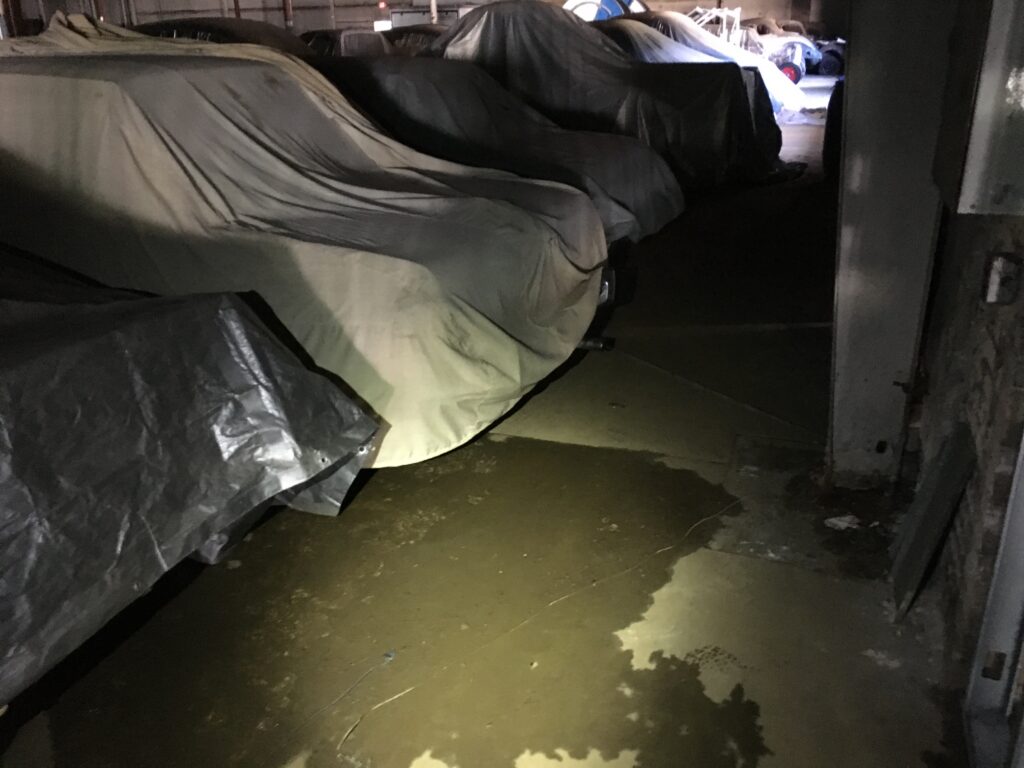
Water on the floor under my cars a few years ago…
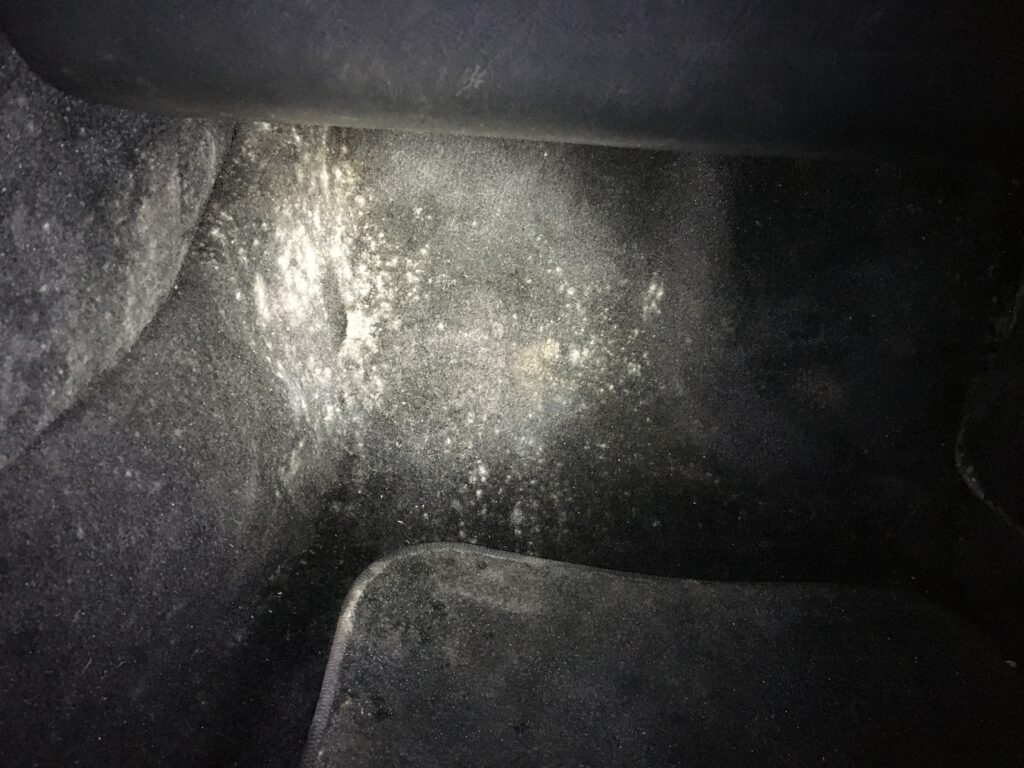
…and the resulting mildew bloom.
When this happened, I’d already begun using the 12oz DampRid containers (the ones with a basket in the top into which you pour the DampRid desiccant flakes, and the empty space at the bottom into which the attracted moisture drips). My response to the mildew was to double-up the DampRid (two containers per car). A few weeks later, there was still mildew, so I added the kind of desiccant bricks that are used in cargo containers and eventually doubled those up. That belts-and-suspenders combination appeared to do the trick, and I hadn’t had mildew problems since.
However, it now had been seven months since I’d visited, much less inspected and driven, the cars. It barely seemed possible that, having sold the Bavaria last July, the Euro 635CSi last October, and Bertha two months ago, I could even have five cars I hadn’t seen in seven months, but welcome to my odd world. I’ve joked for years that I’m not a collector because I don’t seek out the best examples, pay top dollar, and cocoon them in climate-controlled storage, but this joking had devolved into outright negligence. Plus, the state of Massachusetts’ registry of motor vehicles is kind enough to email me when one of my cars has an inspection sticker that has expired, and three of them had, adding to my feeling that I’d abandoned the cars out there to neglect and decay. And although the warehouse owner has given me the combination to the locks on the sliding fence gate and the main roll-up door to largely come and go as I please, neither of those heavy doors are motorized, and with my recent flare-up of issues with my back, I was really hesitant to move them alone.
So I hatched a plan. I coordinated with the owner so I’d go out there at a time when the doors would already be open, had him make sure that the cars weren’t blocked in so none needed to be put on wheel dollies, and made an agreement with myself that under no circumstances would I swap batteries or push cars around. And I decided not to confuse the goals of the trip with doing a “Monson swap” (heading out in one cool car and returning in another). Besides, the car I would’ve done that in was Bertha, the 2002 I sold two months ago for the very reason that if I had used it to do a Monson swap, it would’ve sat in that warehouse for another year. Instead, the goals were a) evaluate the cars’ condition, b) get the DampRid changed, c) exercise as many of them as possible, and d) time permitting, get inspection stickers for the three that needed it.
So, last Tuesday morning, I set out on “The Hack Mechanic Atones For His Automotive Negligence 2026” Massachusetts tour. Although I’m trying to lift as little as possible these days, there was no getting around muscling the battery jump pack and the travel tool box into the trunk of the E39, both of which weigh just under 20lbs. The hour-and-a-half drive itself was fine, as my back appears to be very happy when it’s securely mashed into a genuine Tempur-Pedic back pillow.
I arrived at the Monson warehouse and, as per arrangement with the owner, the roll-up door closest to my cars was already open. The cars that have been sitting out there since Thanksgiving are the ’99 M Coupe, the FrankenThirty (the ’87 325is salvage car), Hampton the survivor ’73 2002, Louie the Ran When Parked ’72 2002tii, and the ’74 Lotus Europa Twin Cam Special. It was a very snowy winter here in New England, so it was possible that that could’ve translated into standing water inside the warehouse, but I saw none, just dry cement.
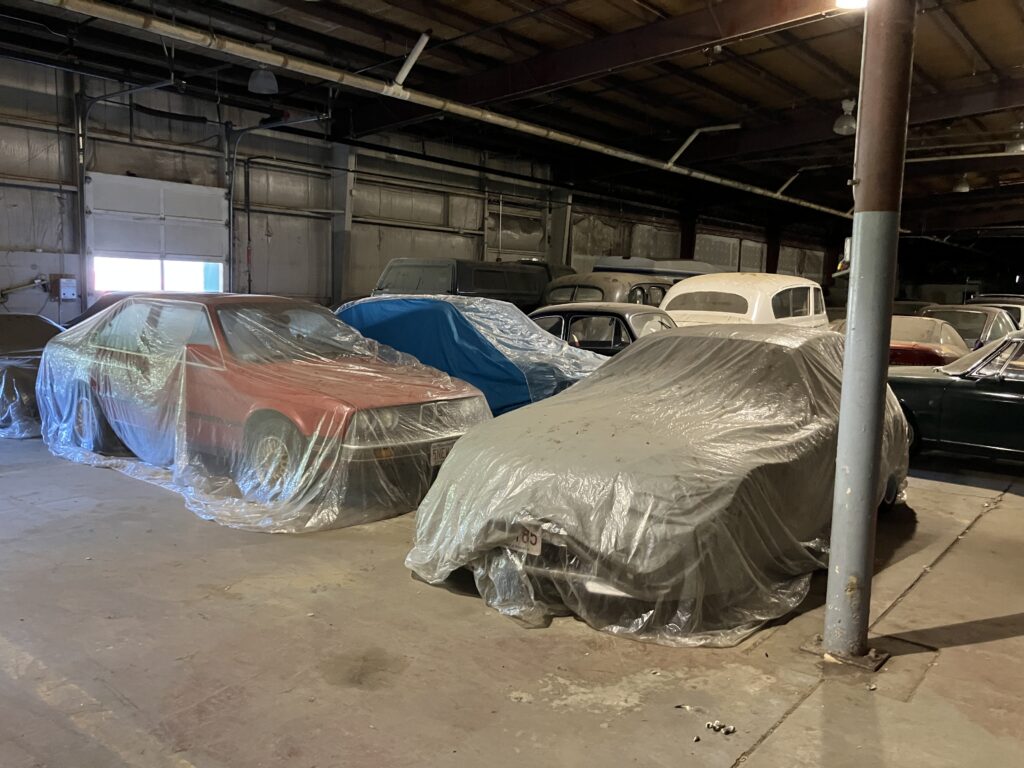
Awaken, my sleeping beauties and beasts.
With quite a bit of trepidation, I pulled back the covers on all of the cars to get a peek, and was absolutely delighted to find virtually zero mildew. So my massive desiccant attack still appears to be paying off. Still, the DampRid containers all needed to be emptied and refilled, and with two in each car, this takes some time, as the water collects in the bottom of the container, the flakes in the basket at the top harden into a puck that looks like a urinal cake, and both must be disposed of. I’ve done this often enough that whenever I go out there I bring a 7.5lb bulk DampRid refill jug ($14 at HomeDepot, shipped—cheaper than Amazon), a cardboard box into which to knock the hardened flakes, another container to pour the water into so I can minimize the number of trips outside to dump it, and paper towels and gloves to clean everything out.
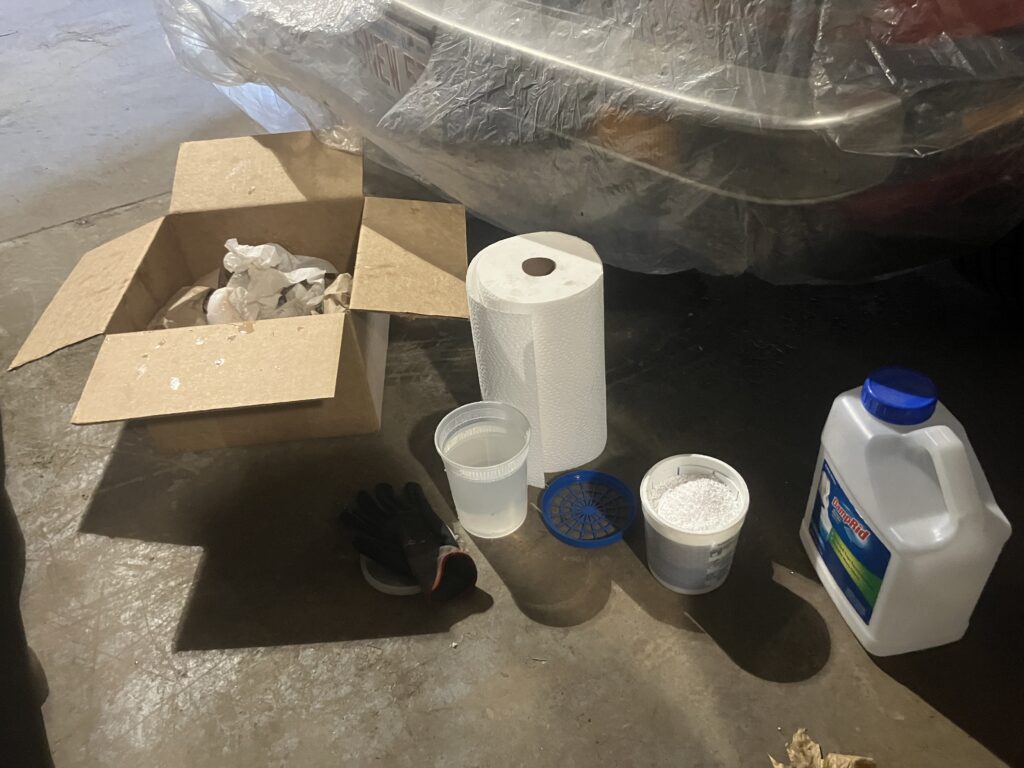
My de-facto DampRid changing station.
Okay, fresh DampRid in all cars, let’s drive these puppies. The M Coupe was in front of the other four, so it came out first. I kind of hated to do it in this order as the clown shoe is so much tighter and faster than the other cars that it spoils you, but I needed to be efficient.
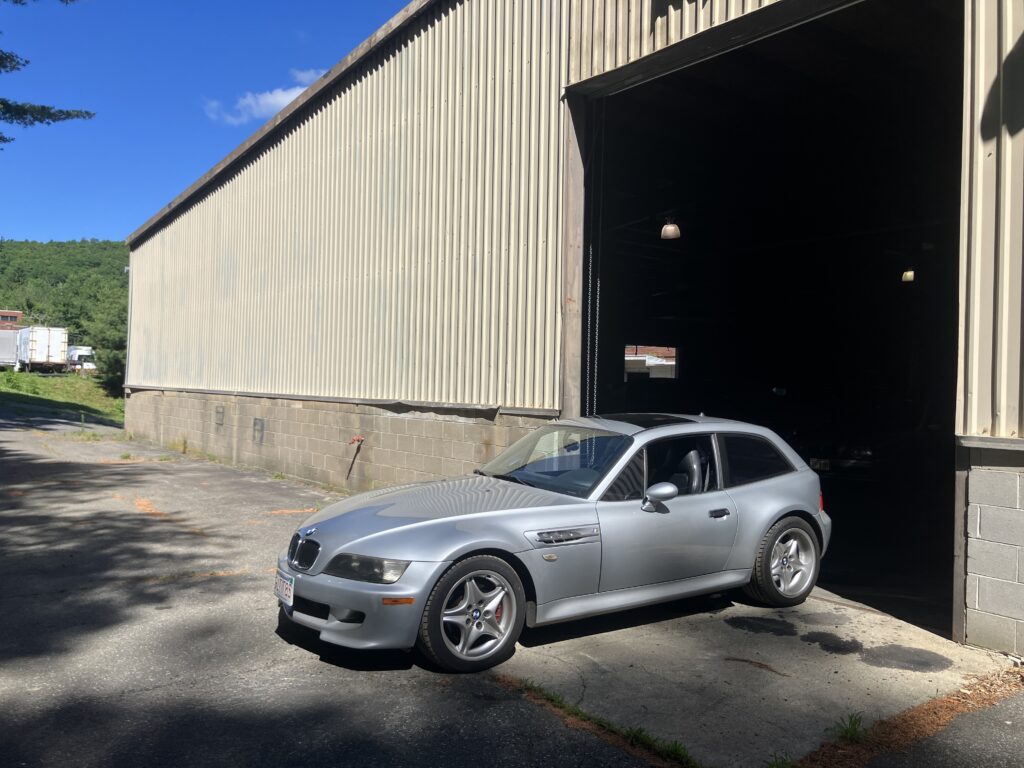
Gotta love the shoe.
I’ve now owned the M Coupe for 19 years, longer than any of the other cars except the ’73 3.0CSi, but I drive it very little. A big part of that is that even before my back issues arose from the depths to torment me, I found that the seats in the car are so firm that they don’t confirm to and support my lower back (and bottom) in the same way that vintage Recaros do, and retrofitting older seats is difficult due to the integrated seat belt tensioners. Nonetheless, the car is so much tighter and faster than anything else I own that I hate to get rid of it. Plus, I’m terrified that if I do sell it, it’ll do what my ’82 Porsche 911SC did and rocket up in value six months later, though as a ’99 S52 car in silver/black and driver-quality condition, I doubt that’s going to happen. If I do decide to sell it, Jeff Caplan at Odometer Gears kind of has dibs on it.
Next was the FrankenThirty. This is the car I was thrilled to buy in the summer of 2024 as a running driving rust-free E30 325is for five grand, only to learn that it was the rear 2/3 of what it was supposed to be, and the front 1/3 and ETA motor of a pre-facelift 325e, and was badly mouse-contaminated to boot. I sorted much of it out, drove it to The Vintage last year, and wound up liking the car far more than I ever expected. The only downside I noticed while driving it was that when I opened up the fresh-air sliders, the smell of rodent was still more apparent than I’d like (I never removed the heater box to clean it; I removed the heater and a/c cores and cleaned it in situ, which is never going to be as good). Still, I look forward to getting it back to my house as soon as I can, as it’s the perfect knock-around drive-it-anywhere leave-it-anywhere vintage BMW.
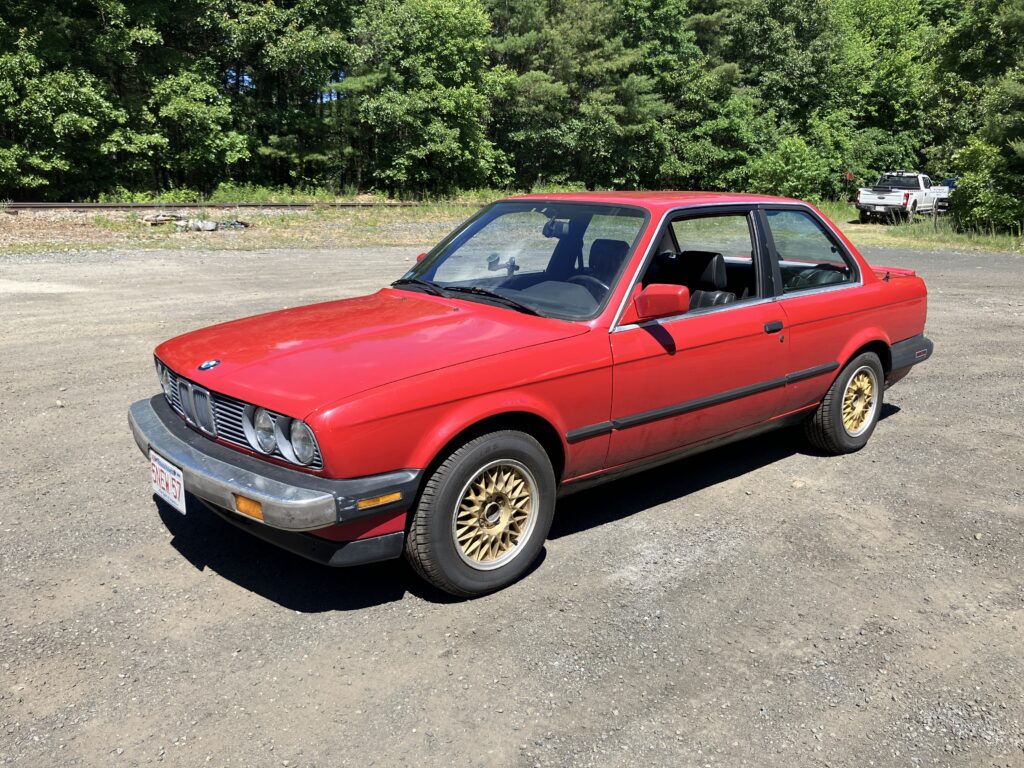
The FrankenThirty has the biggest rebound bounce of any car I’ve ever bought.
The remaining three cars were the ones that needed inspection stickers, and the first of those was the Lotus Europa. Being a Lotus (Lots Of Trouble Usually Serious and all that), I never know what surprises it has in store for me. After all, the last time it sat out in Monson over the winter, I was greeted with fuel streaming out the bottom of one of the float bowls due to a bad seal on the plug, and needed to put an order in to Moss Motor, wait for parts, then fix it in the warehouse. This time the little surprise was a dead-flat right front tire. Fortunately I keep certain things like a floor jack, jack stands, fluids, and a fire extinguisher in the trunk of one of the cars, among them is 12-volt compressor, and whatever was leaking in the tire wasn’t acute.
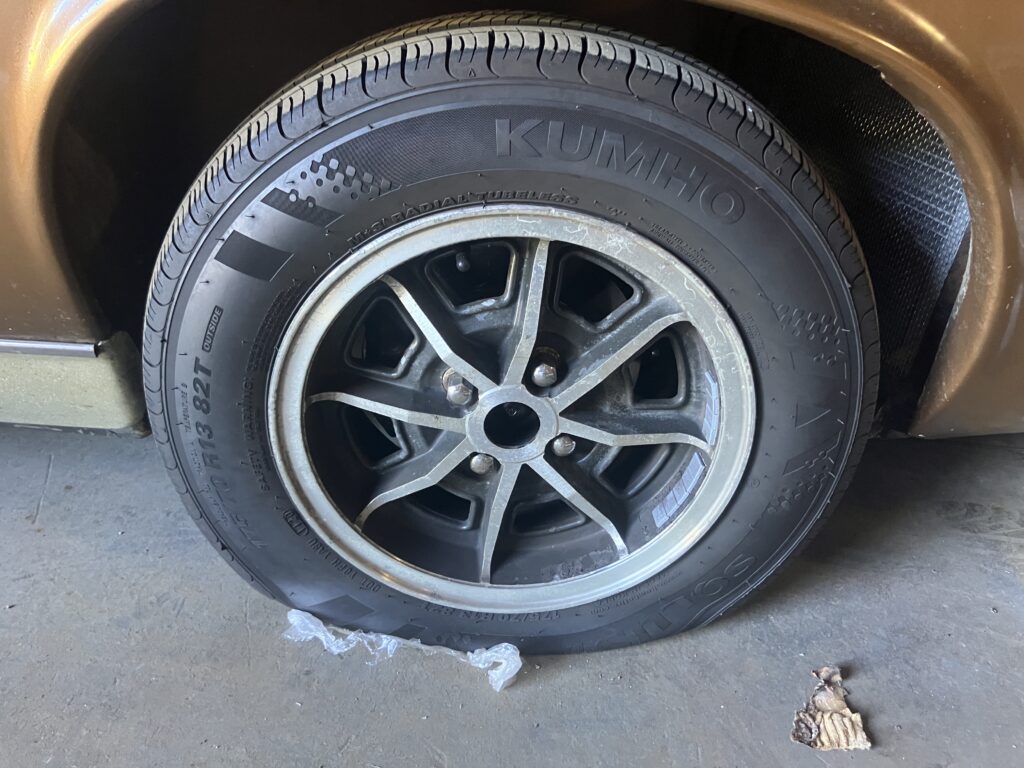
A surprise, not a showstopper.
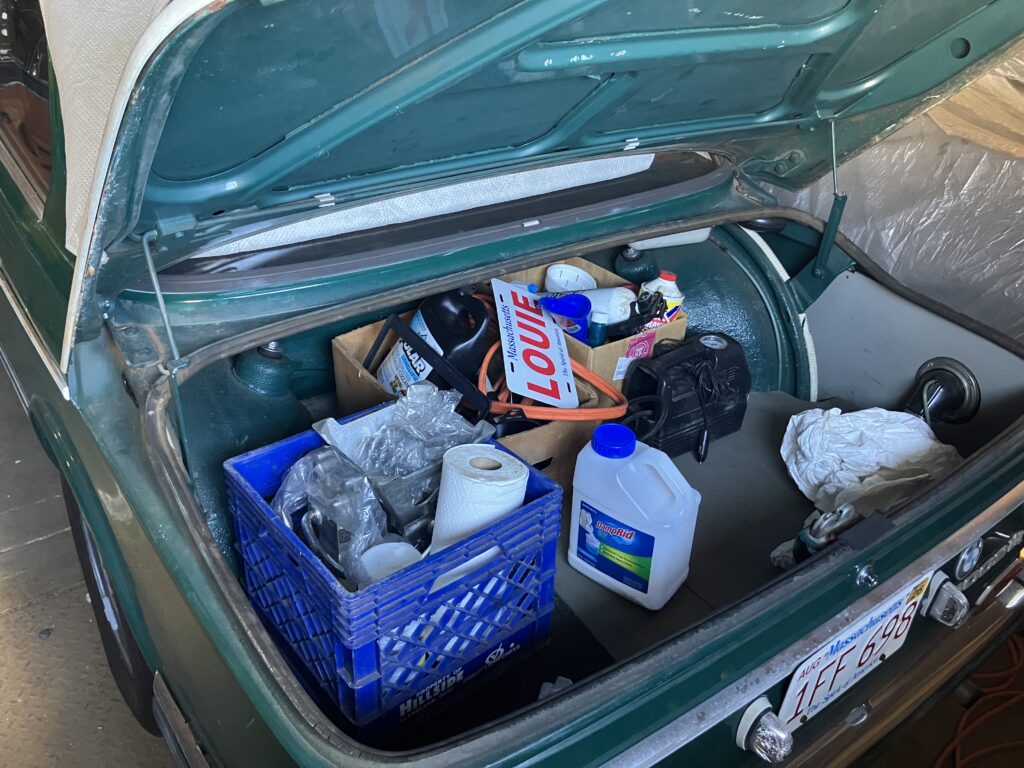
Louie’s trunk is sort of my garage-away-from-home.
With a squirt of starting fluid and a jolt from the battery jump-pack, the little slot car started easily, passed inspection without event, and treated me to a delightful exercising drive.
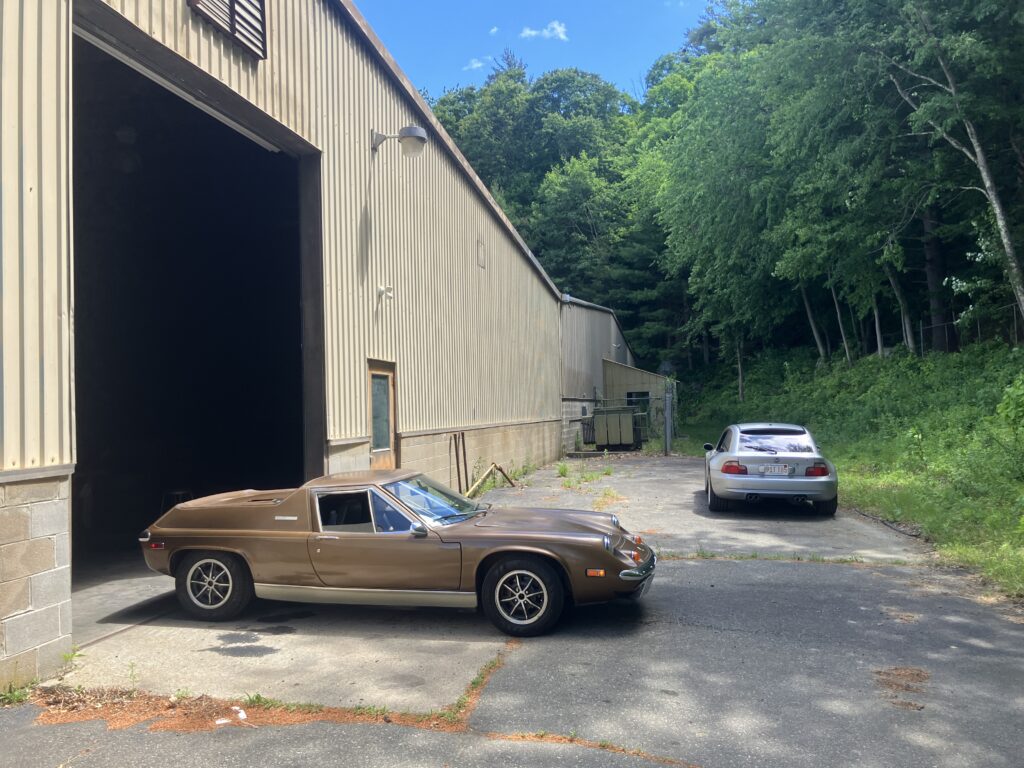
Add these two together and you almost have yourself a whole car.
What remained were the two 2002s. Hampton the ’73 survivor car came out first. This car spends a lot of time at my house, as I’ve become totally smitten by its unadorned originality. It only wound up in Monson over the winter when I made a last-minute decision last Thanksgiving to bring Bertha home and give it some long-delayed attention. Other than the Bilstein HD shocks and struts and the Weber 32/36, it’s a bone-stock car, and compared with Bertha and Louie, that made it, well, a bit boring to drive, but I’m now totally on Team Hampton. The quick exercise drive reminded me how astonishingly free of thunks and clunks it is and made me look forward to bringing it home.
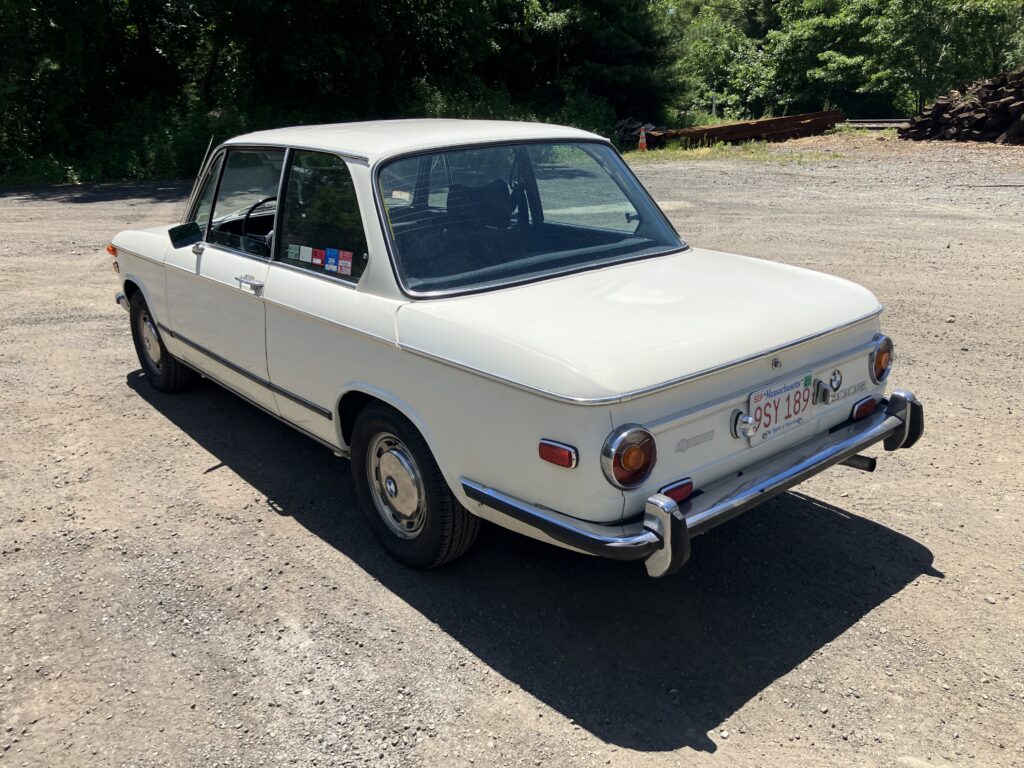
Lovely little Hampton.
And that left Louie. I’ve logged more road-trip miles on Louie than any of the other vintage cars, even the 3.0CSi, and have a deep bond with it from the whole Ran When Parked adventure. A few years ago I elected to freshen-up the car’s suspension, as it still had its original oil-filled front struts, and one of them was blown and the other seized. I sourced a set of used Bilstein HDs for it, but then like an idiot I didn’t stop there—while I was in the neighborhood I also installed H&R progressive-rate springs and a set of Suspension Techniques 22/19 sway bars. Over the years this has become the go-to combination for firming-up a 2002’s handling and knocking back the body roll. I’ve used it on multiple cars. But for some reason, it had an adverse effect on the connection I felt with Louie. Possibly related (or not) is a thunk/clunk that could be bad rear subframe bushings that, with my back, I’m in no condition to address. Plus, I had retrofitted a Clardy a/c system into the car, and while that didn’t “break any connection,” it currently isn’t working, so I have a leak I need to hunt down. So of all five cars, Louie was the one that I drove and felt that its maintenance issues are likely to continue to be deferred.
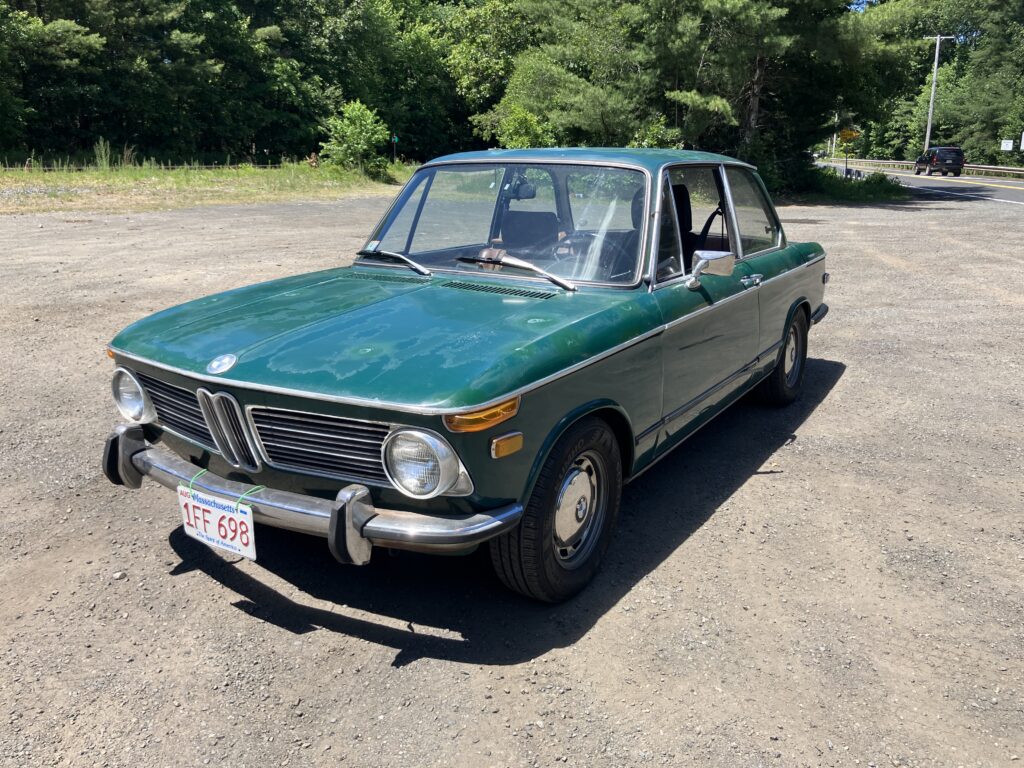
Louie needs a little love, and isn’t likely to get it until I’ve resolved a host of issues with my ’69 Lotus Elan +2.
Still, to check out all five cars in Monson, get the DampRid changed, have them all start, drive them all, get three of them inspected, all in one day, have the only issue being a flat tire that reinflated, and to emerge from it without wincing with back pain—I totally call that a win.
—Rob Siegel
____________________________________
Rob’s newly-expanded book The Best Of The Hack Mechanic™: 40 years of hacks, kluges, and assorted automotive mayhem, is available on Amazon here. His other seven books are available here on Amazon, or you can order personally-inscribed copies (including the new Best Of) from Rob’s website, www.robsiegel.com/books.